In 2001 STEFANO FAKE opened his digital art laboratory THE FAKE FACTORY in Florence, the Italian capital of the Renaissance. The vitality of the Tuscan city allows FAKE to experiment with its scenographic and immersive art in multiple directions. Since 1997 he had been working as a creator of the virtual sets of Giancarlo Cauteruccio’s avant-garde theater company Krypton. Starting from 1999-2000 he was entrusted with the direction of many multimedia shows for festivals and cultural events. Since 2001 he began to exhibit his installations under the name THE FAKE FACTORY, generally commissioned by youth culture and electronic music festivals. From the beginning his art is digital, immersive, engaging, dynamic, vital. Even today STEFANO FAKE & THE FAKE FACTORY exhibit the first pioneering works, which opened a trend that two decades later has become worldwide, and perhaps represents the most “contemporary” form of art, due to the fact that it unites in a single concept the real world with the digital world. What today would be defined as Physital art, where space and the spectator are protagonists of the art experience, in relation to the digitally created audiovisual intervention of the artist.
“I have studied the representation of flowers in the history of art for a long time, from Botticelli to Andy Warhol. Whether used in a symbolic or purely decorative way, flowers have always been the subject of research by artists. The concept of birth, sex, re-production can all be involved within flowers. ” (Stefano Fake)
Due to this, the video artwork of The Fake Factory is a visual and emotional representation of the transformation of life and death in the digital age. This work was deeply influenced by the Andy Warhol’s famous Flowers, which the artist showed at a sell-out exhibition at the Leo Castelli Gallery in New York in 1964. Also Ronnie Cutrone, Warhol’s assistant for 10 years, thought the early Flower paintings were about “life and death”.
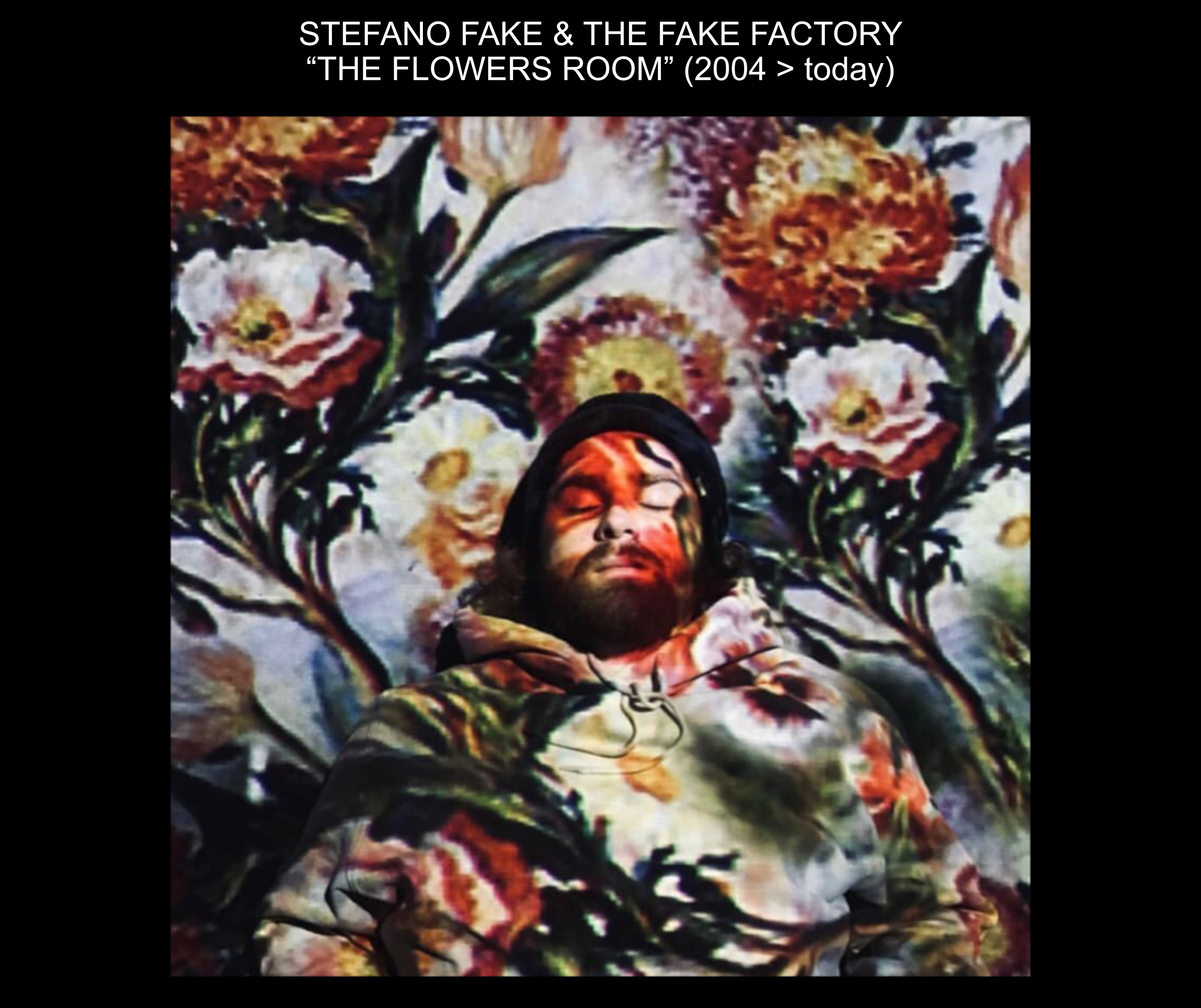
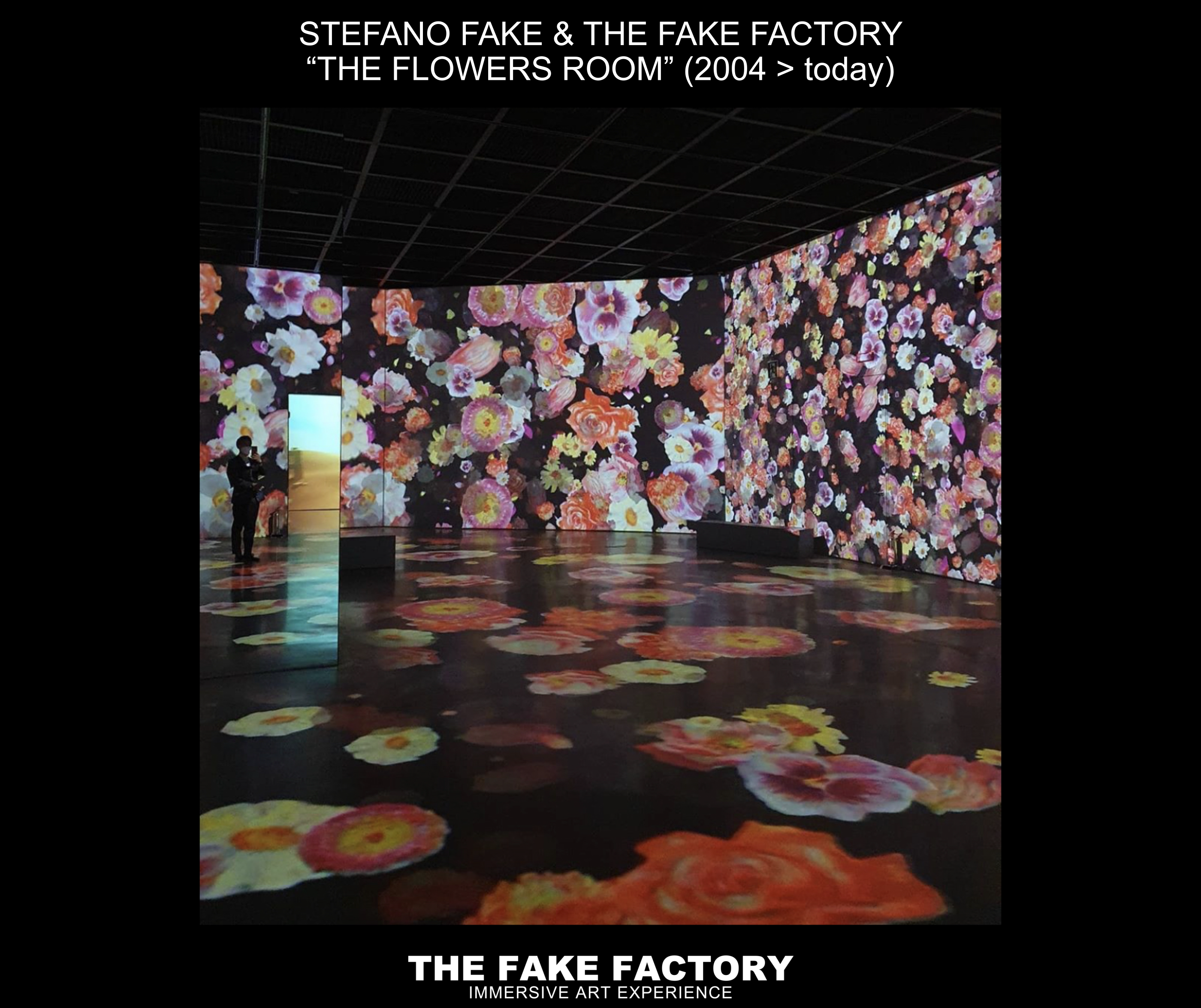
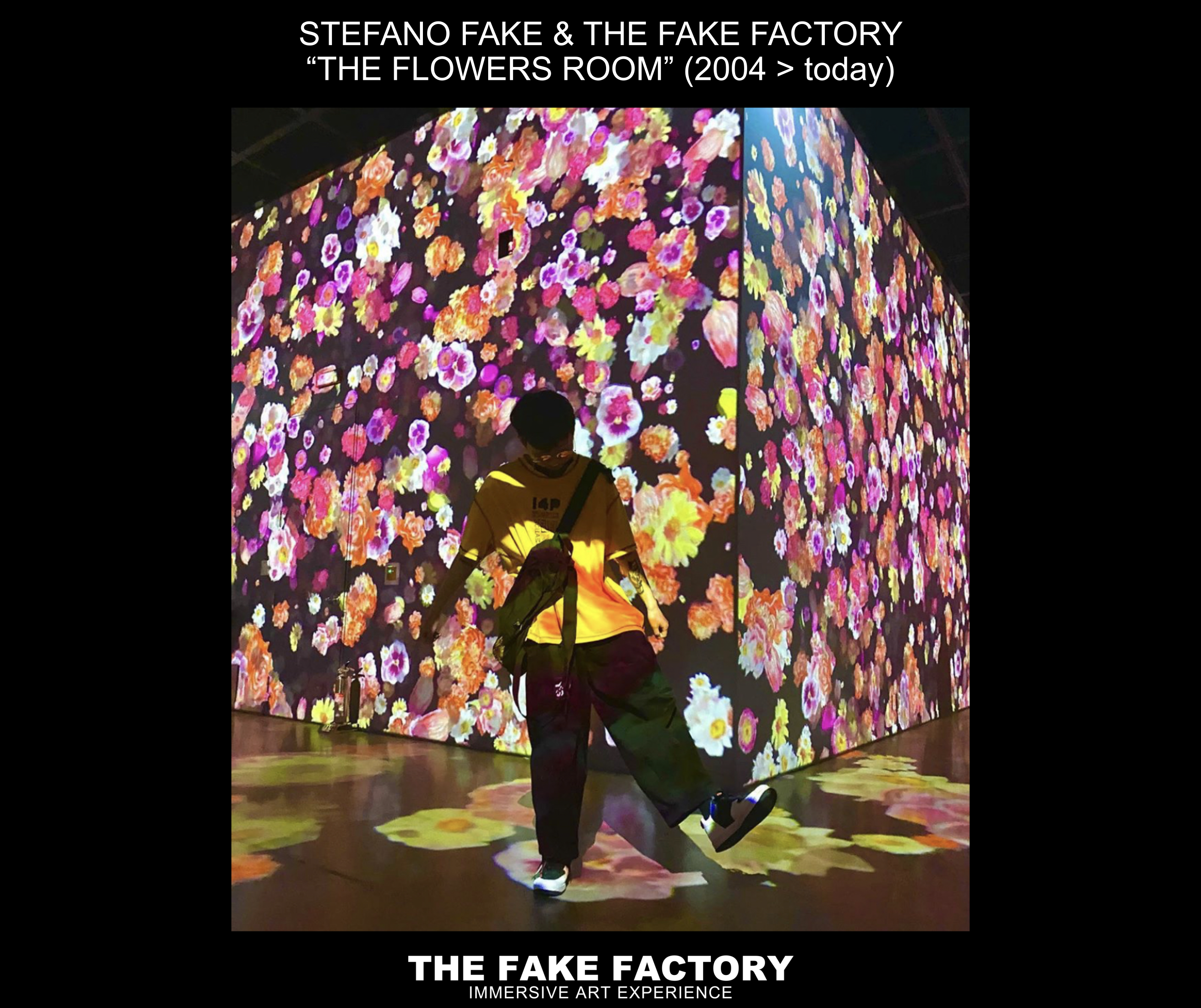
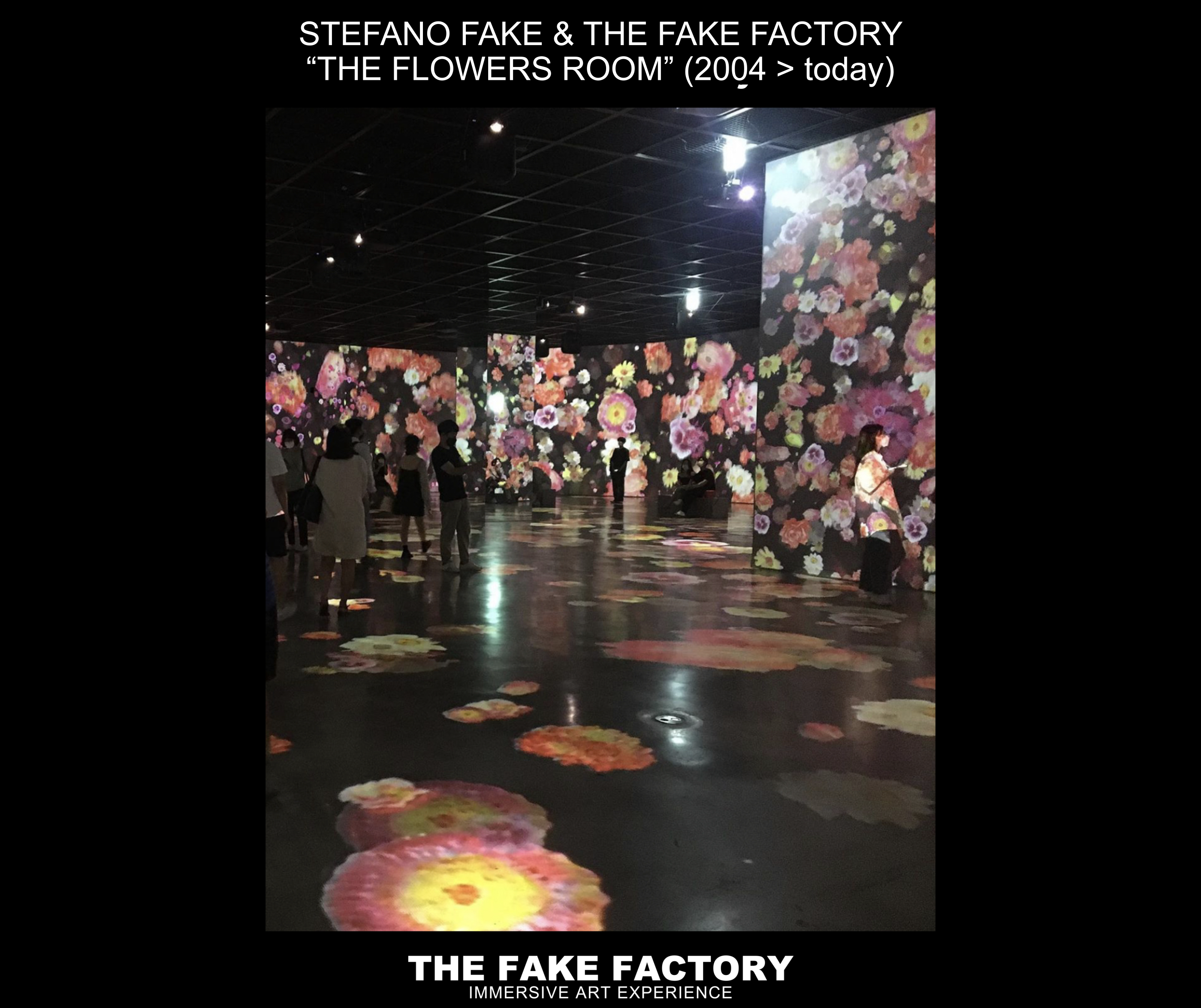
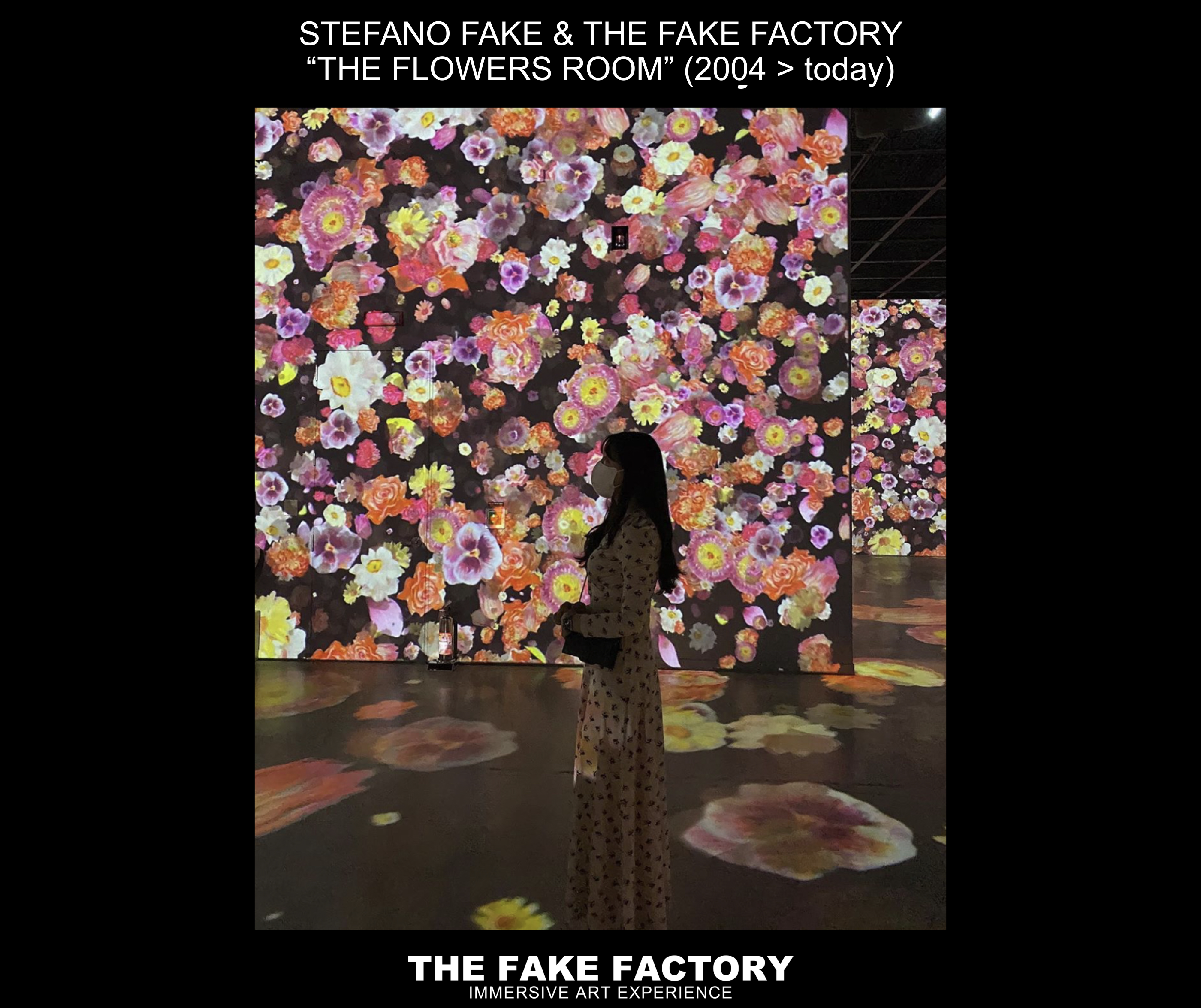
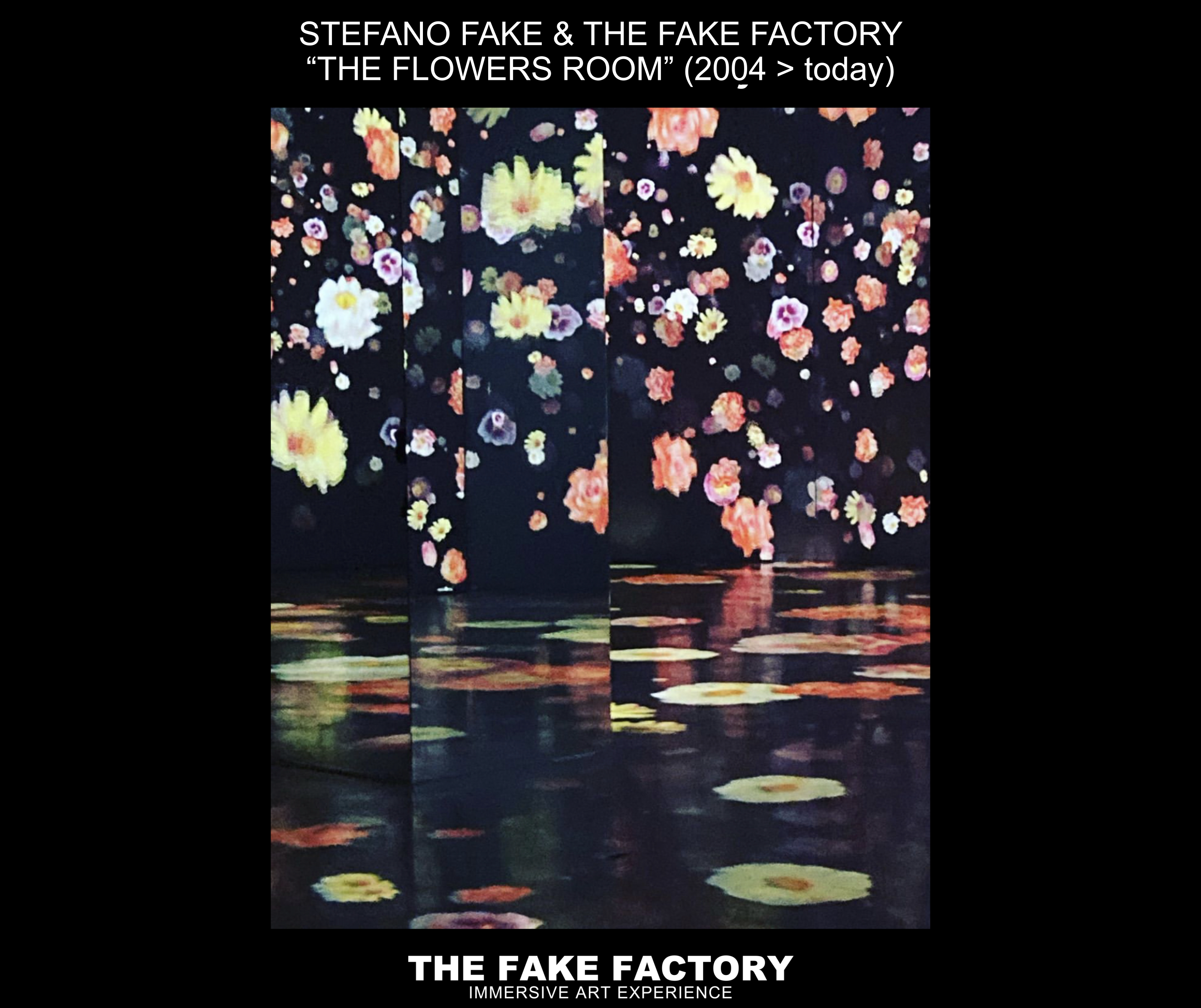
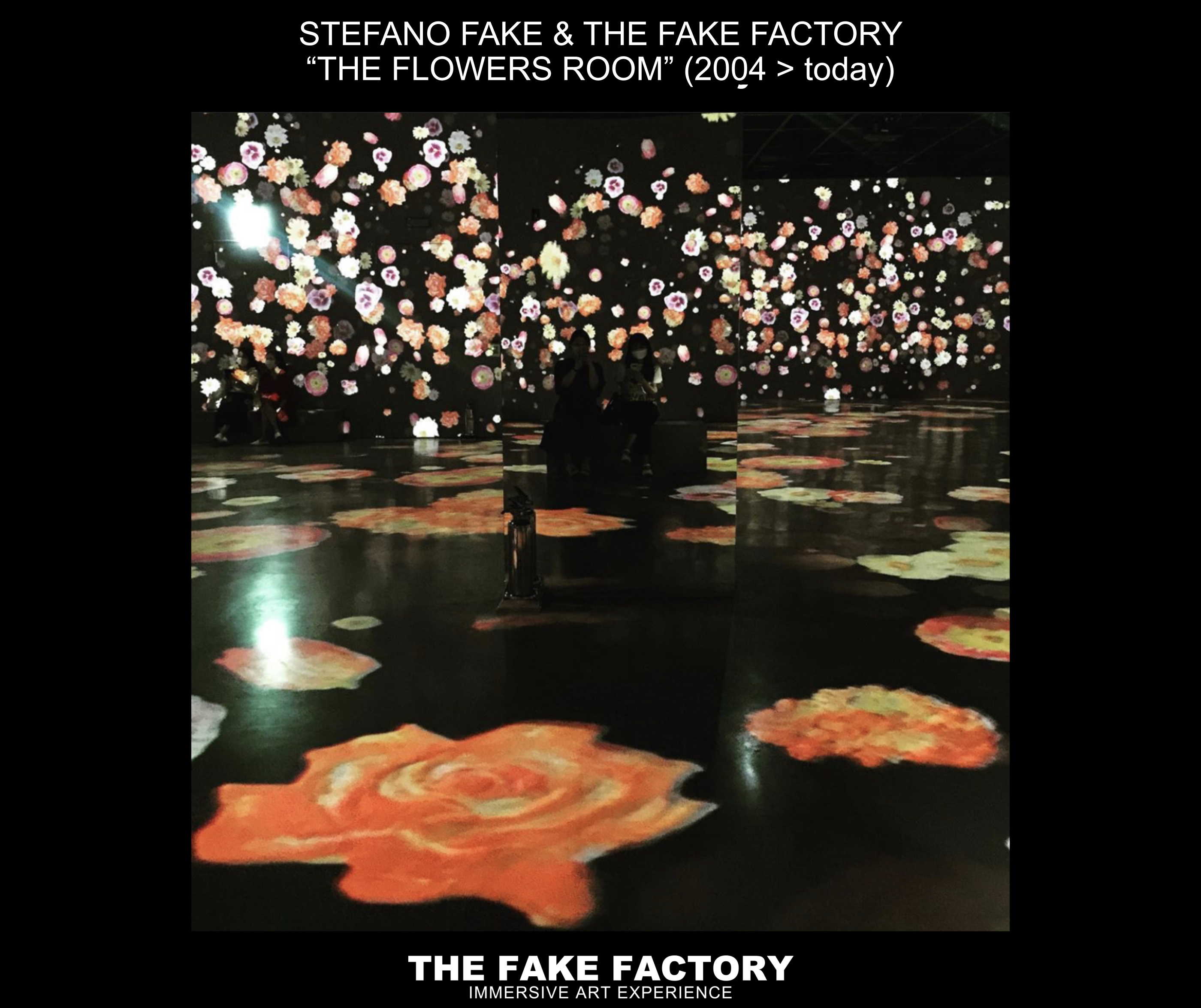
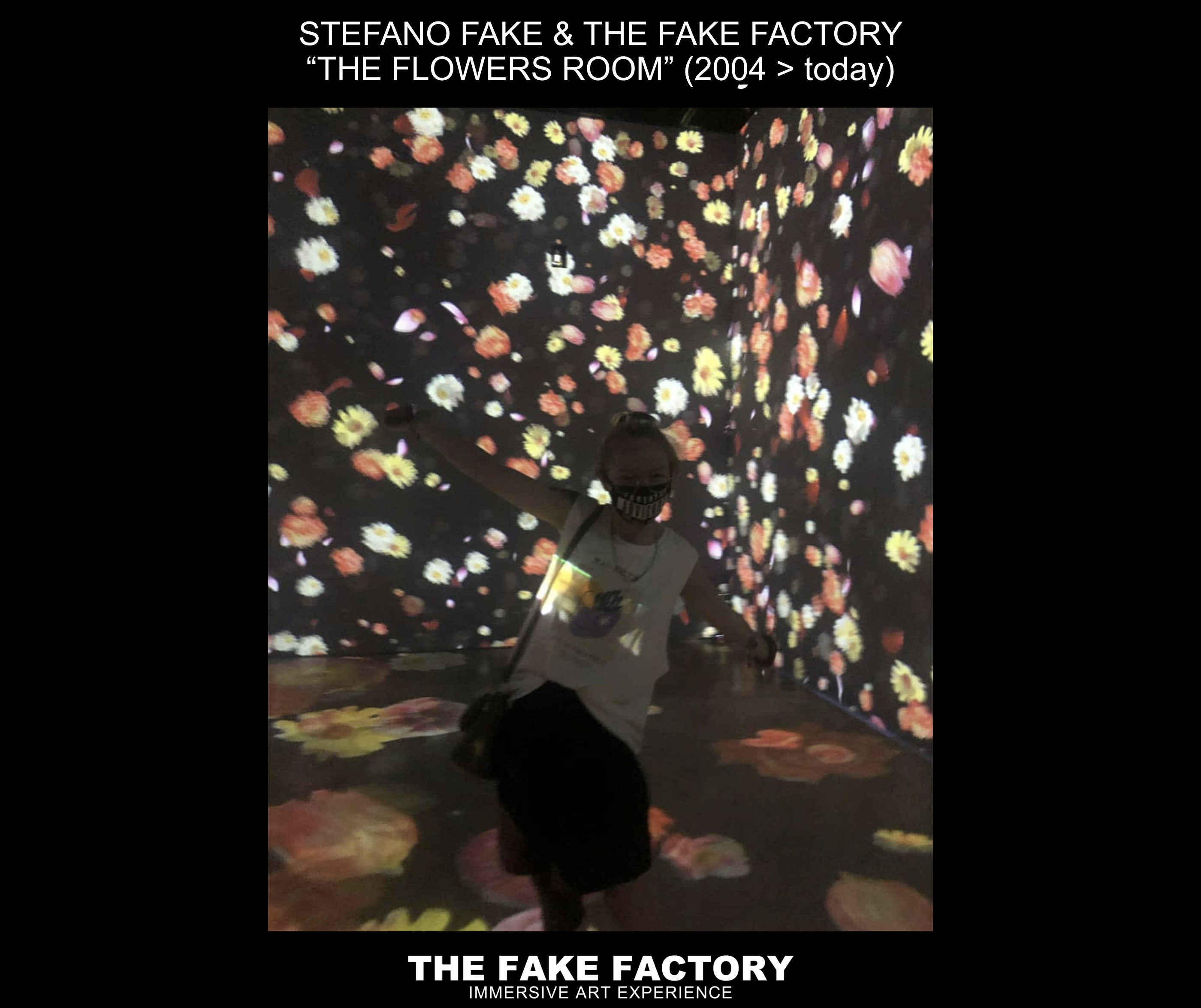
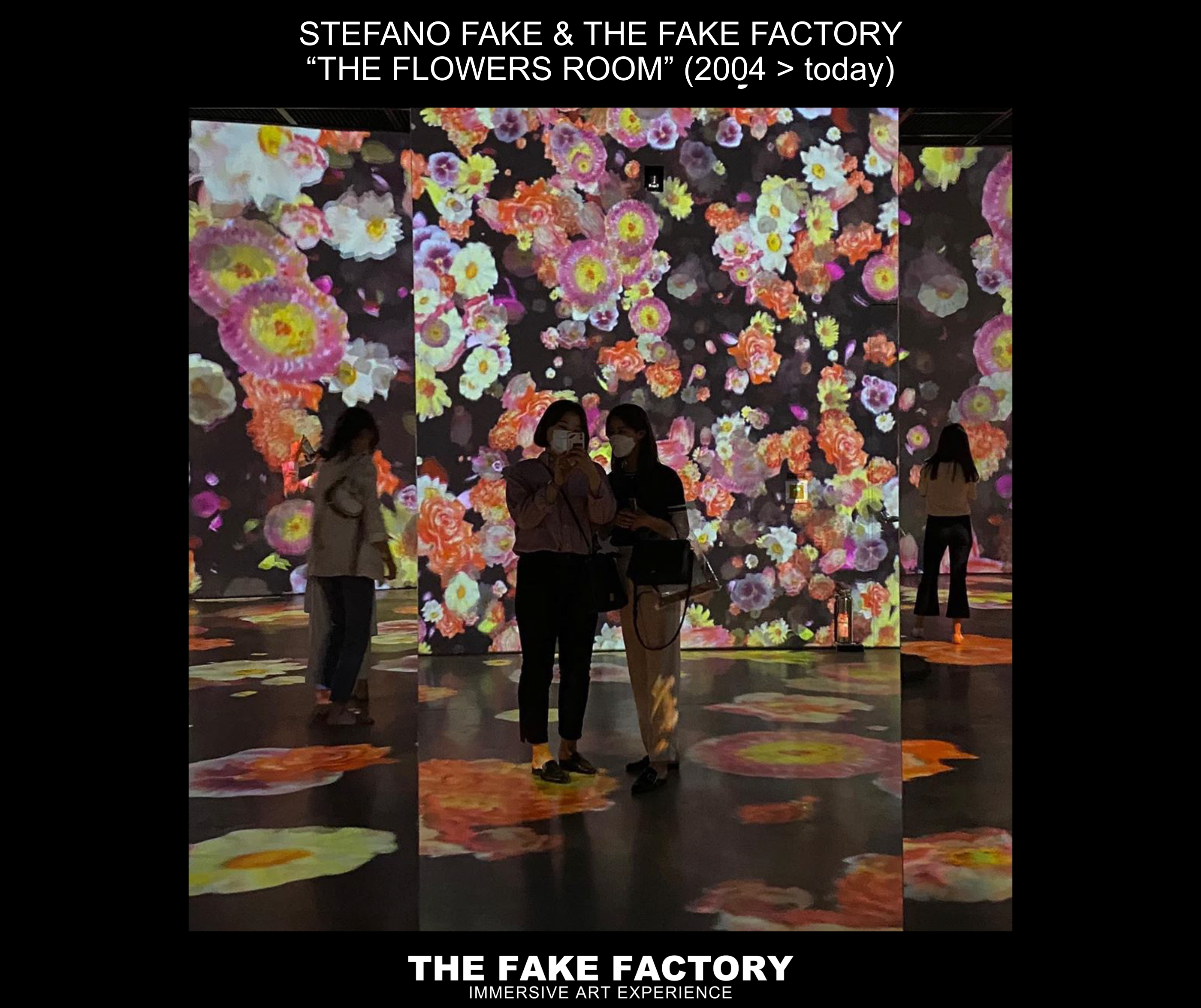
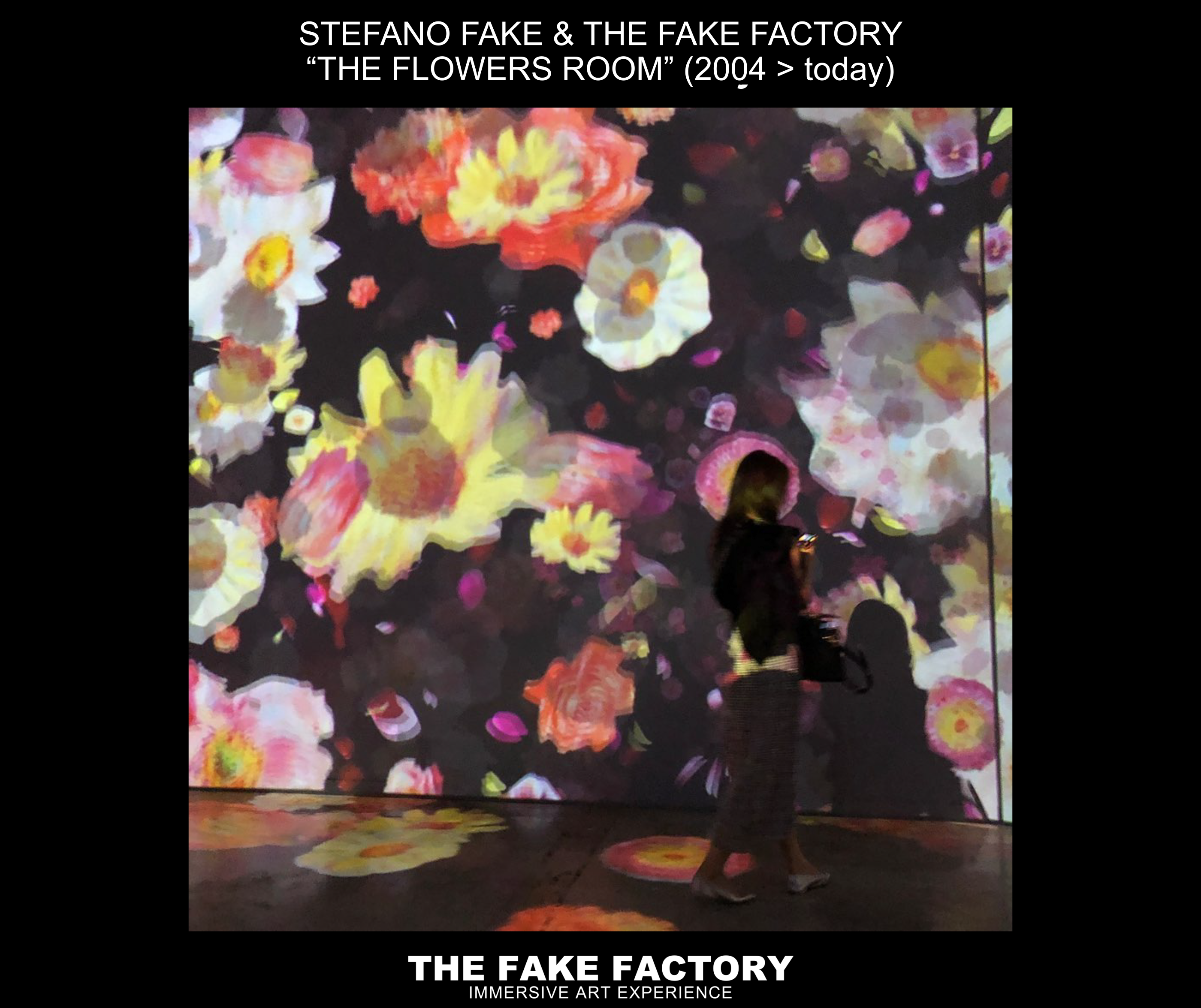
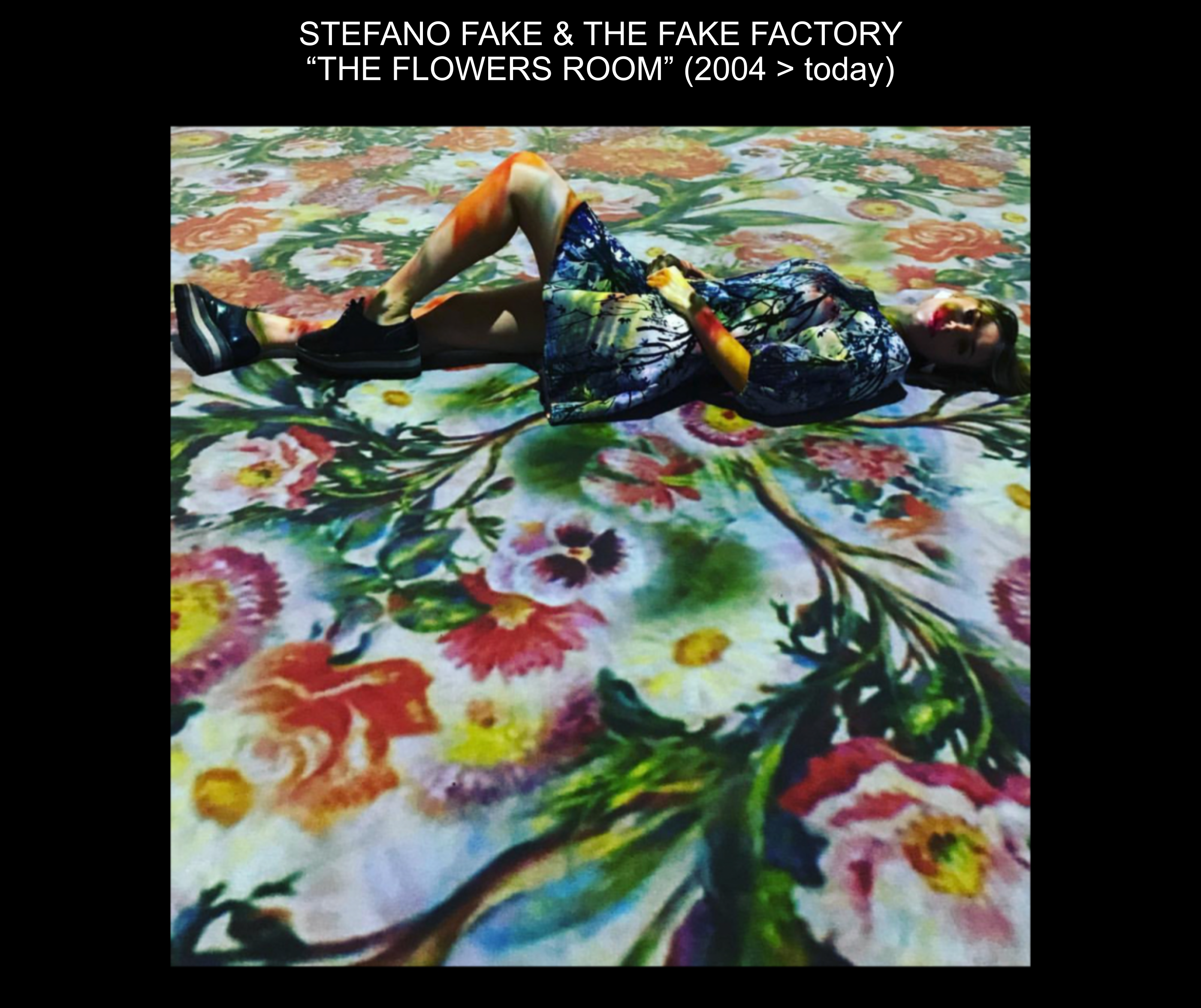
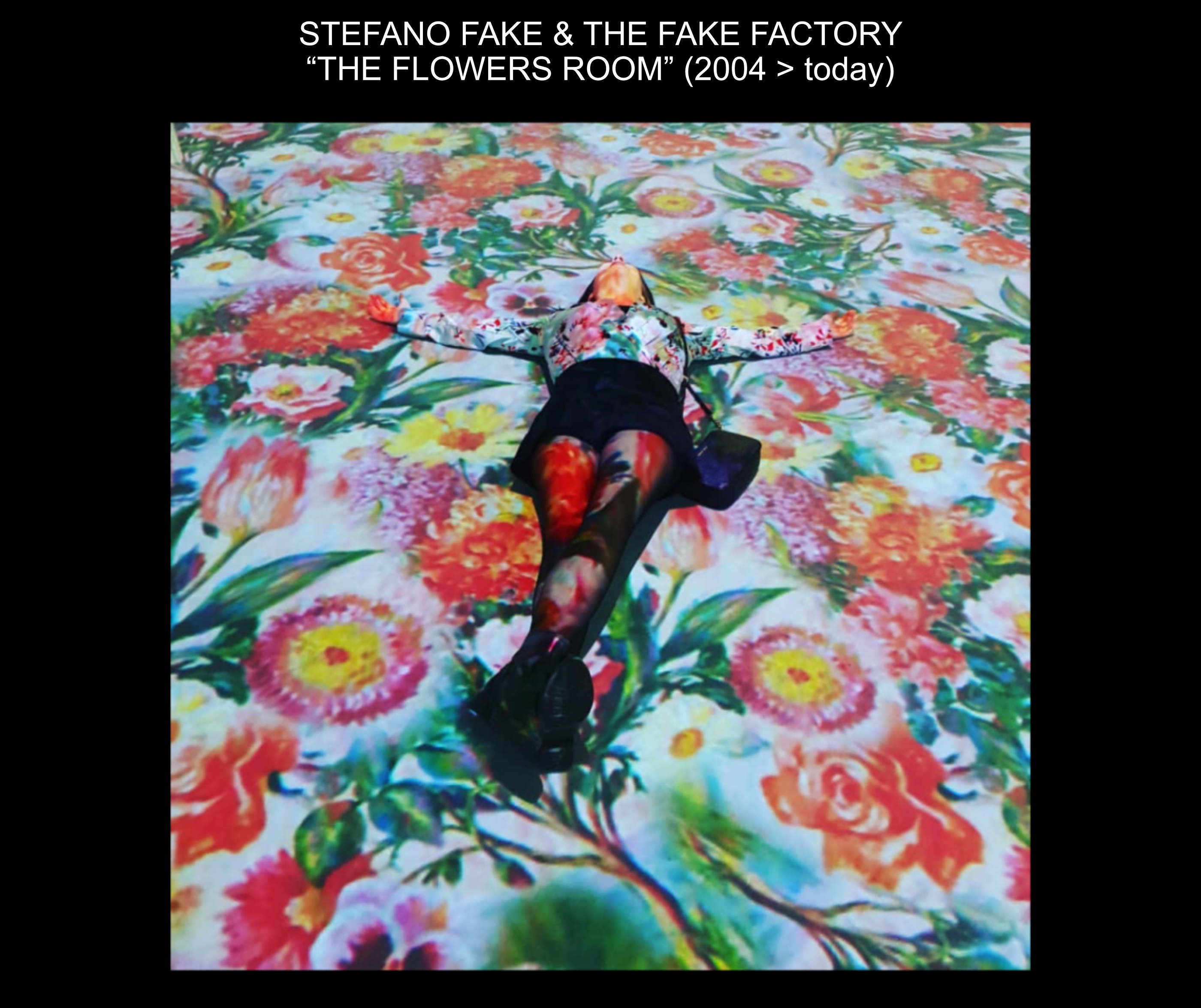
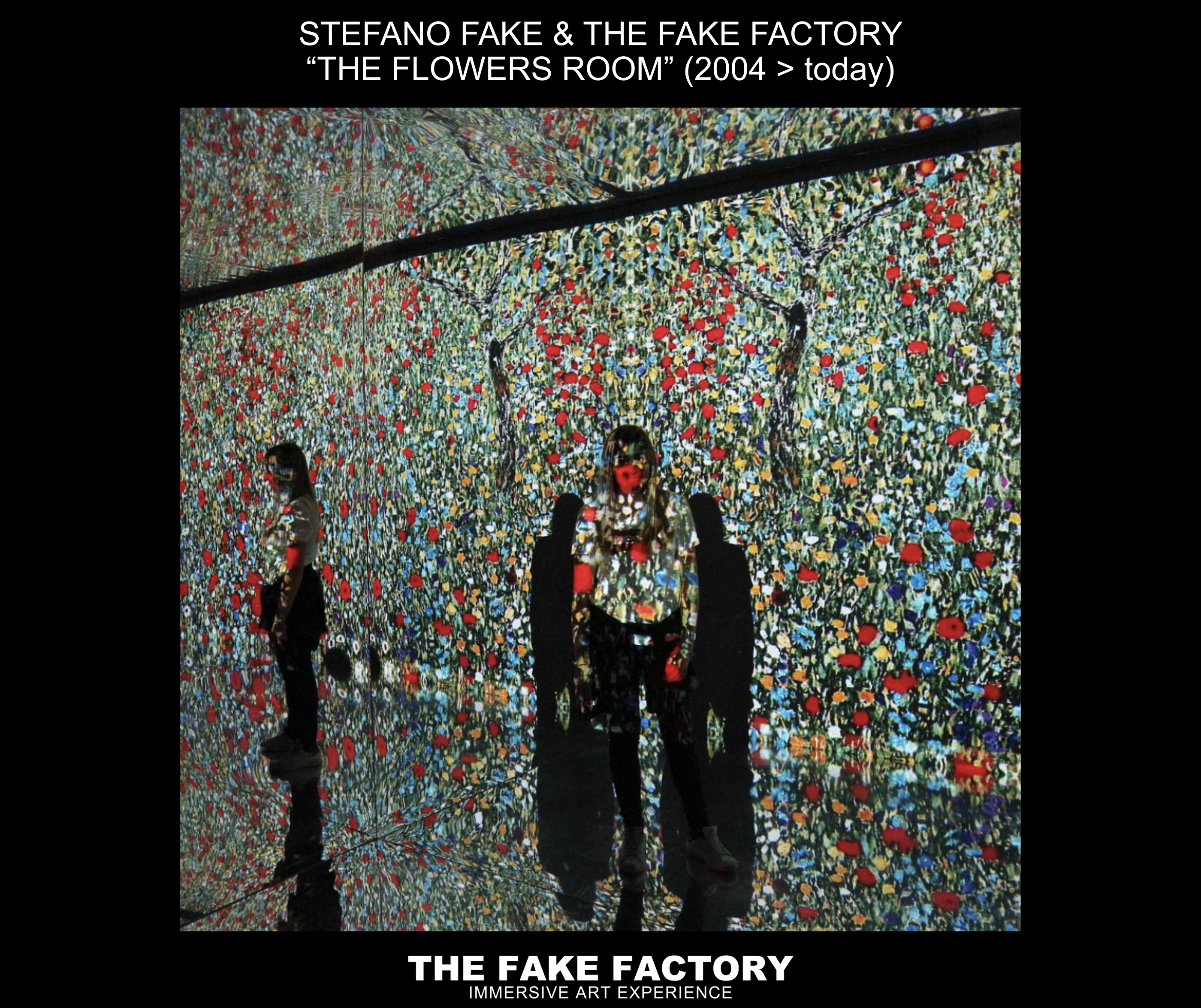
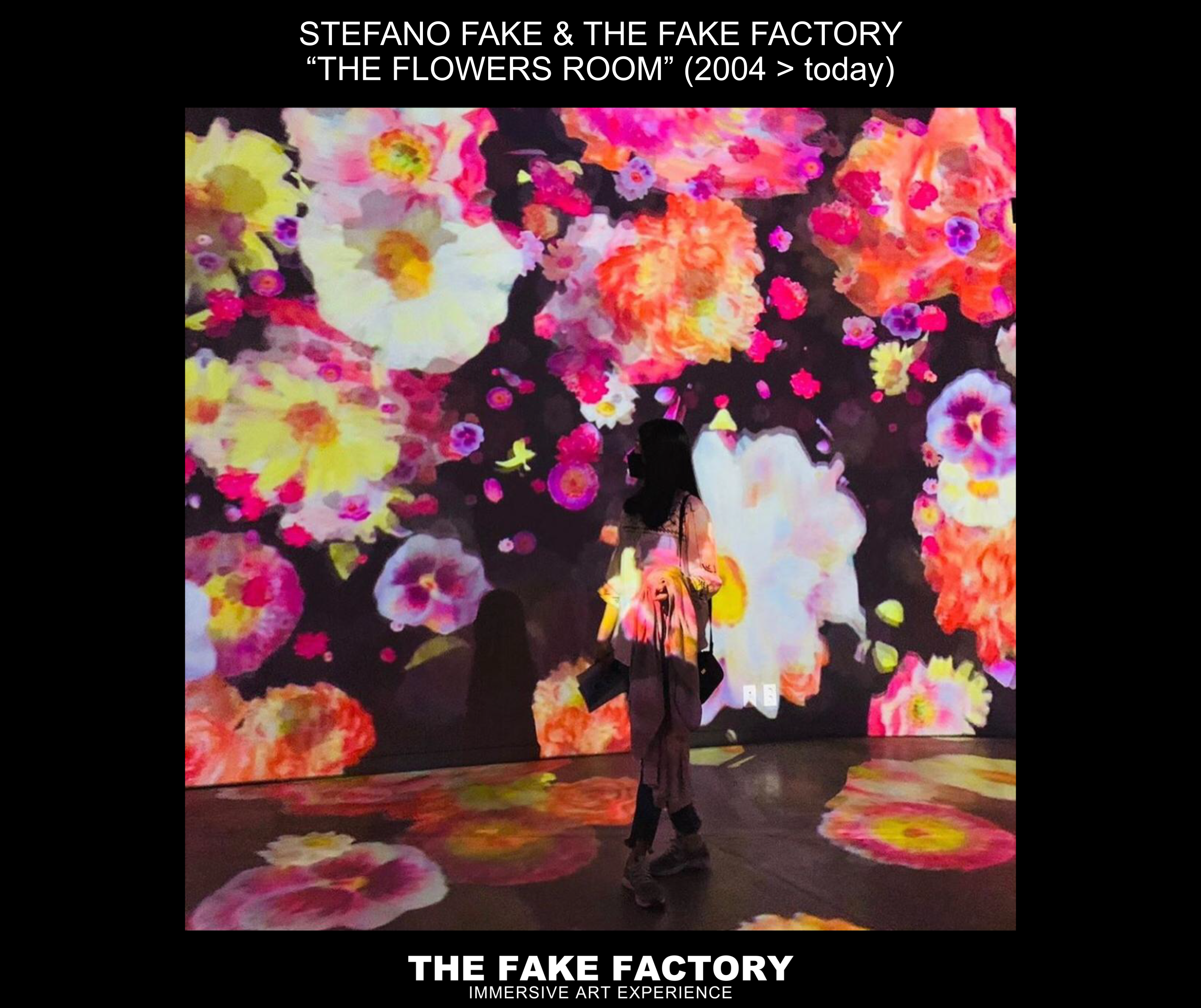
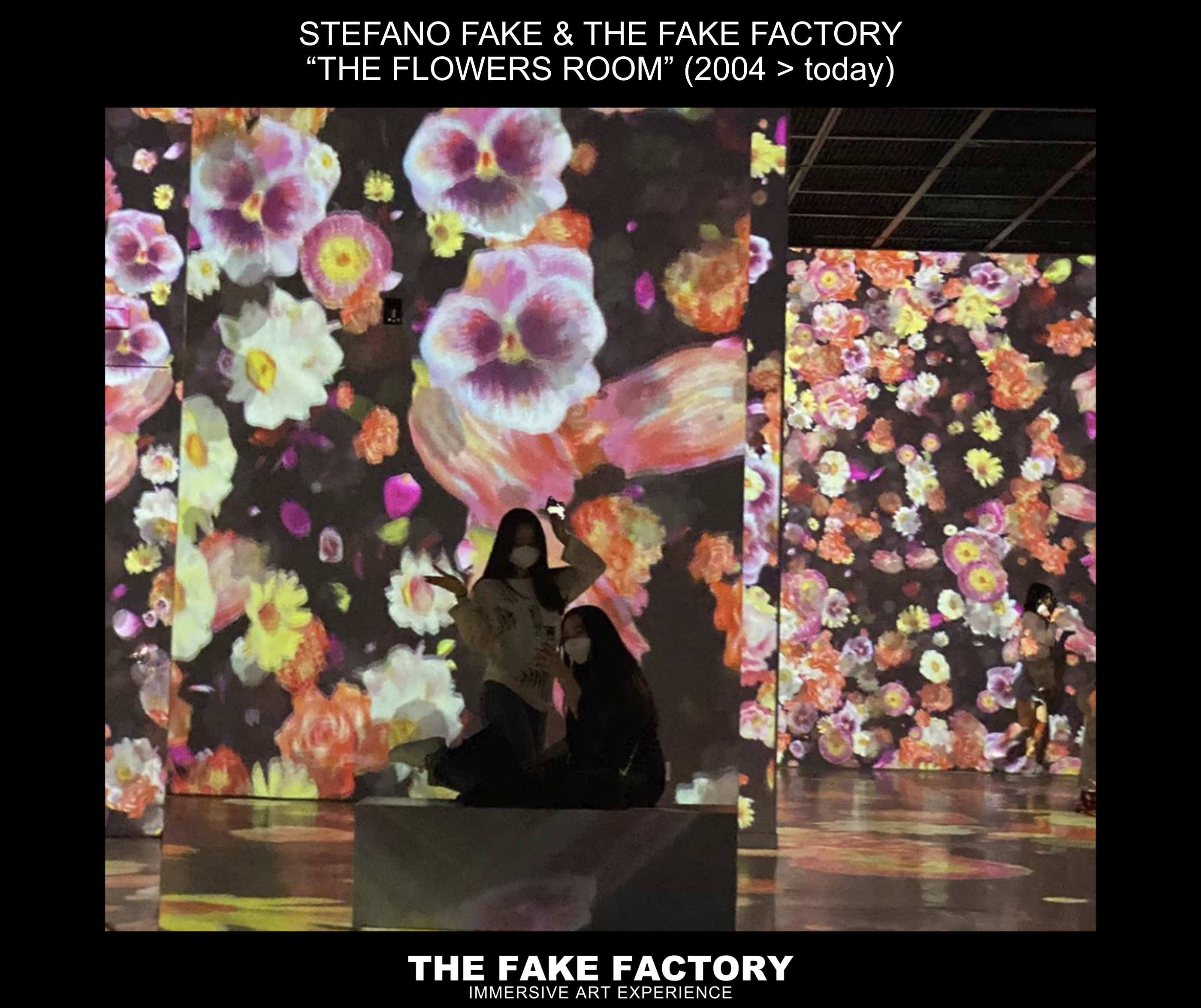
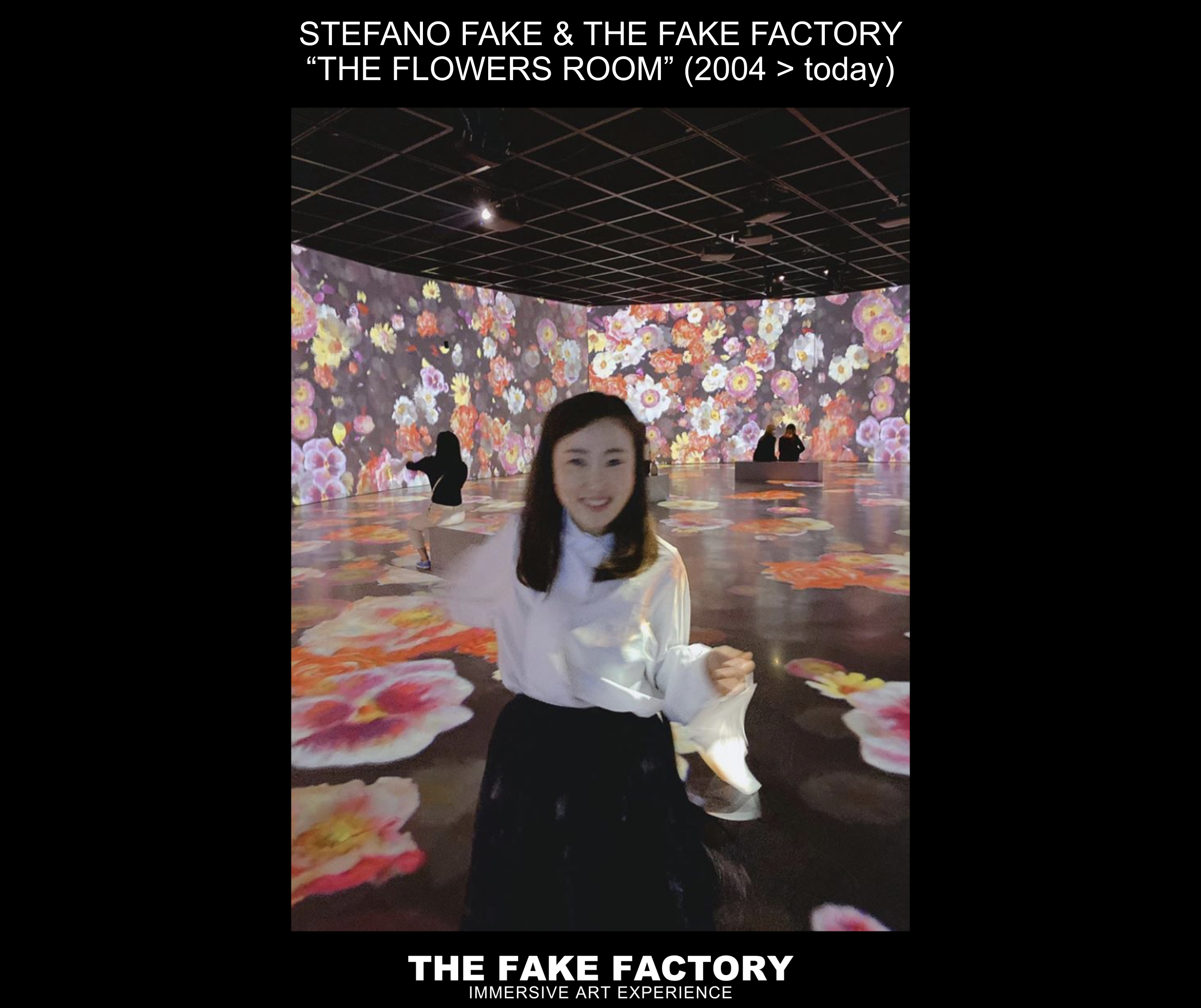
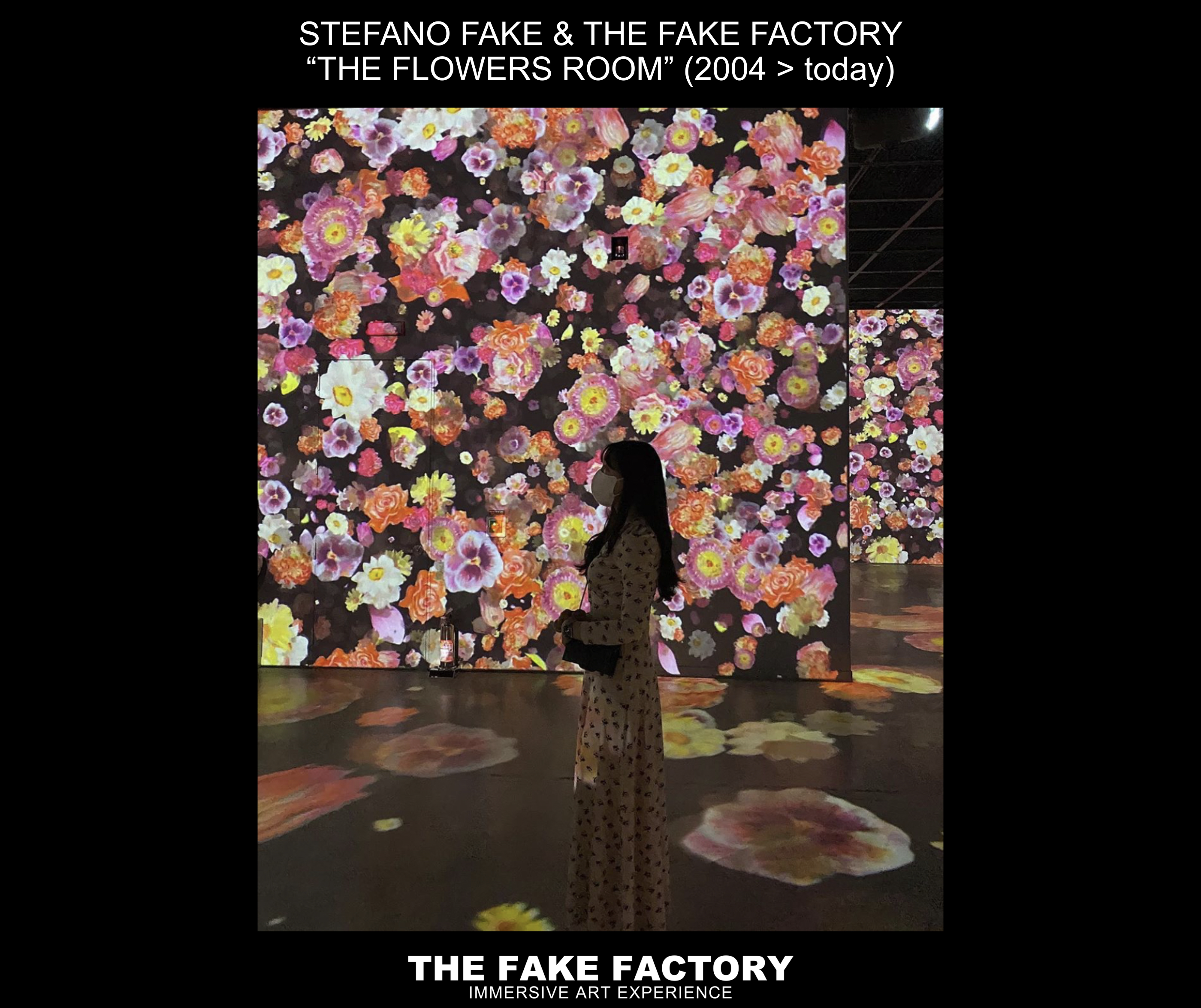
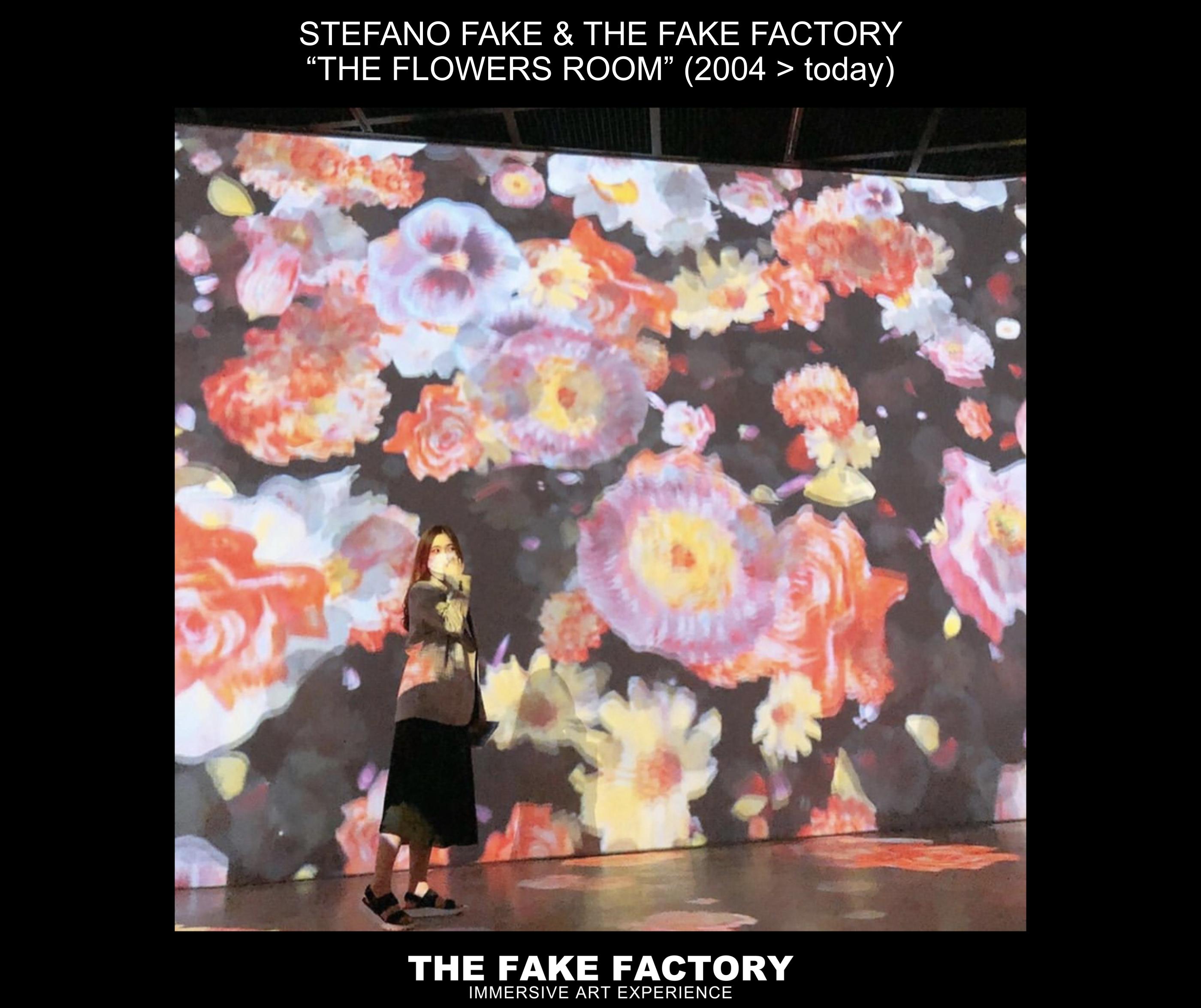
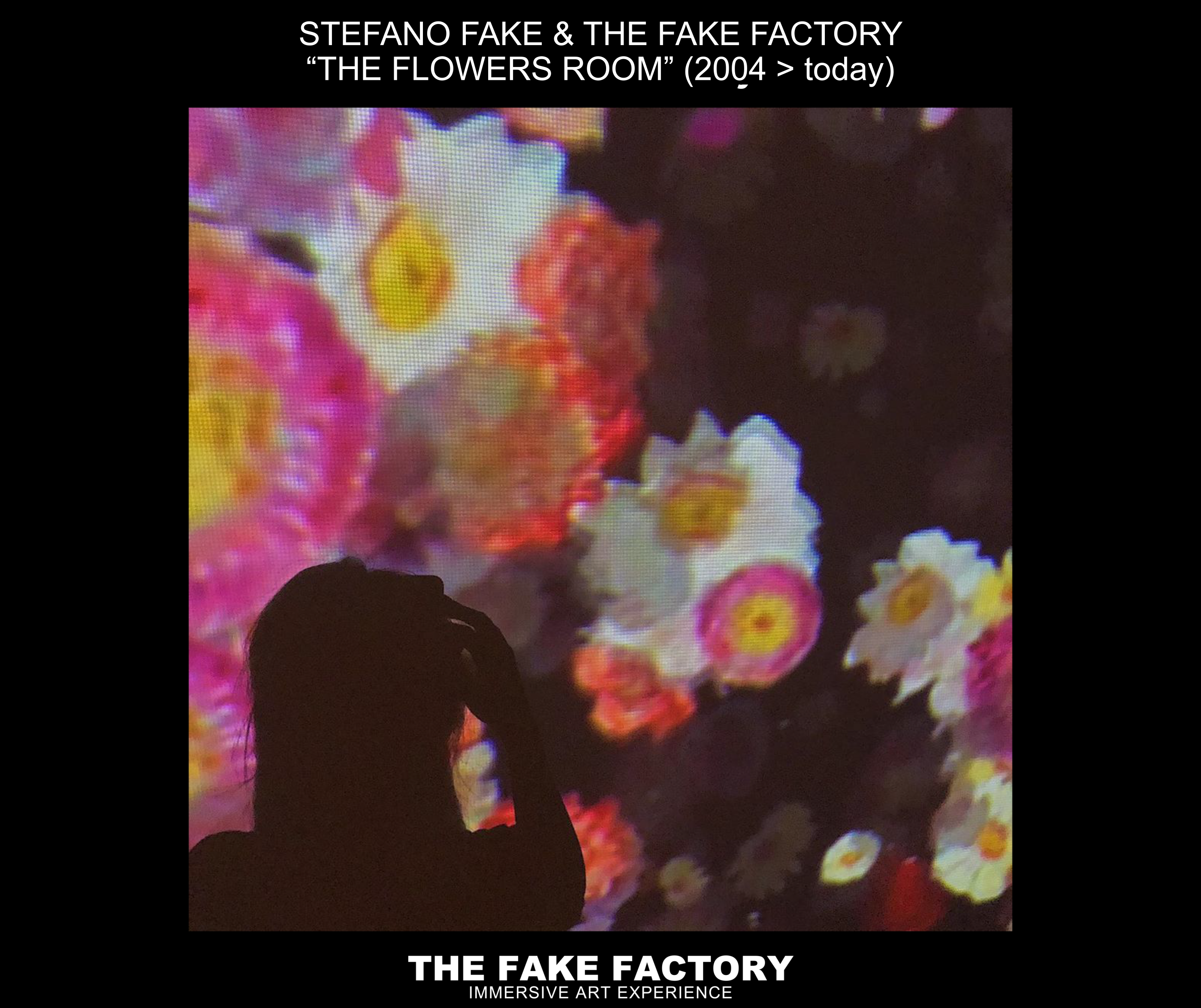
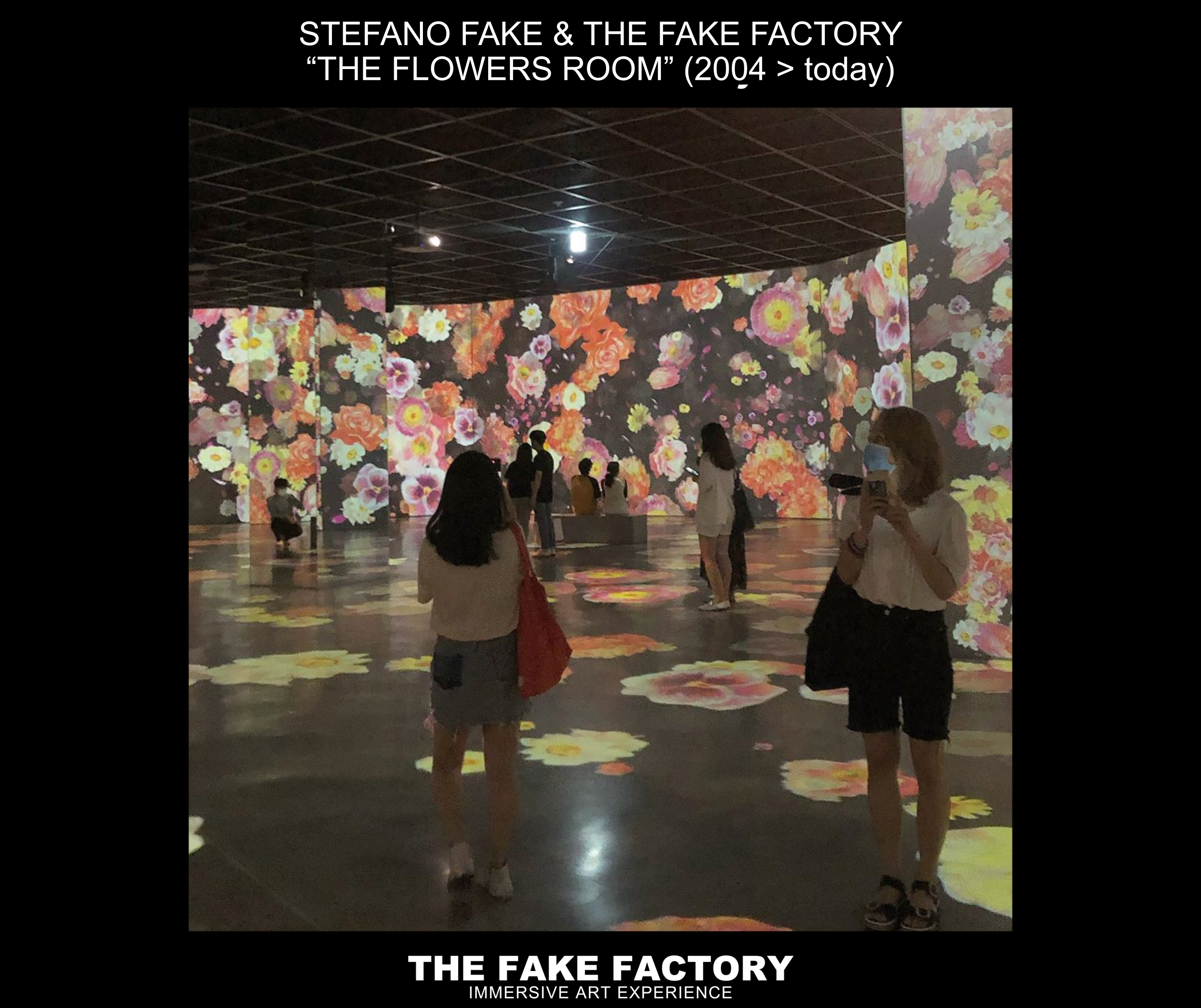
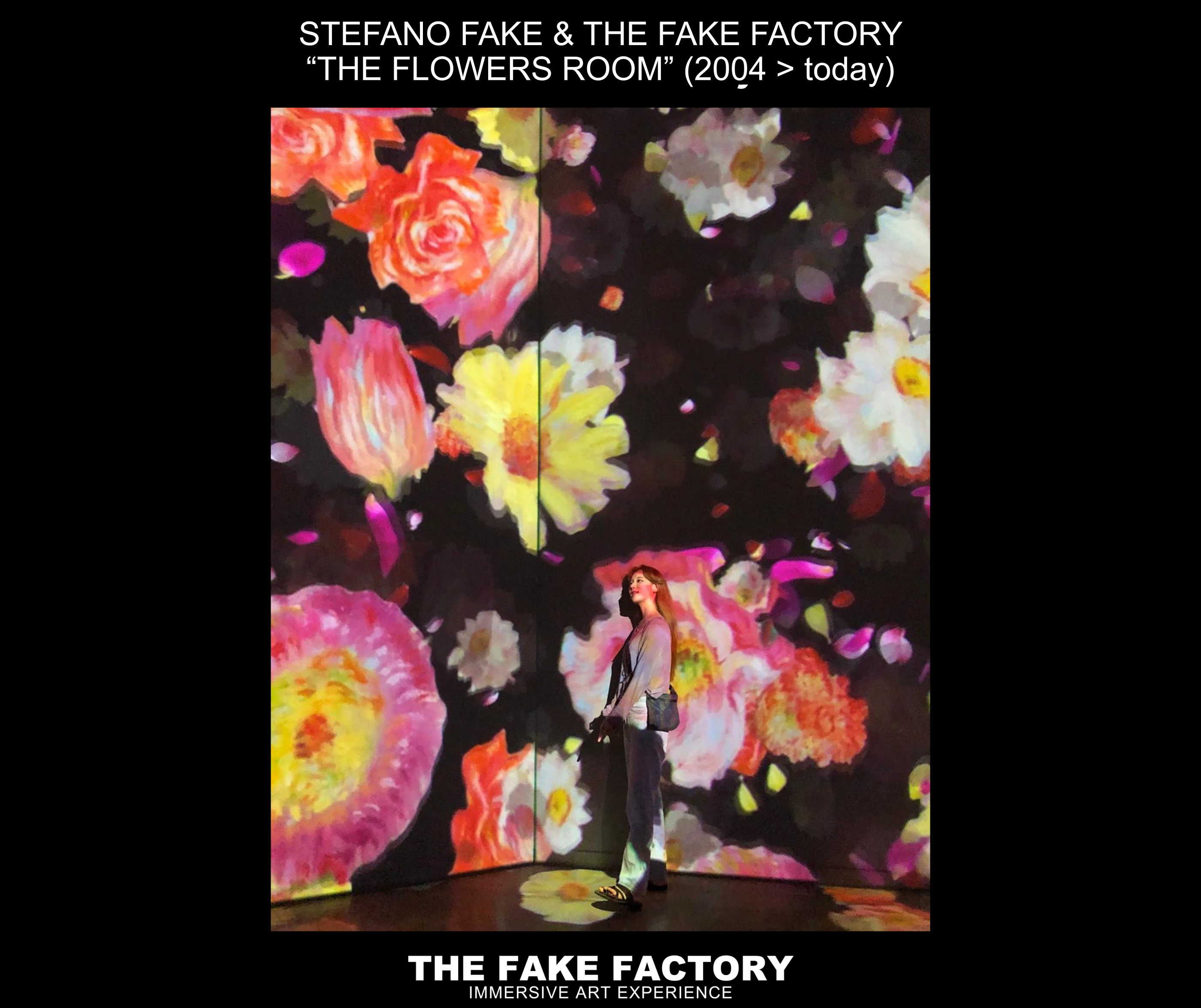
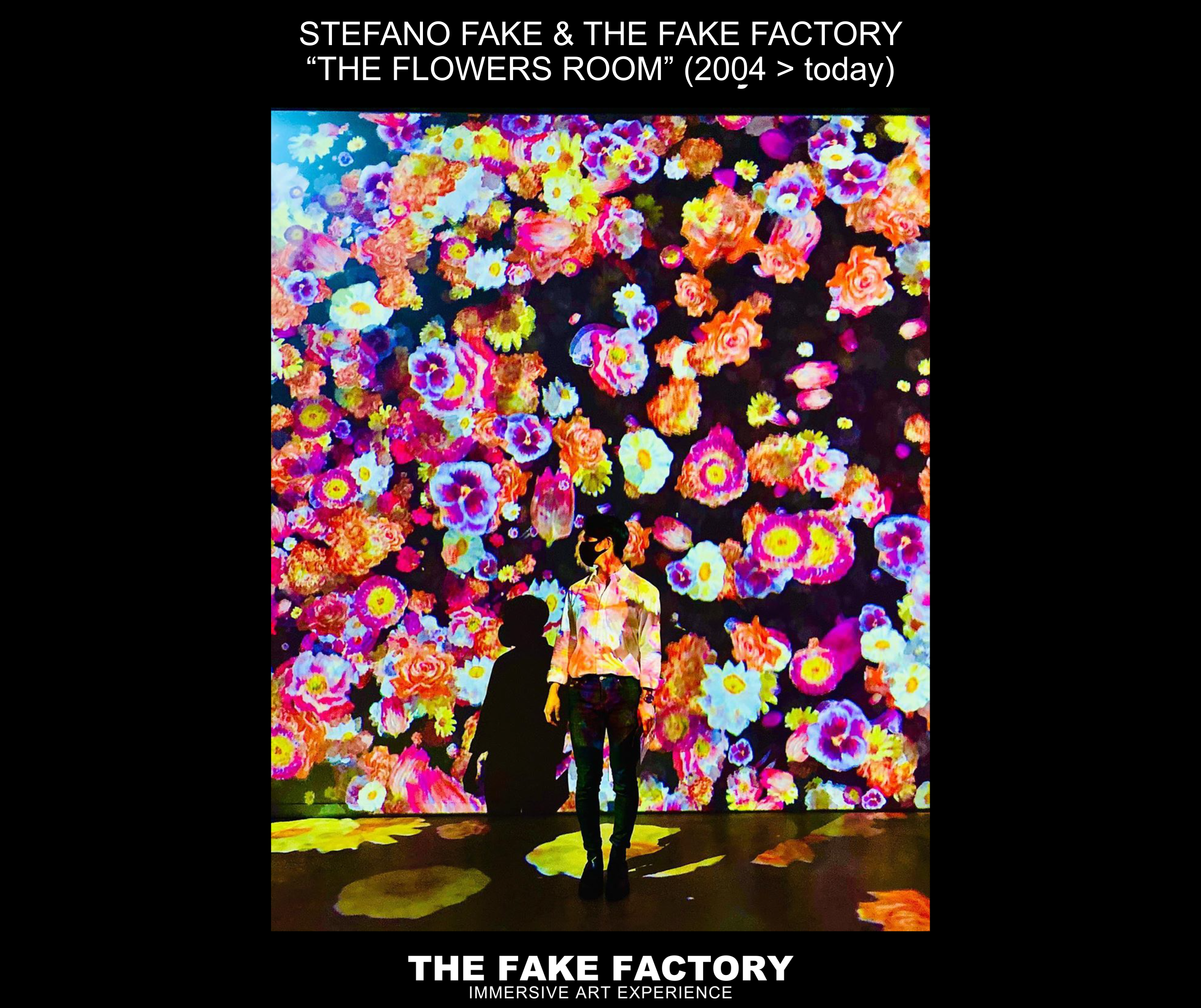
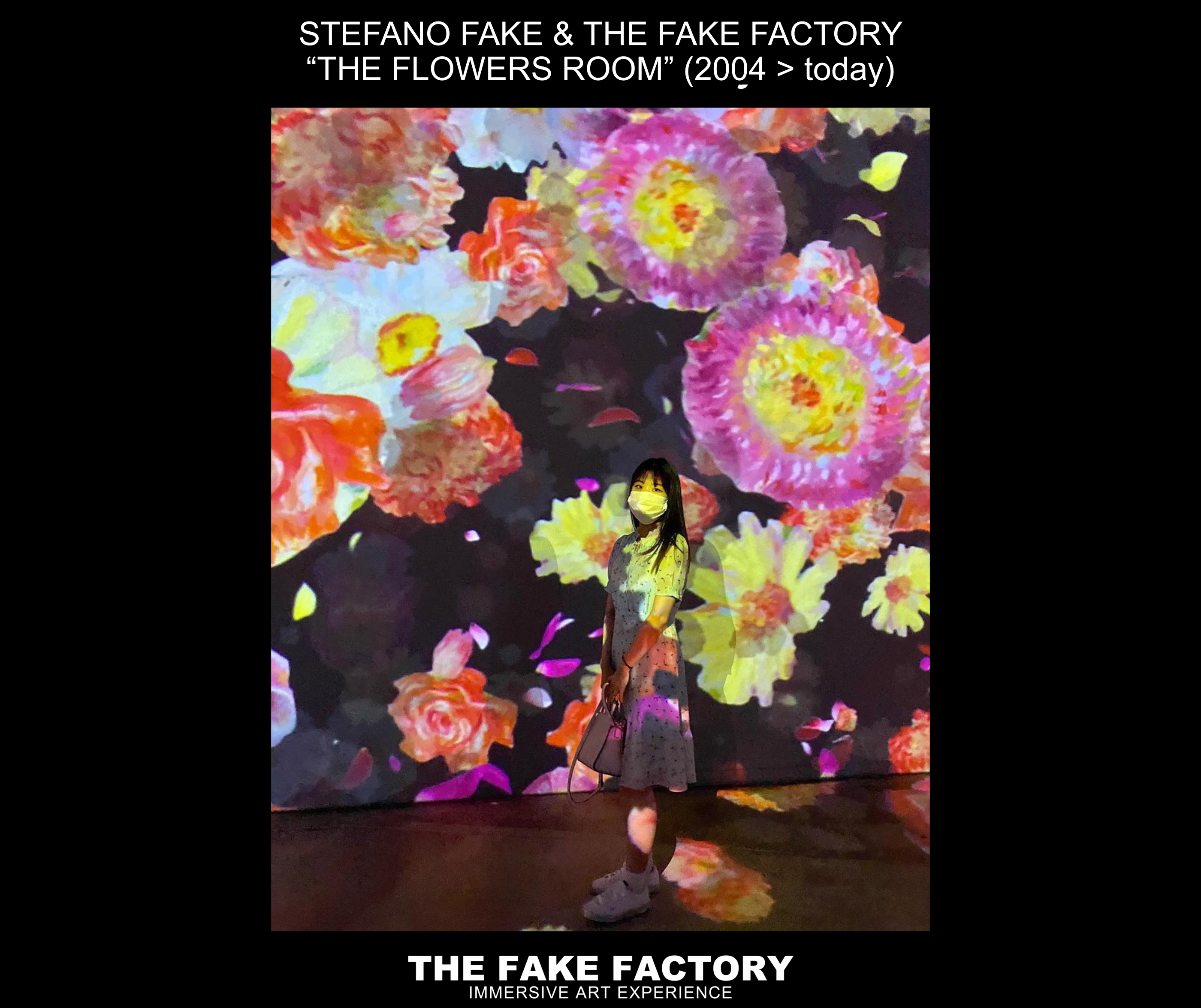
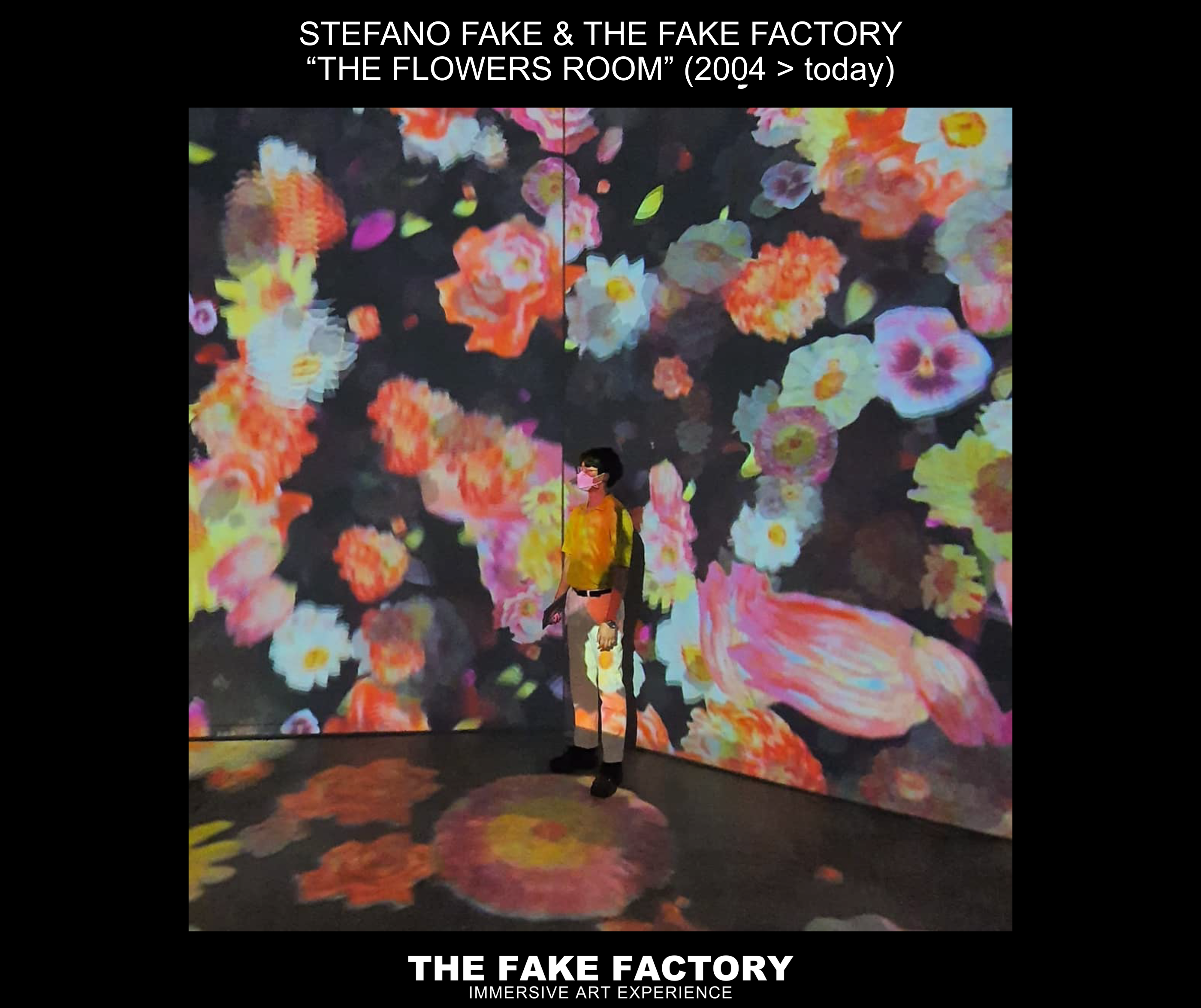
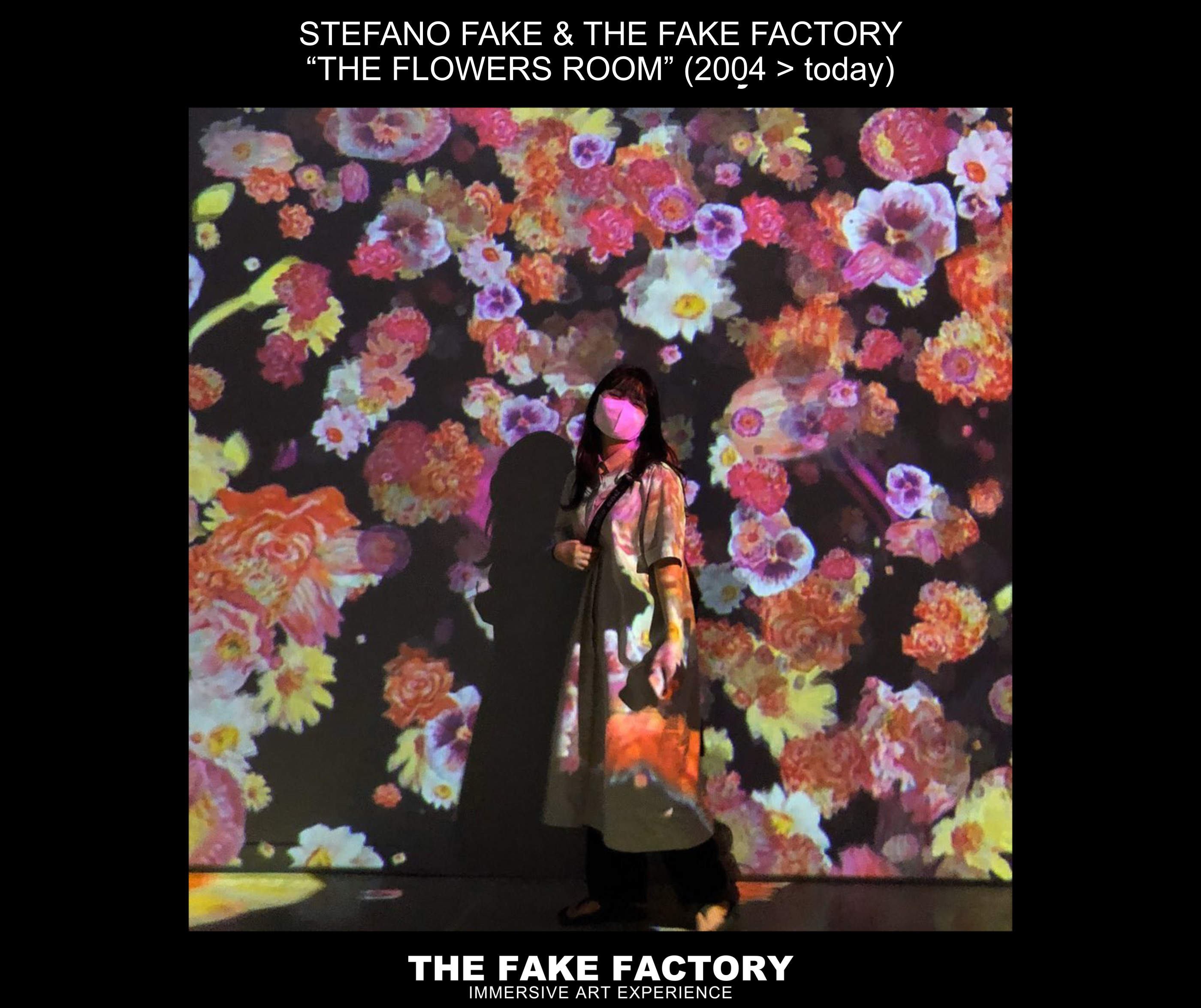
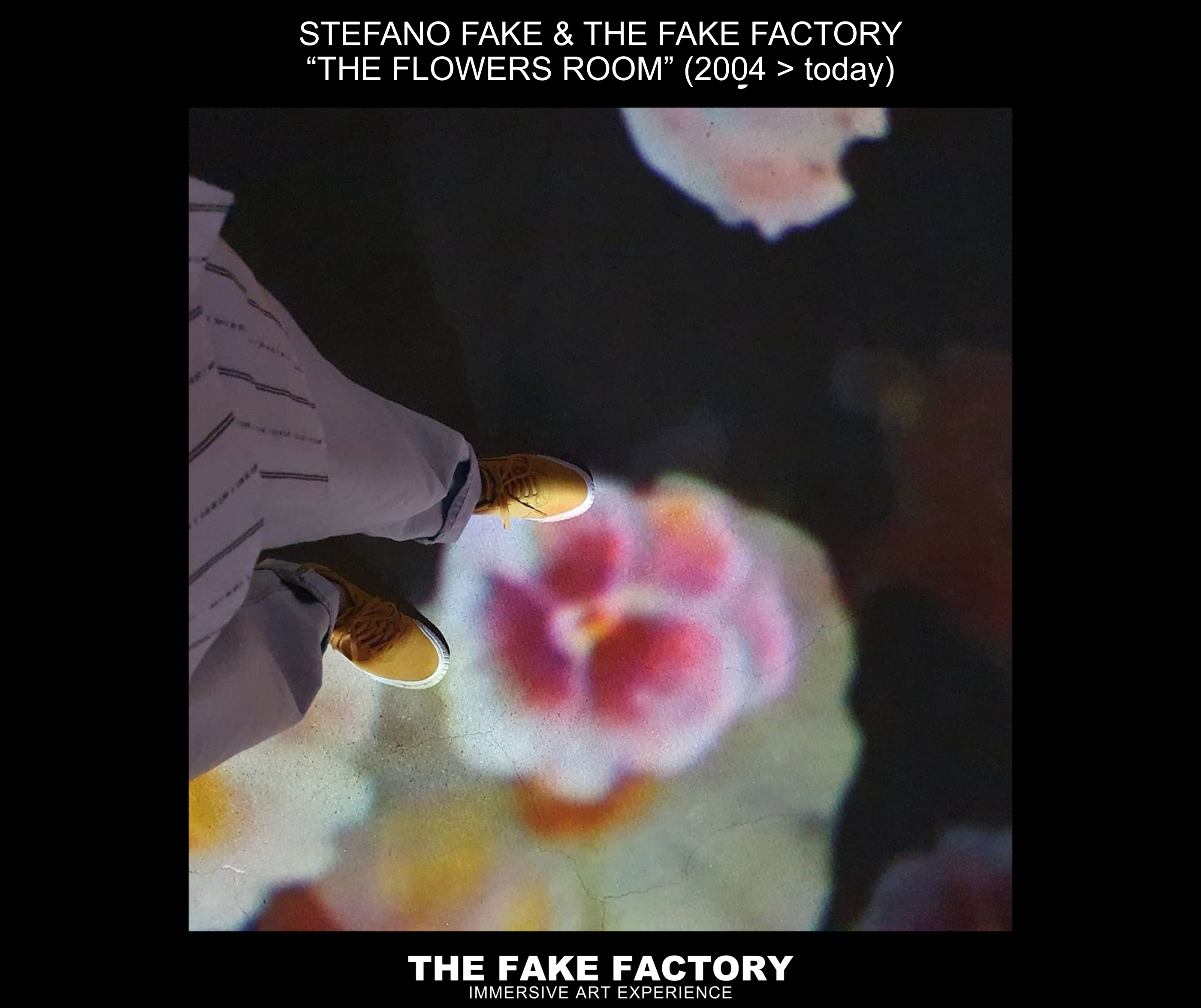
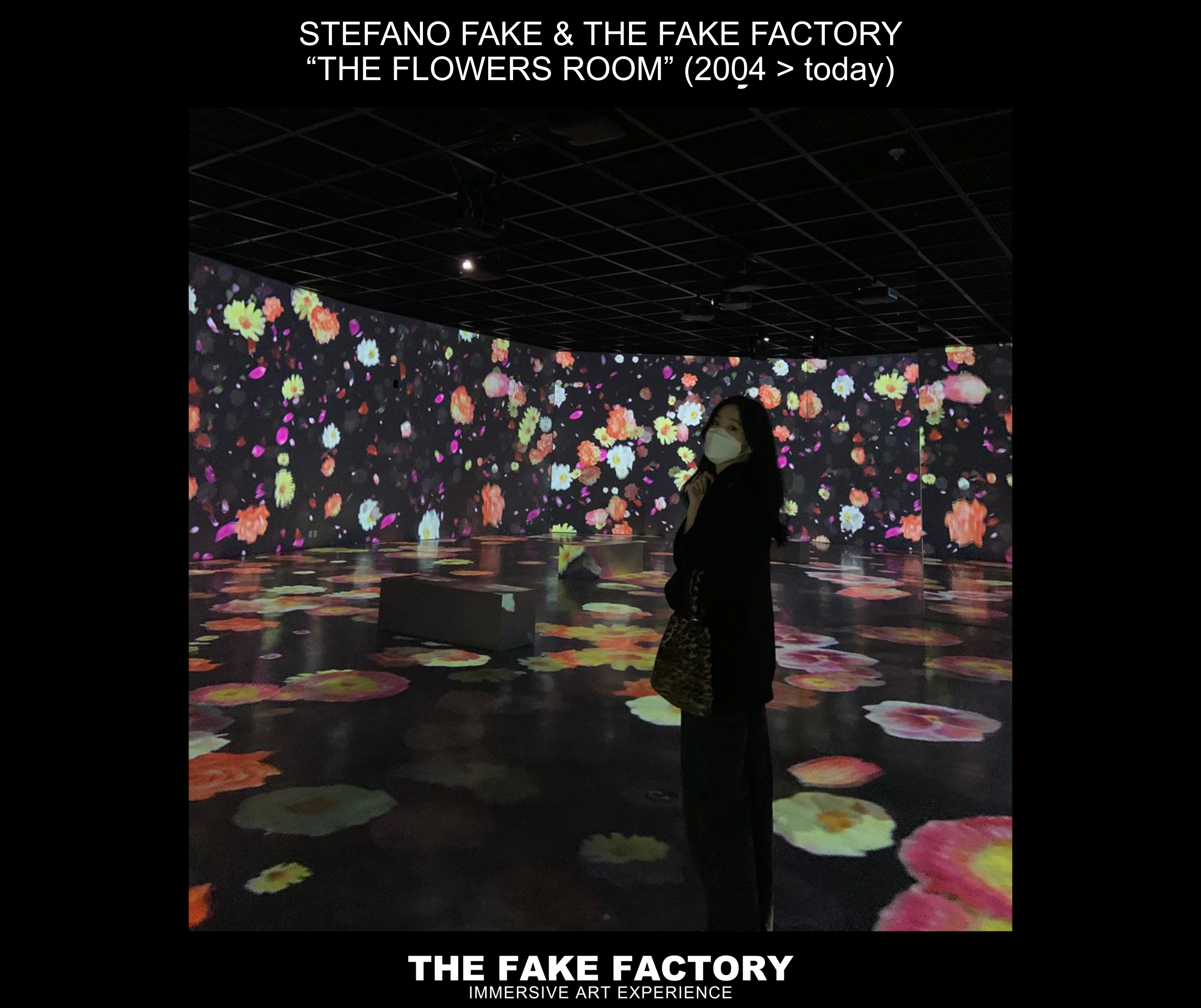
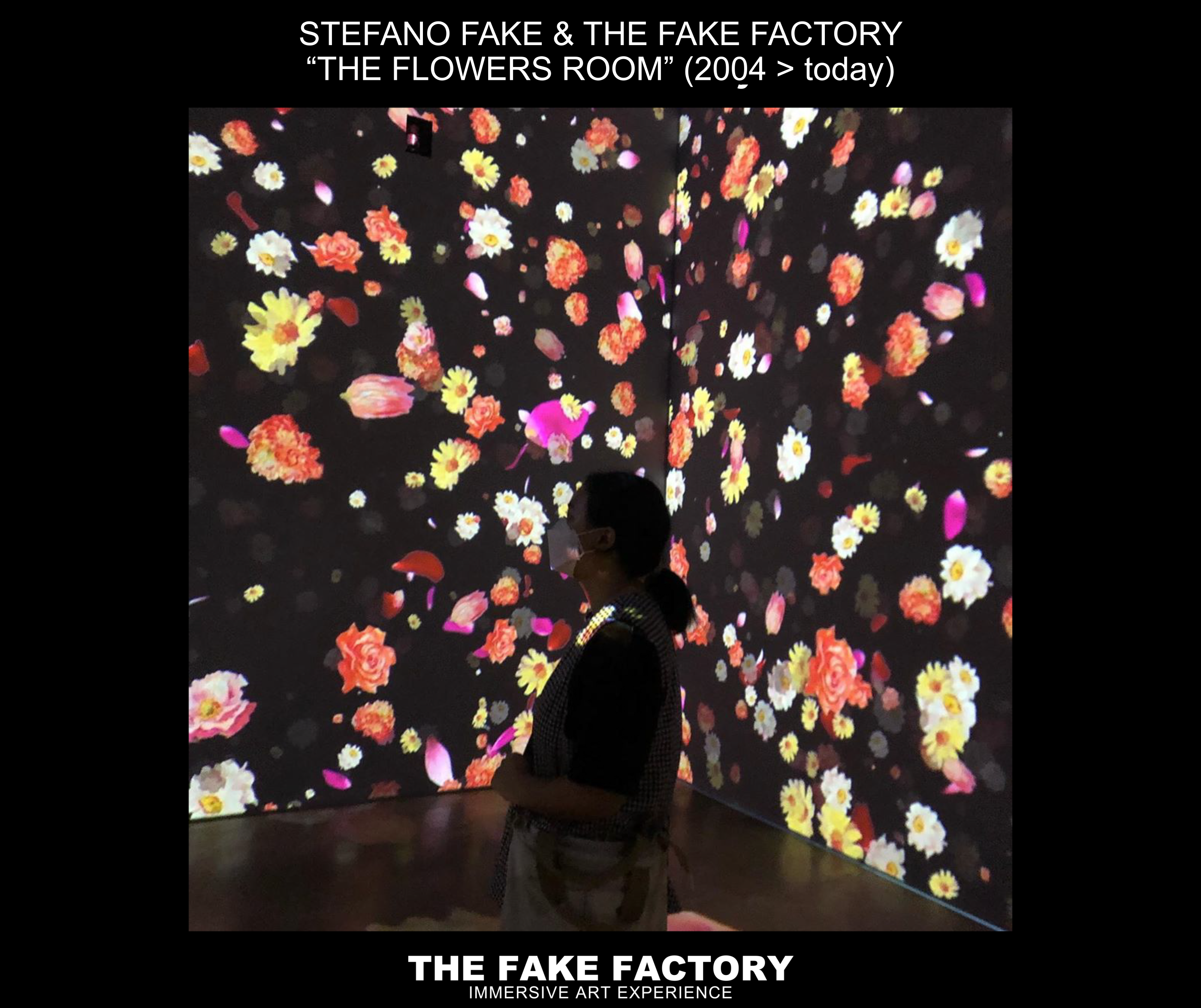
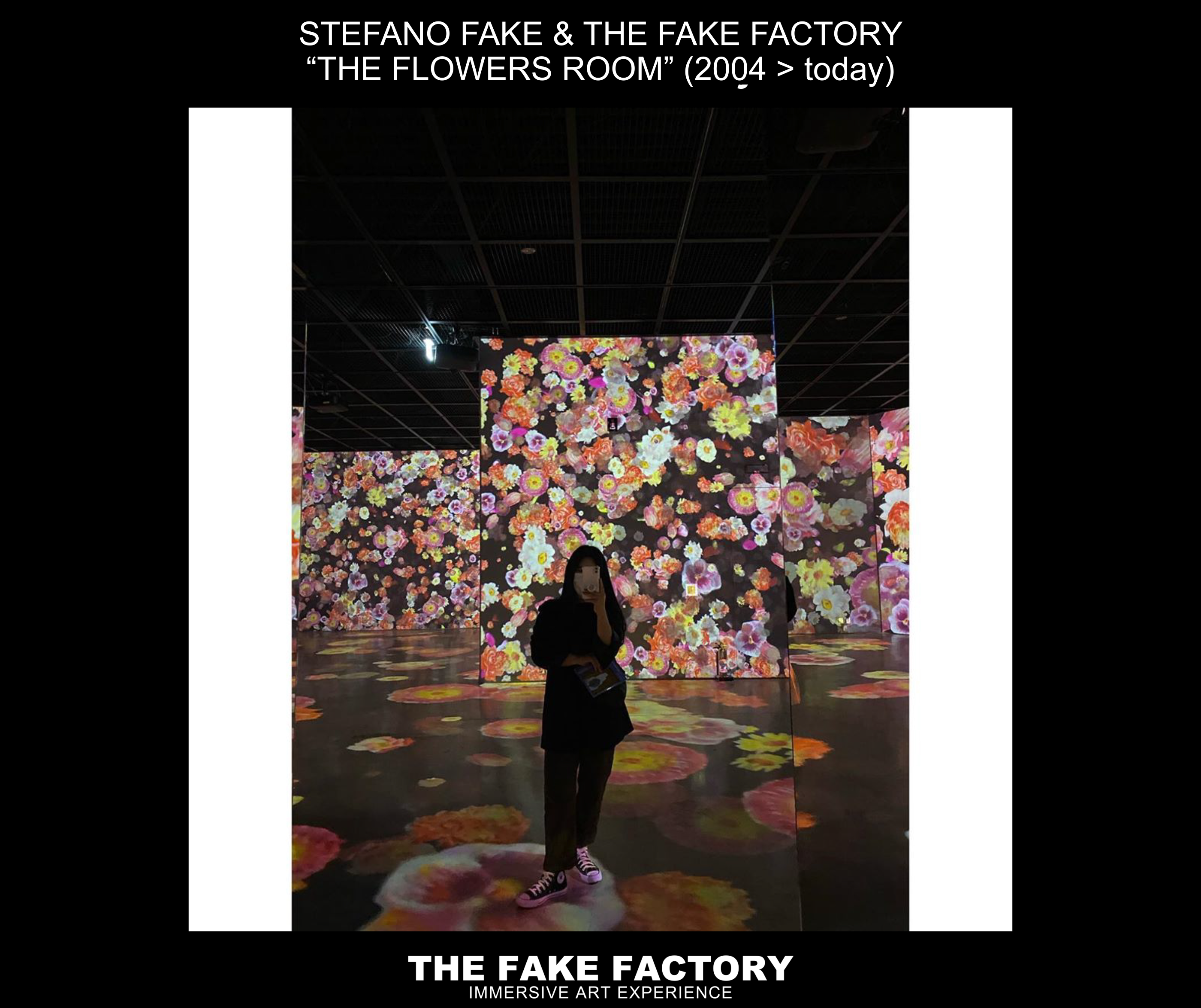
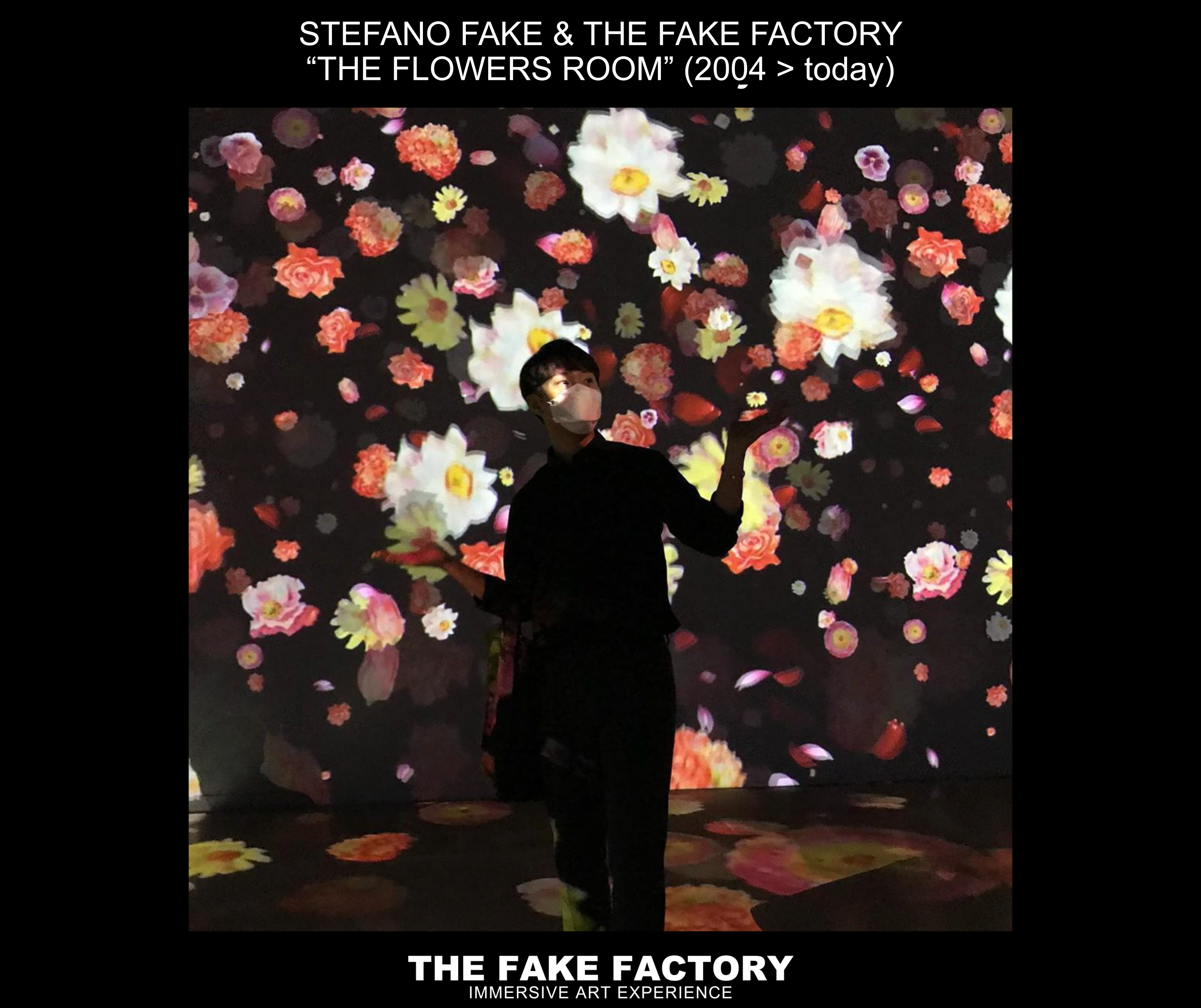
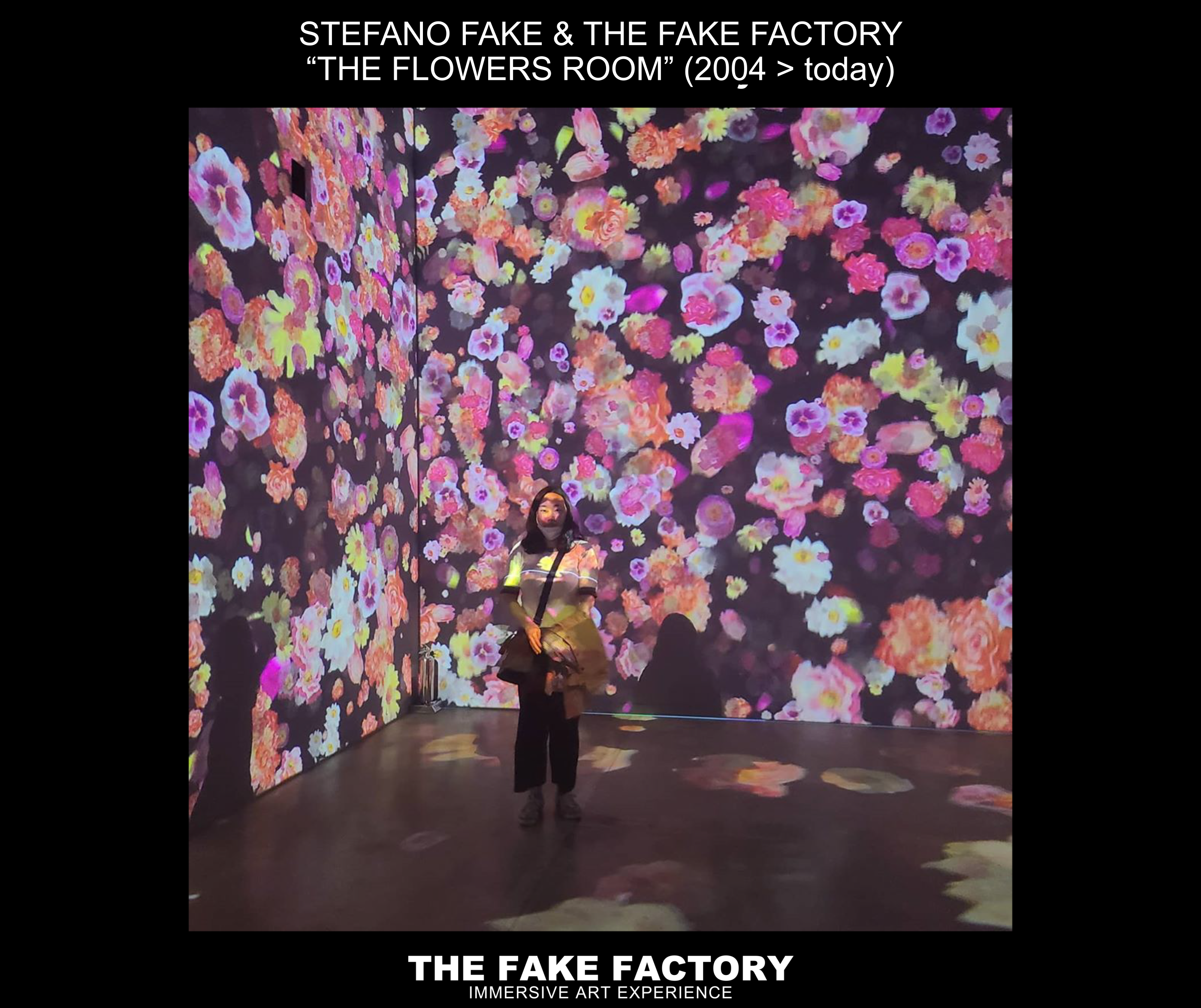
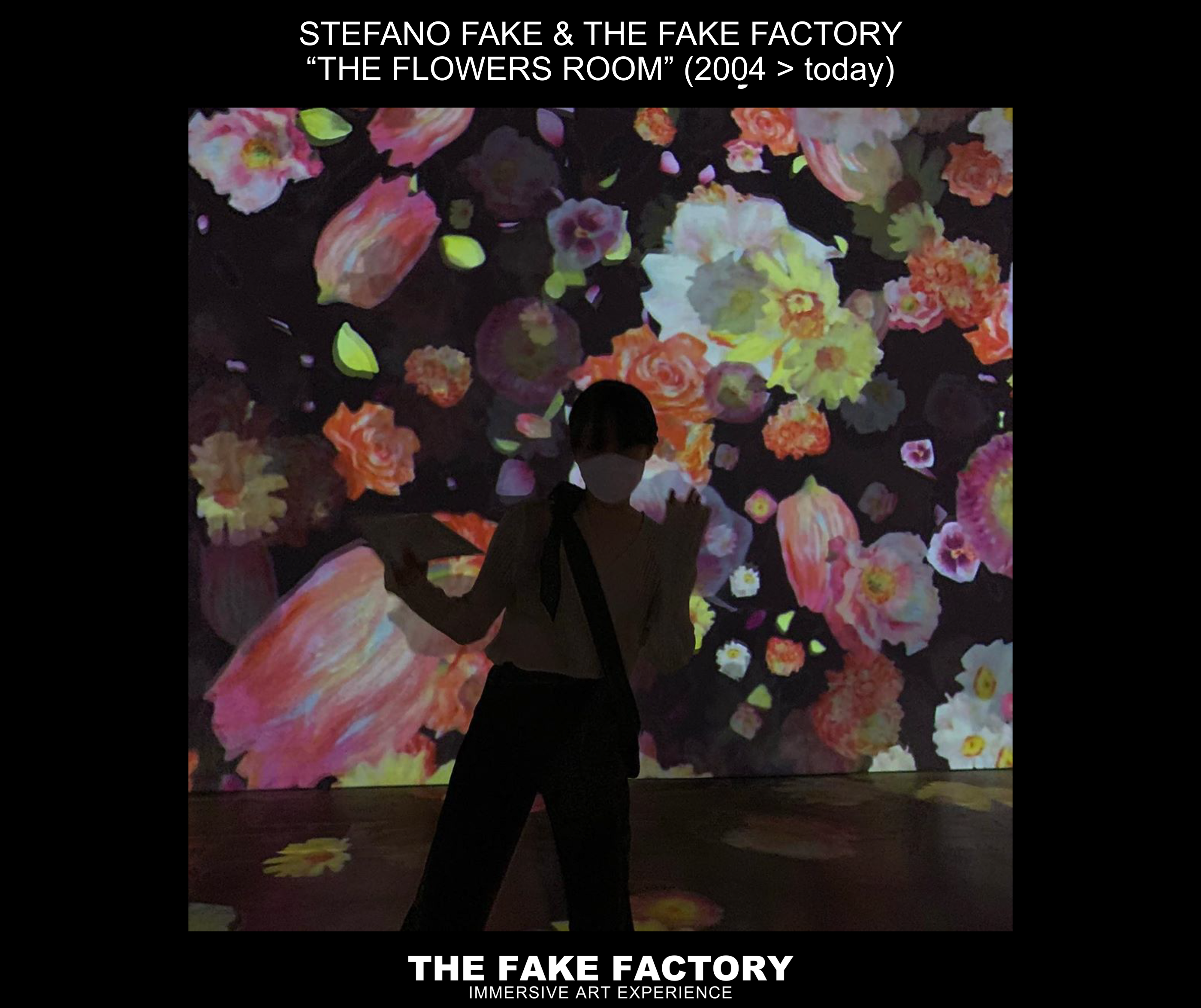
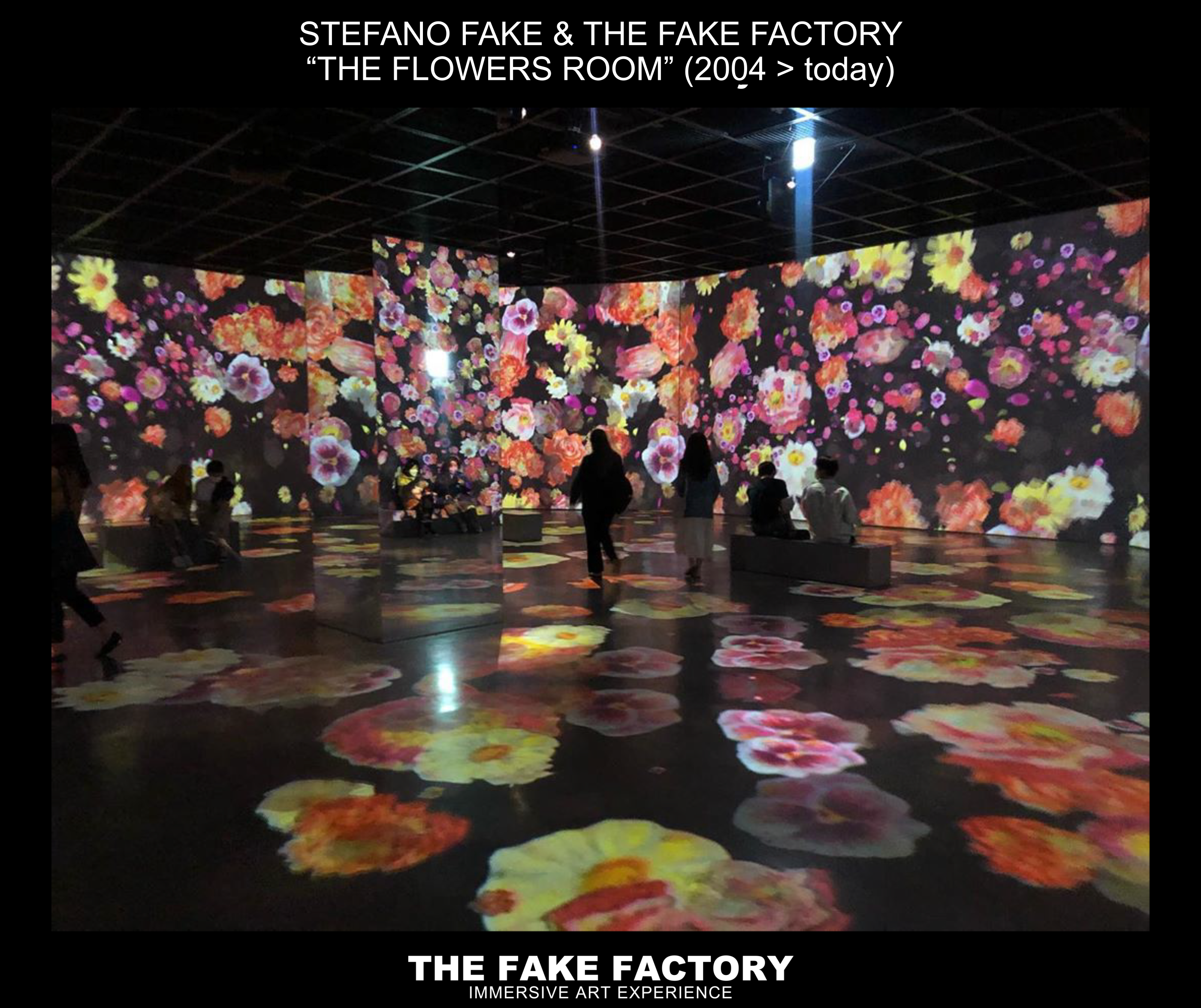
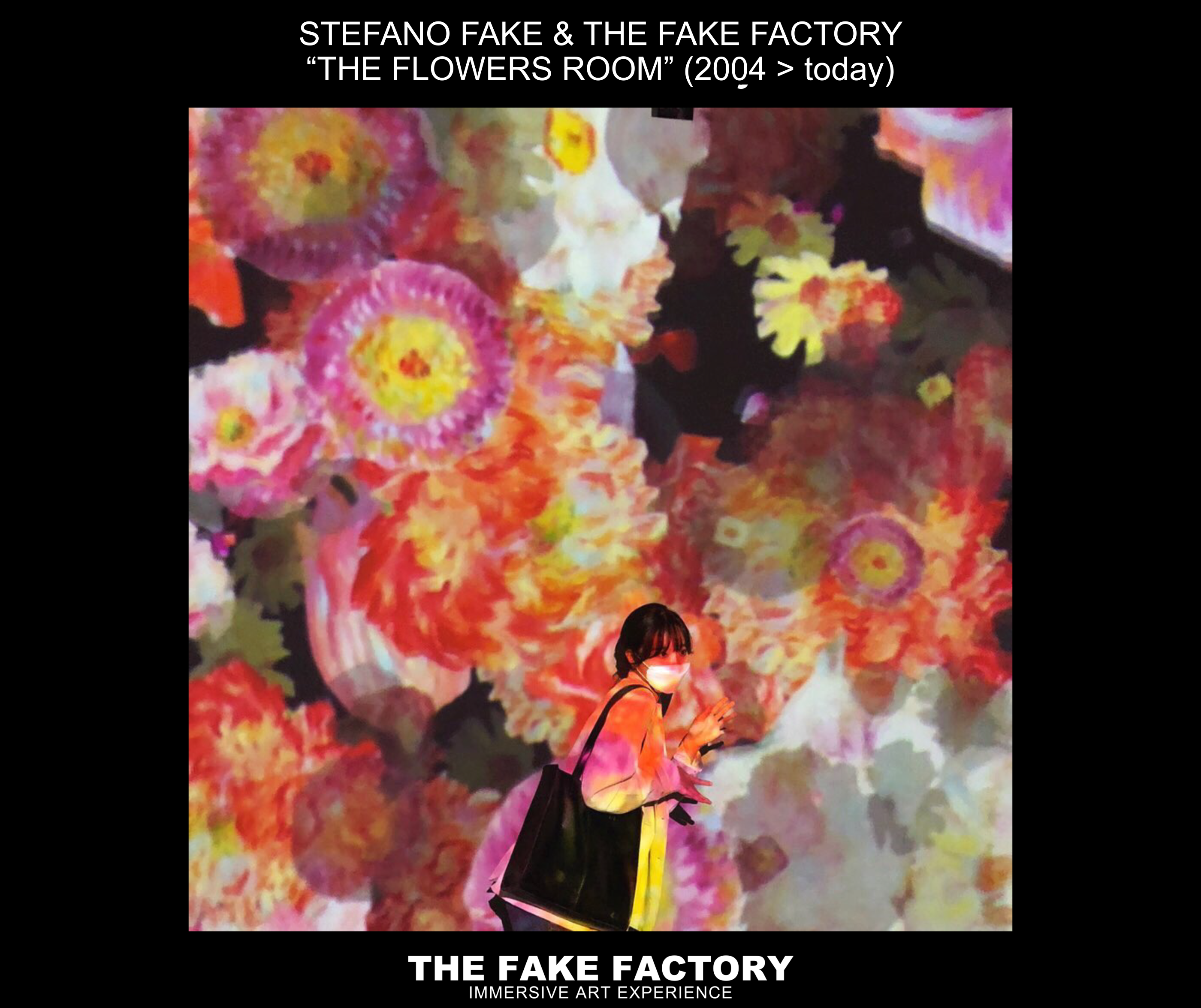
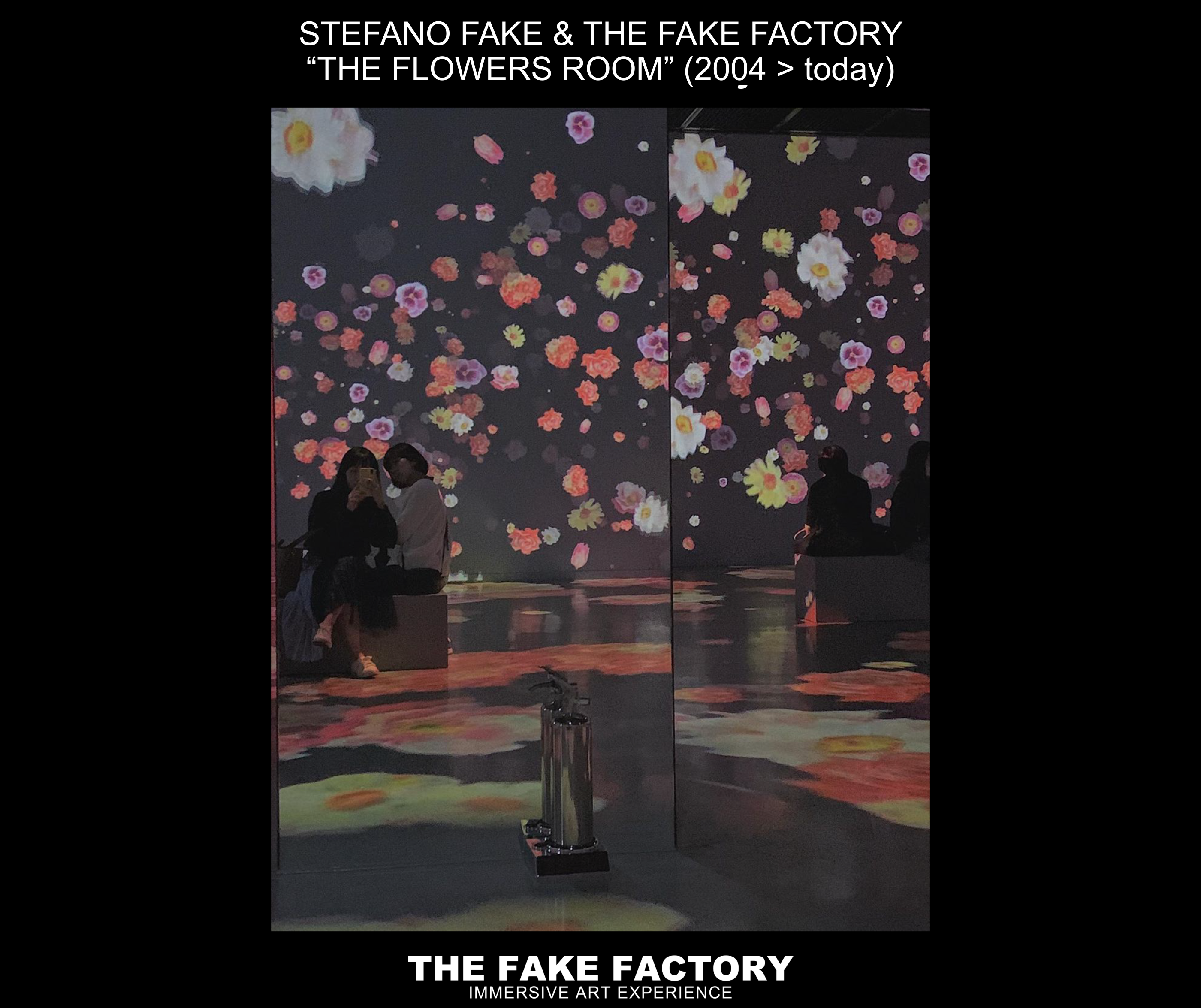
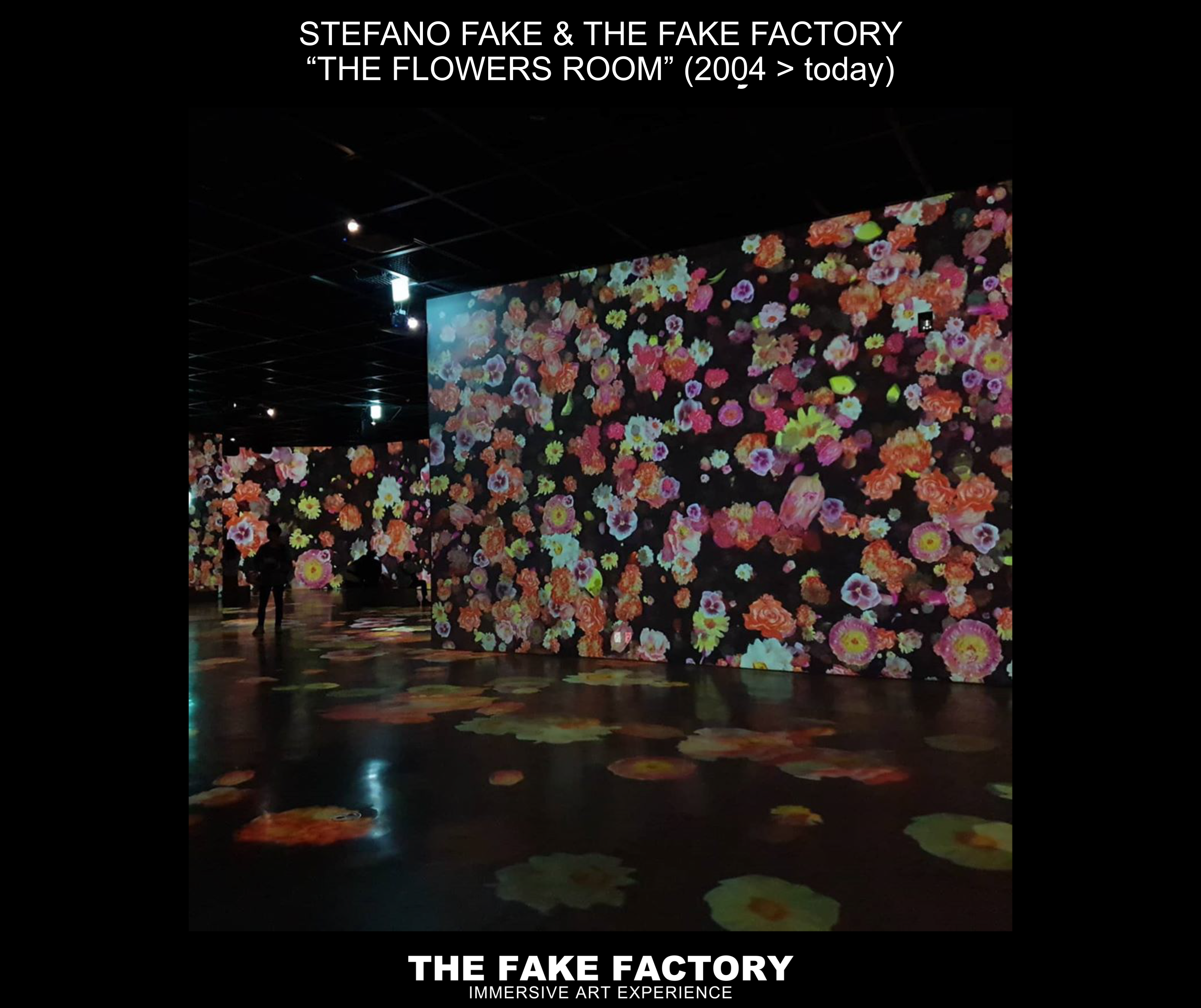
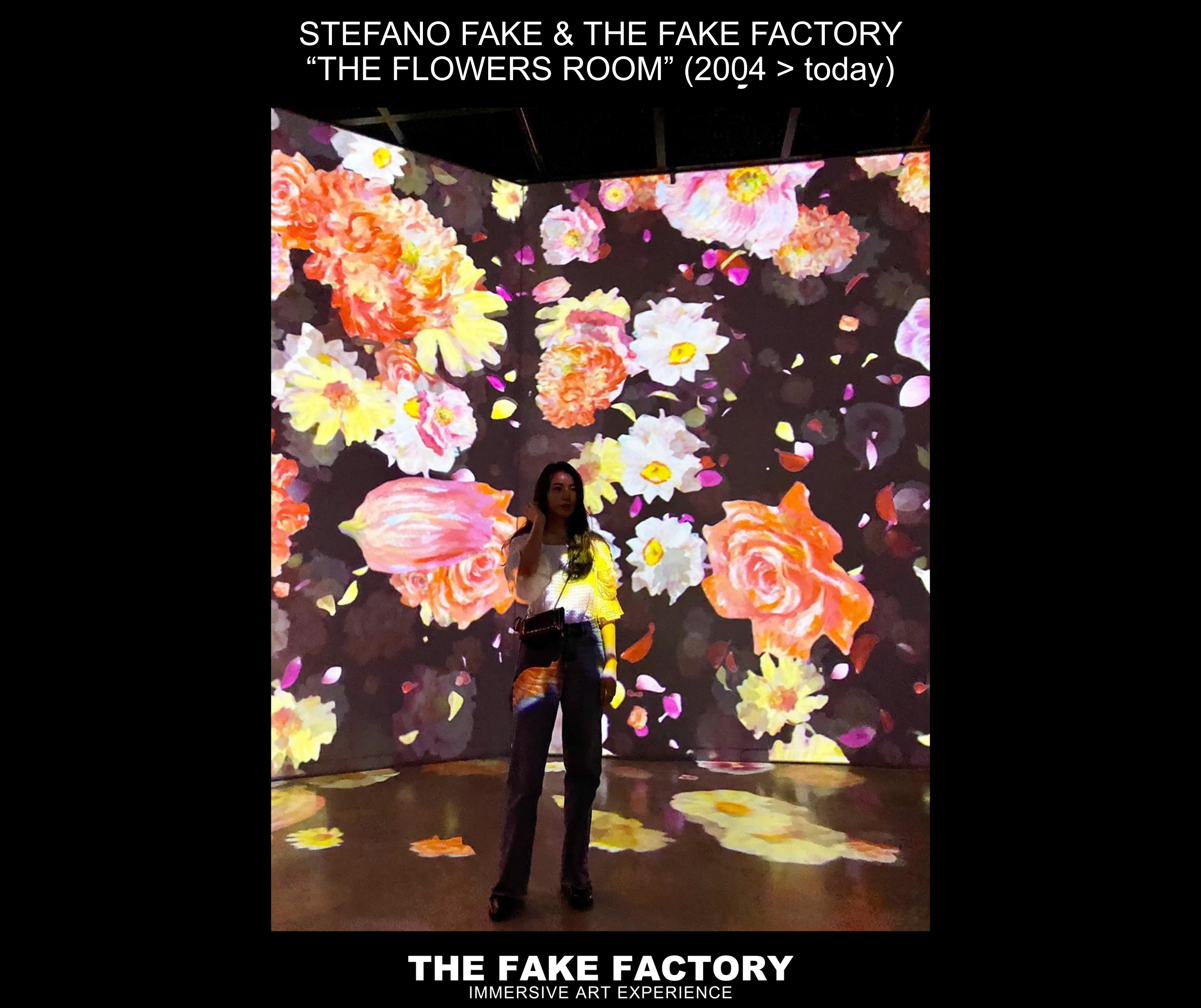
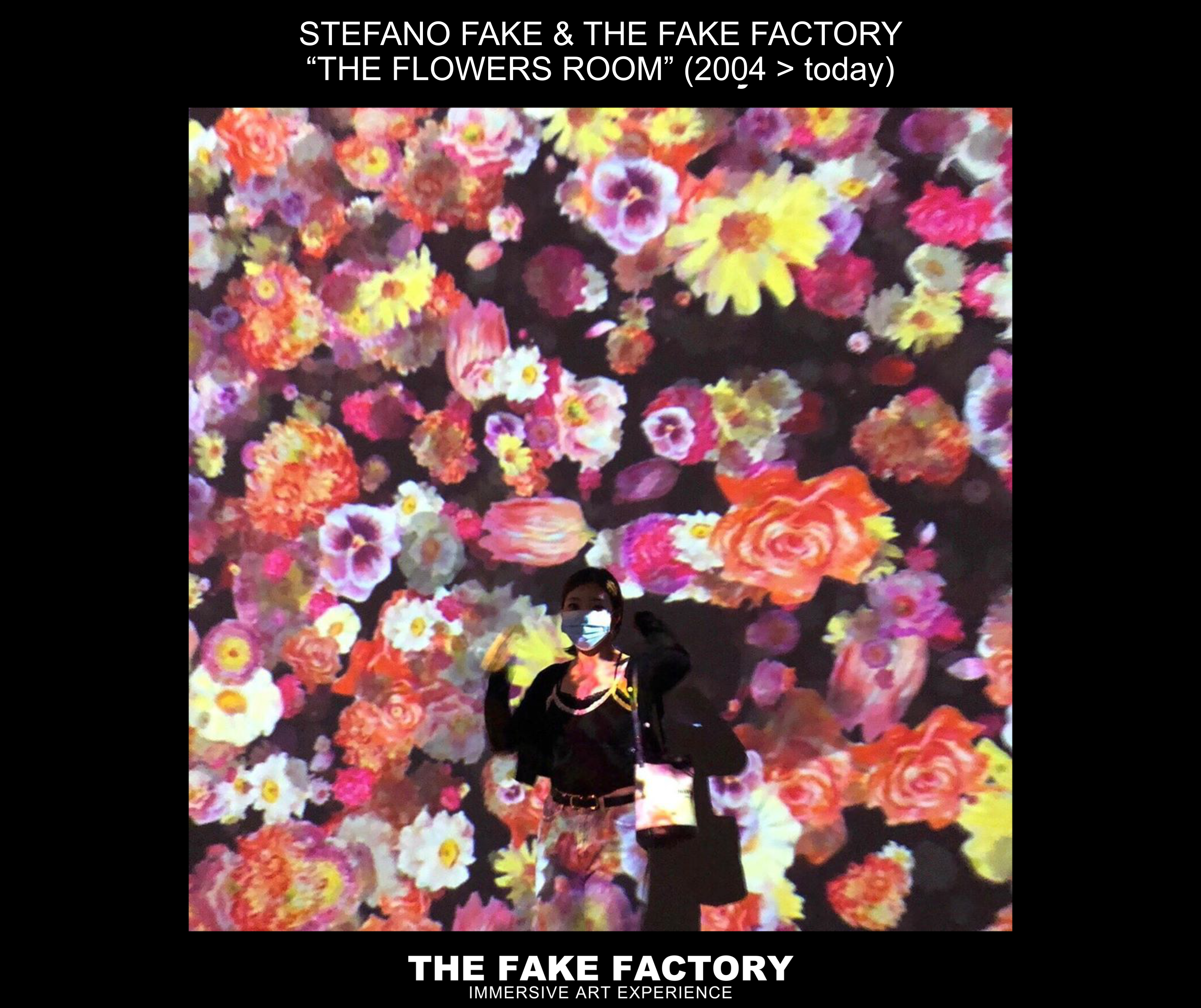
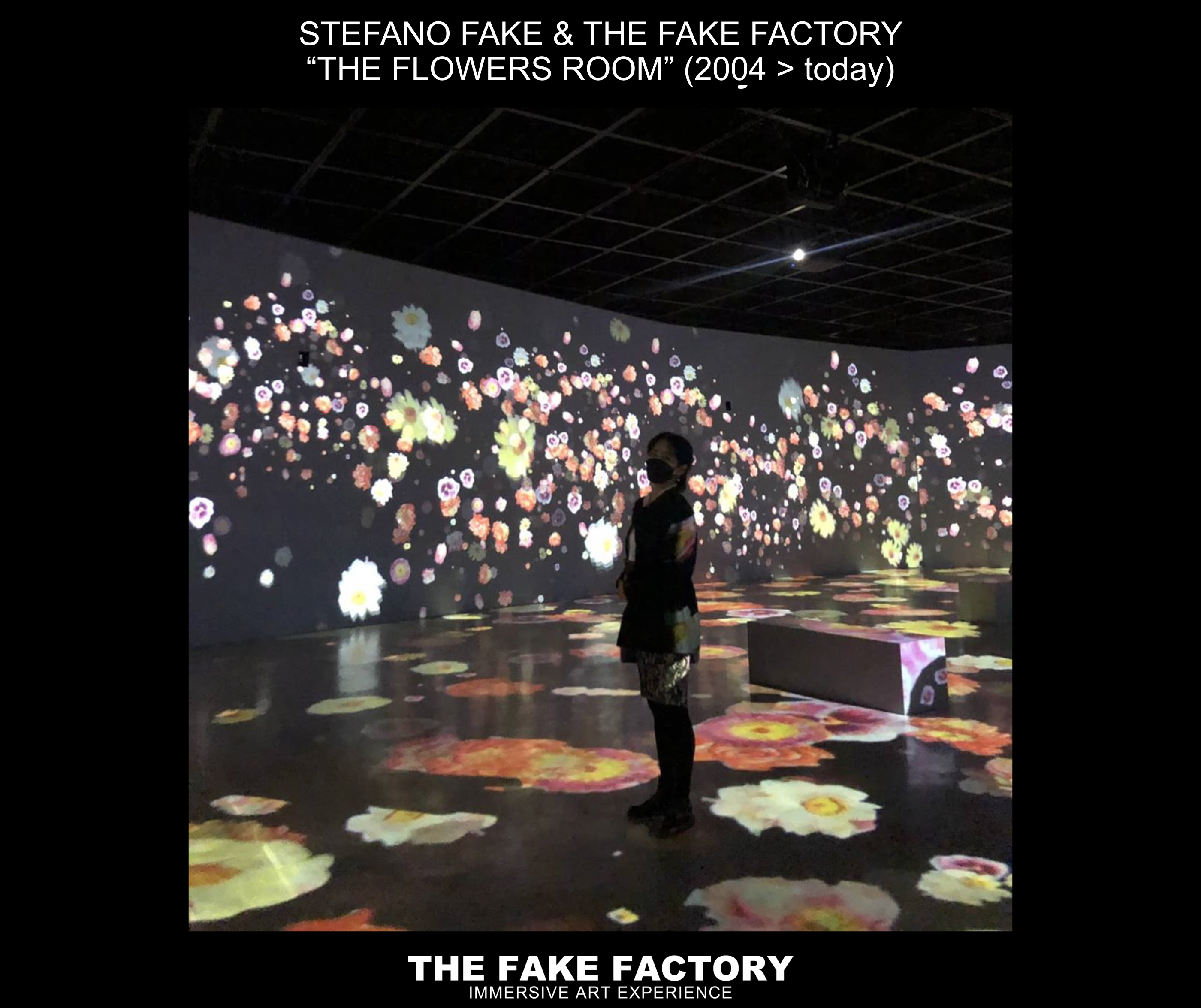
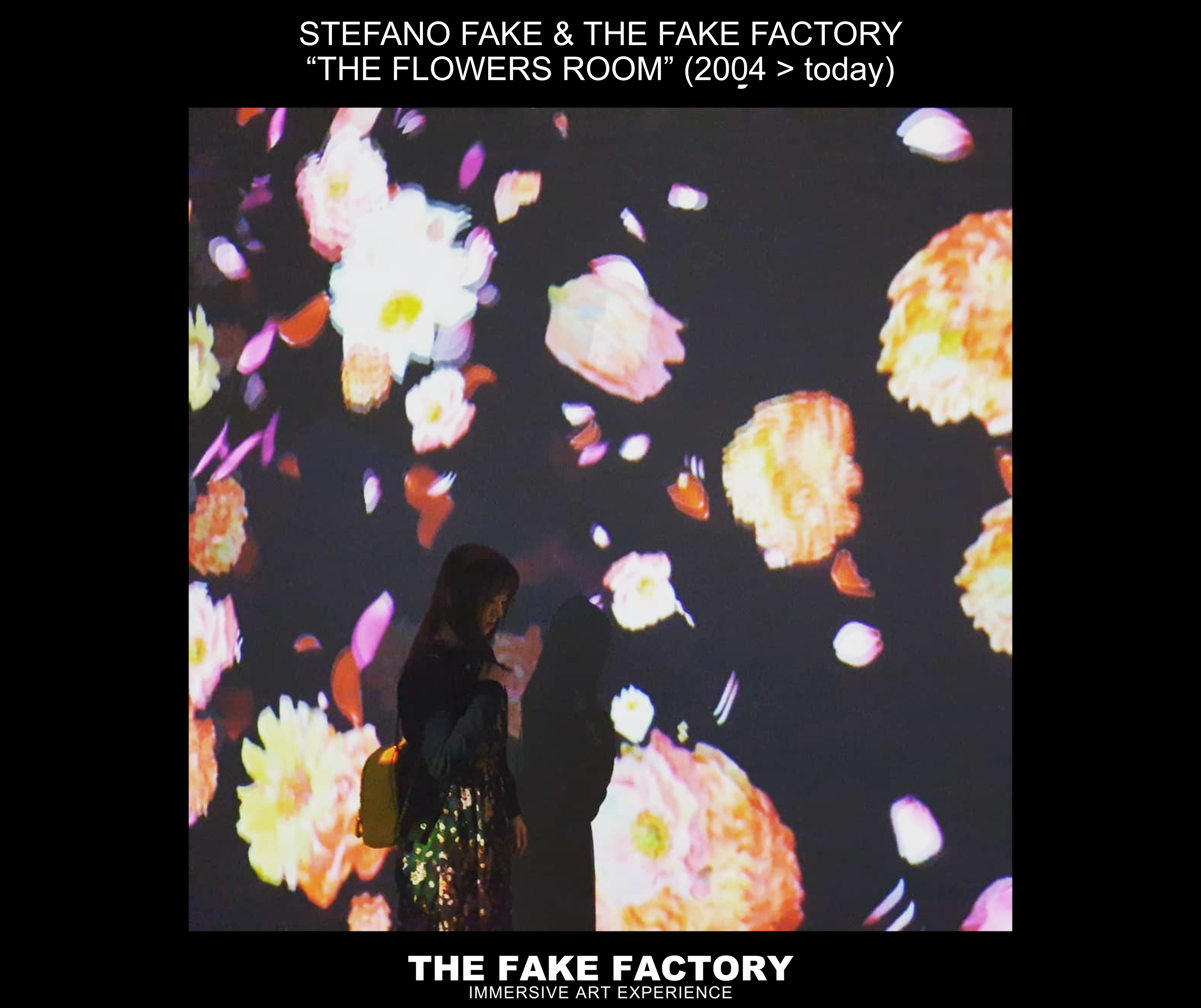
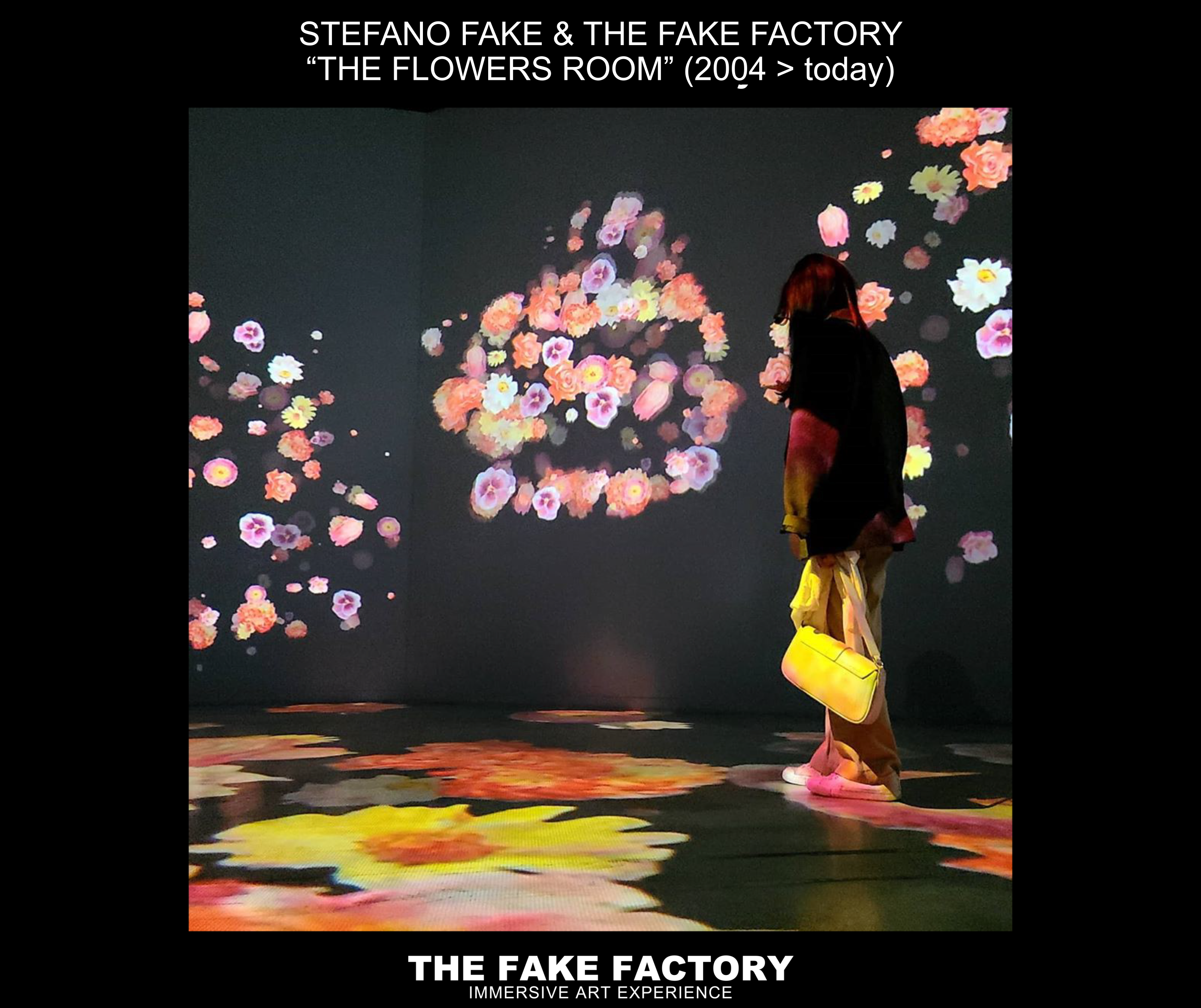
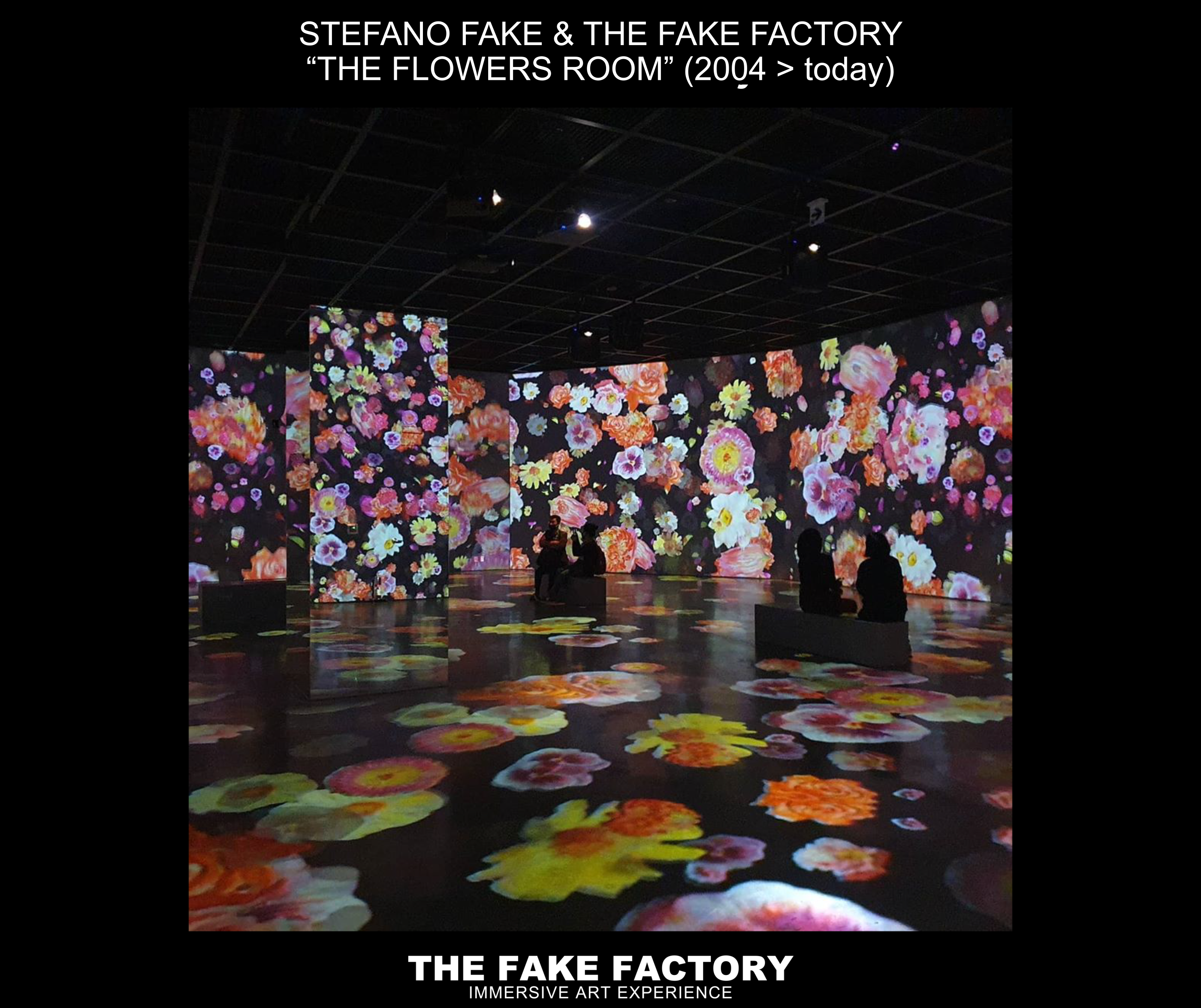
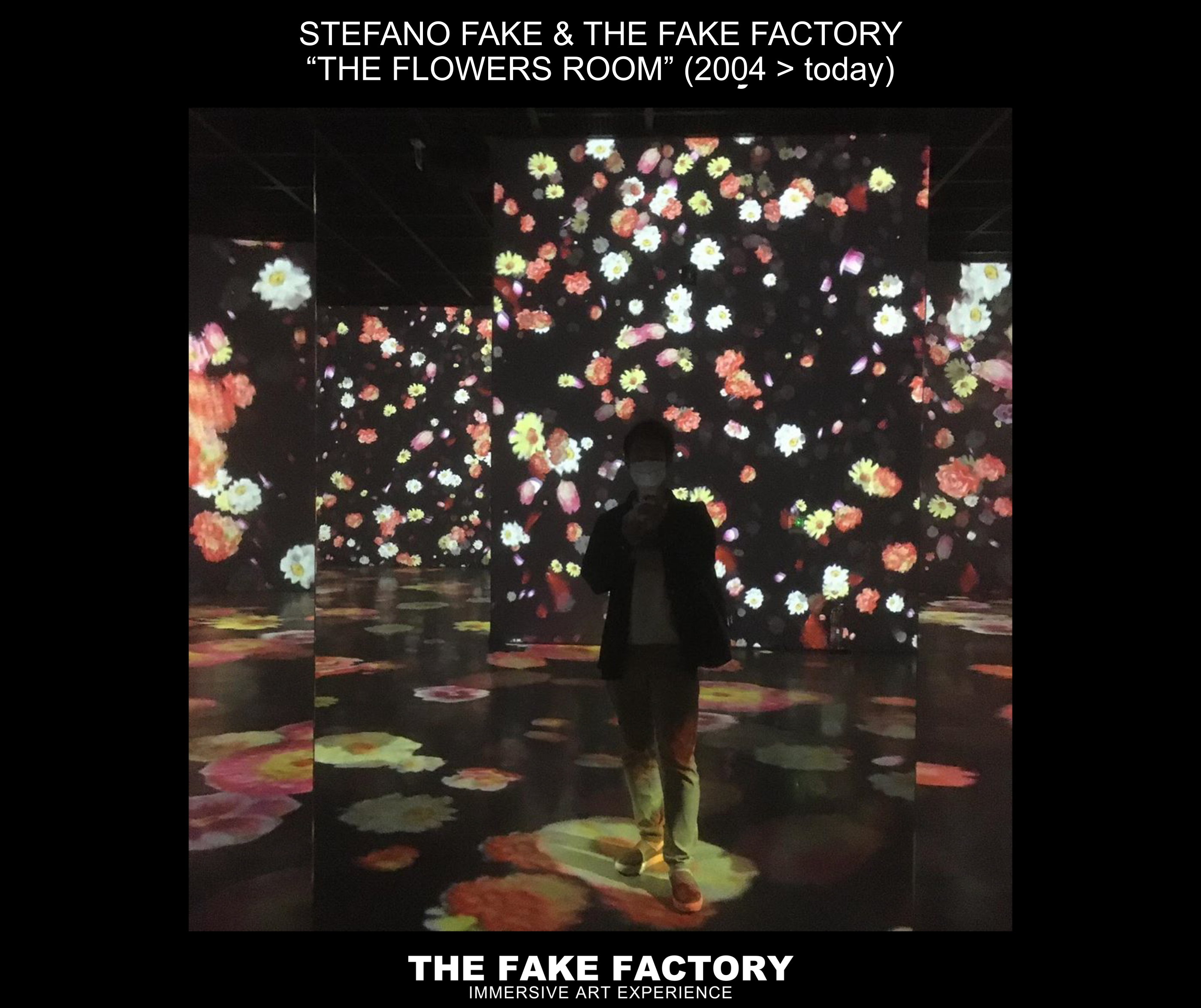
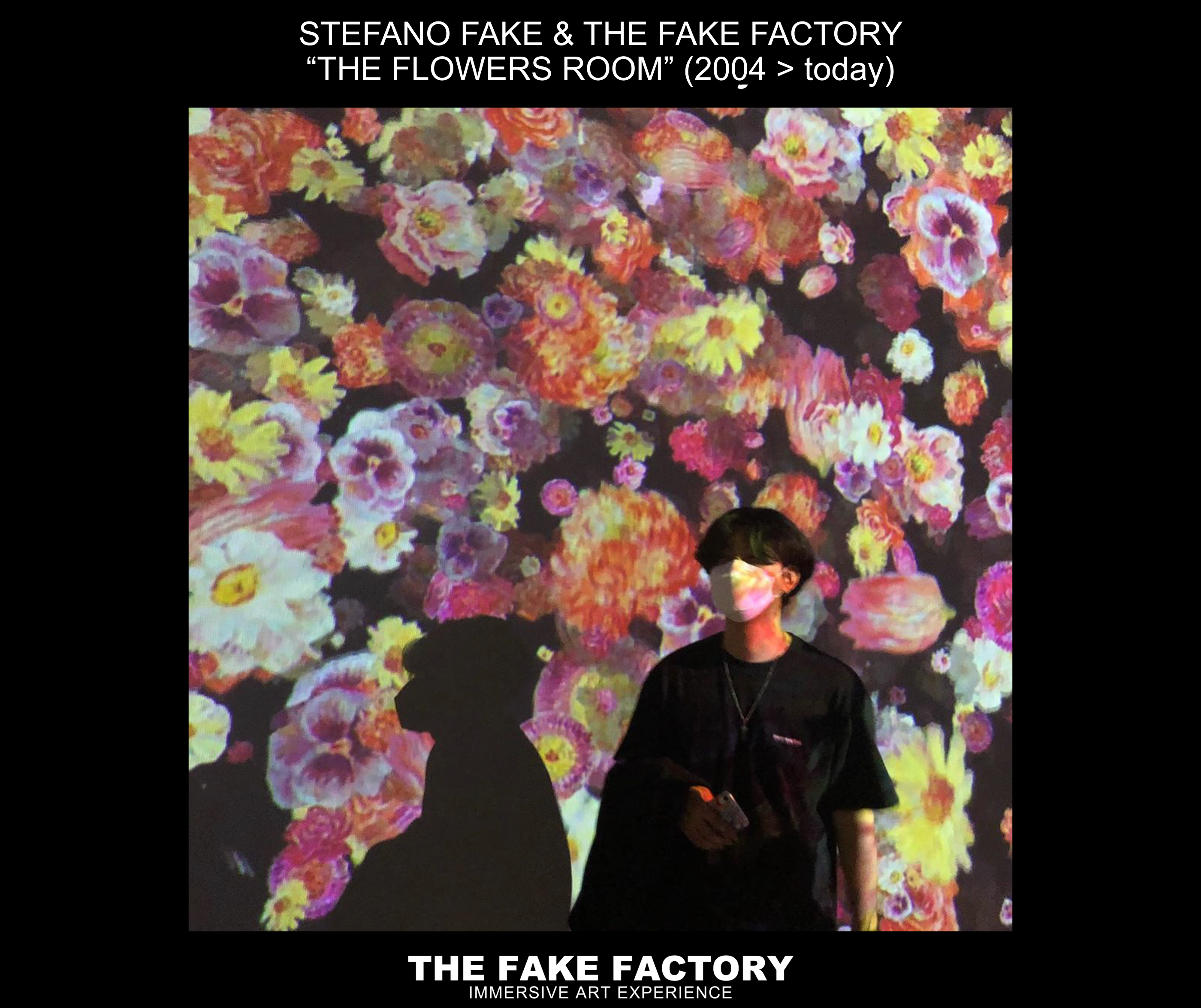
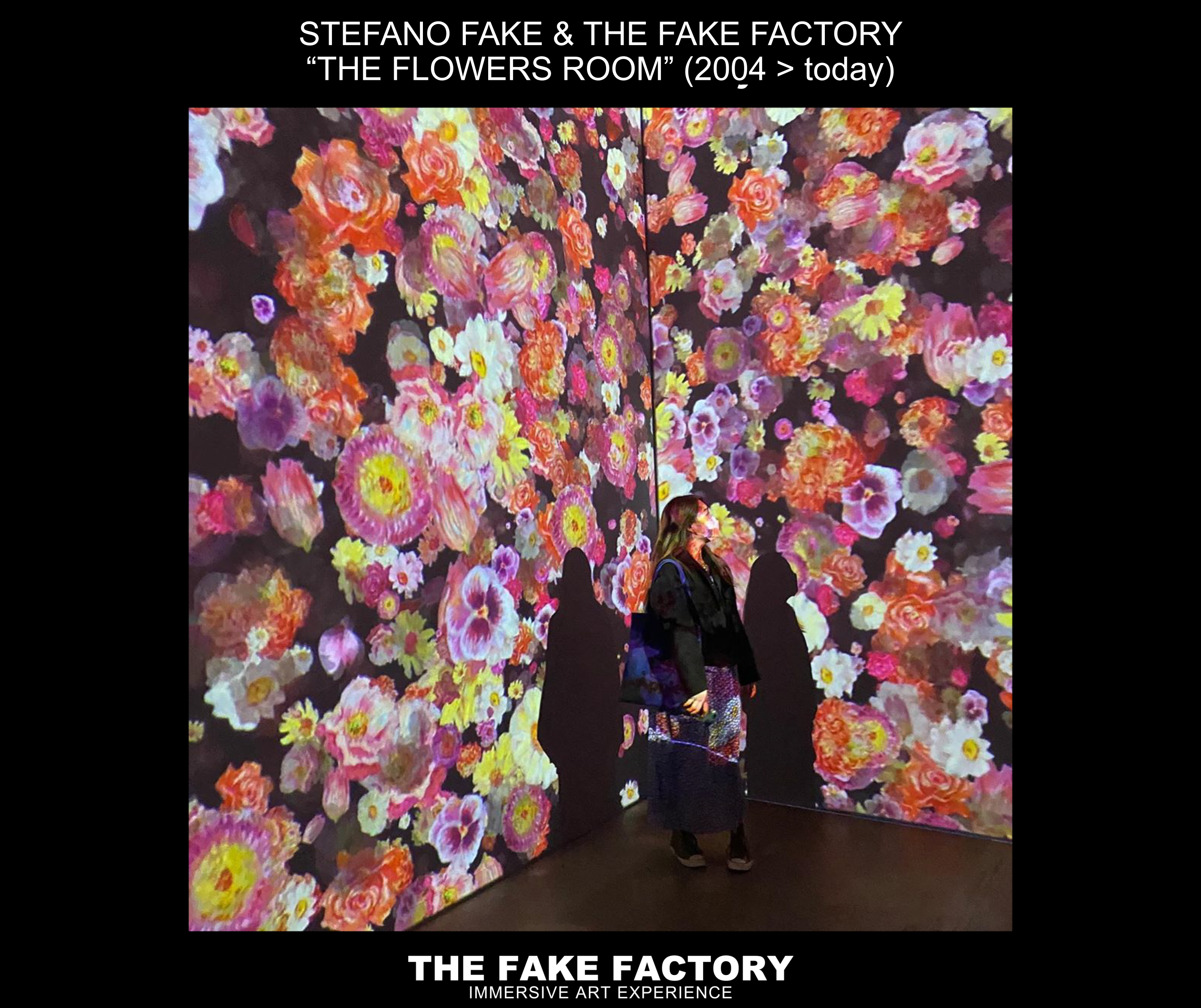
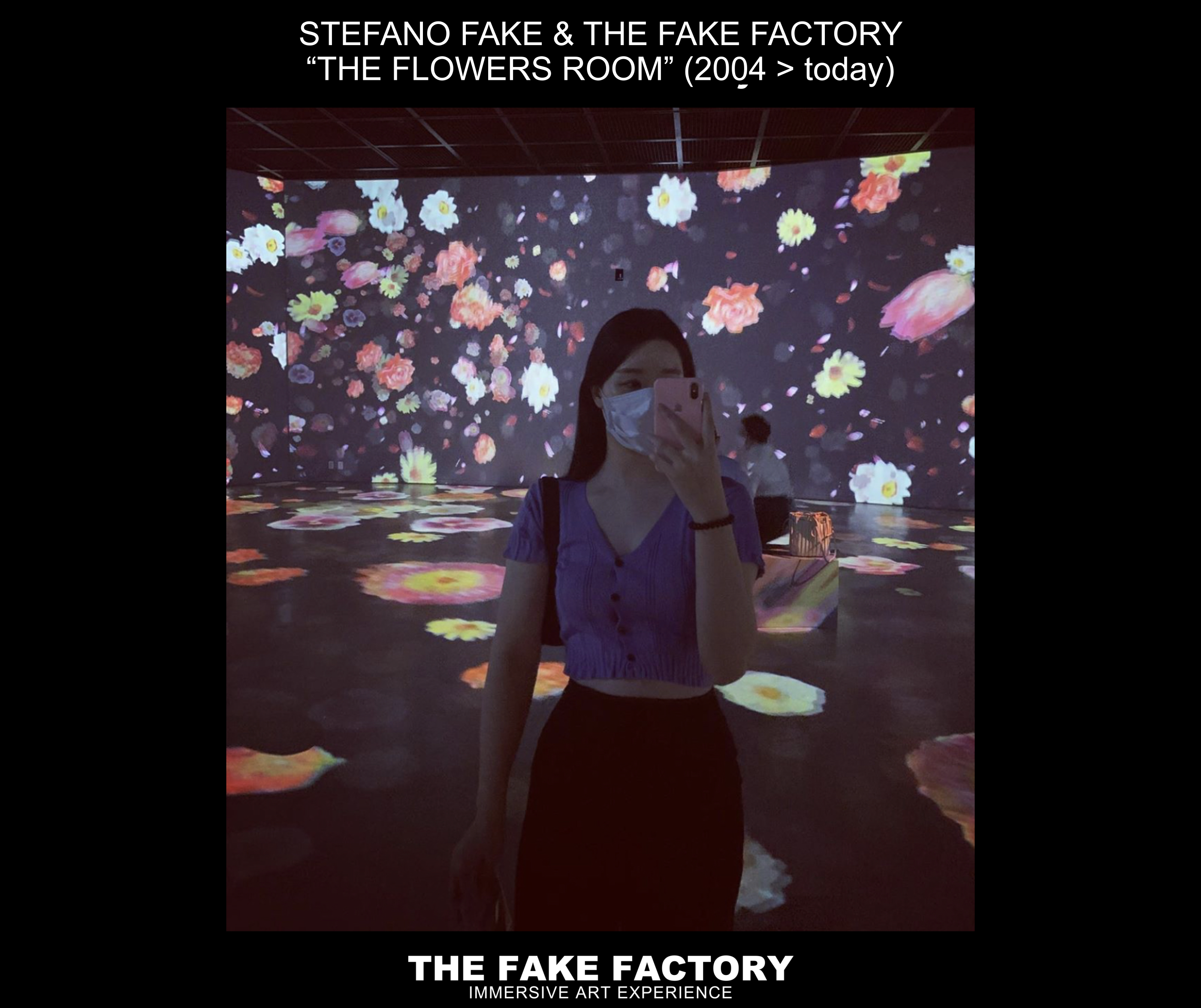
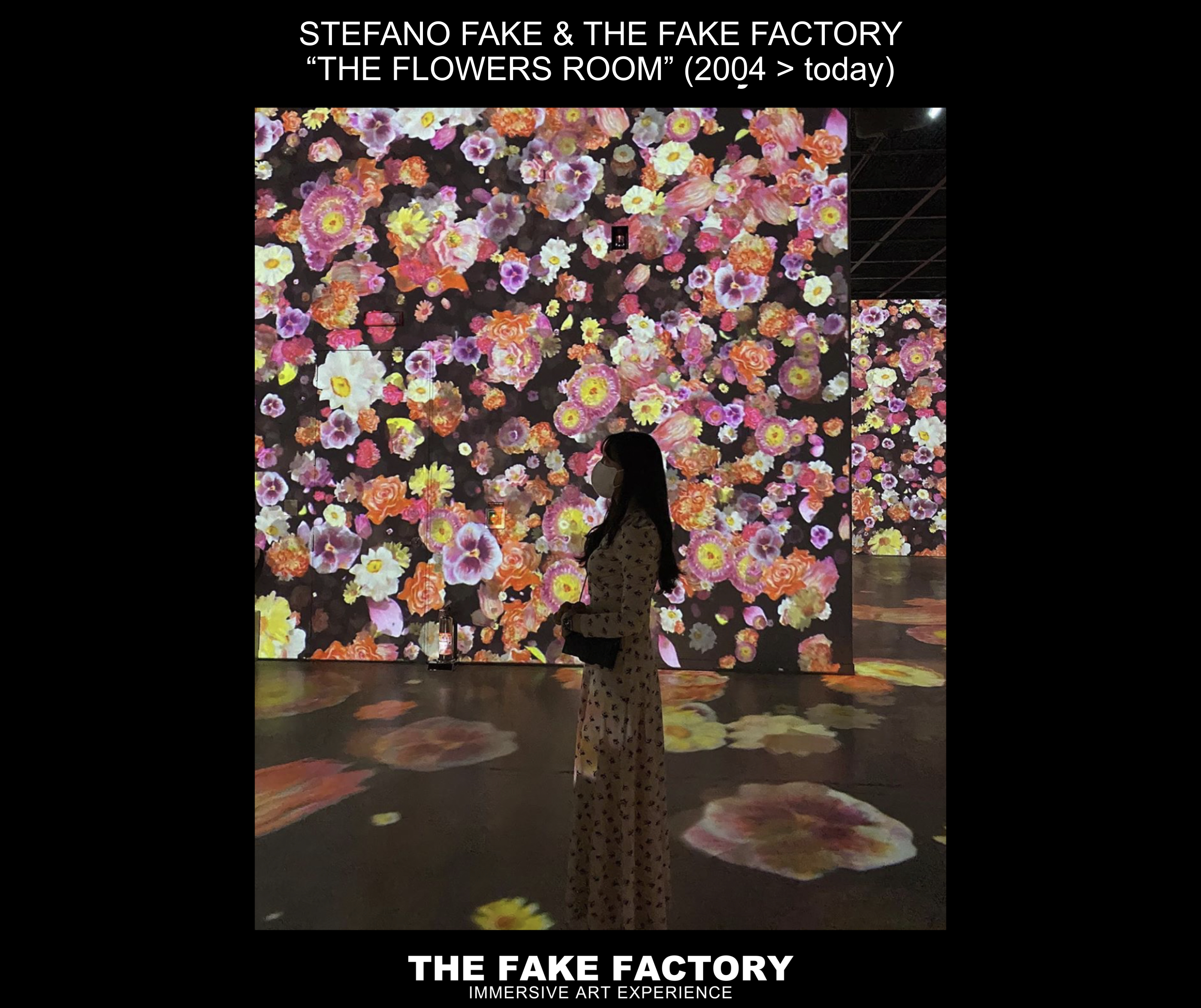
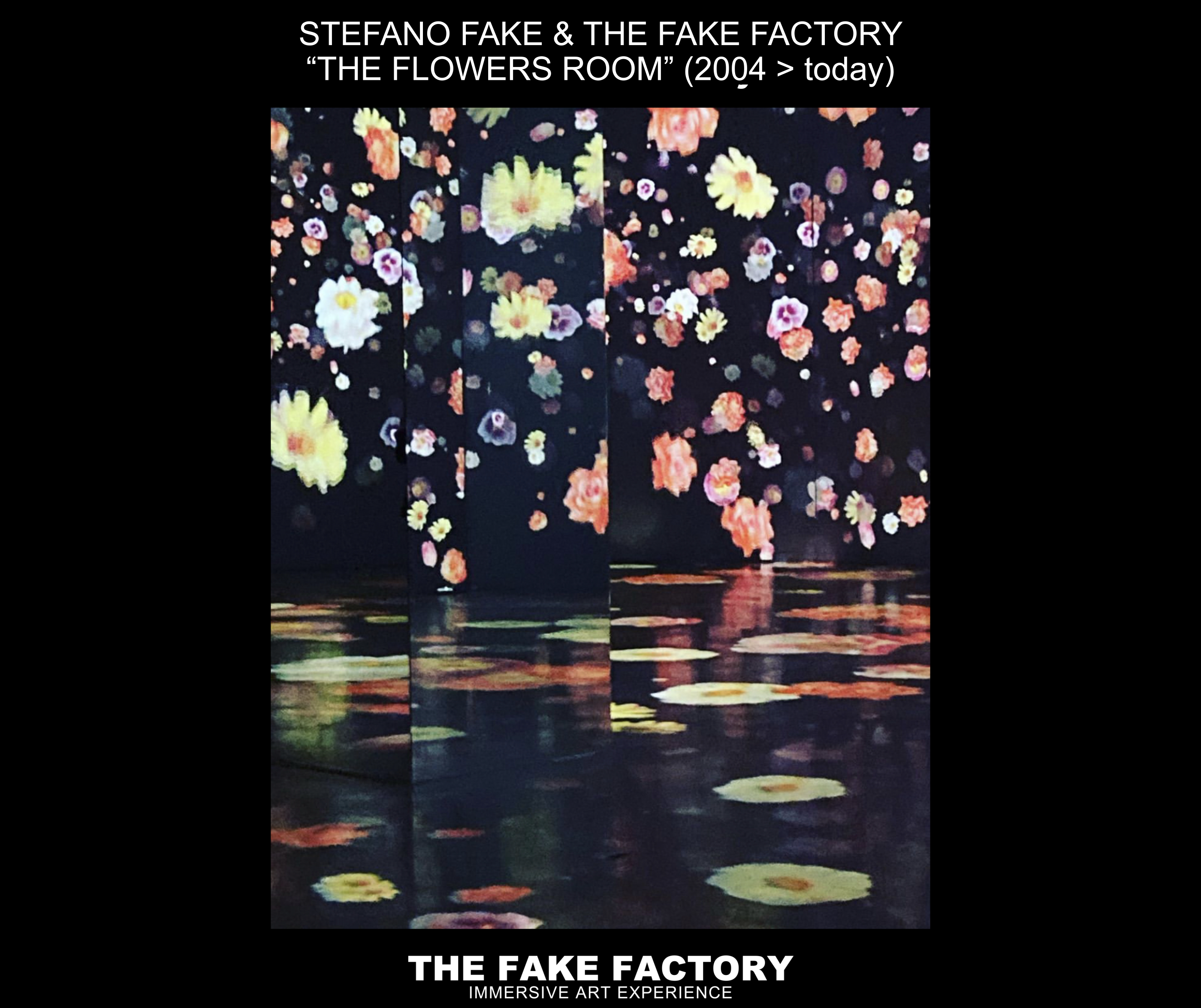
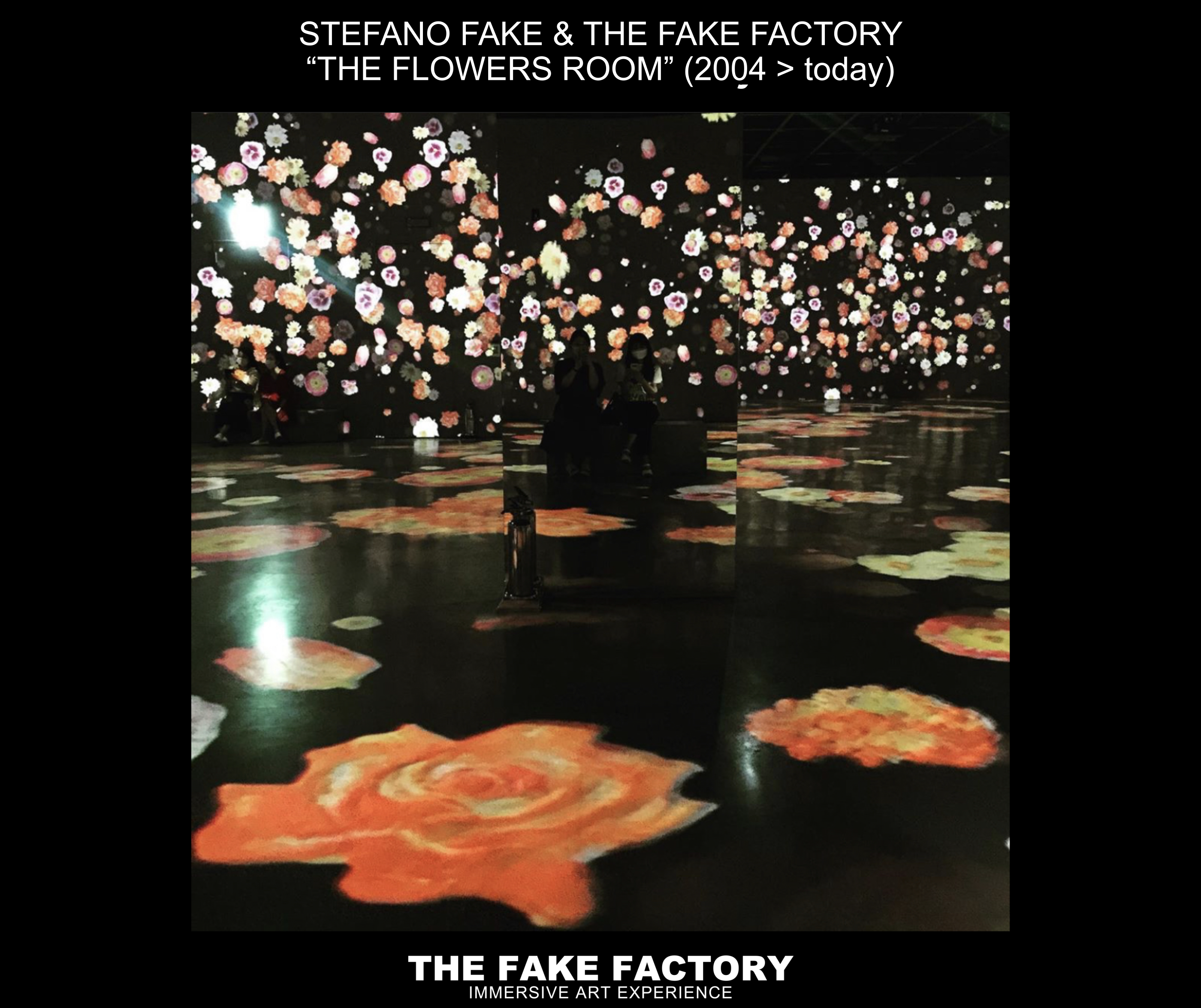
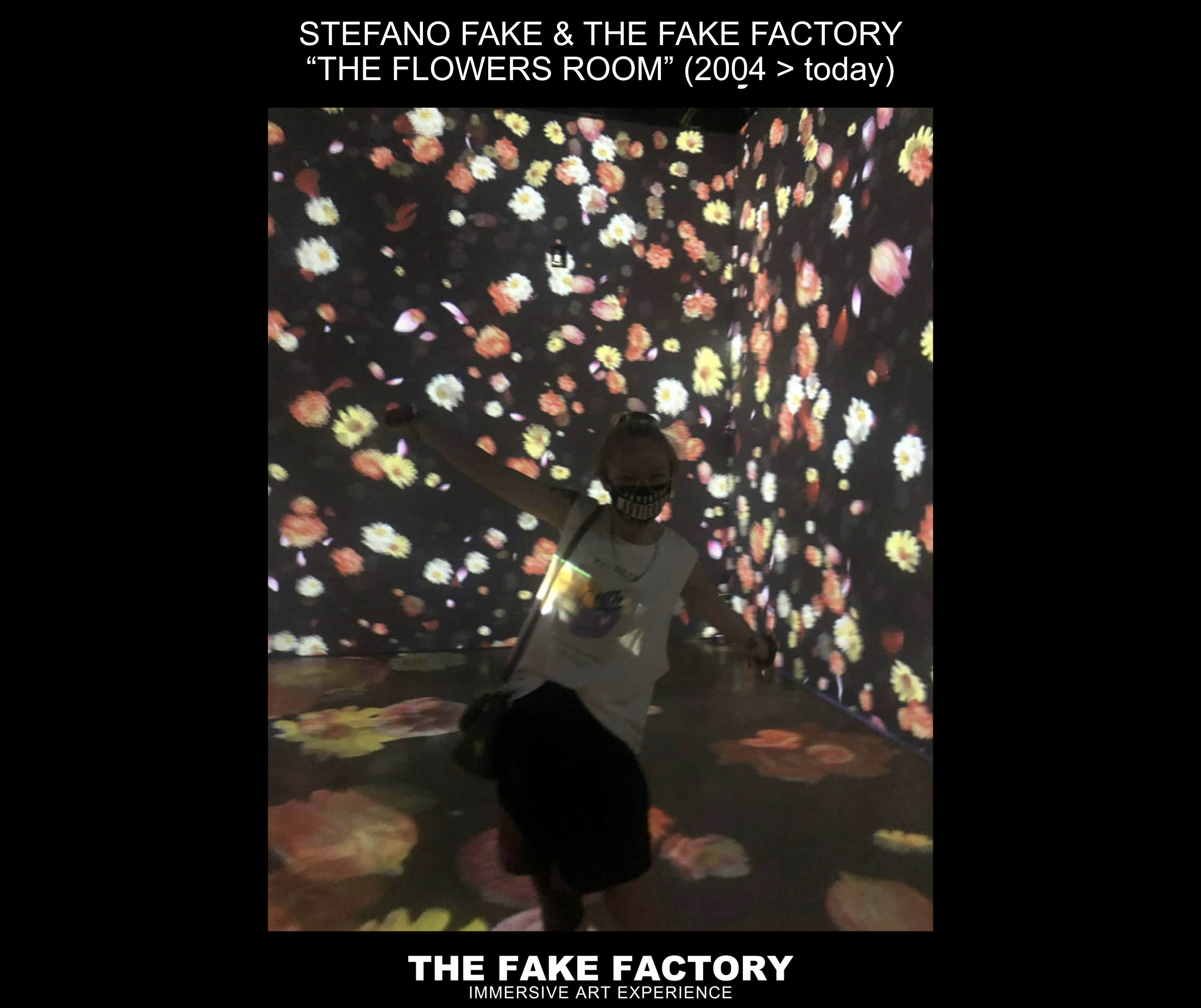
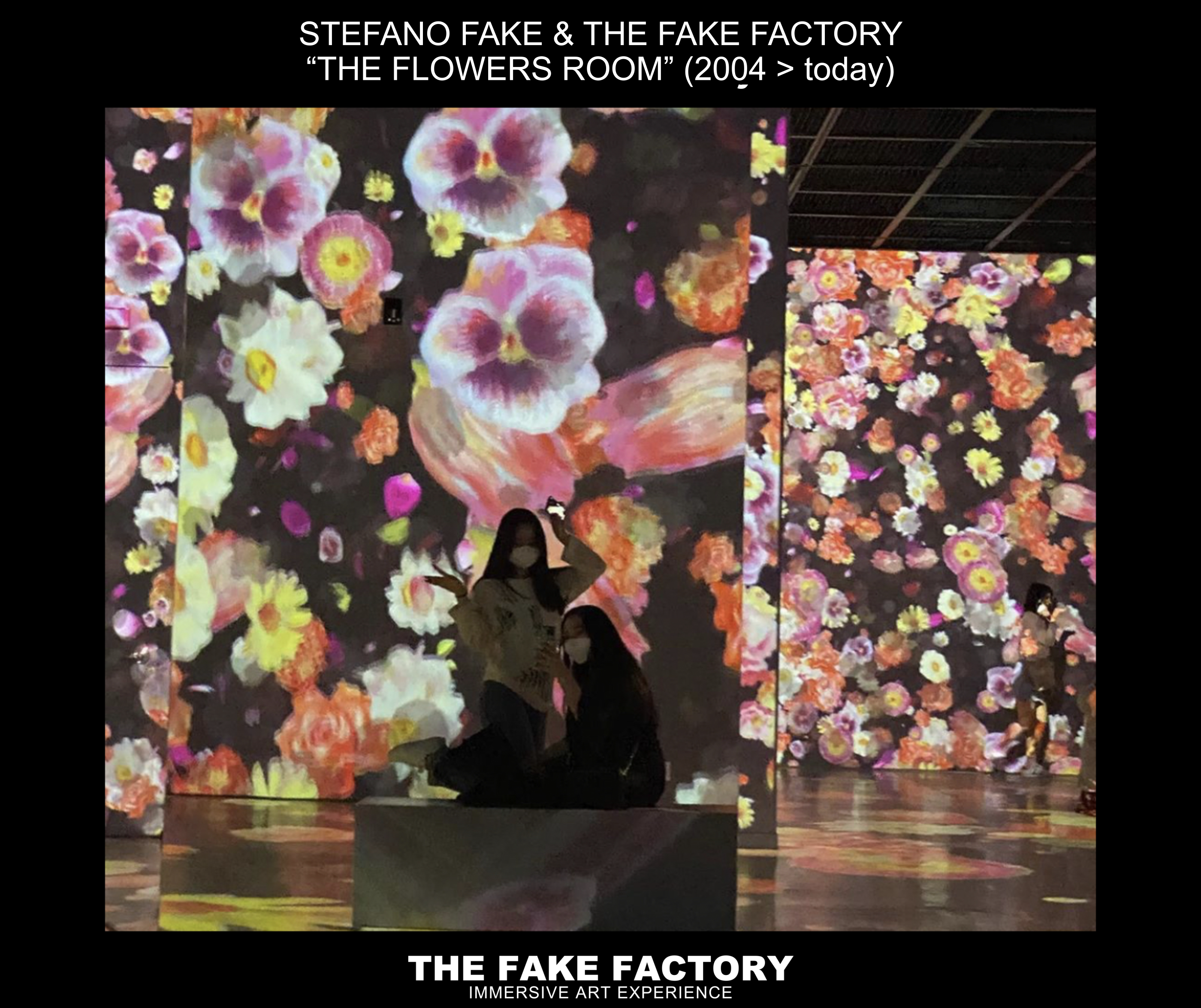
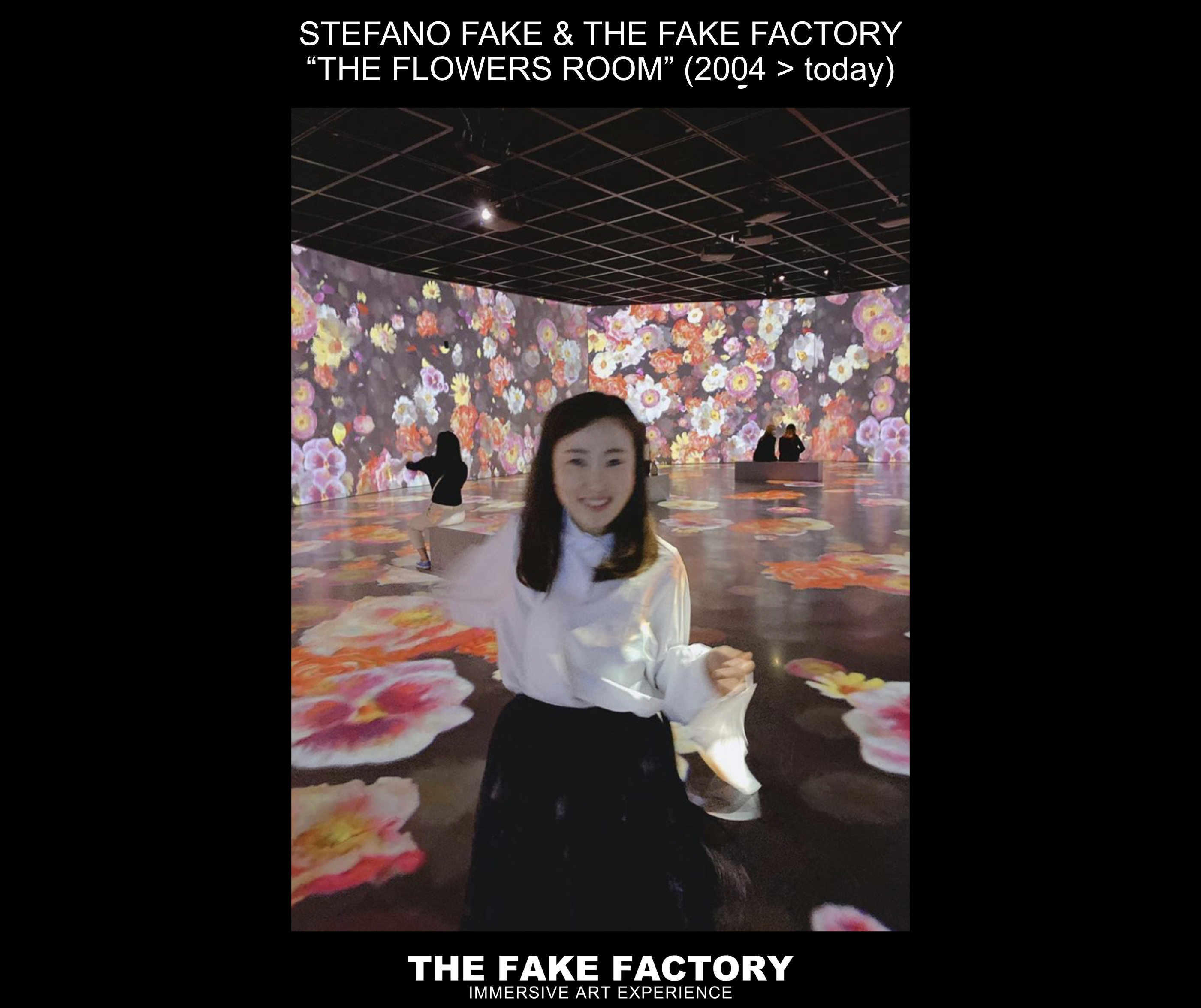
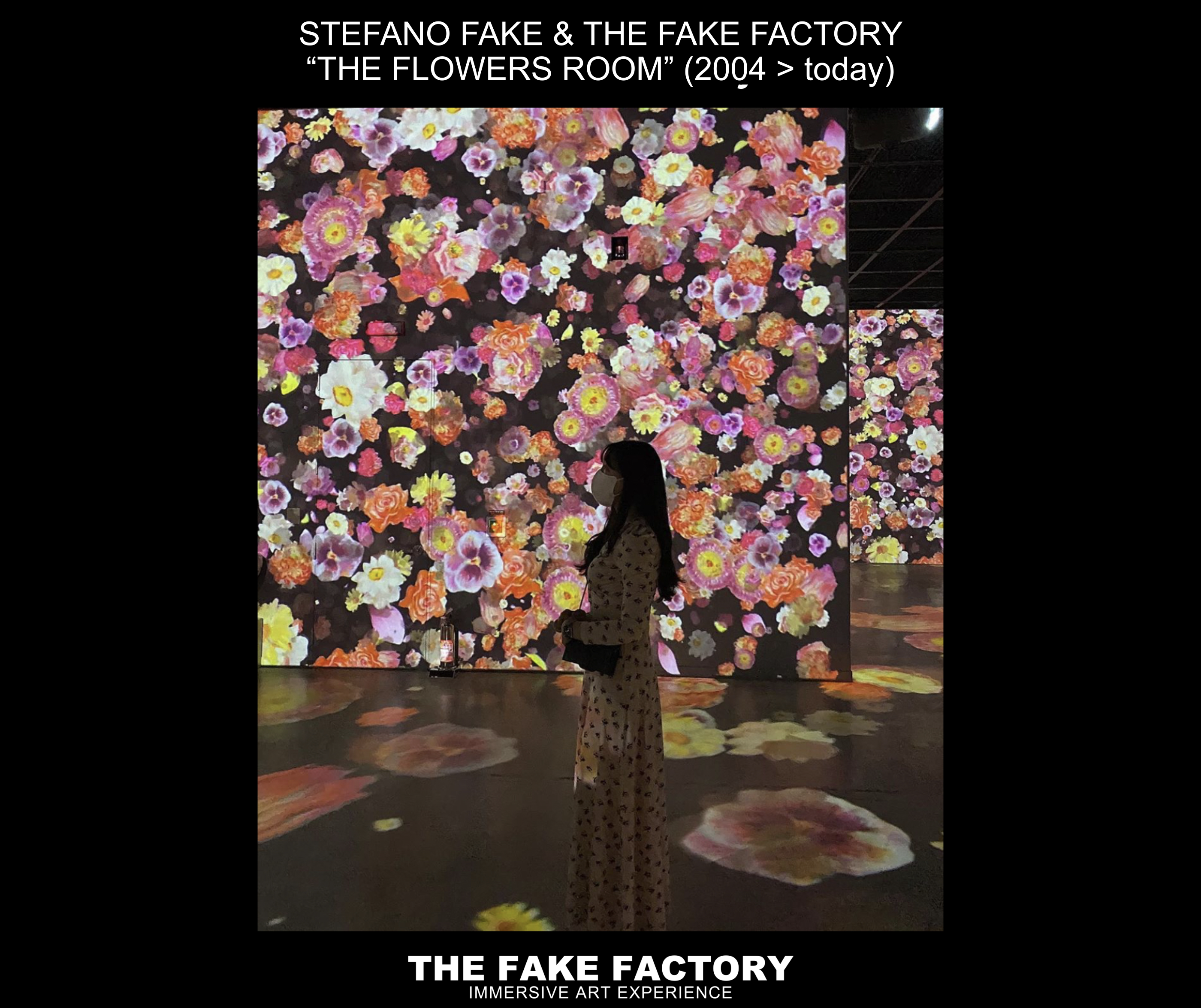
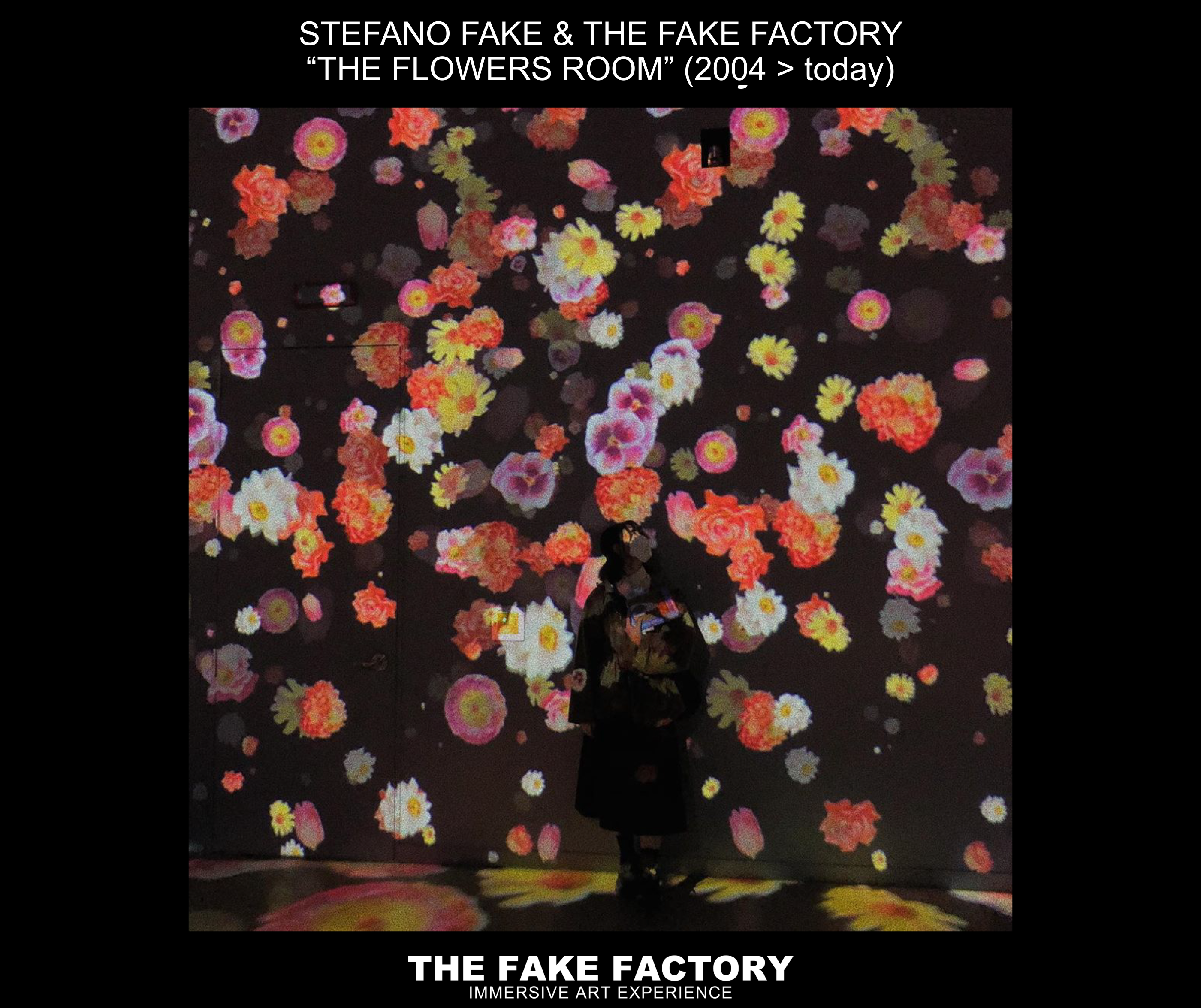
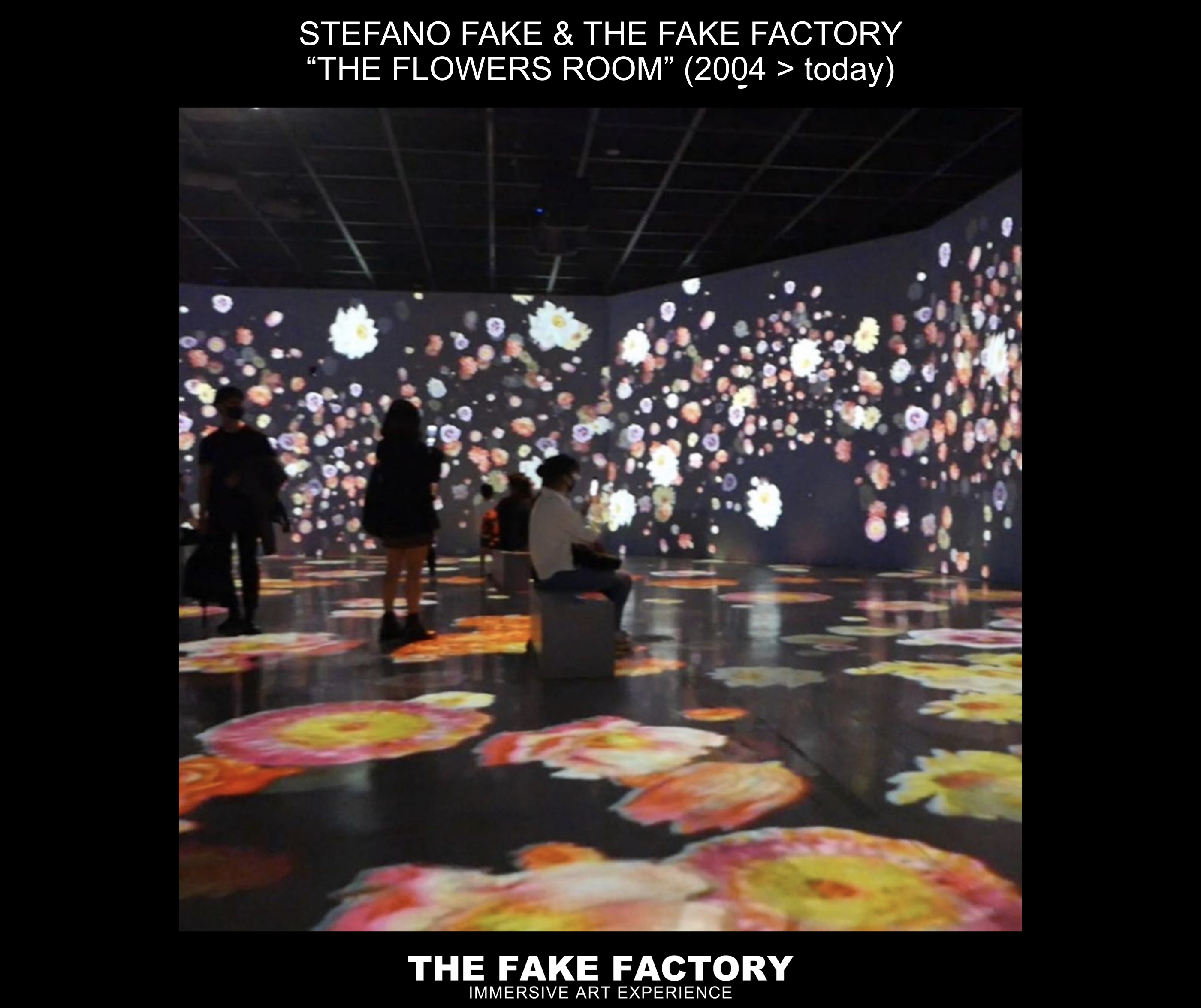
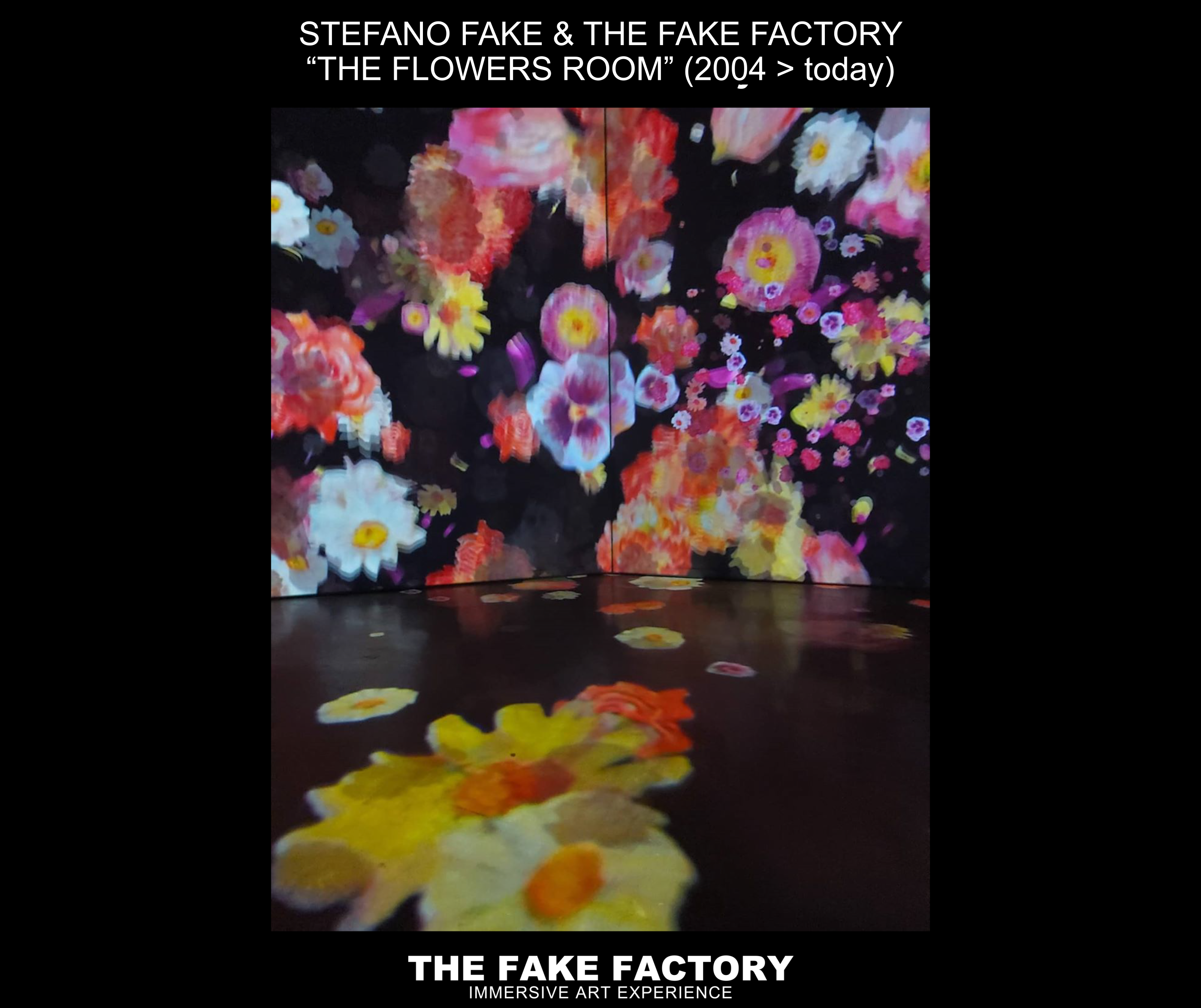
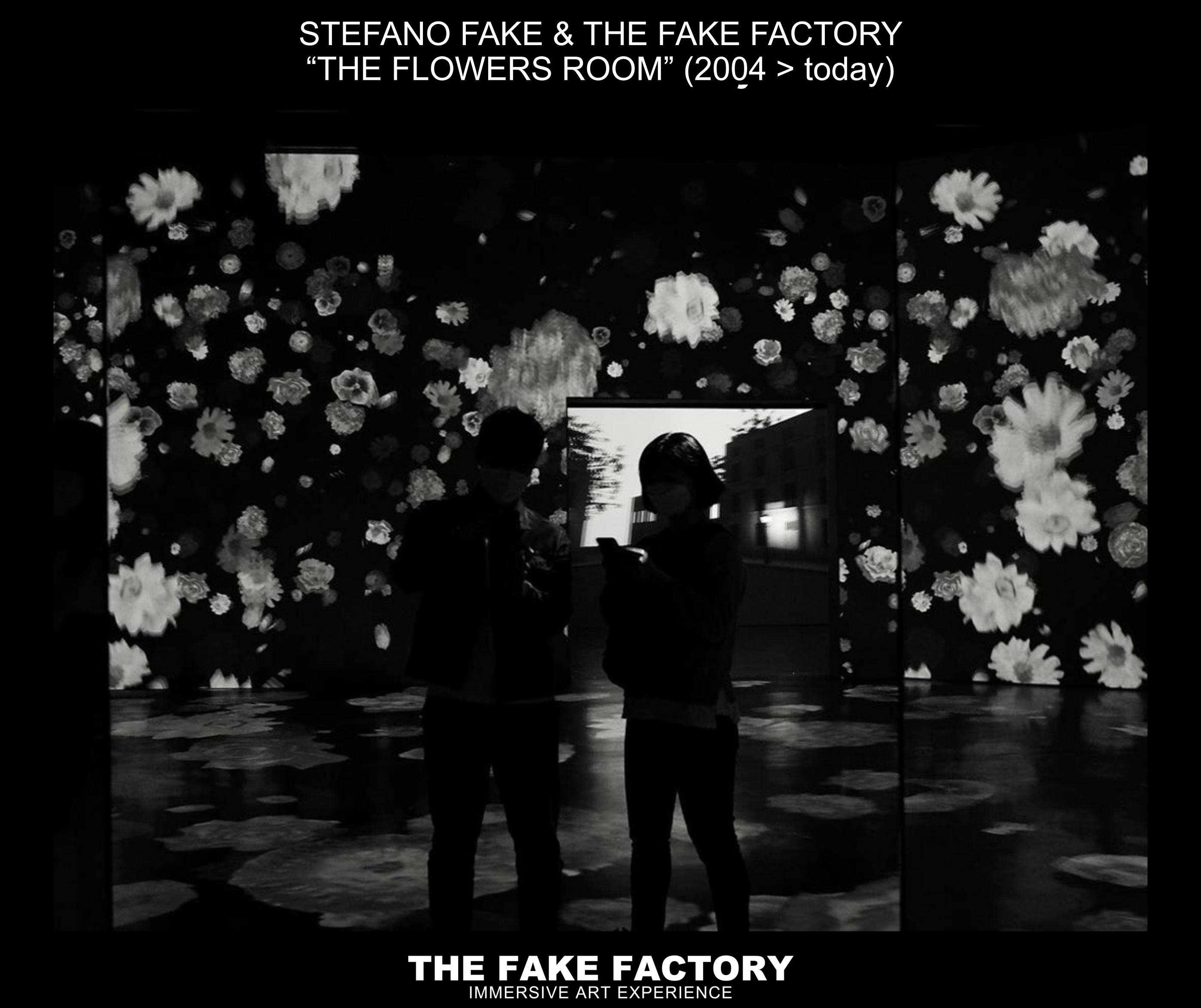
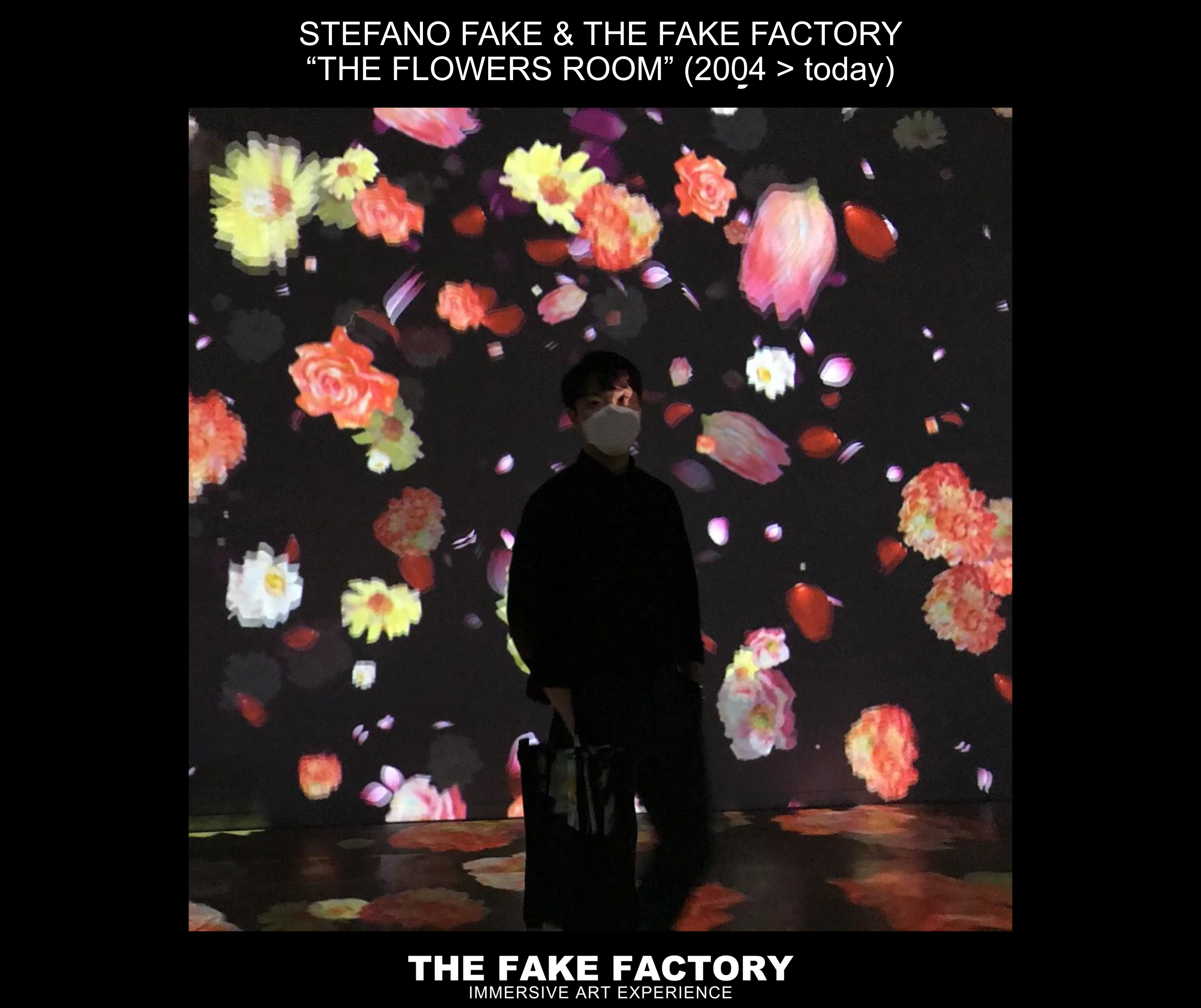
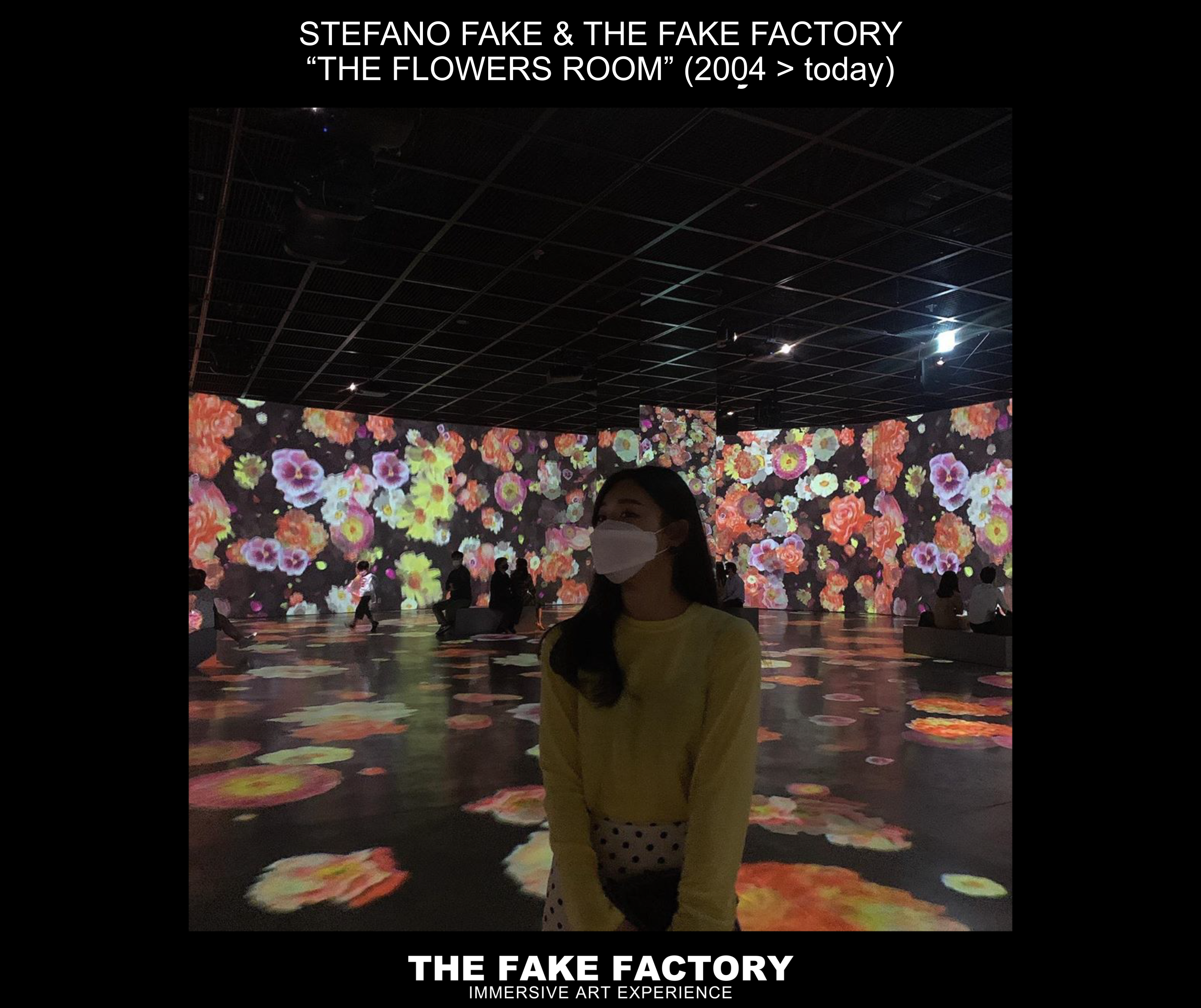
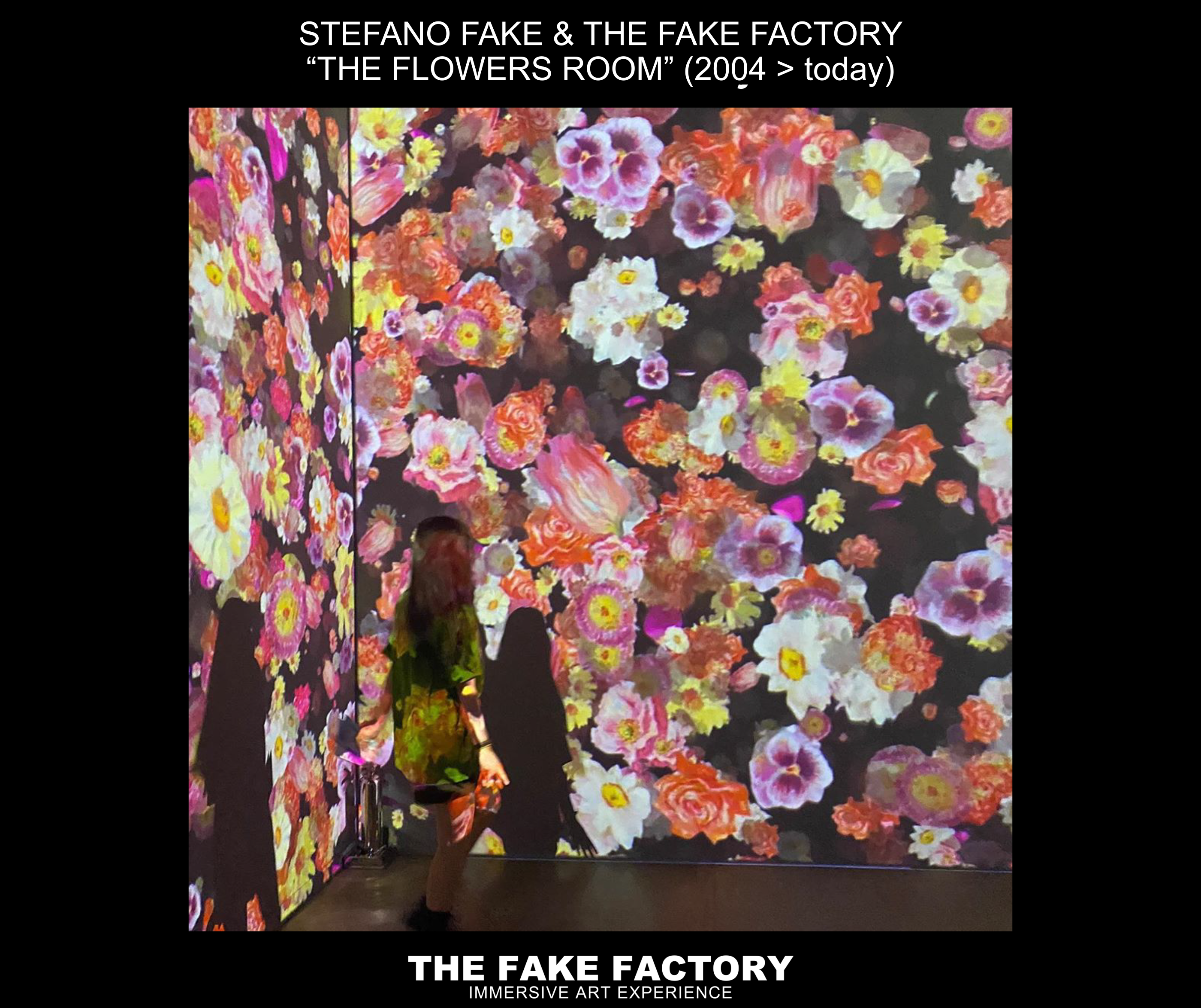
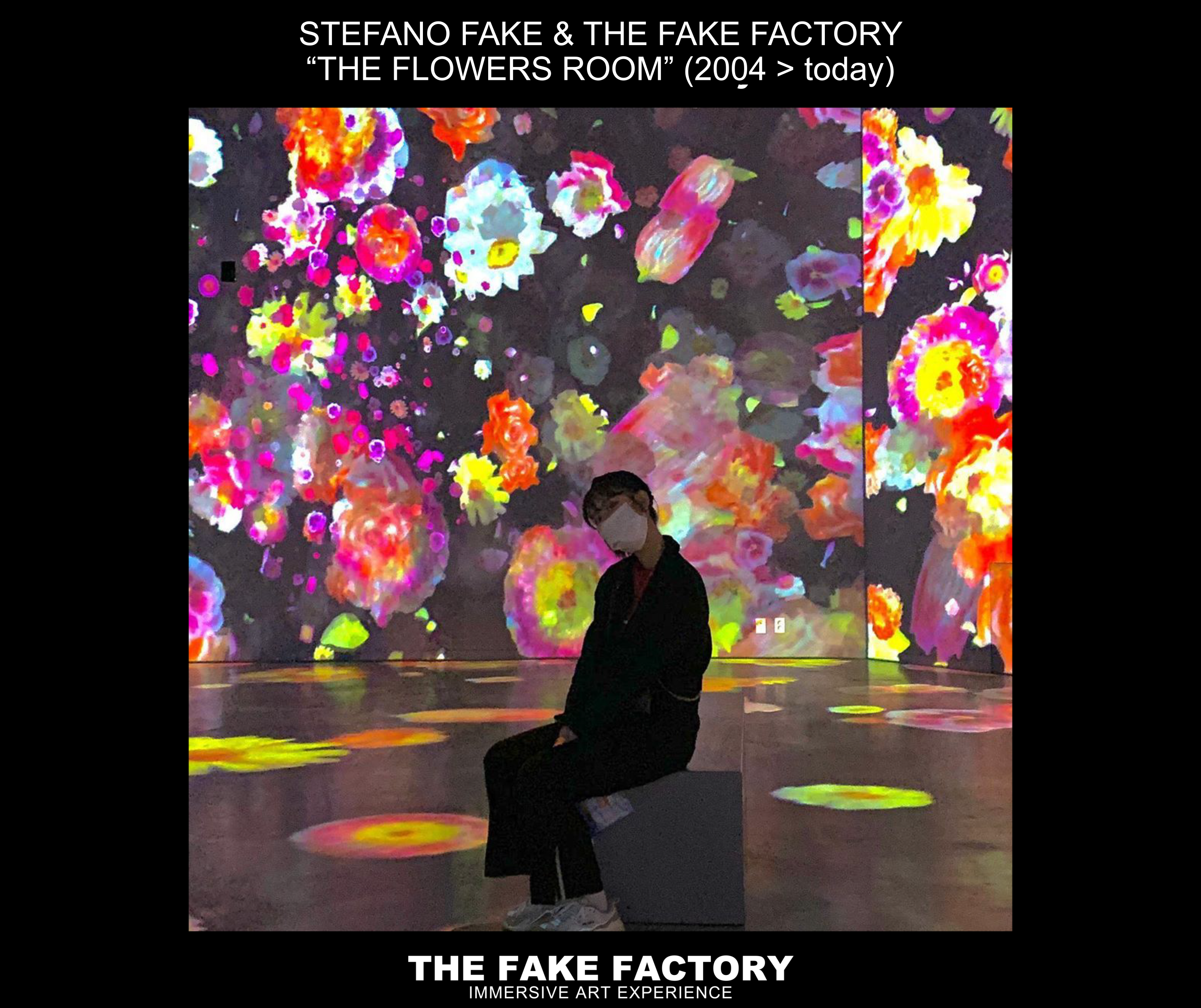
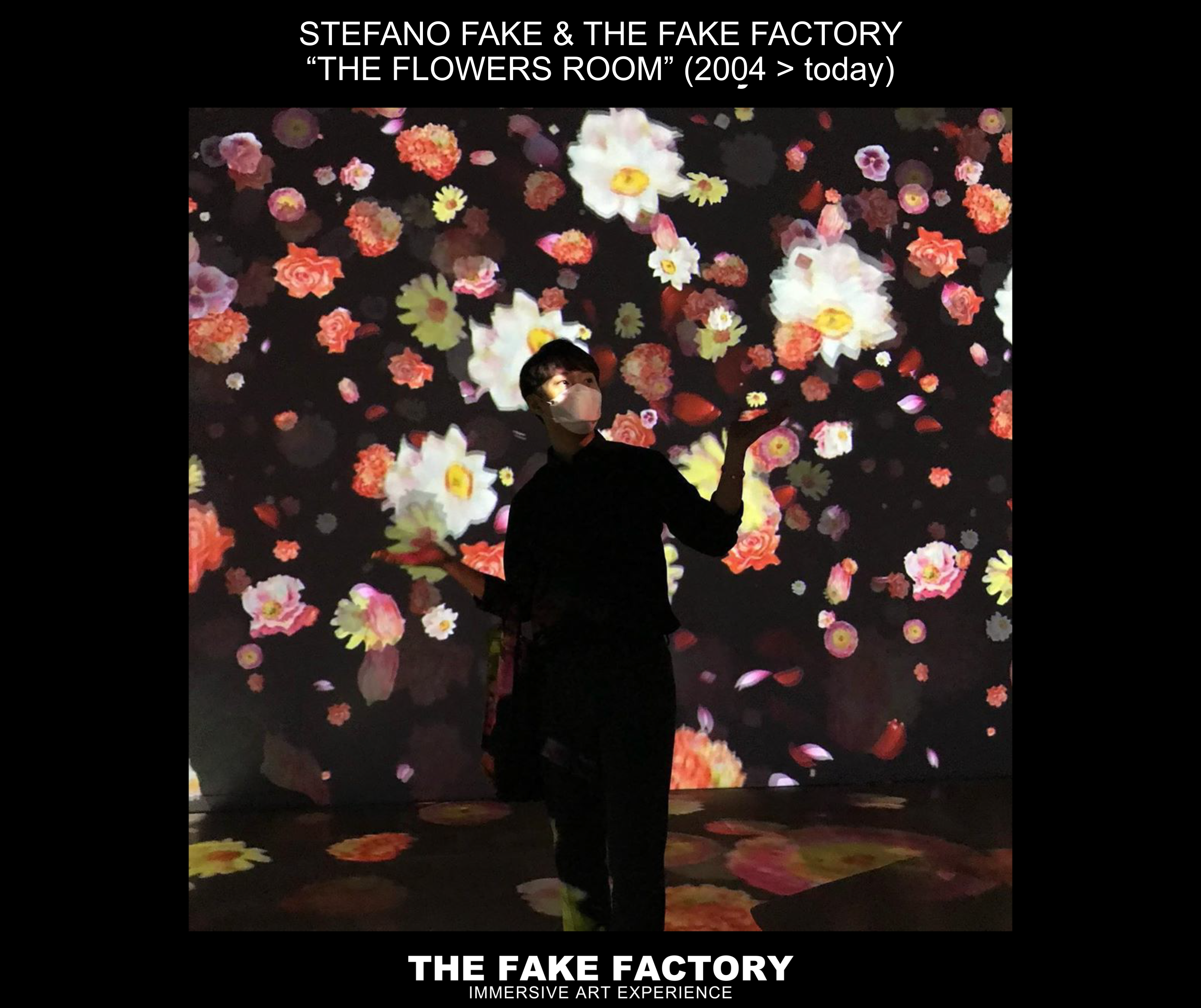
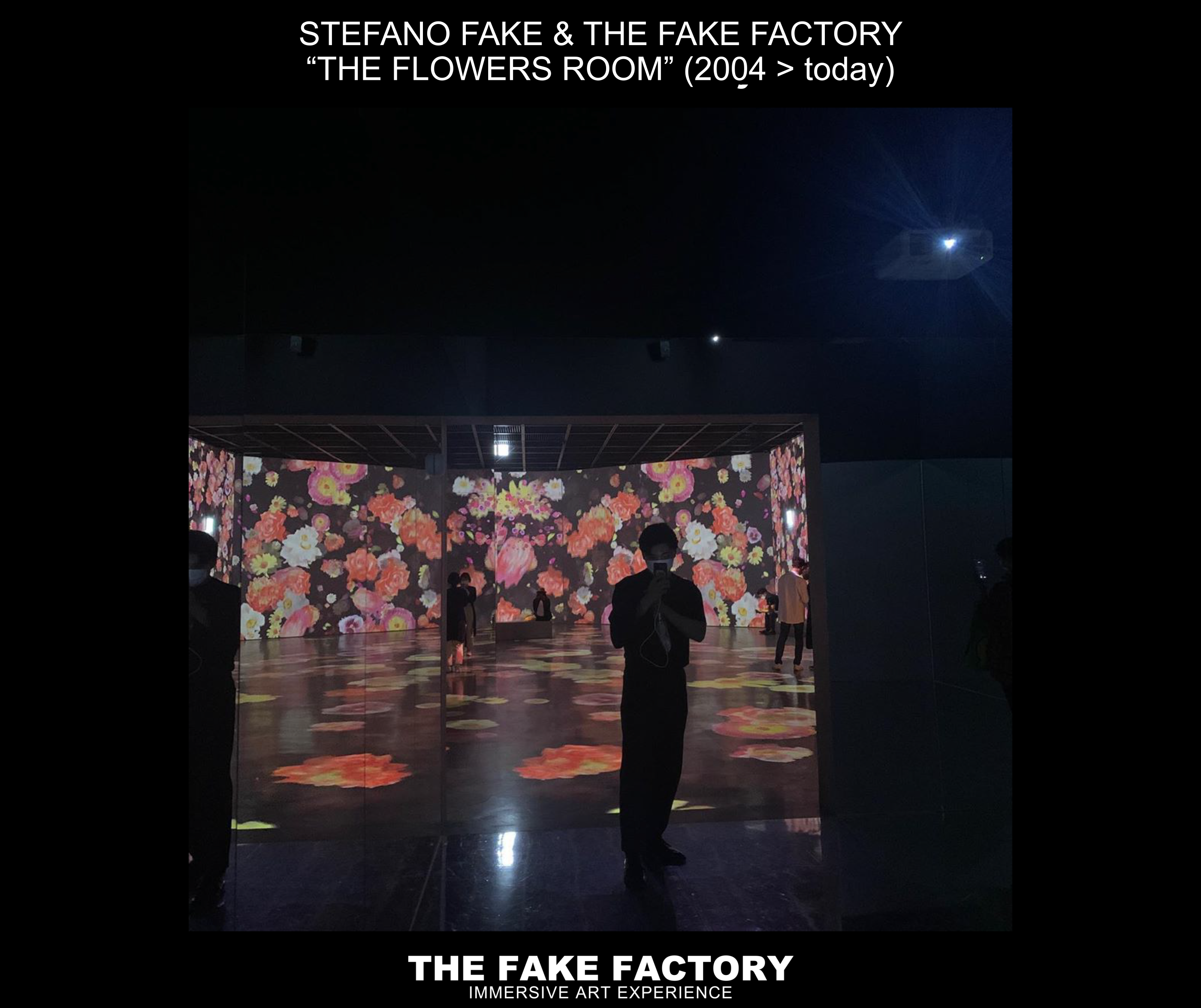
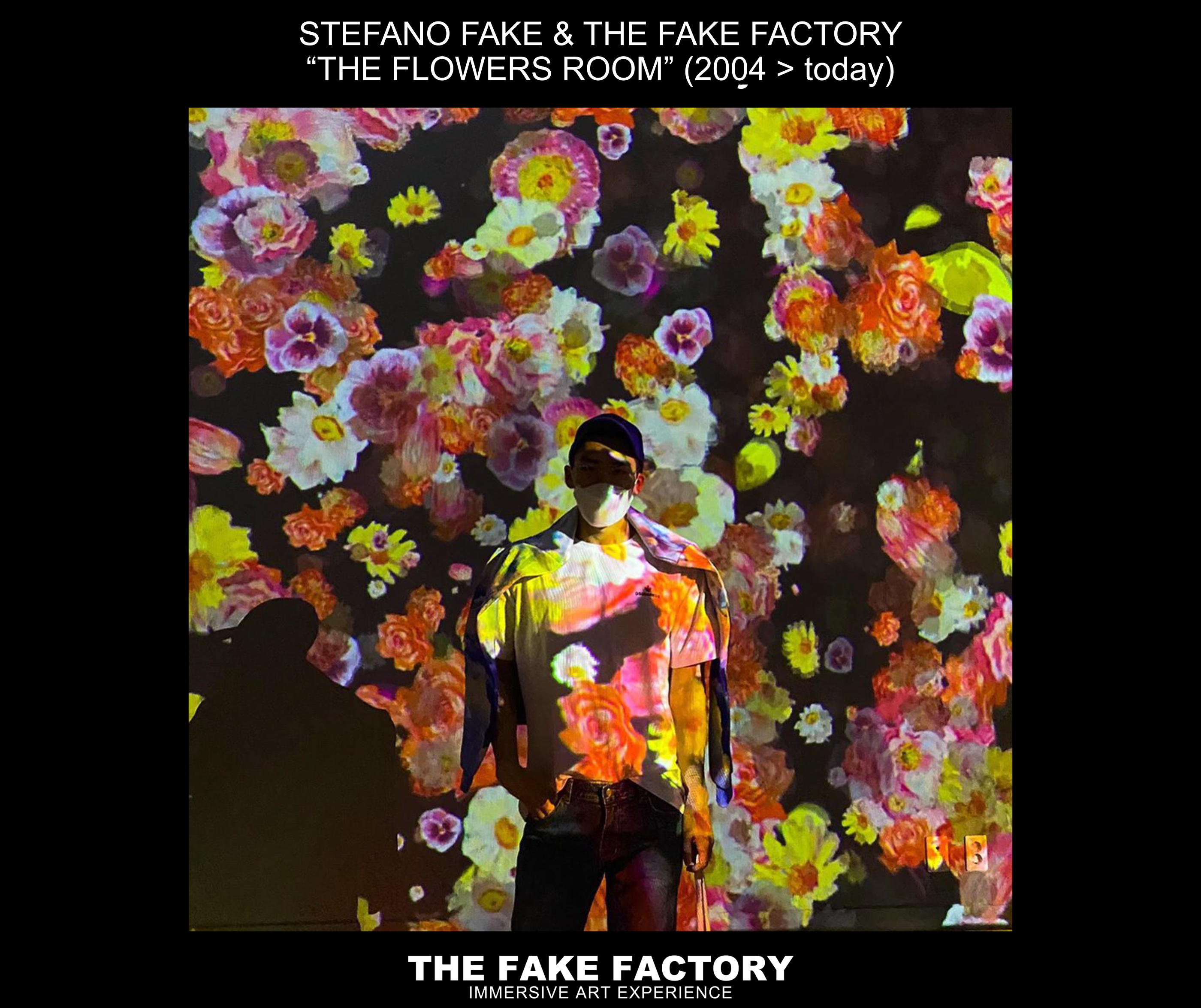
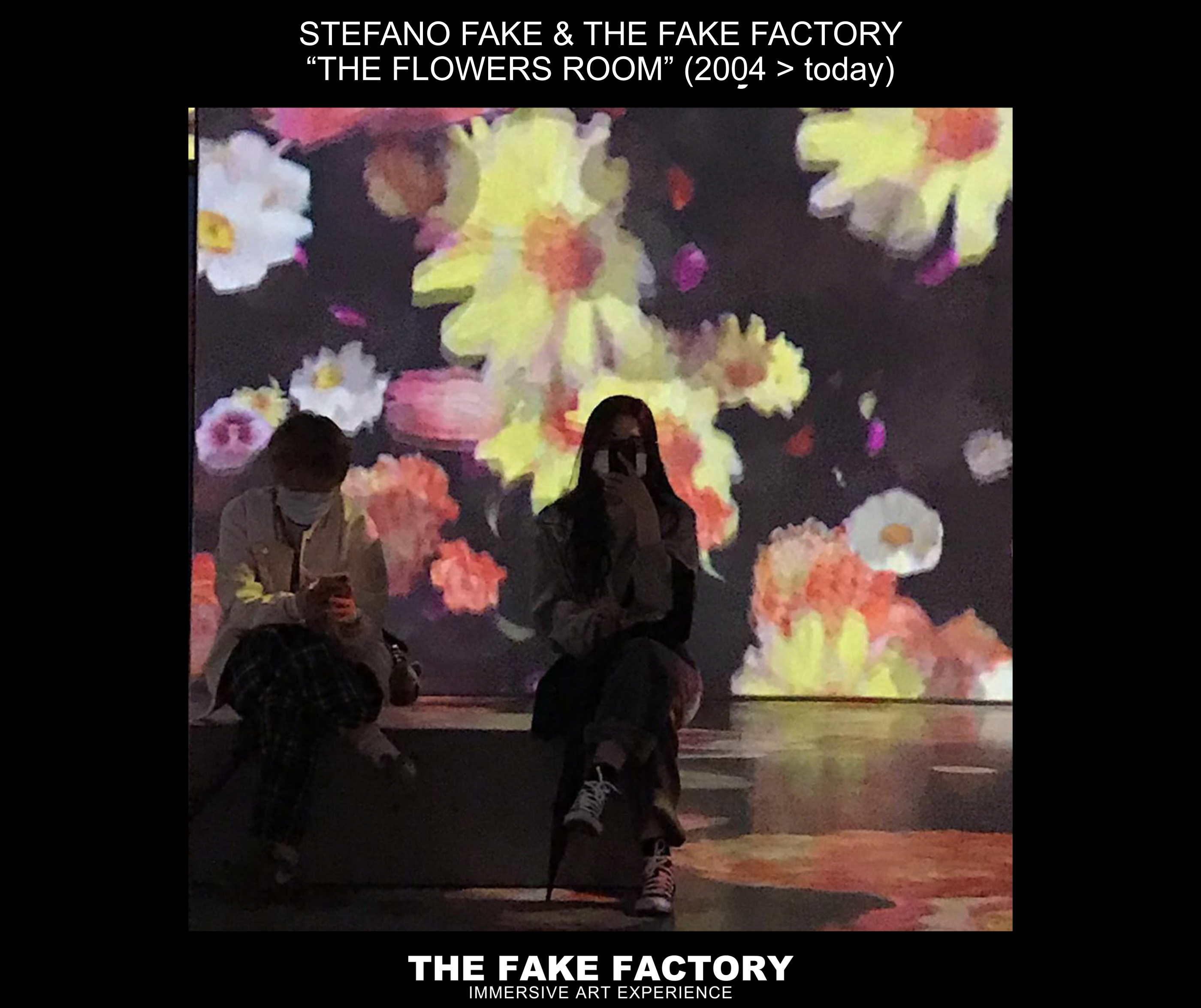
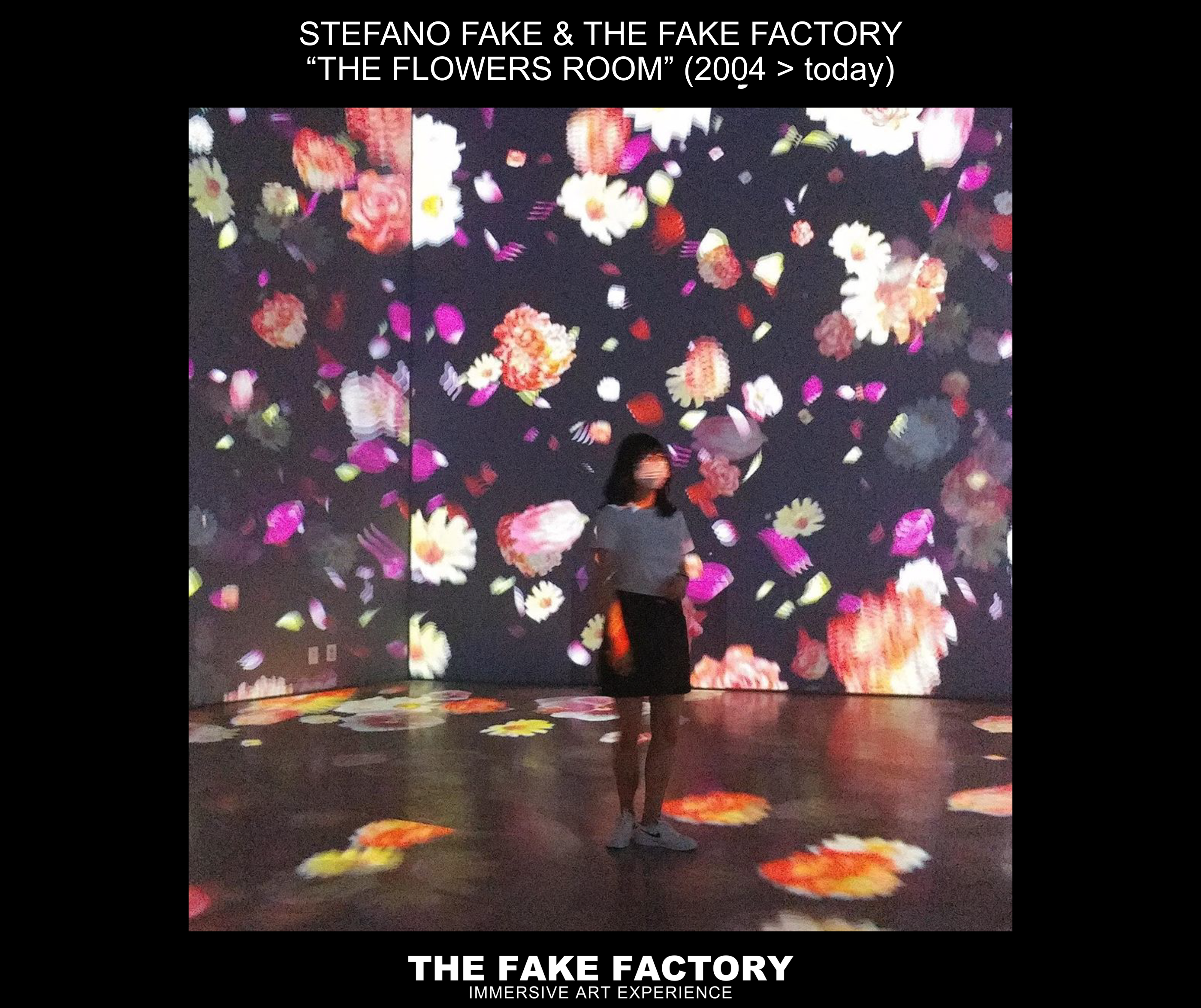
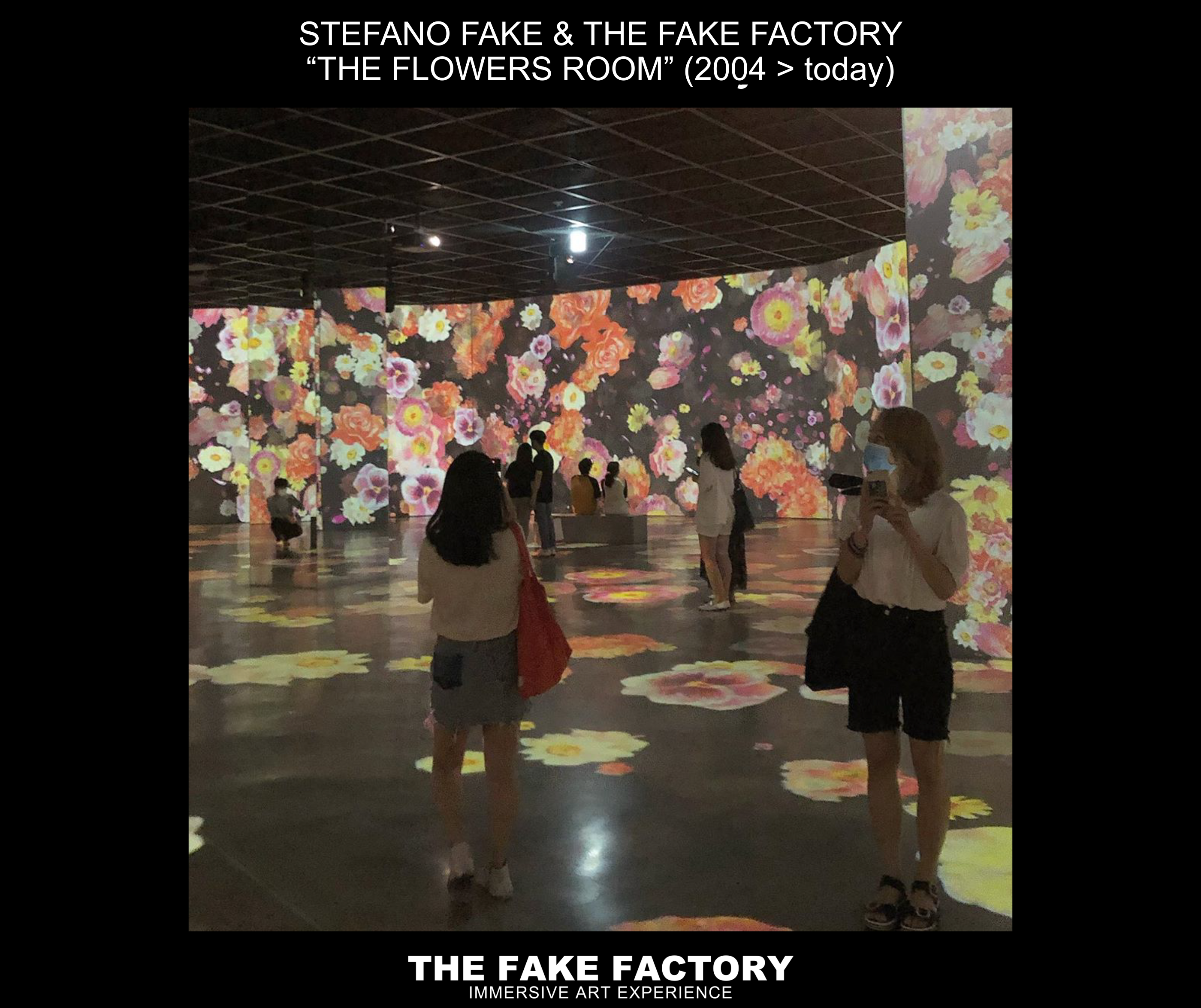
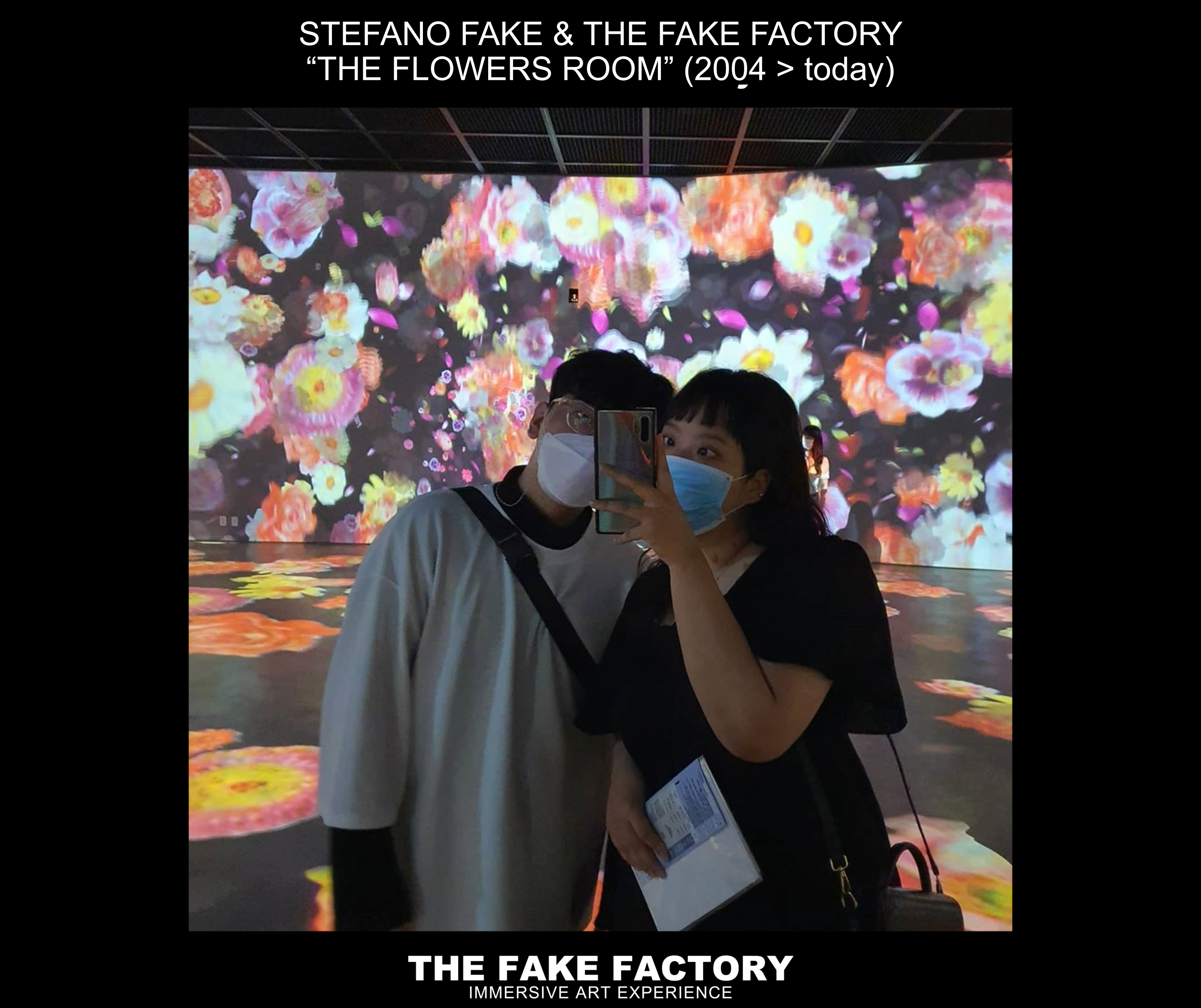
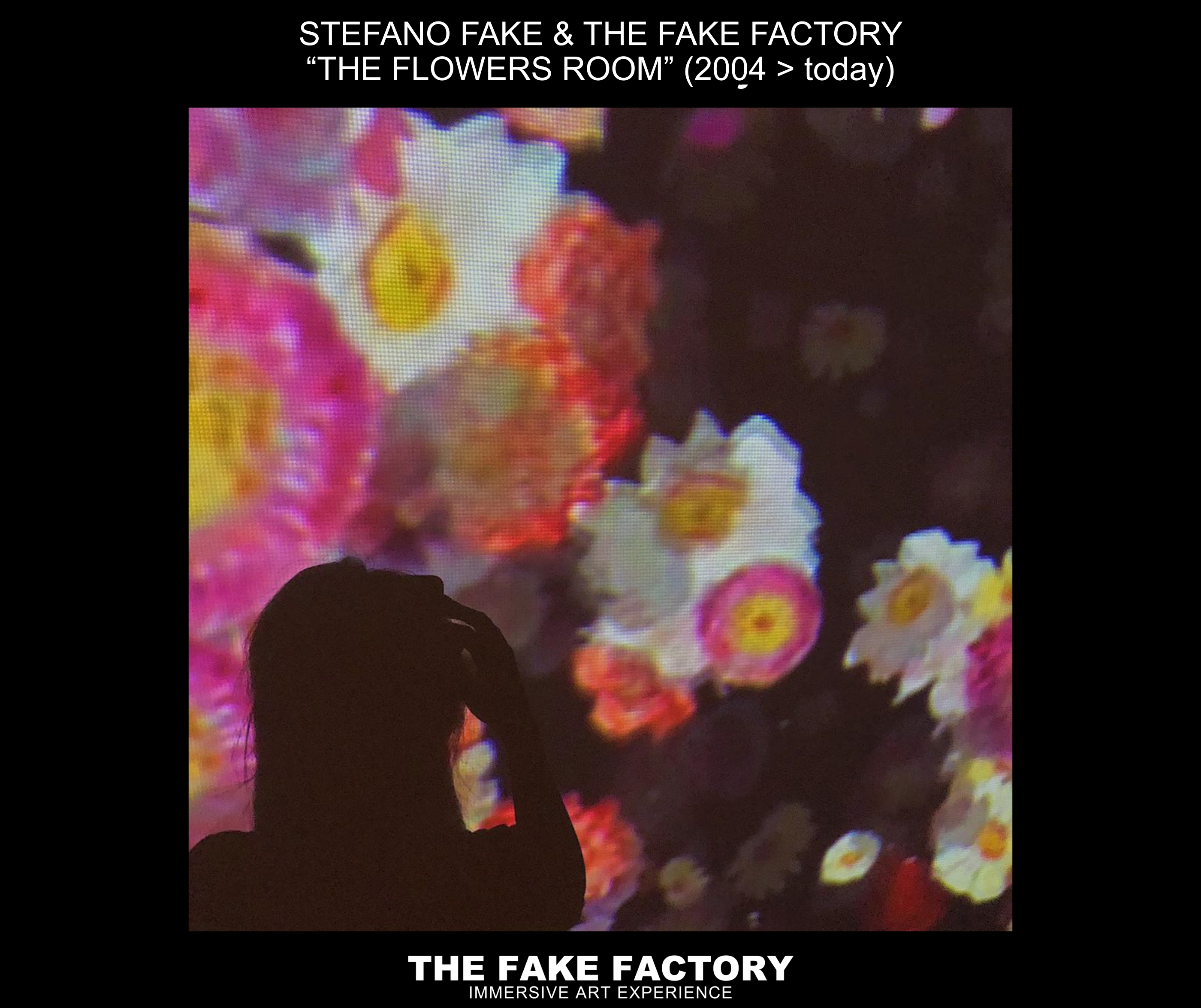
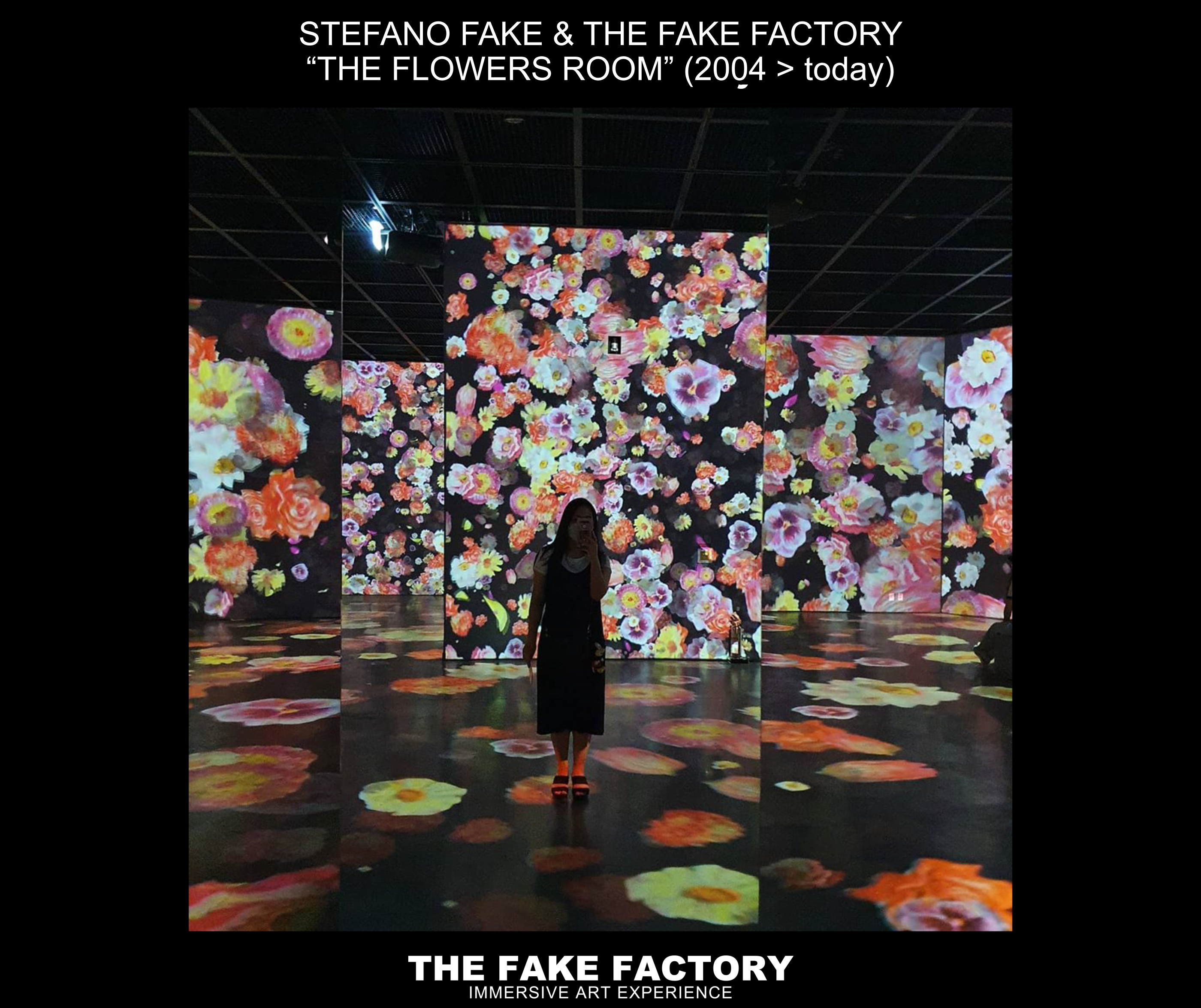
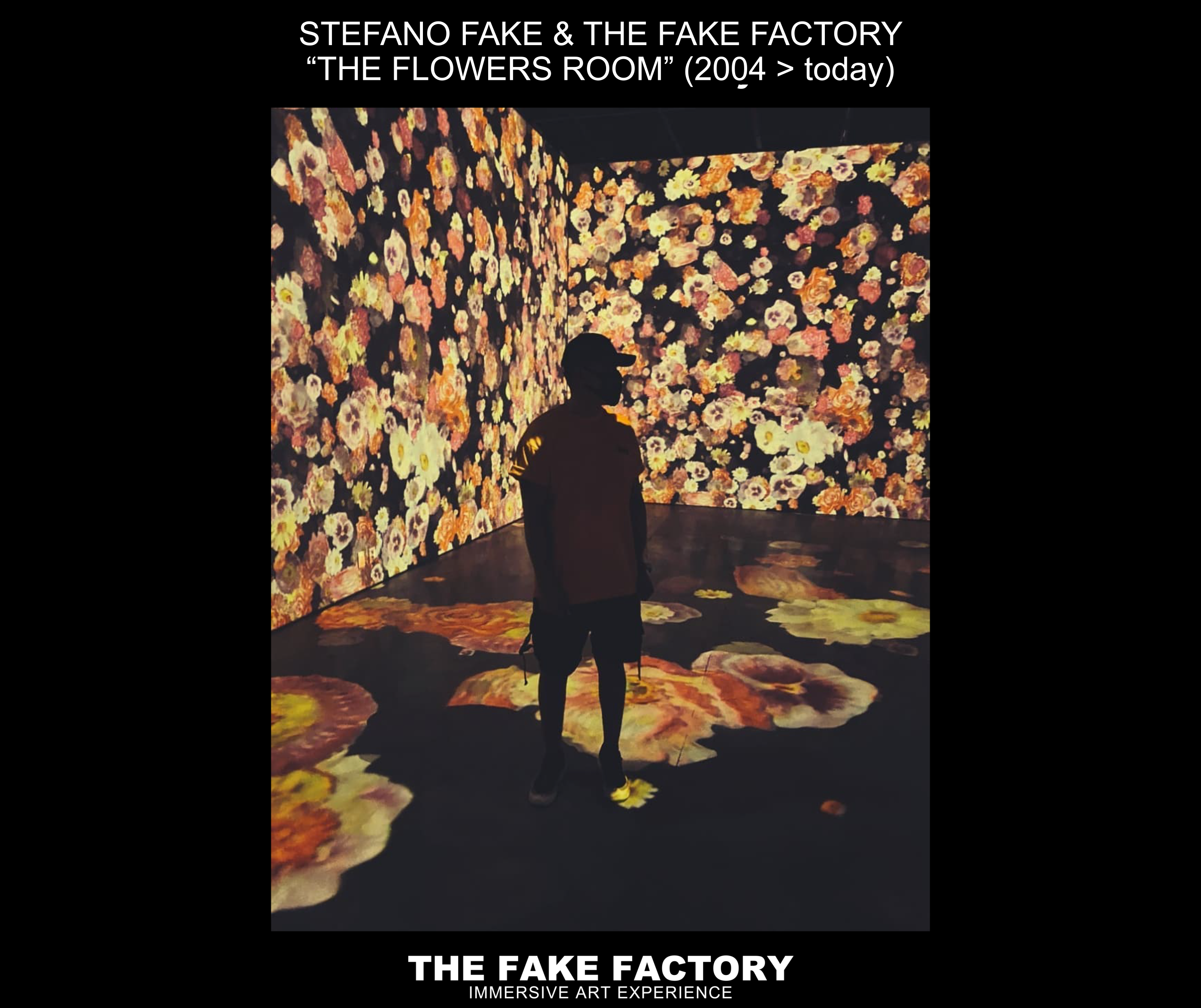
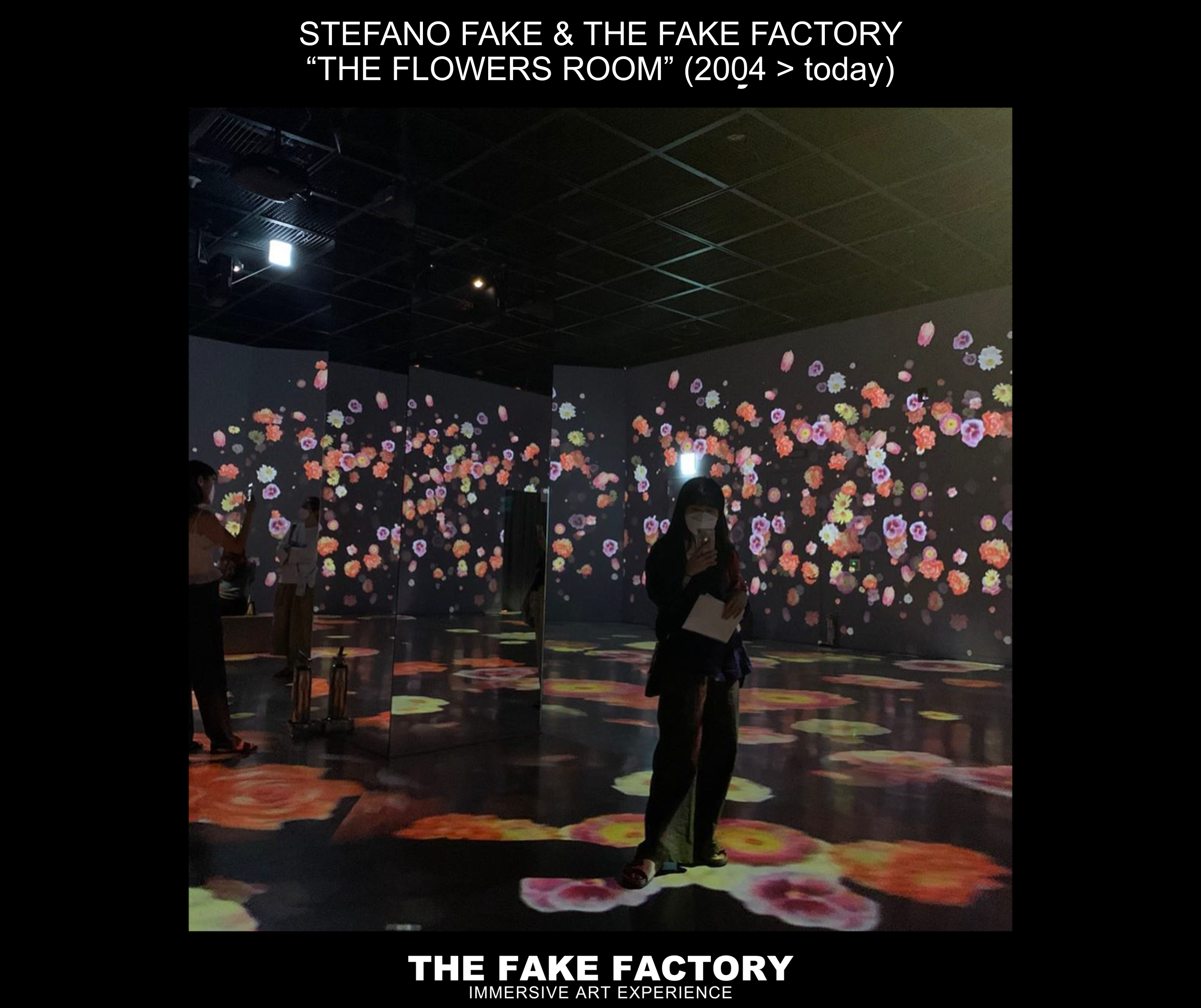
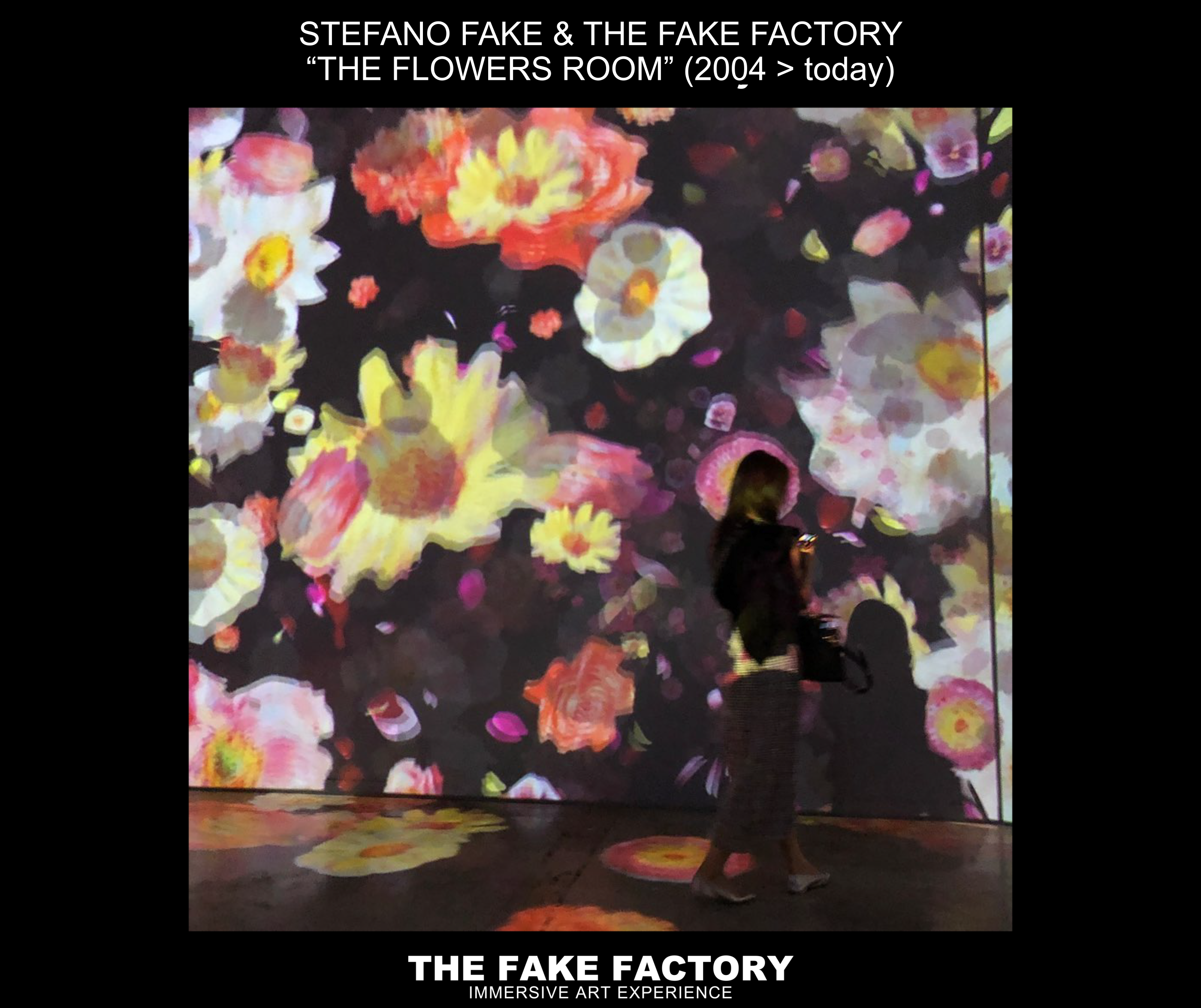
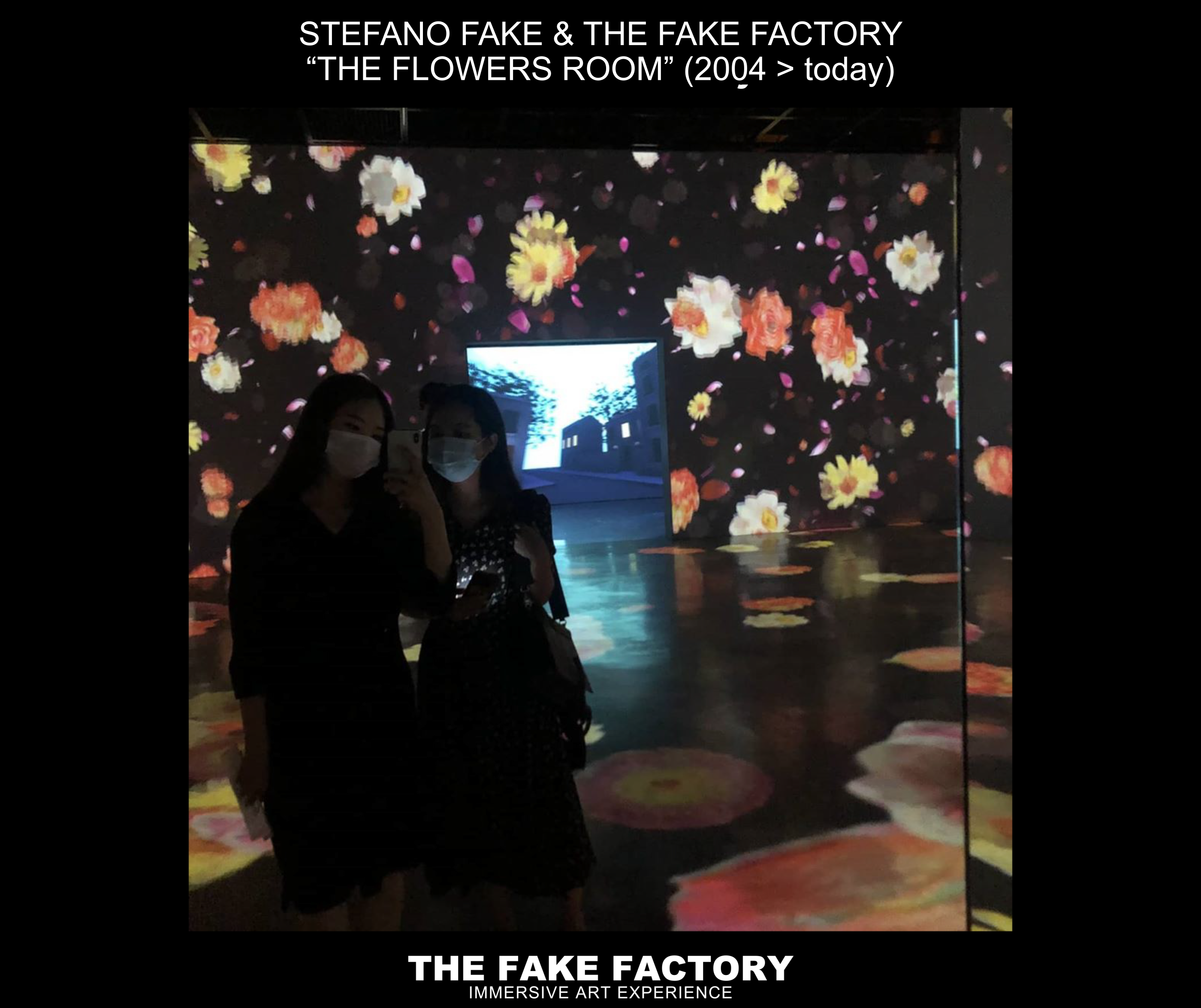
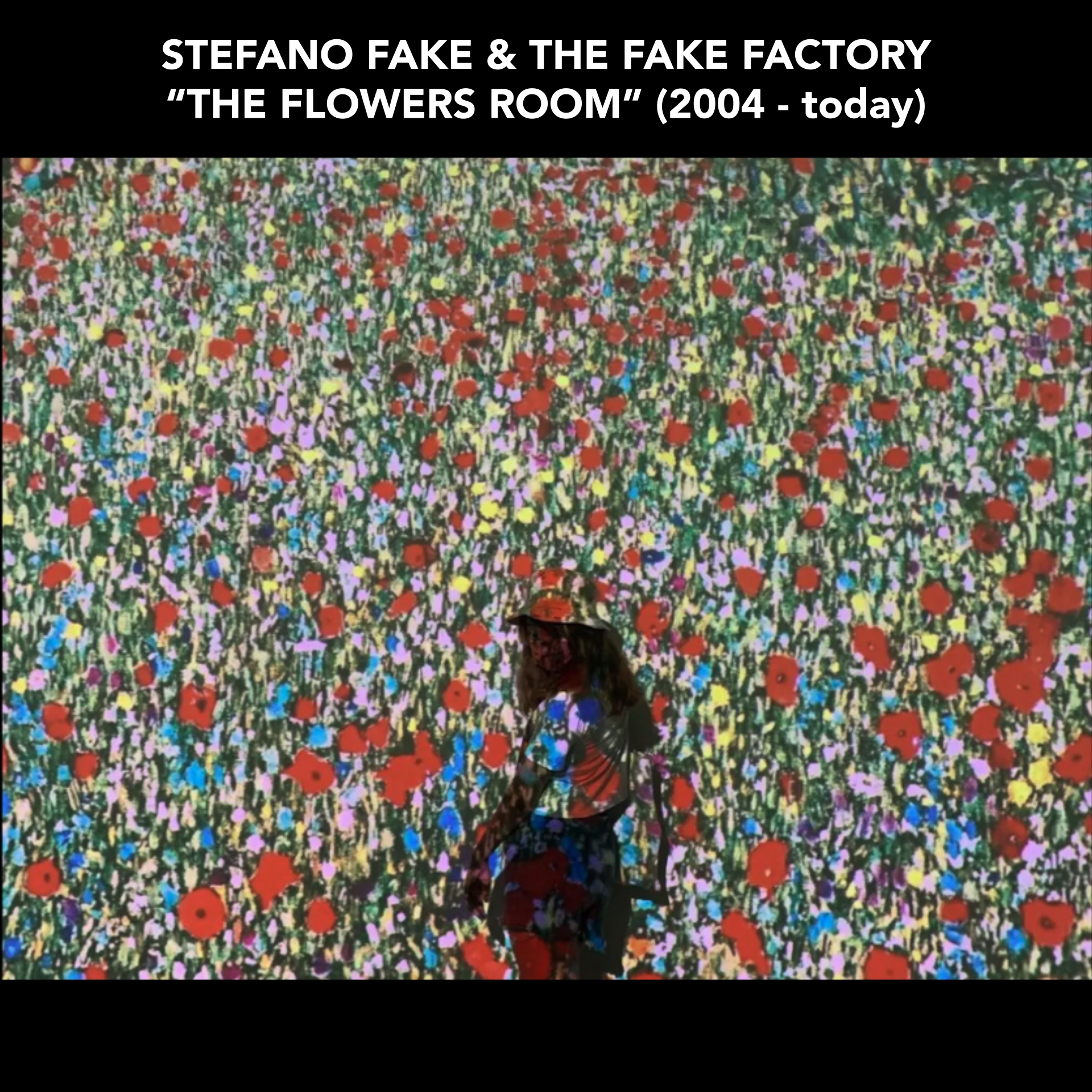
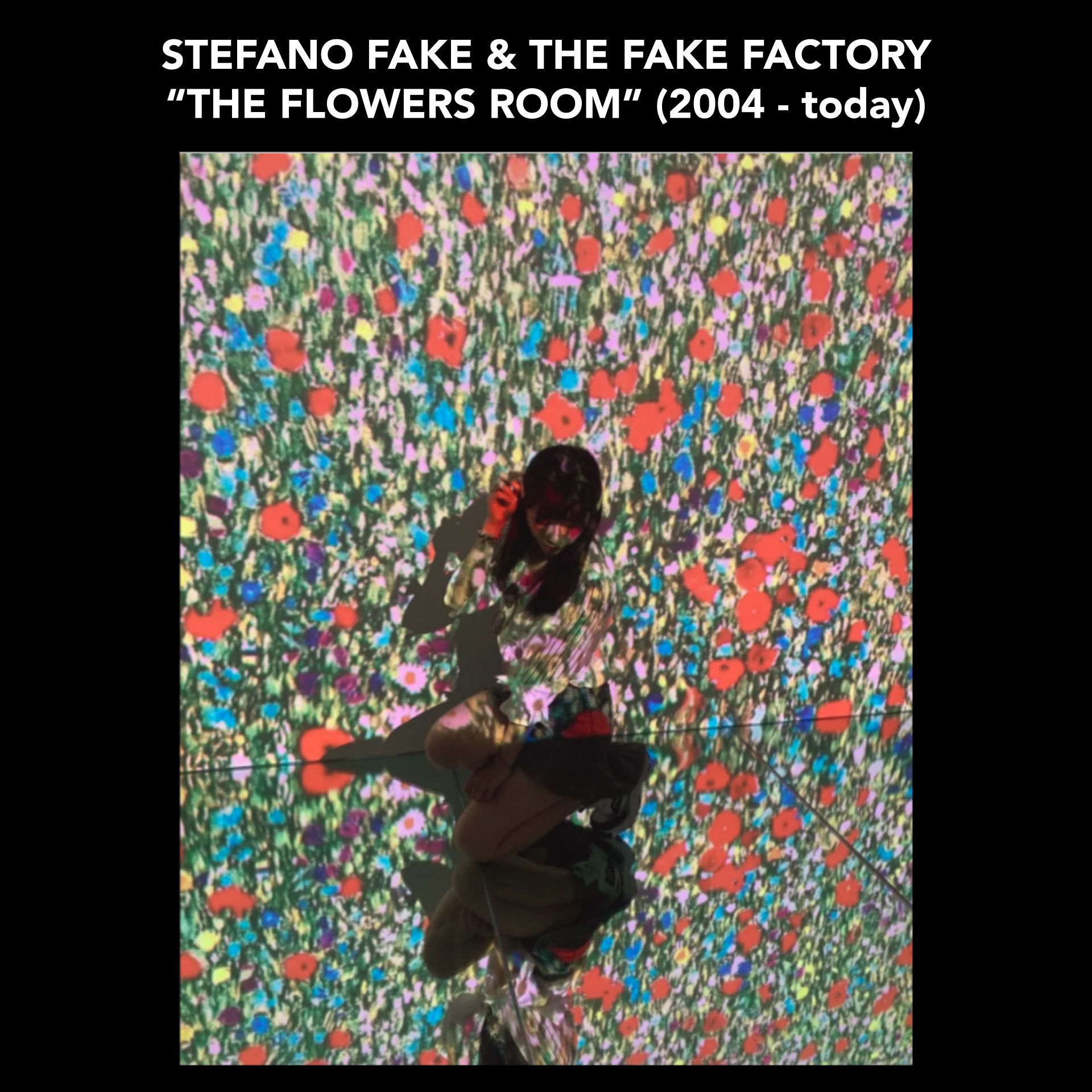
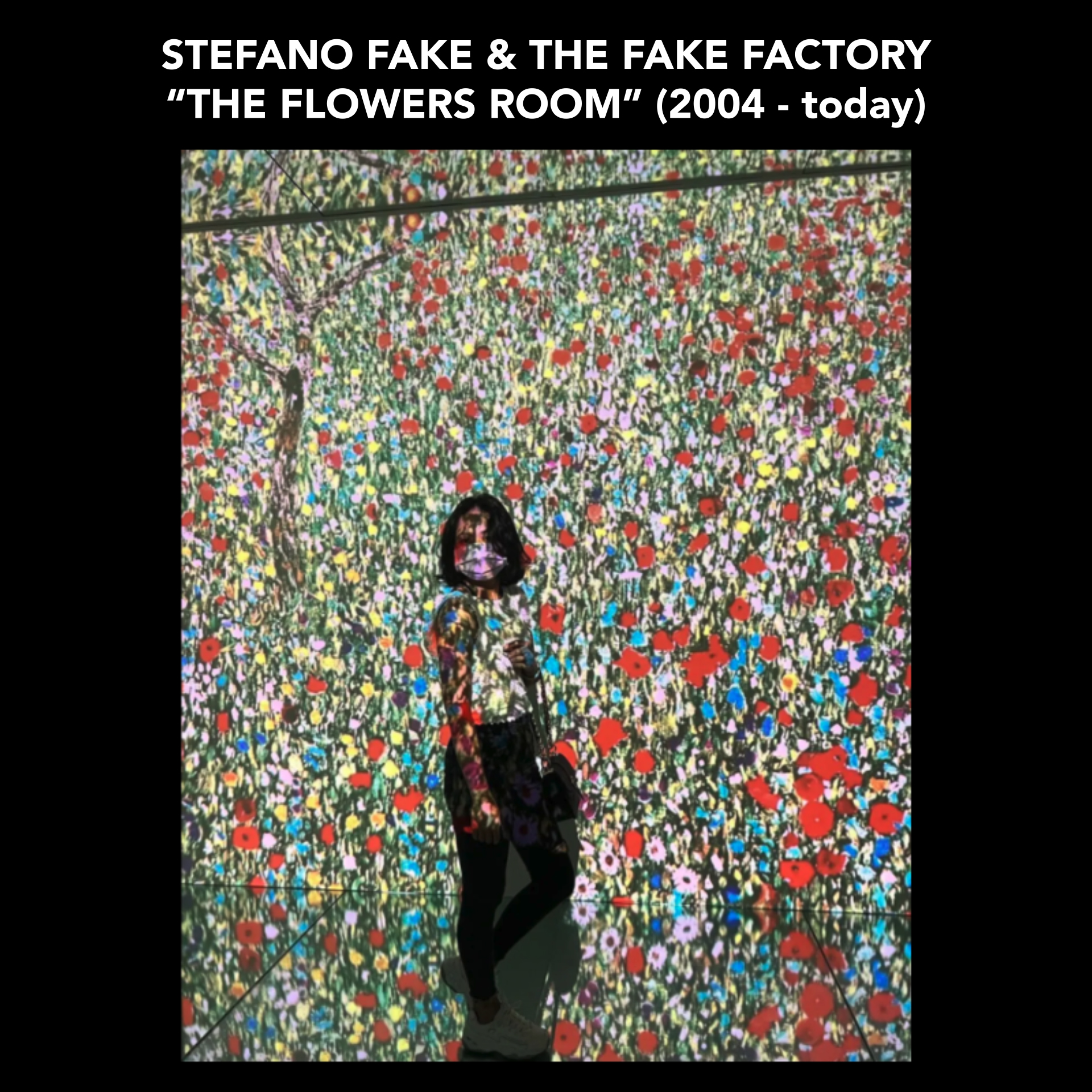
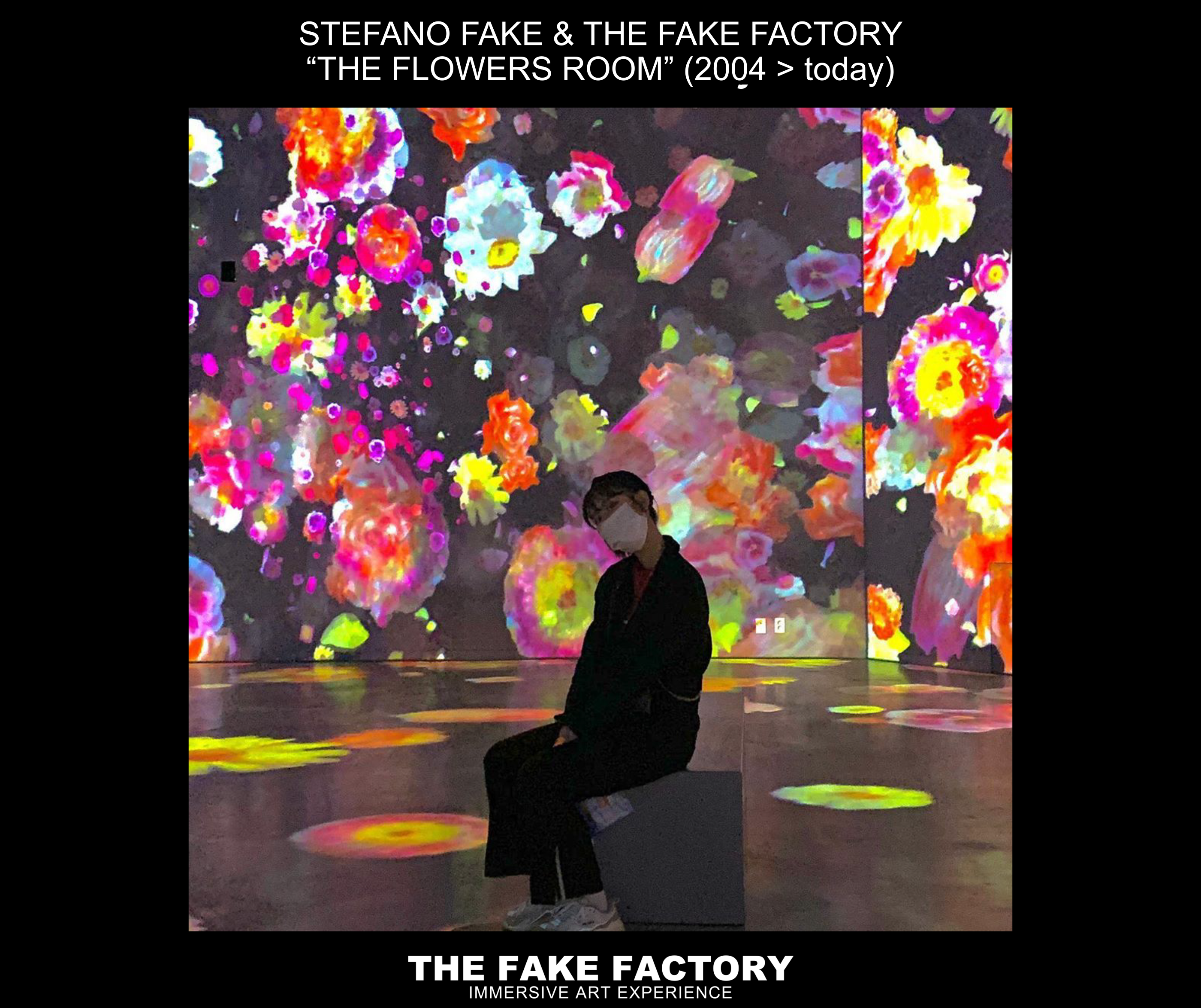
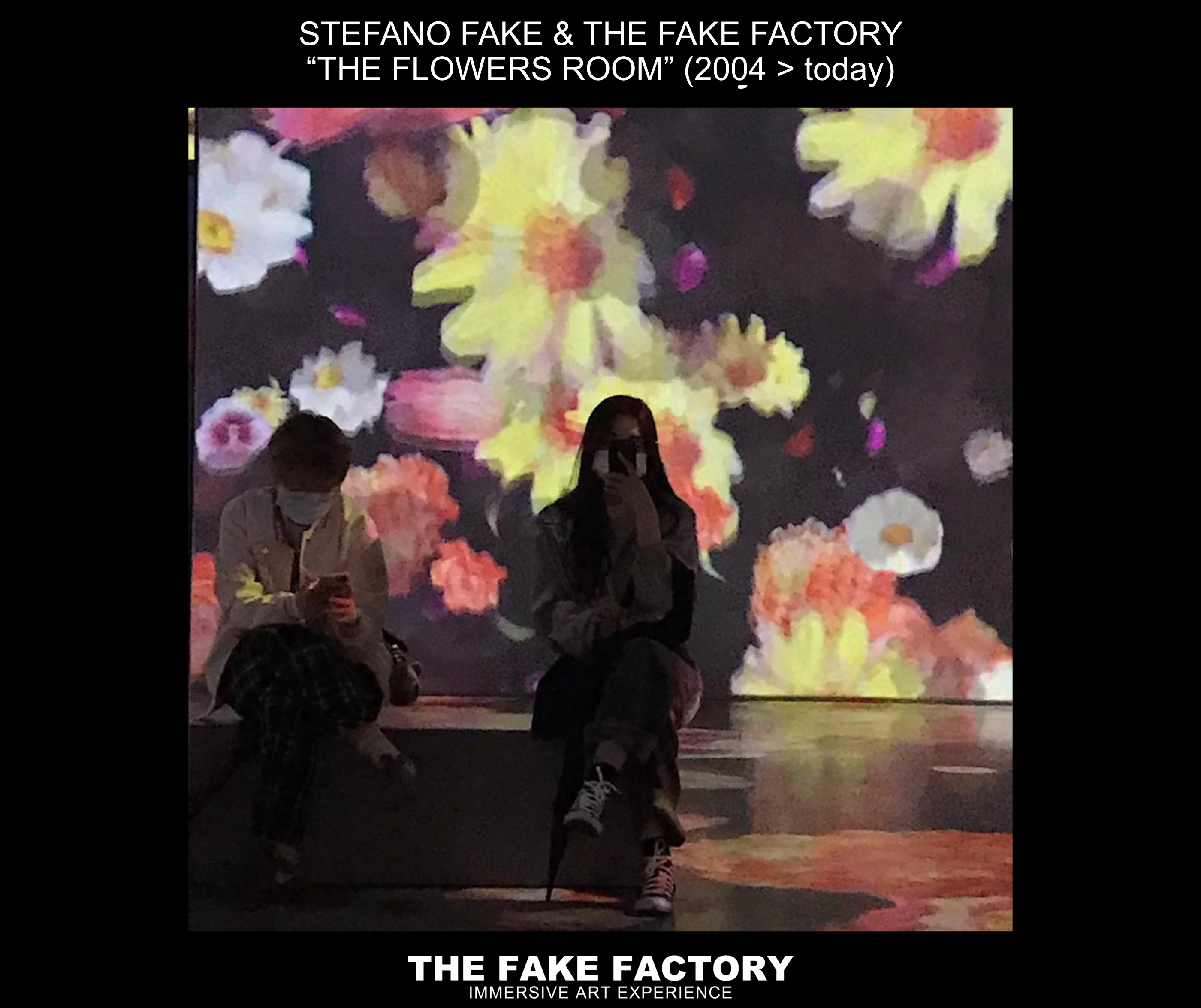
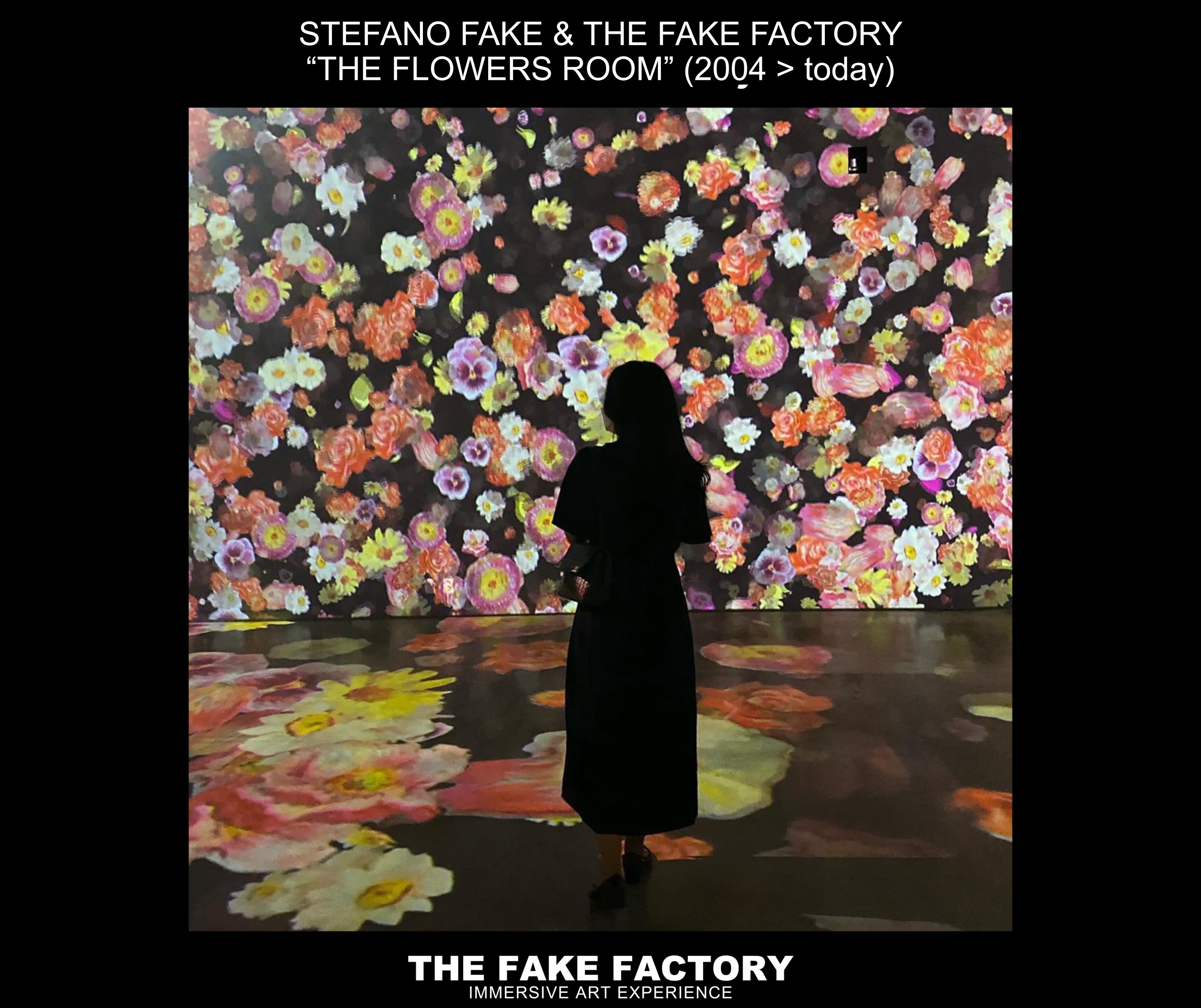
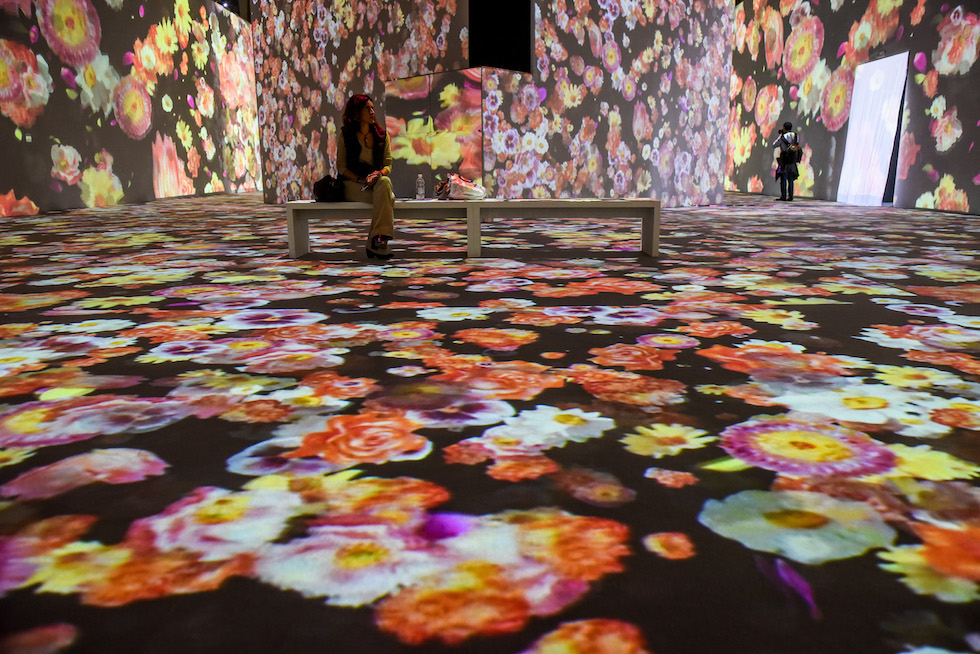
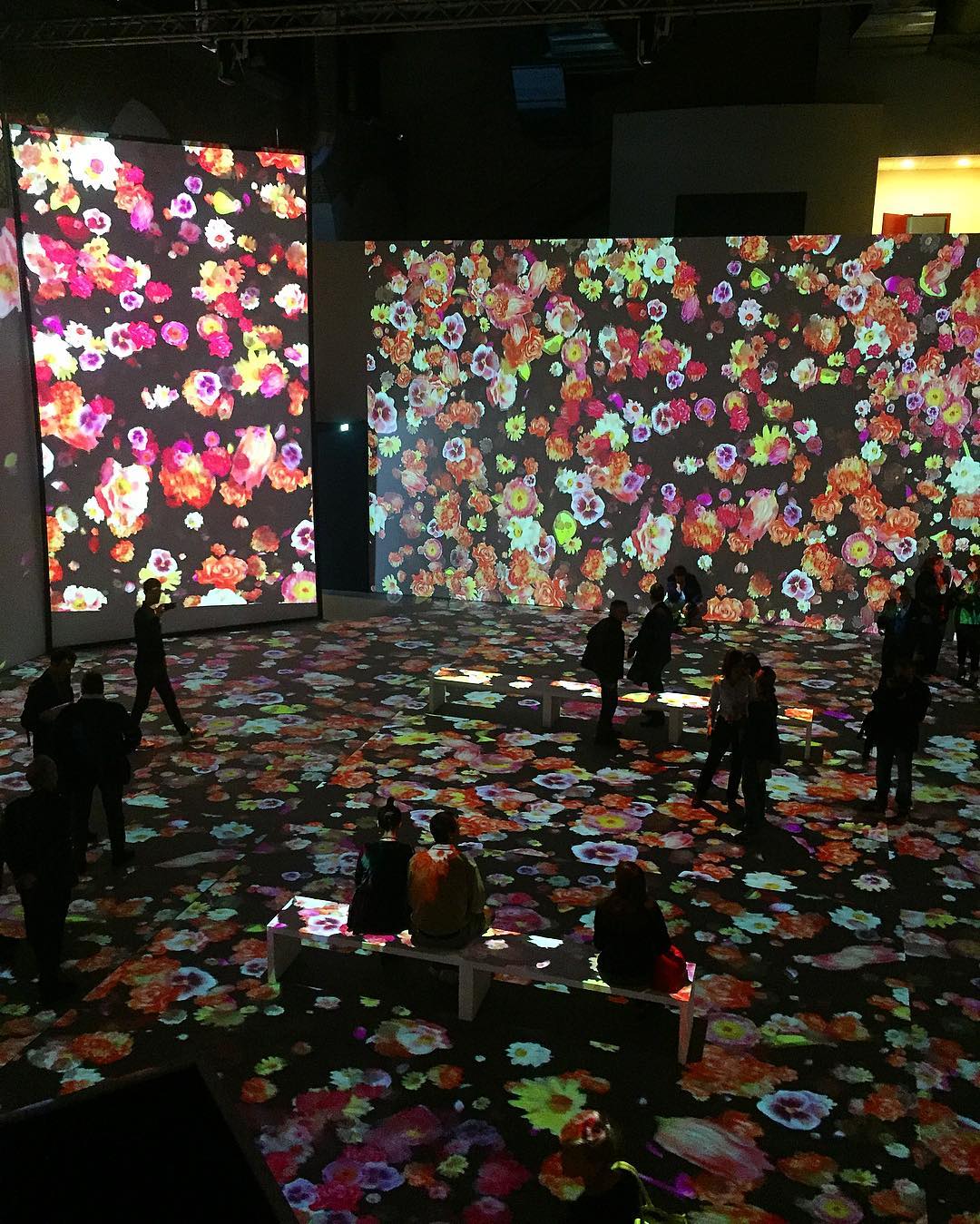
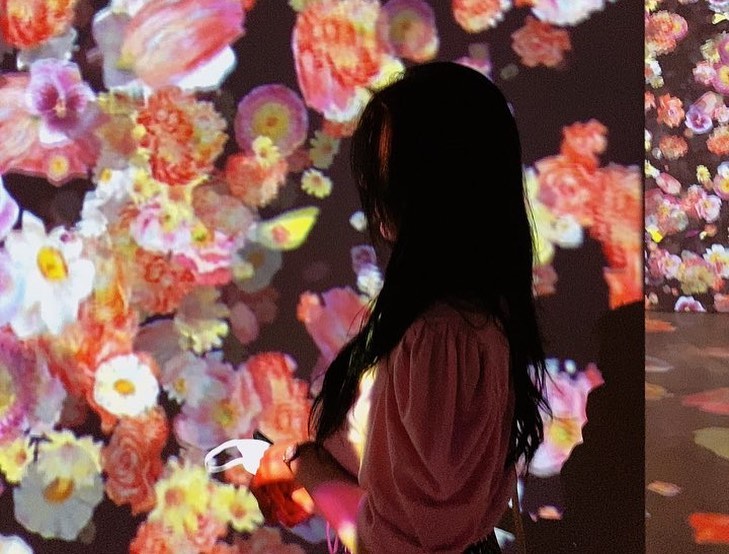
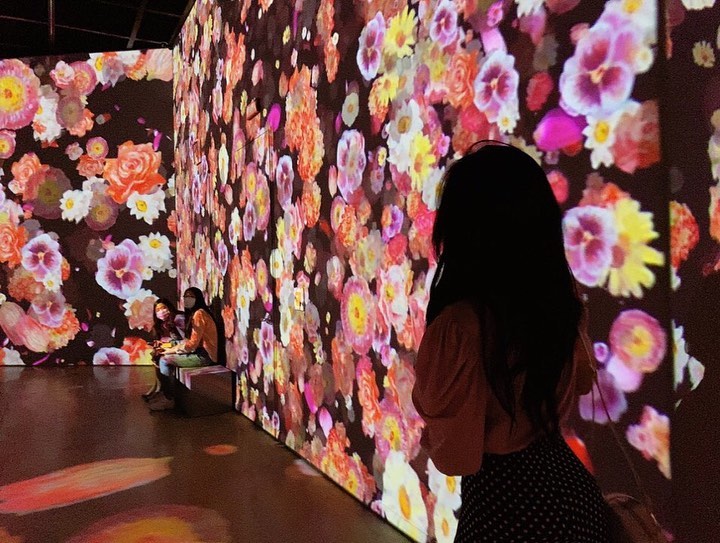
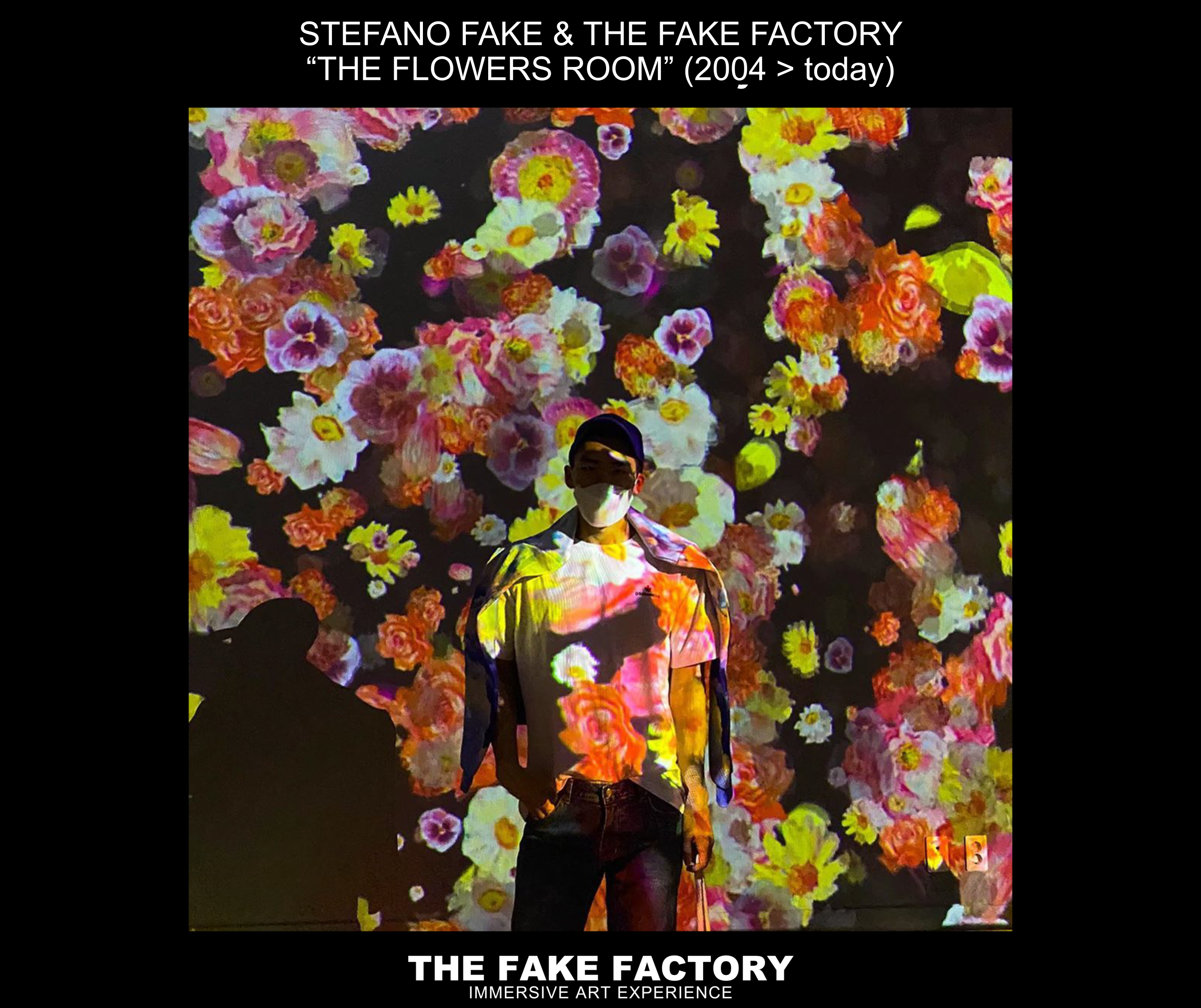
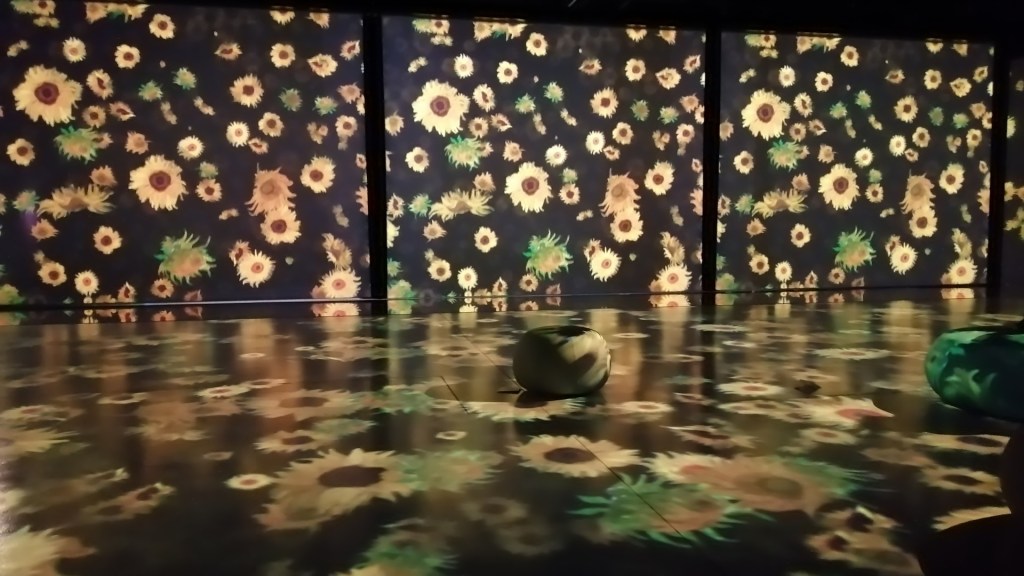
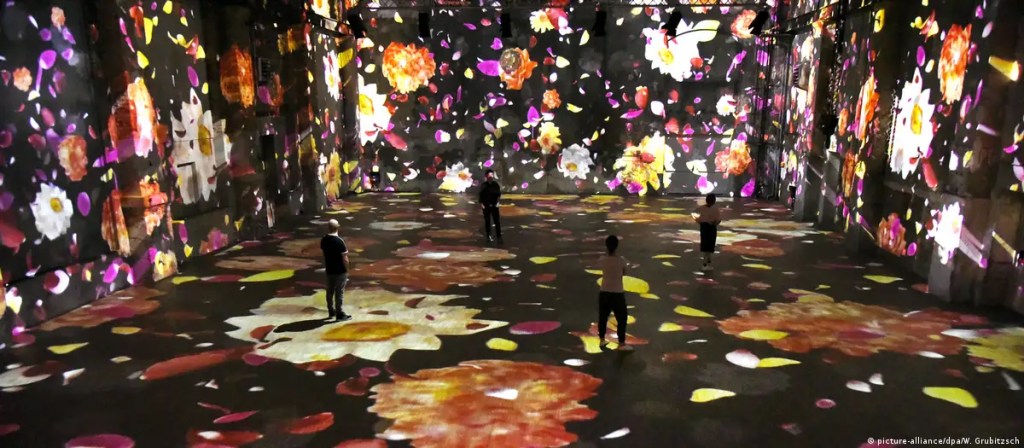
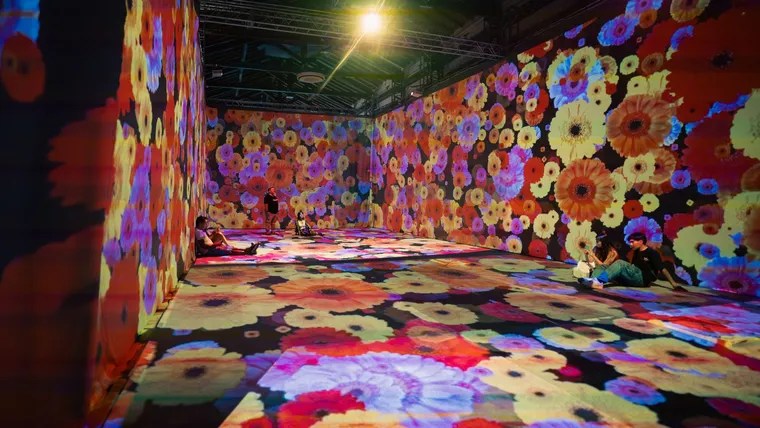
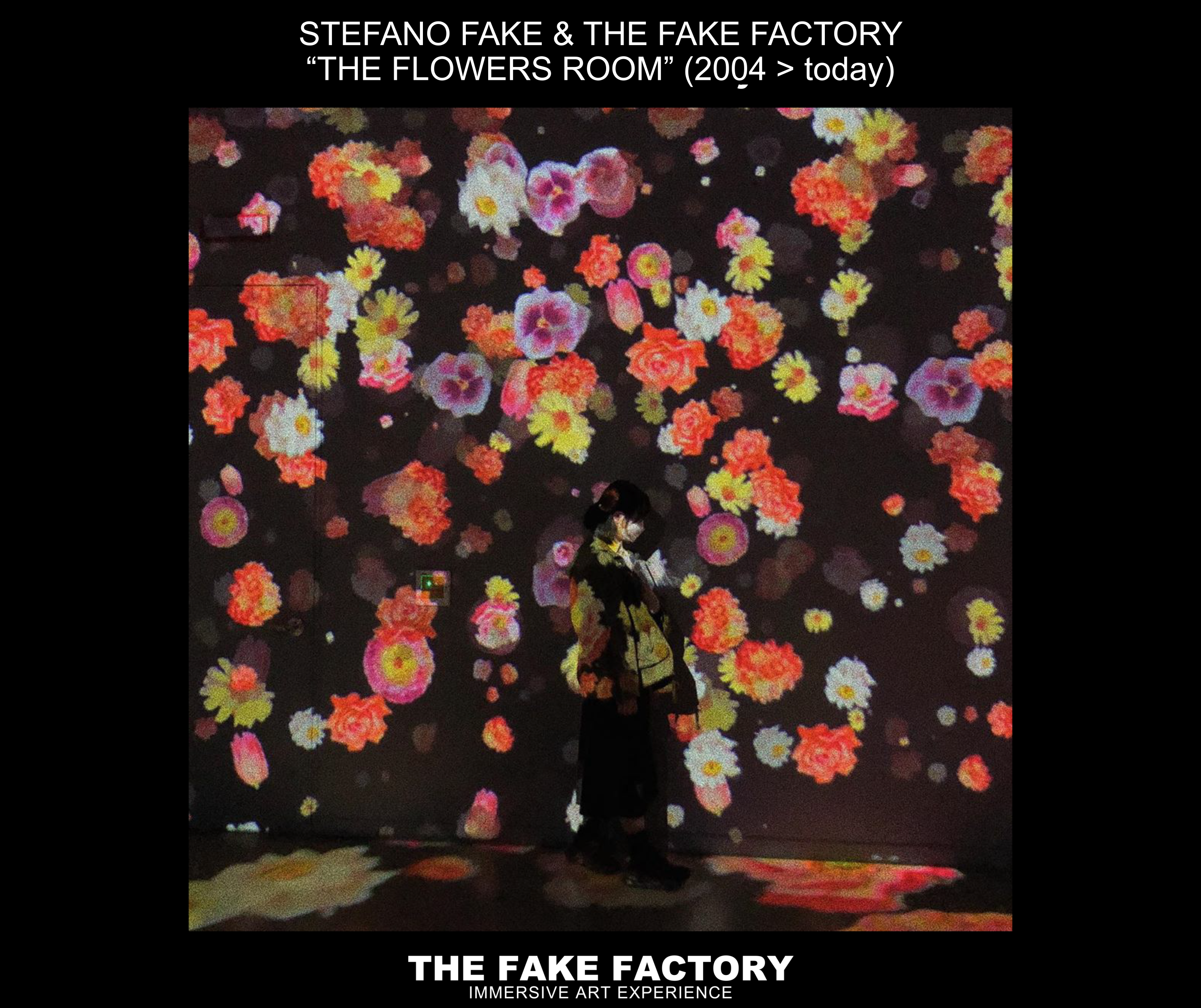
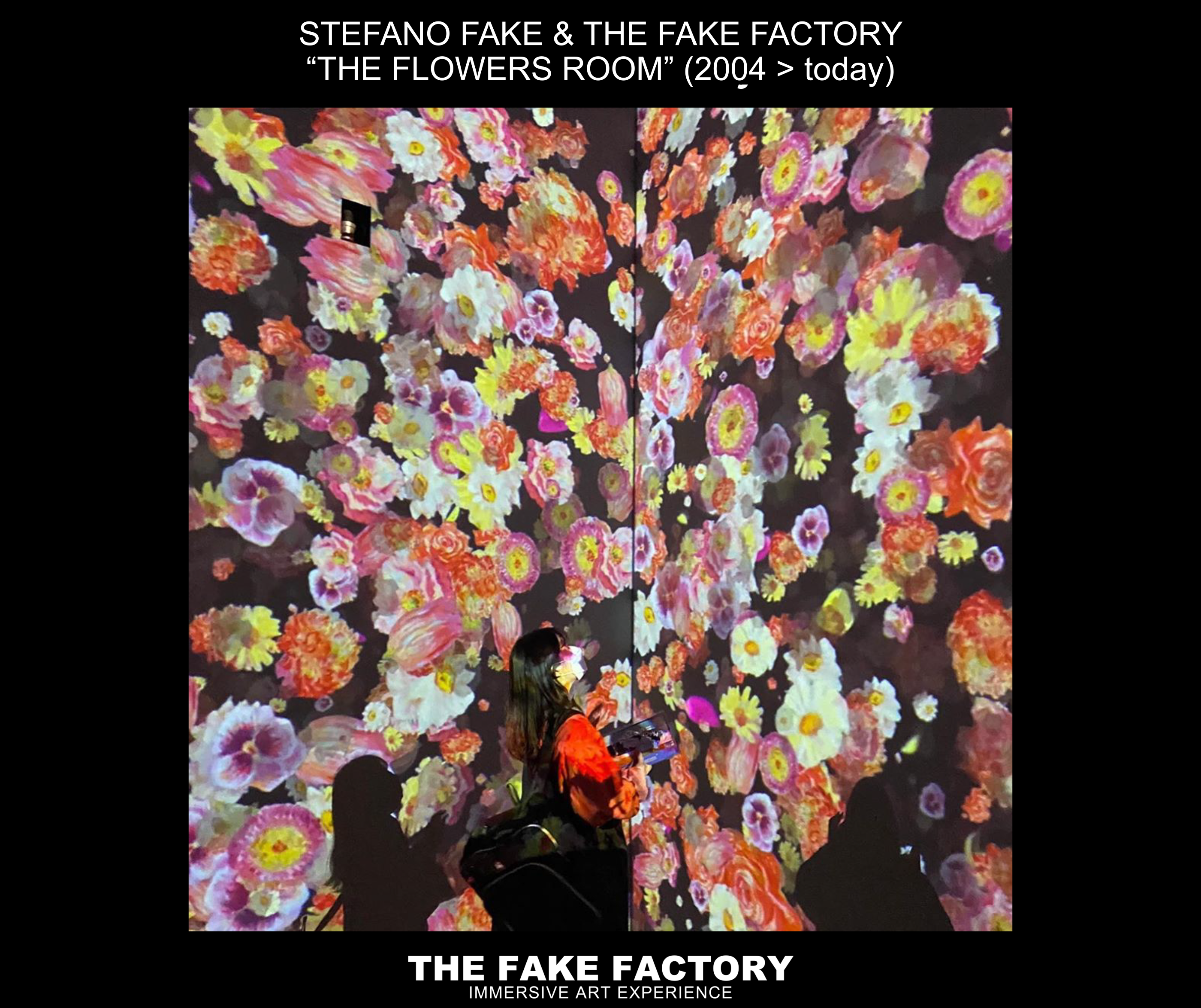
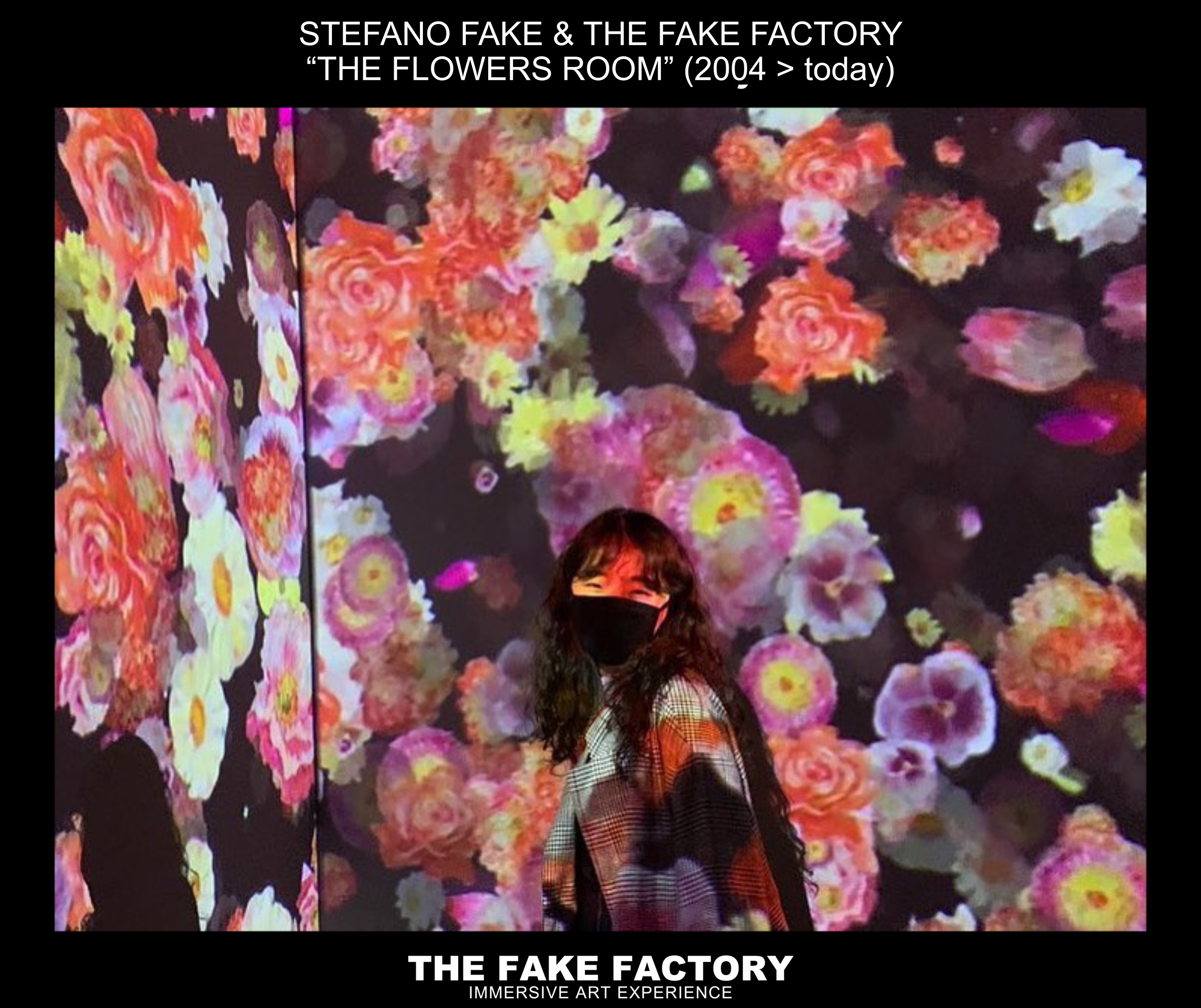
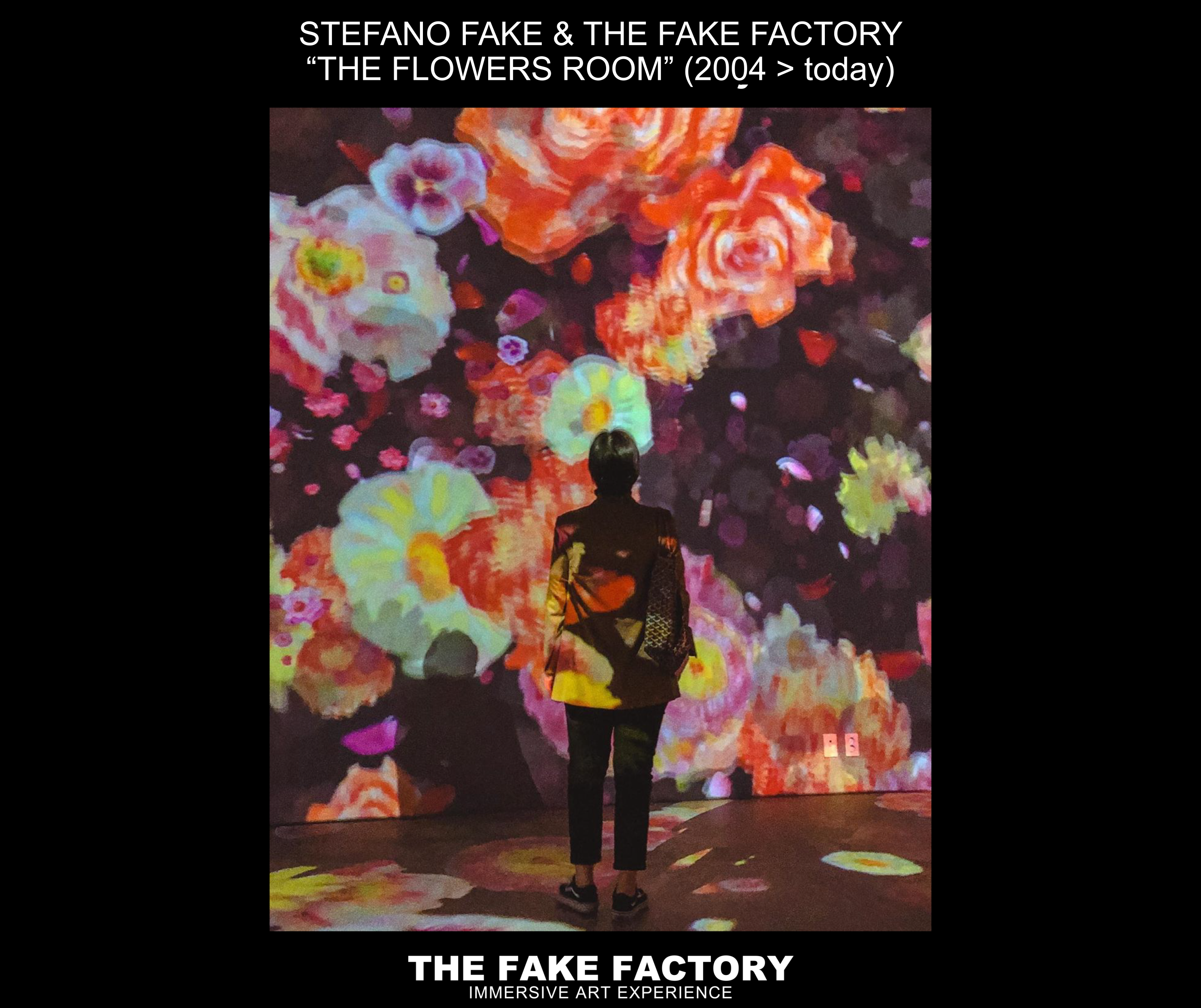
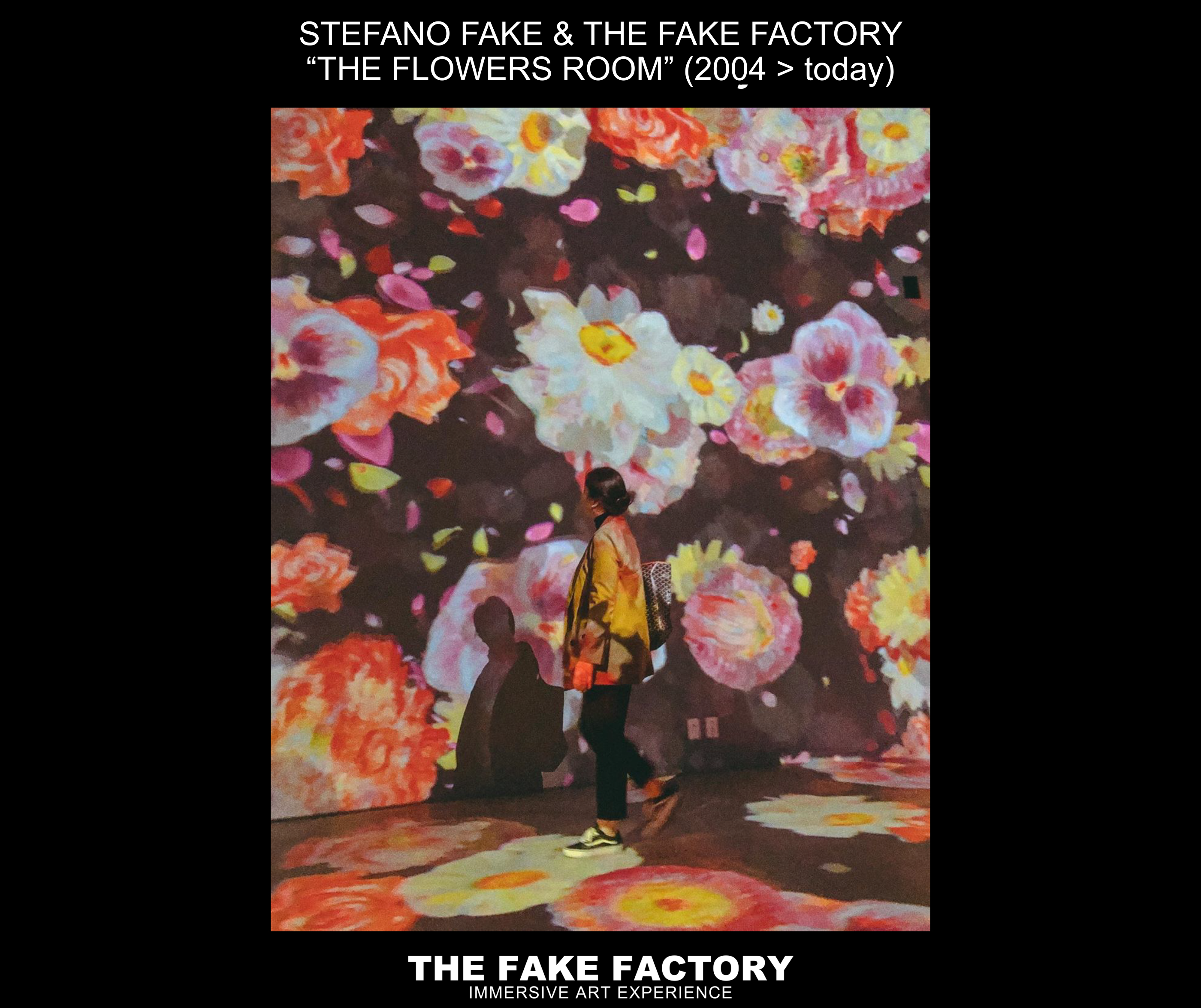
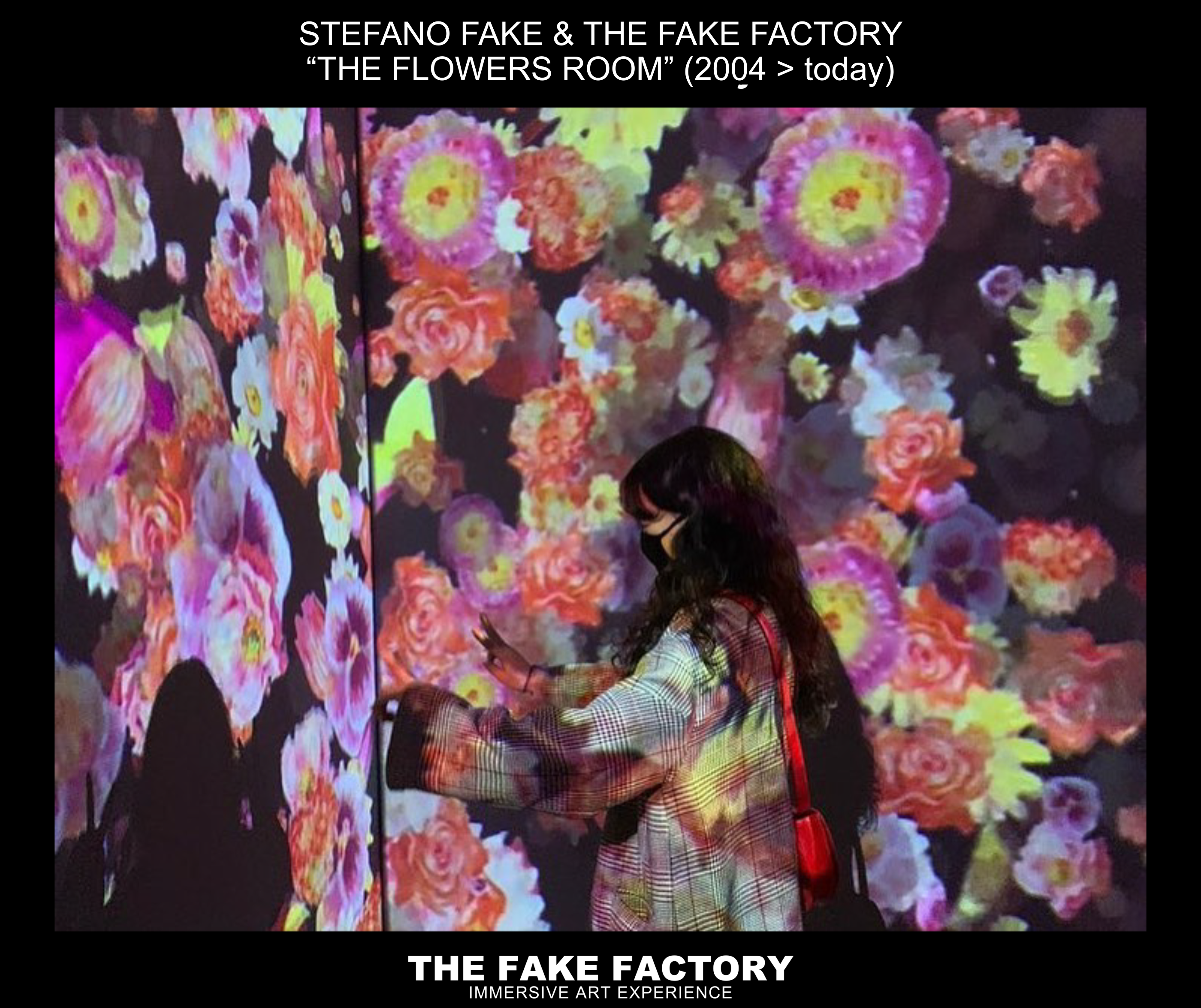
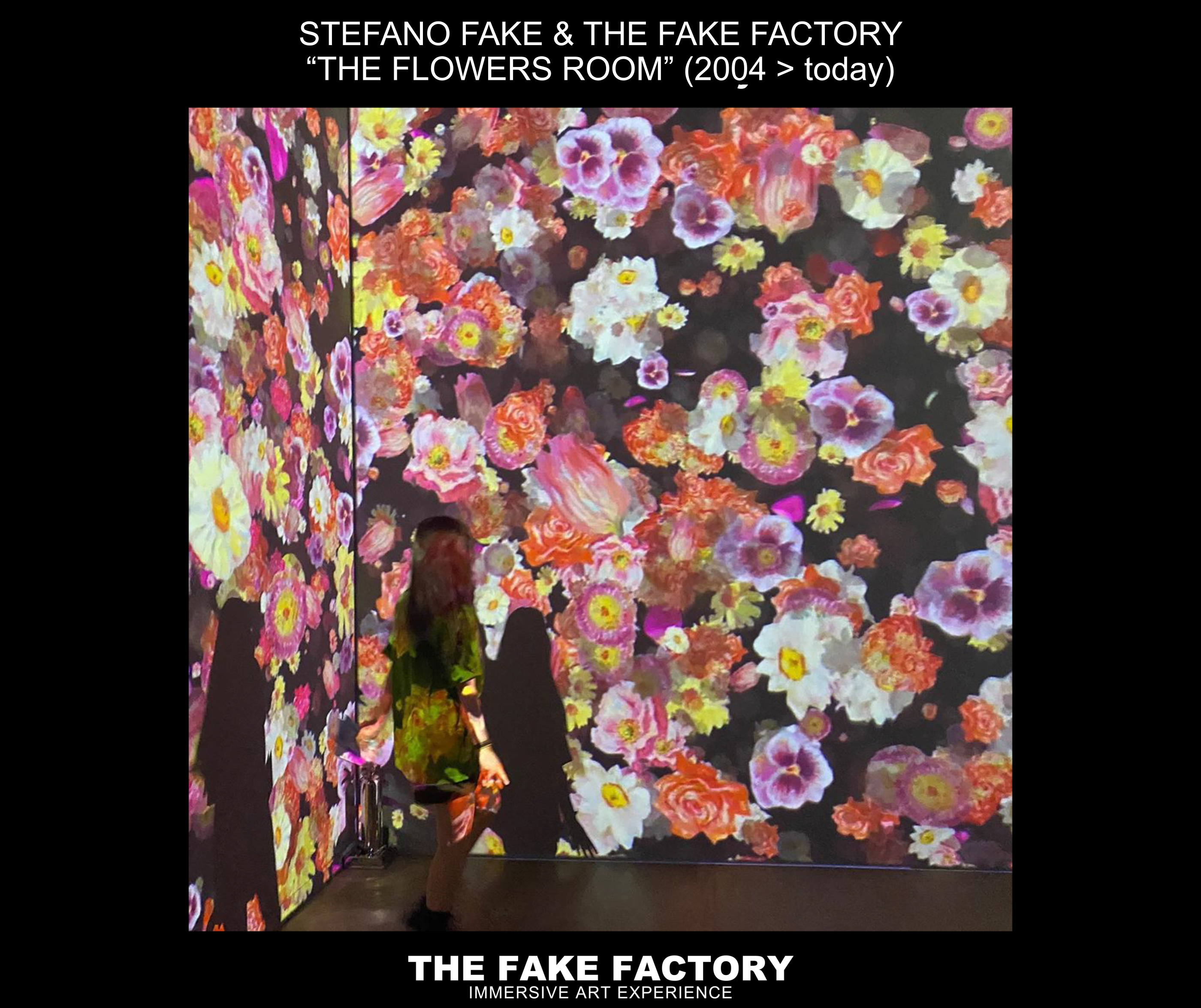
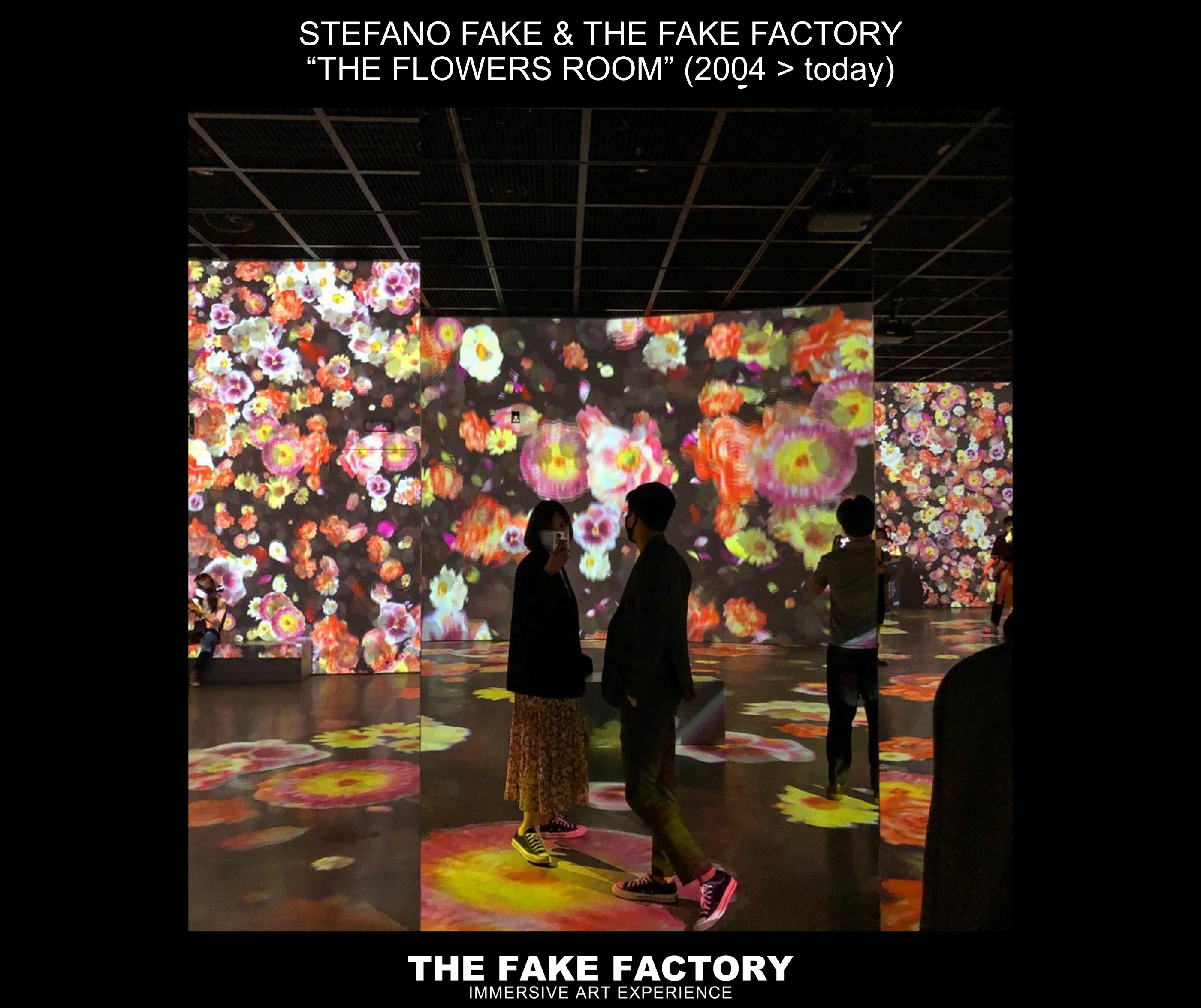
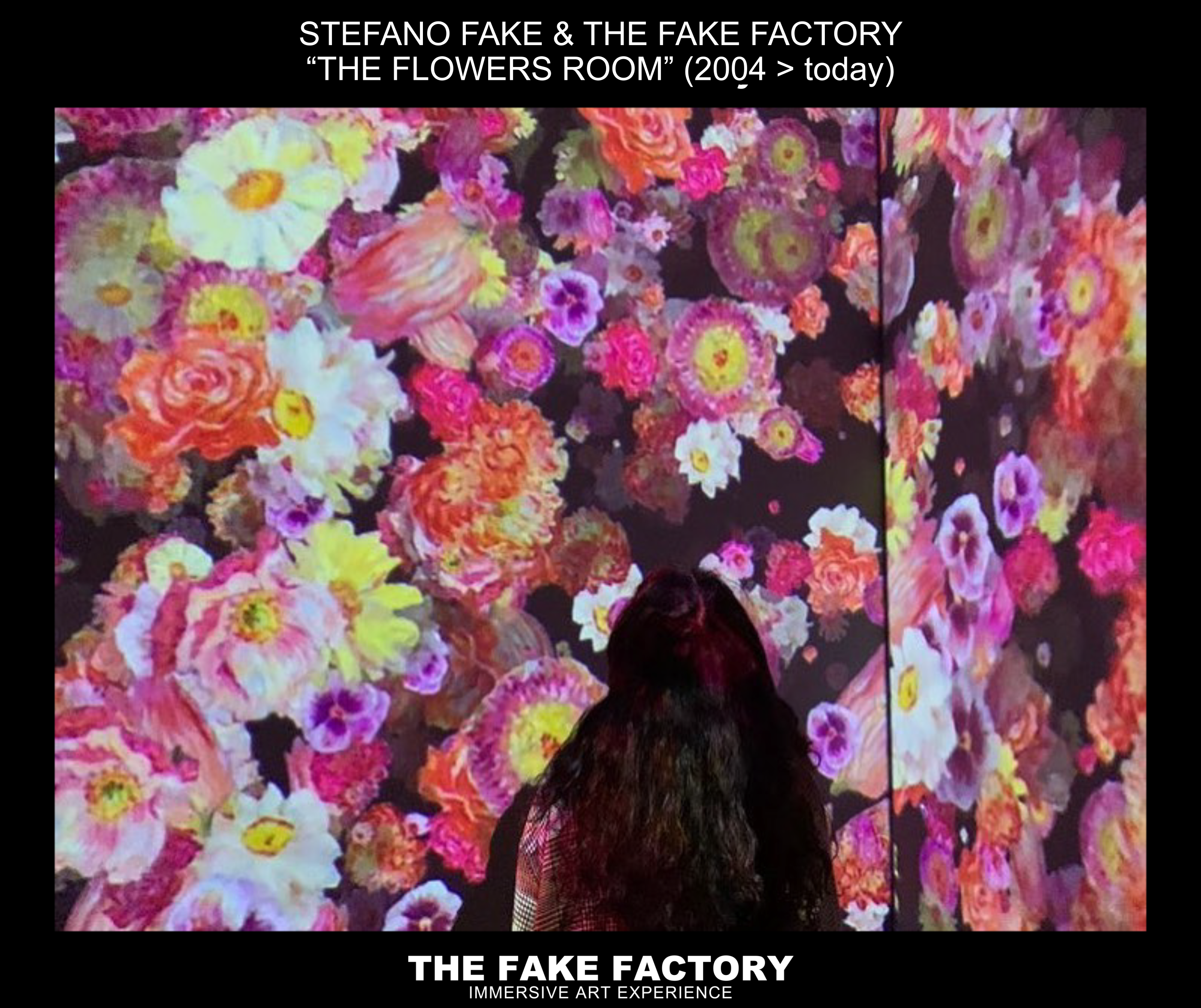
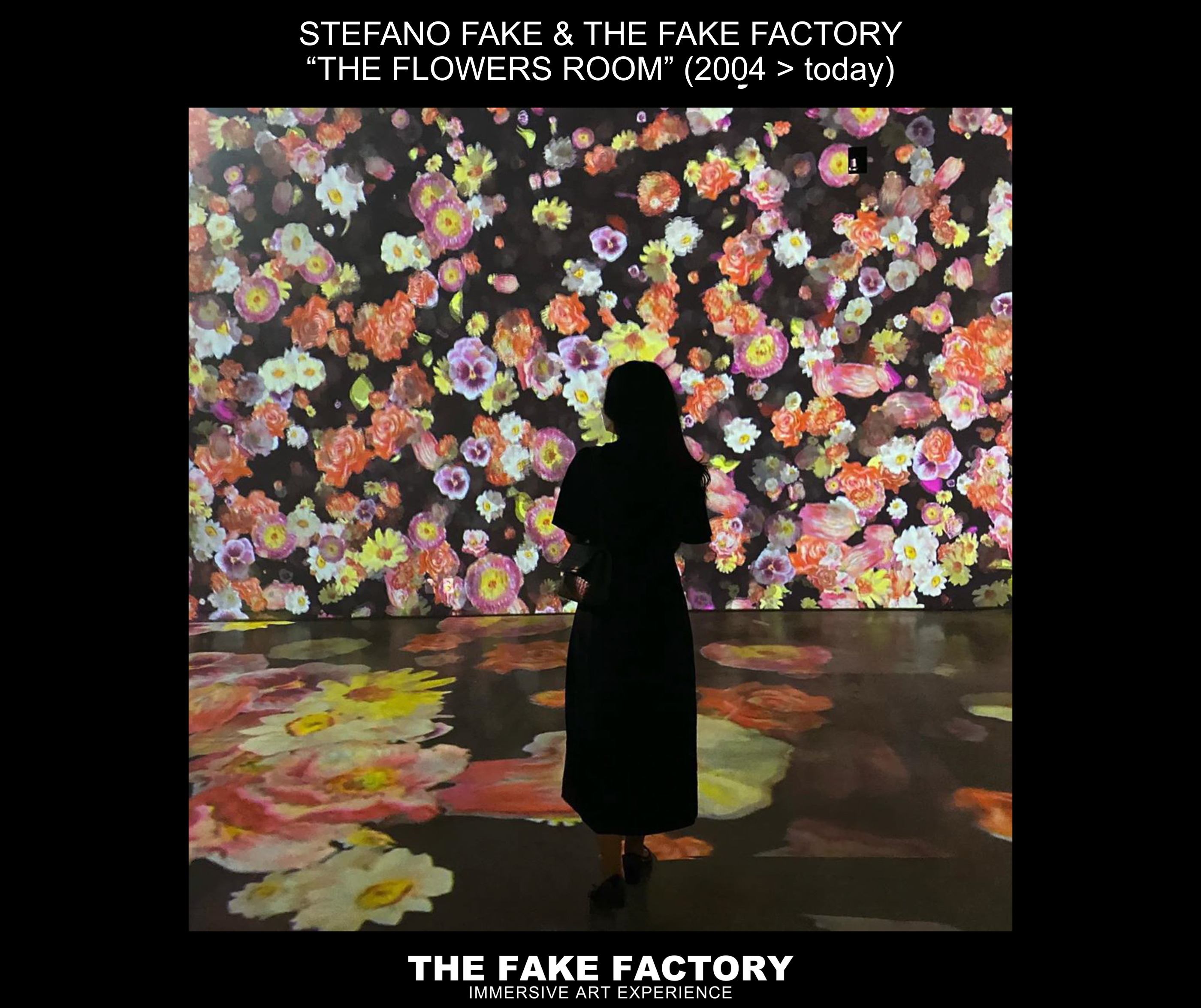
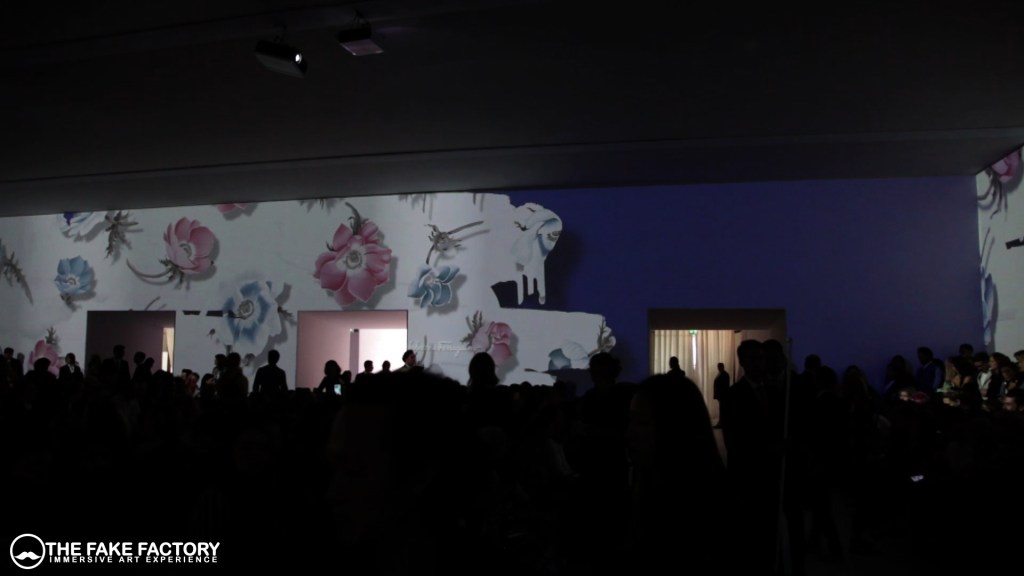
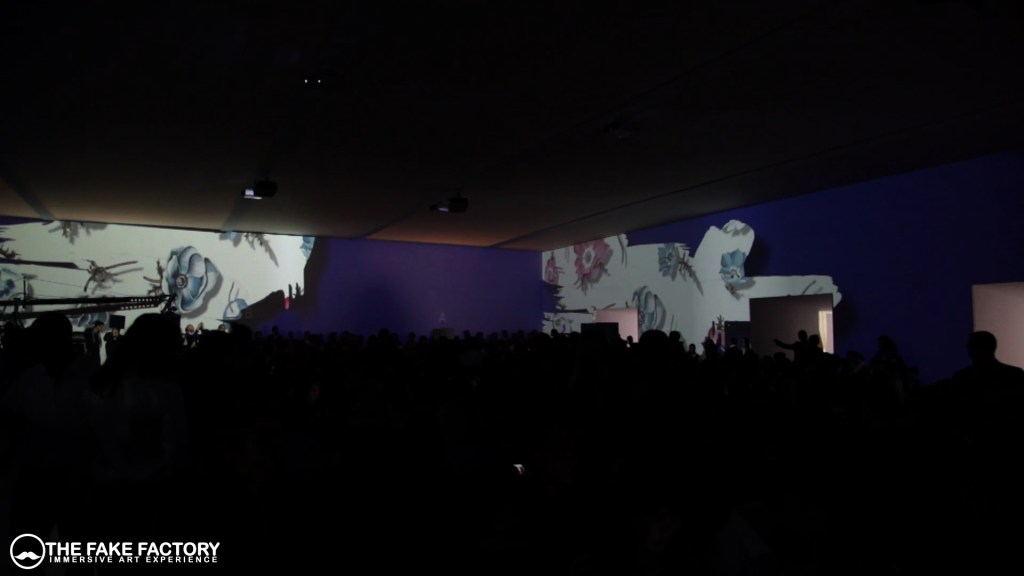
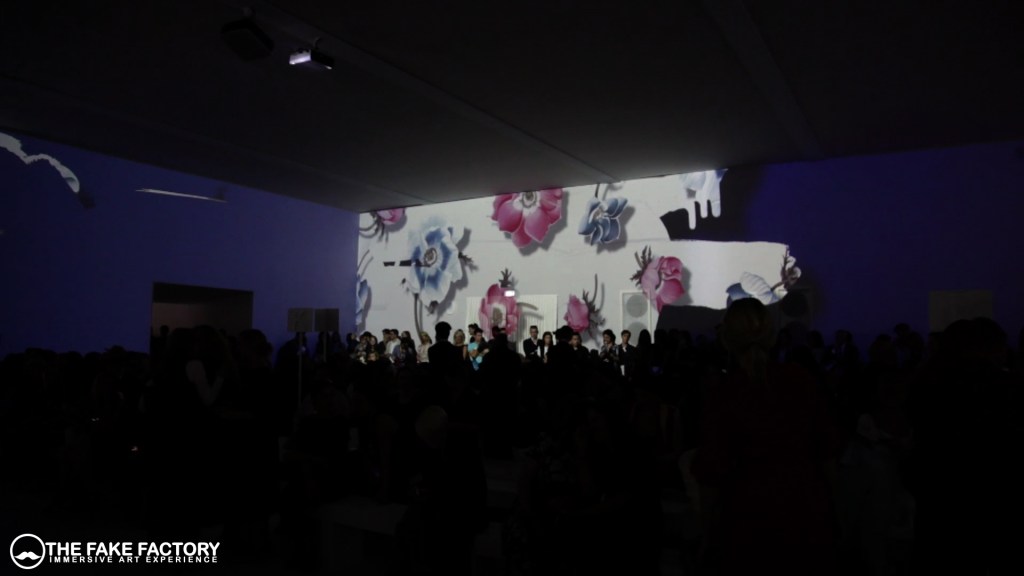
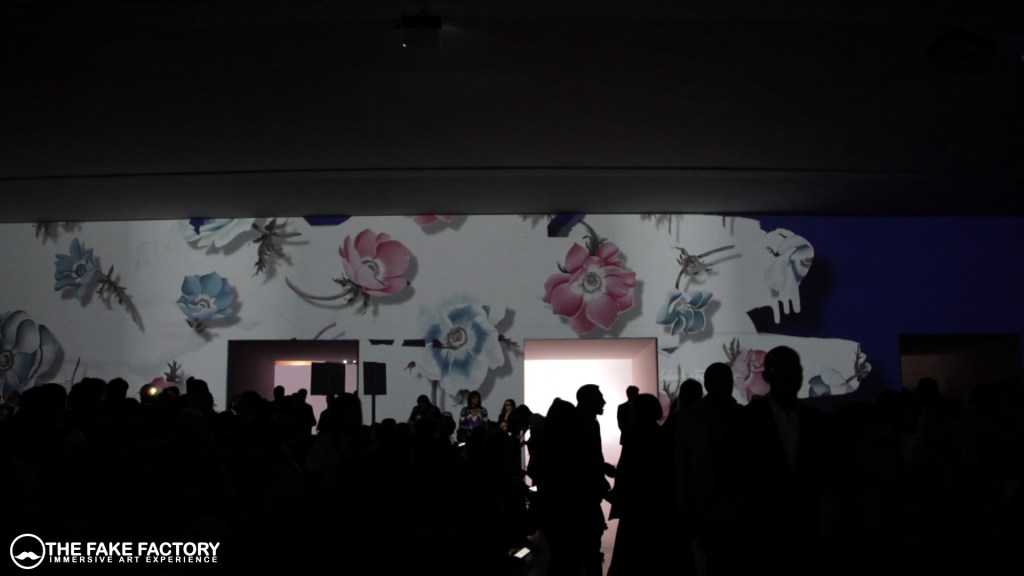
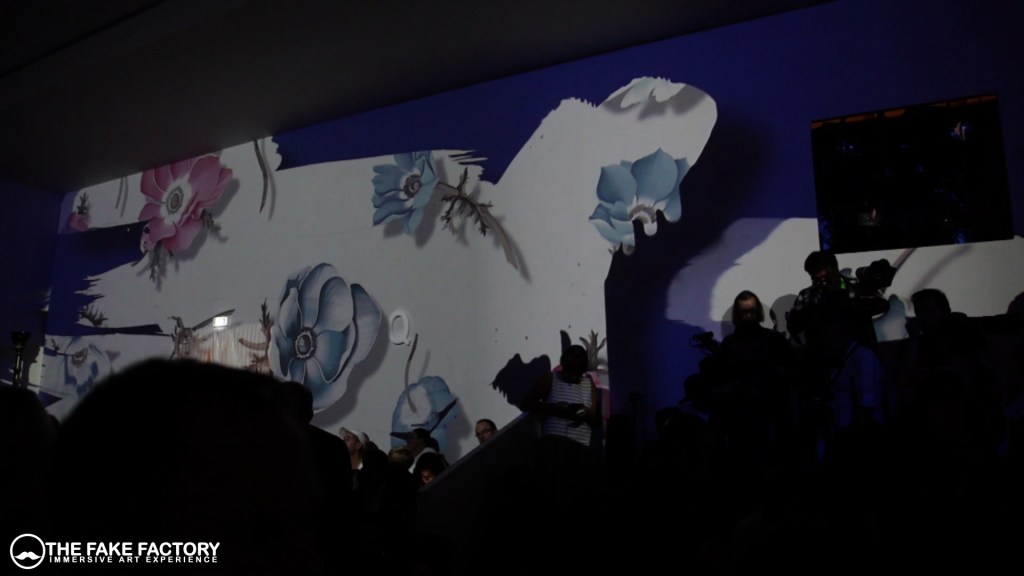
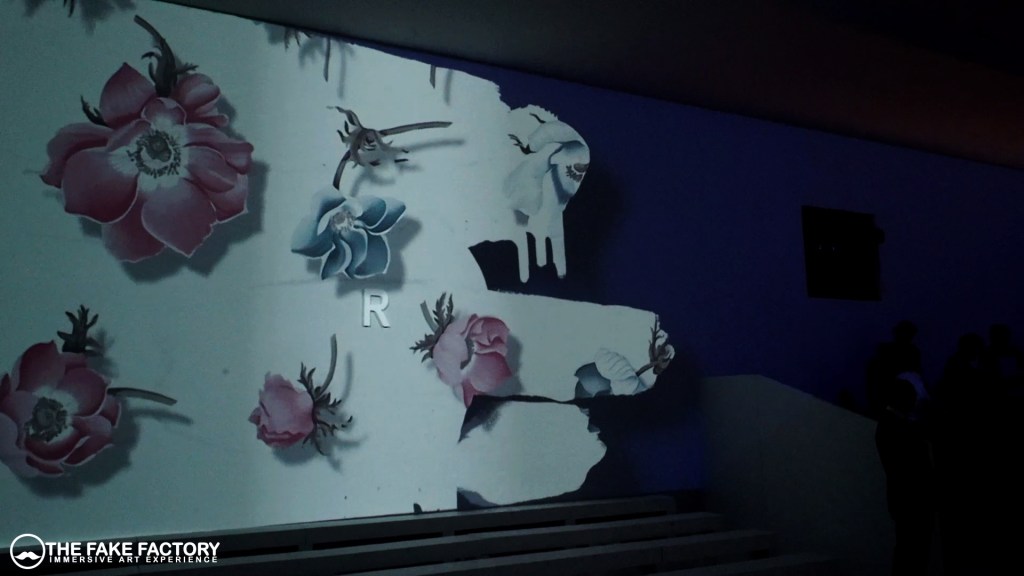
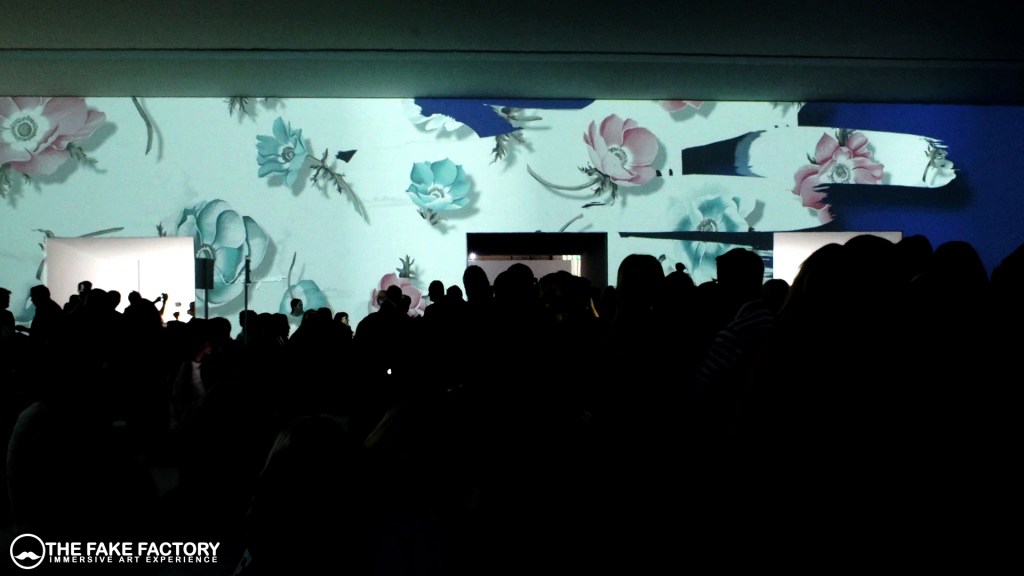
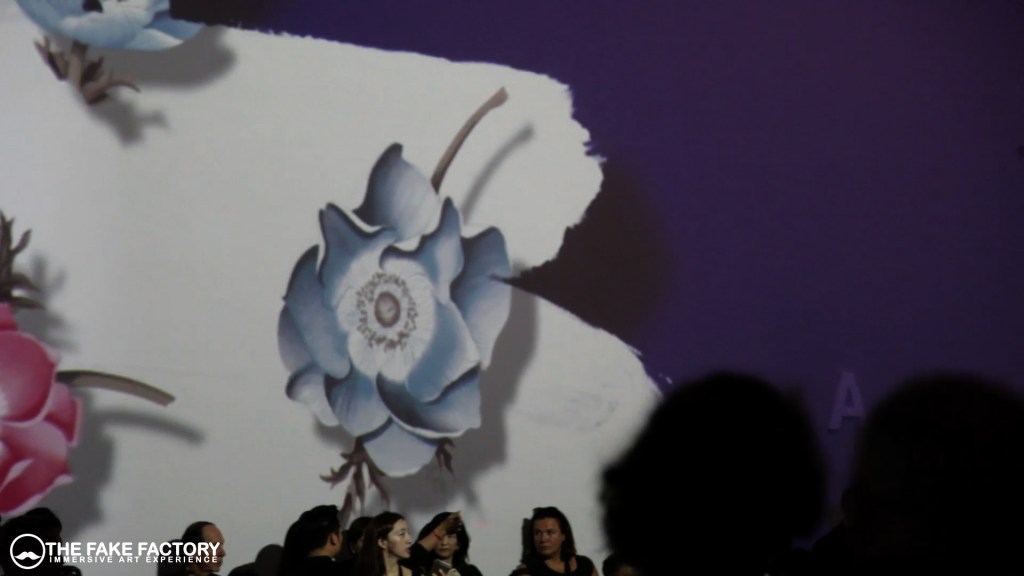
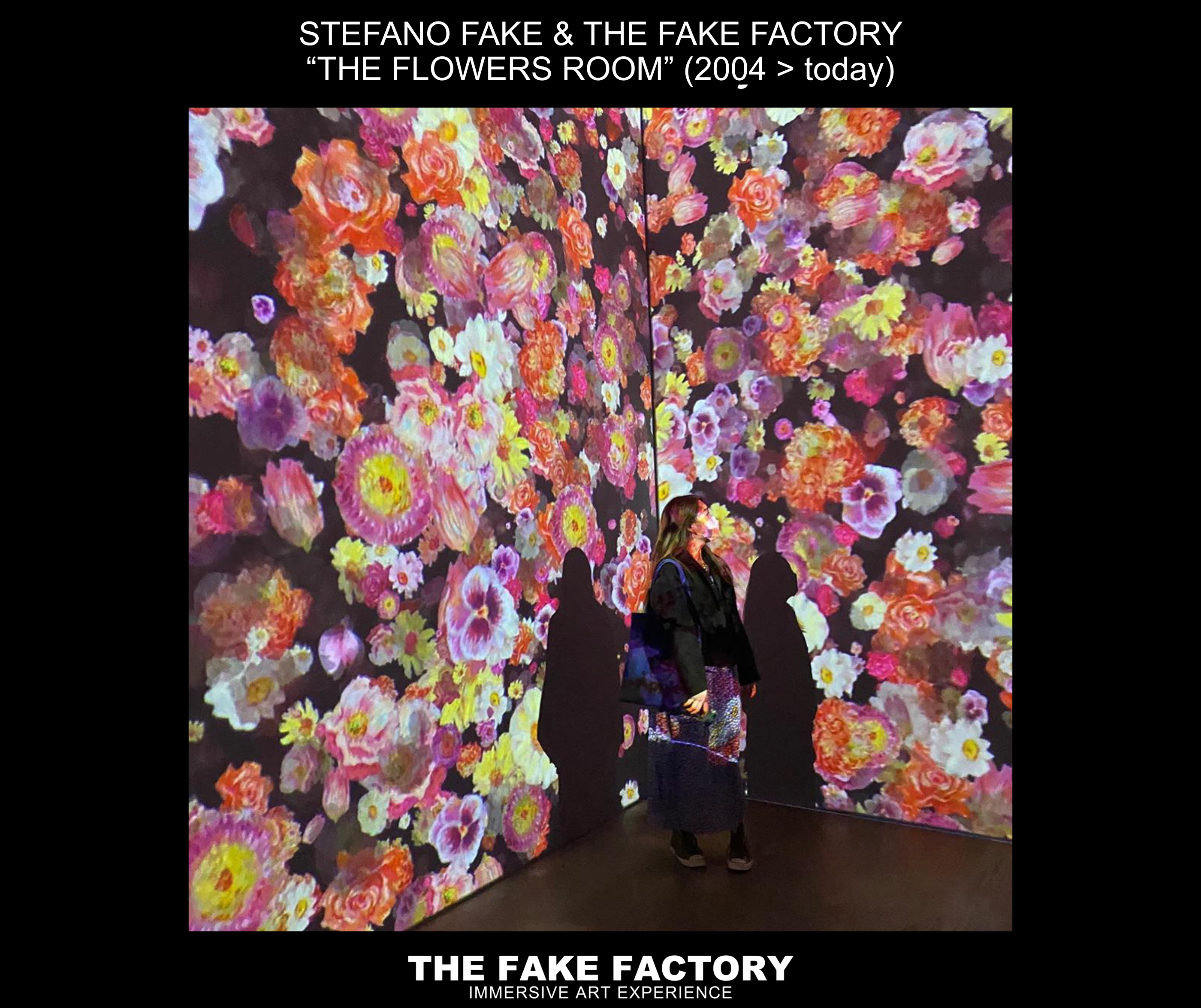
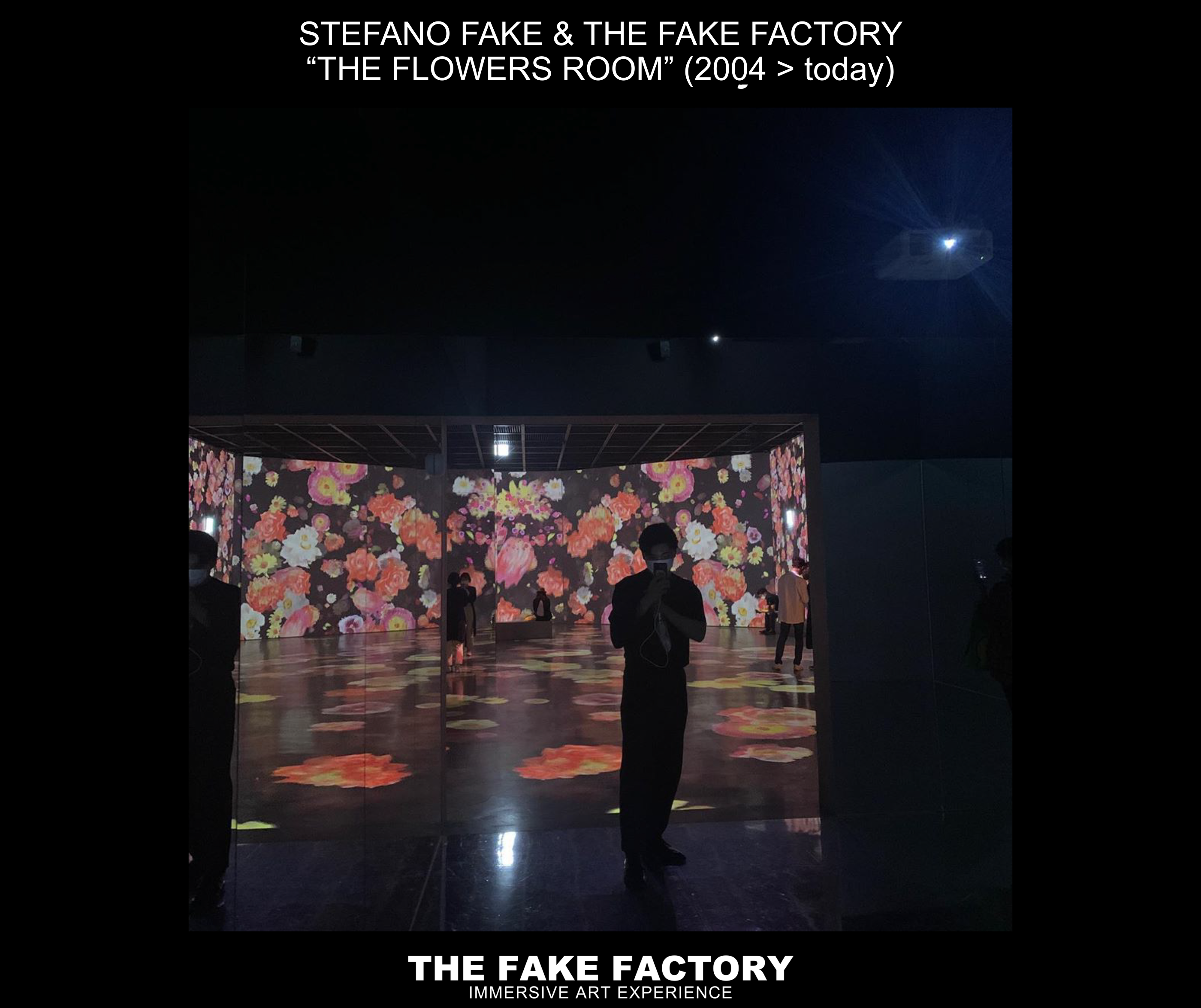
The digital flowers created by Stefano Fake are projected on all the walls of the immersive space. The entire environment becomes a canvas on which the artist creates with light a dynamic evolution of digital flowers that envelops the spectators. “I have always been fascinated by an aspect linked to the nature of flowers: the possibility of witnessing the trajectory of a life. This work is closely linked to my thoughts on nature, life and death. Despite being an extremely dynamic immersive environment, refers to a single moment in the life of flowers, to their moment of maximum vitality, stopped and exalted in its maximum vital power.” (Stefano Fake)
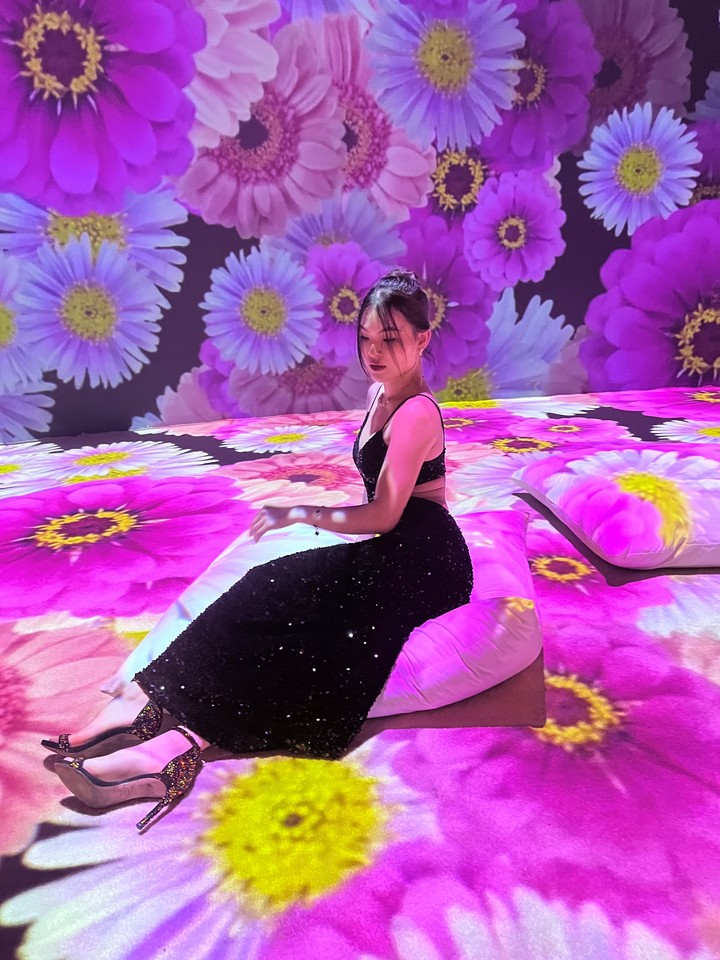
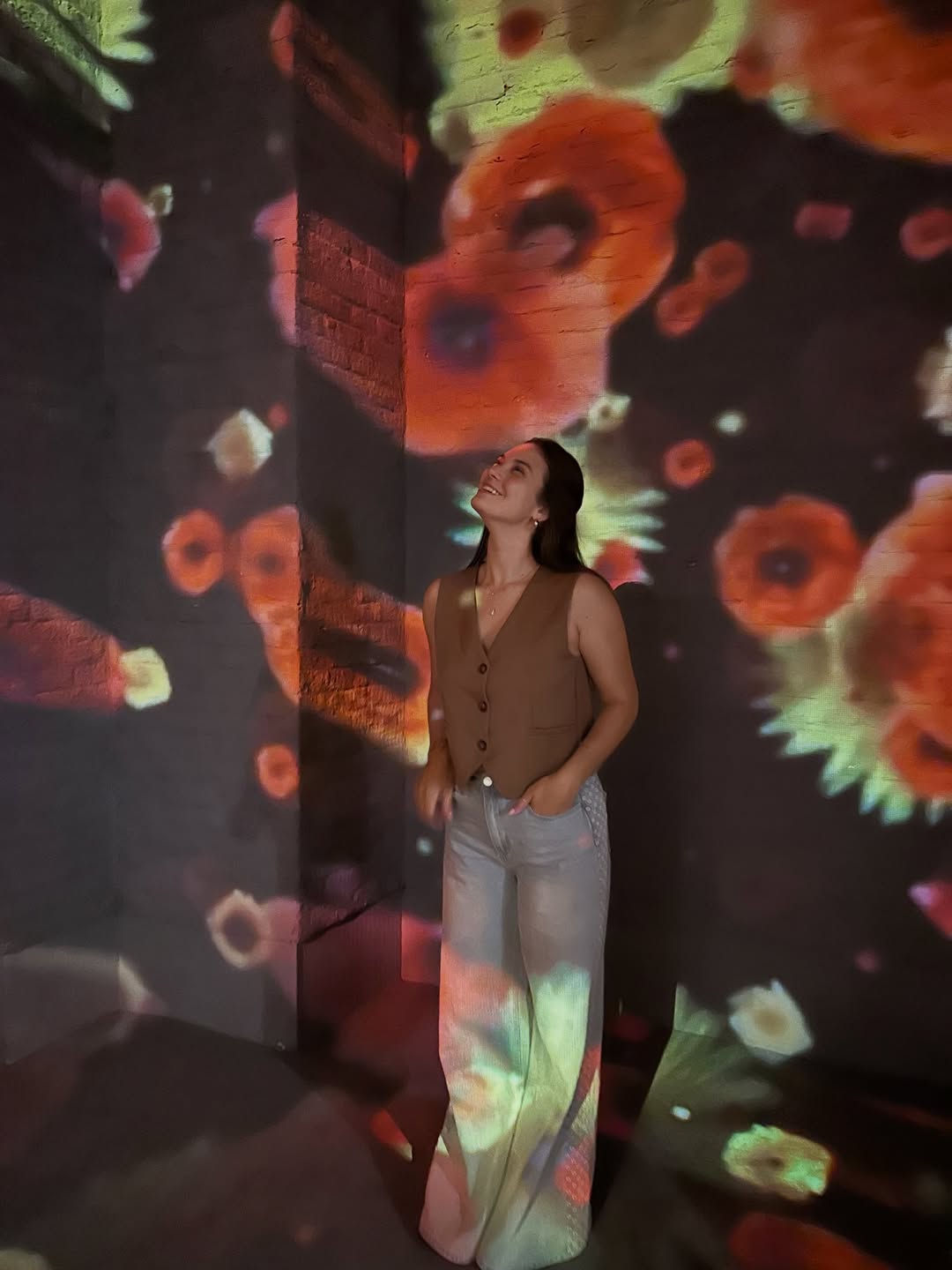
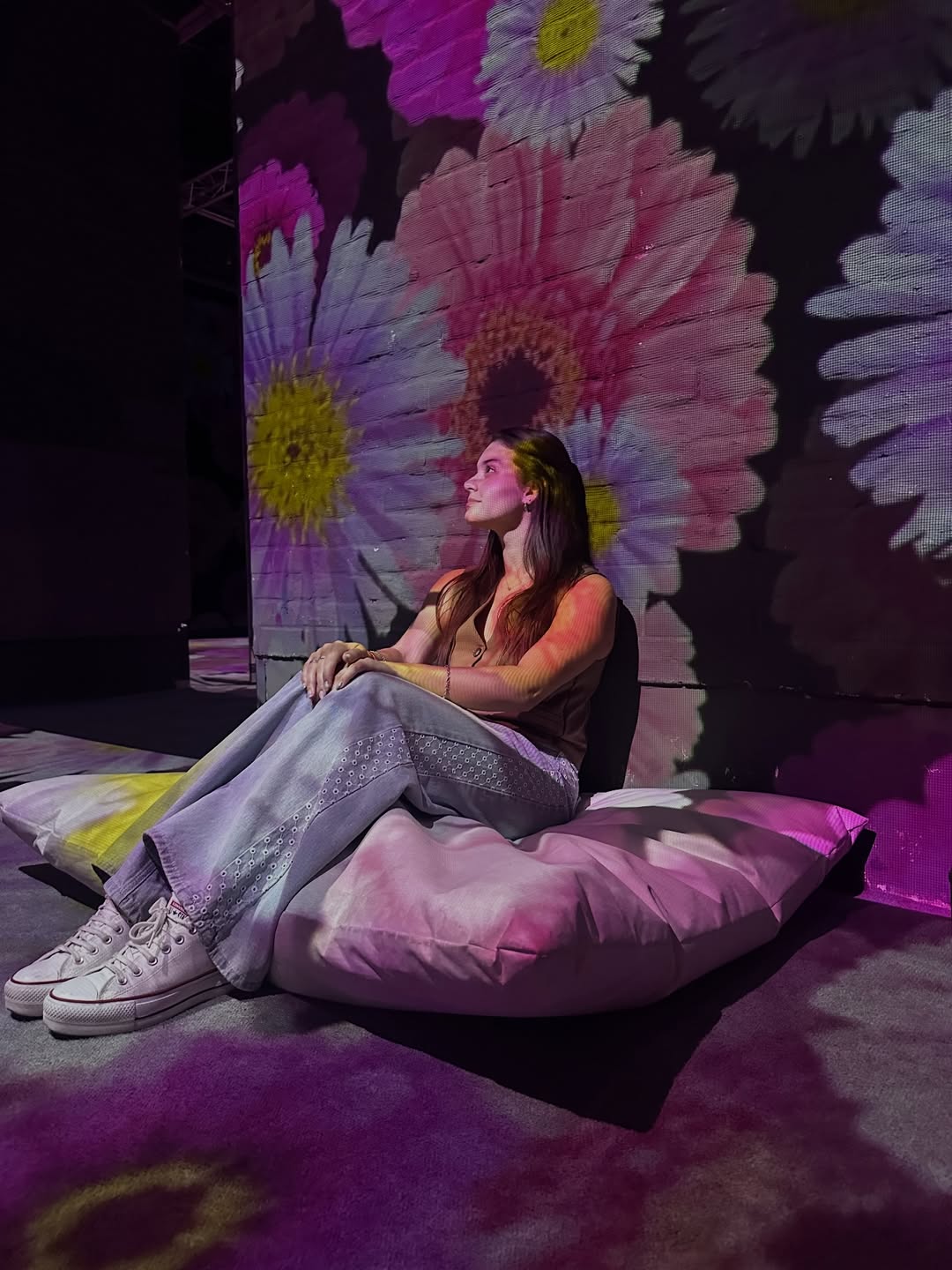
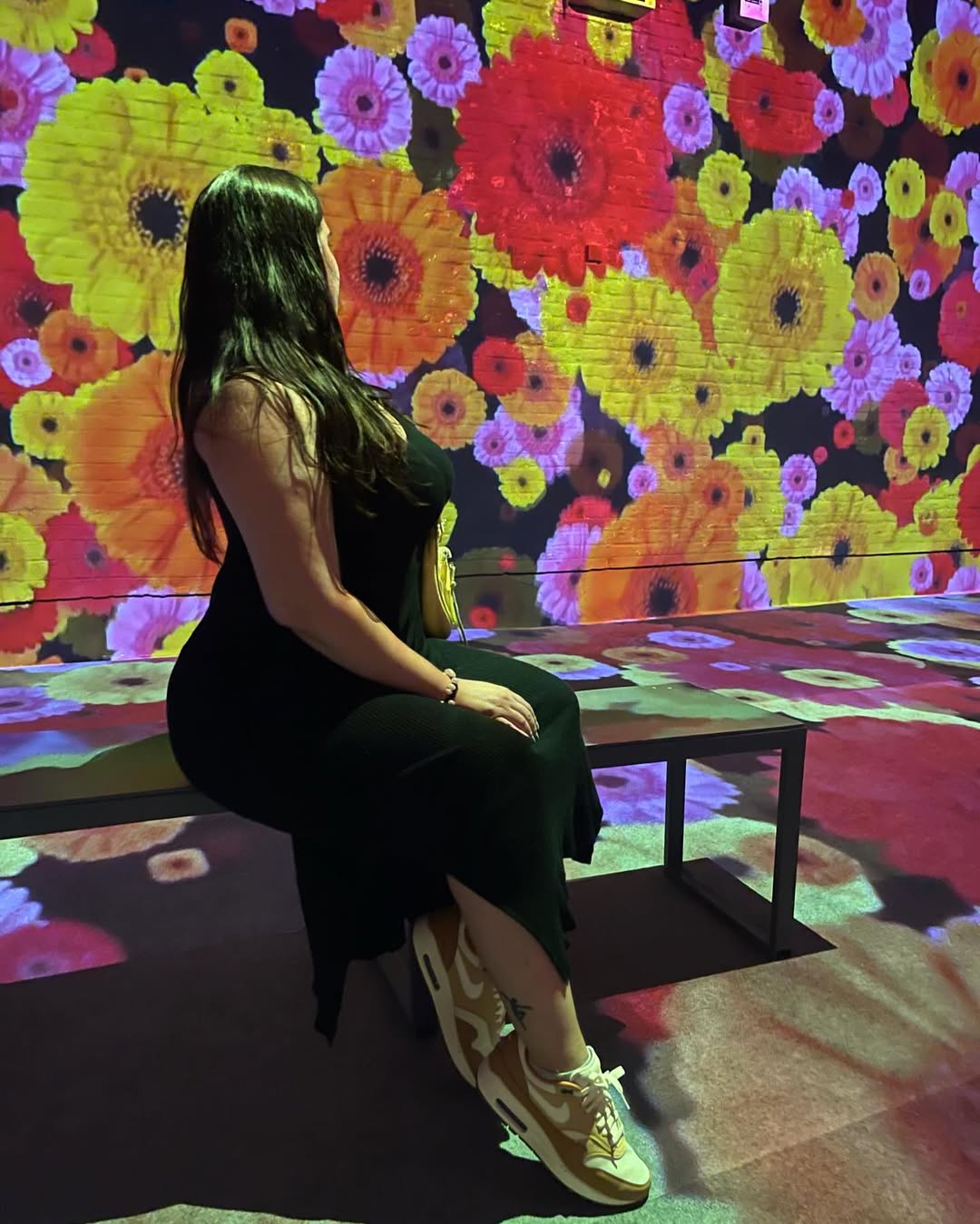
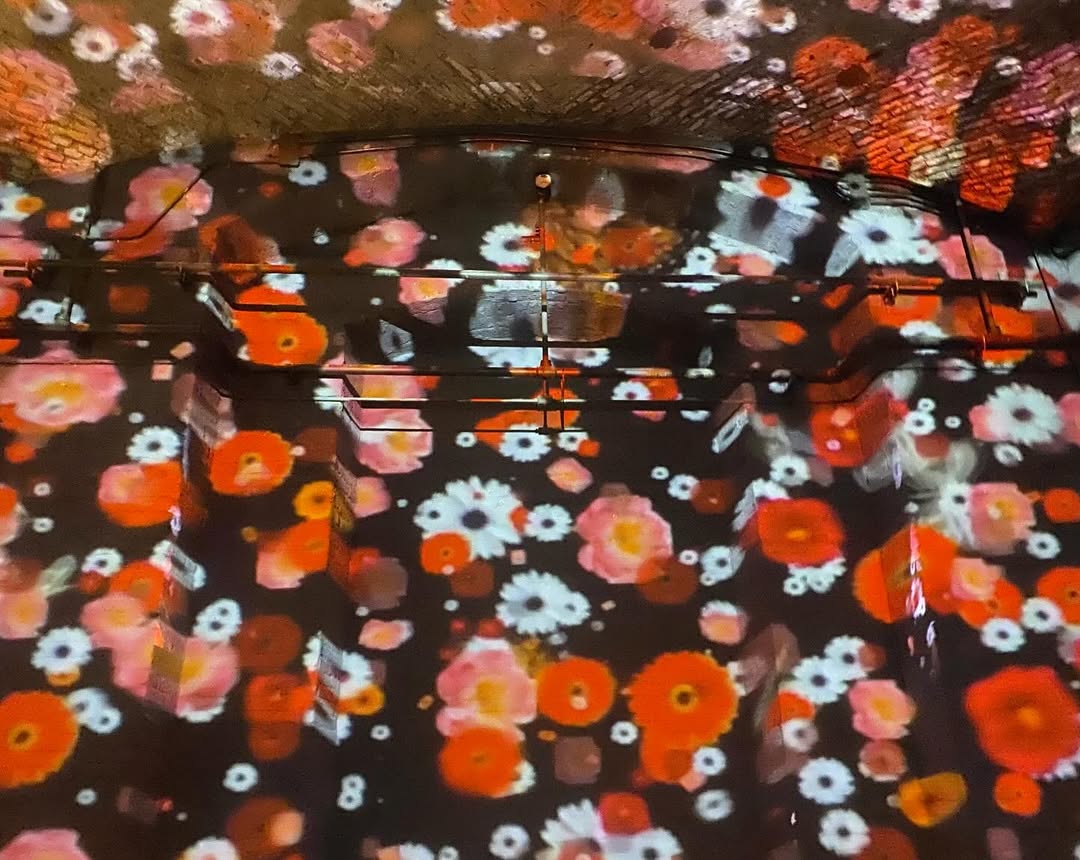
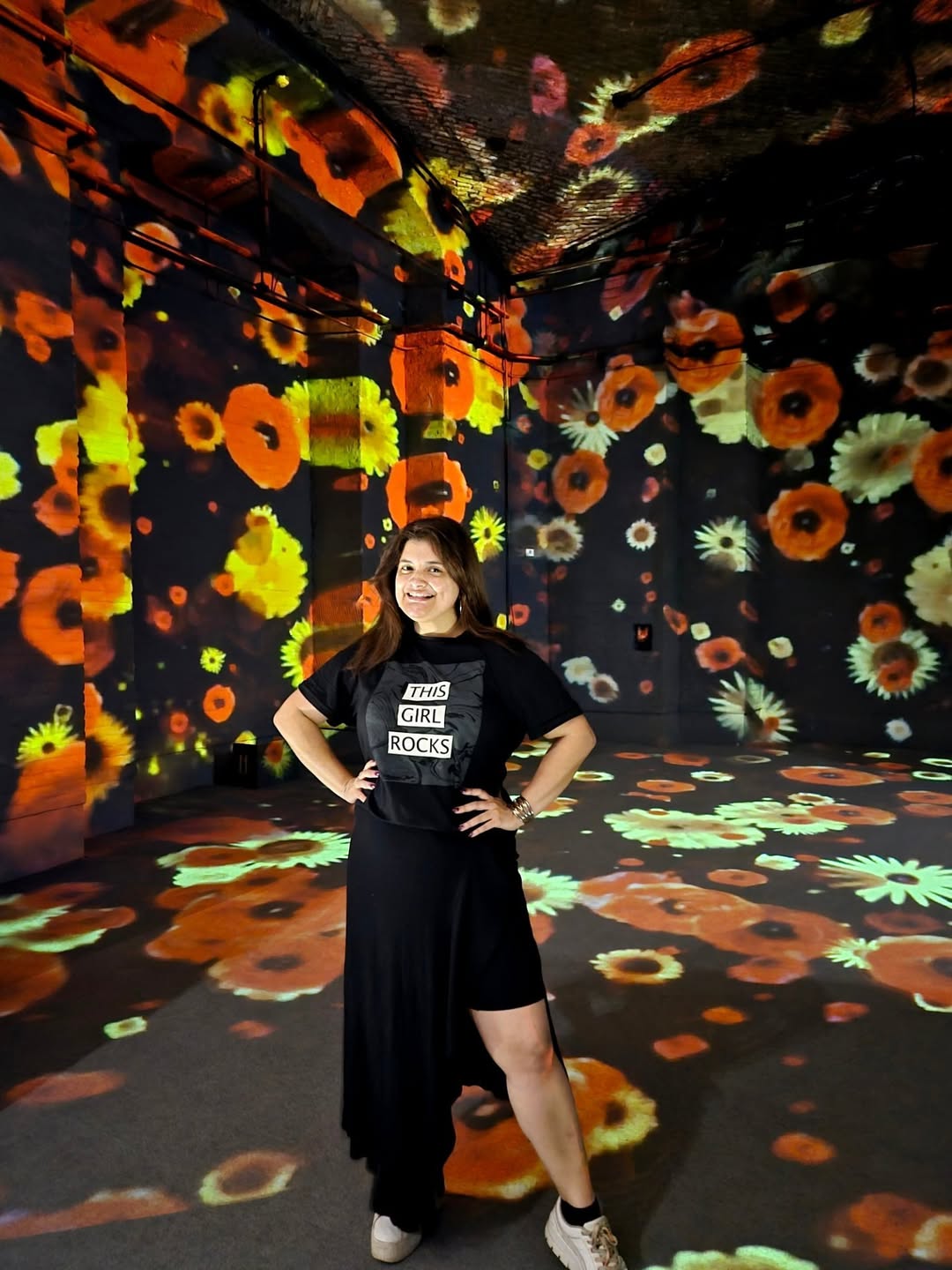
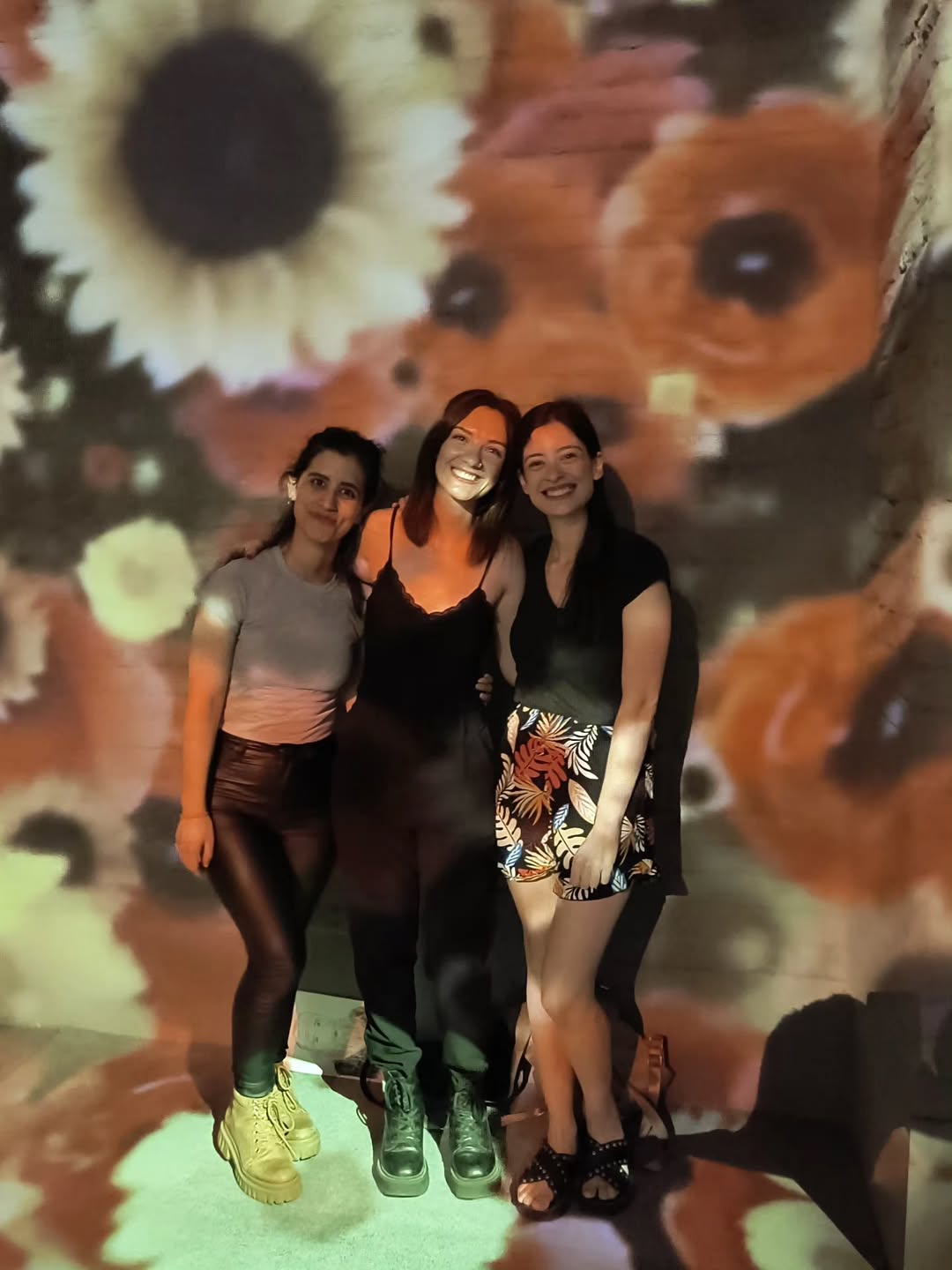
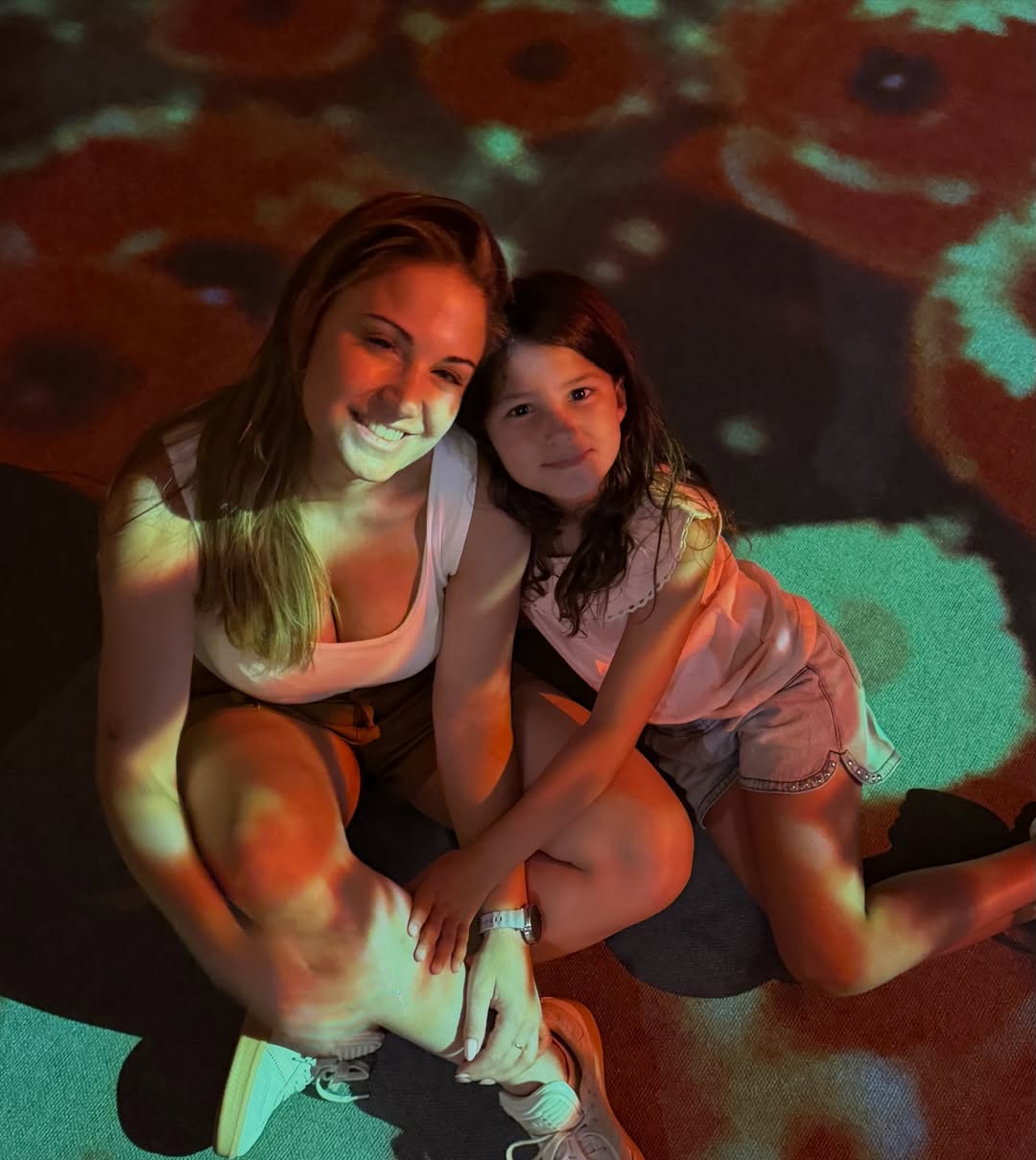
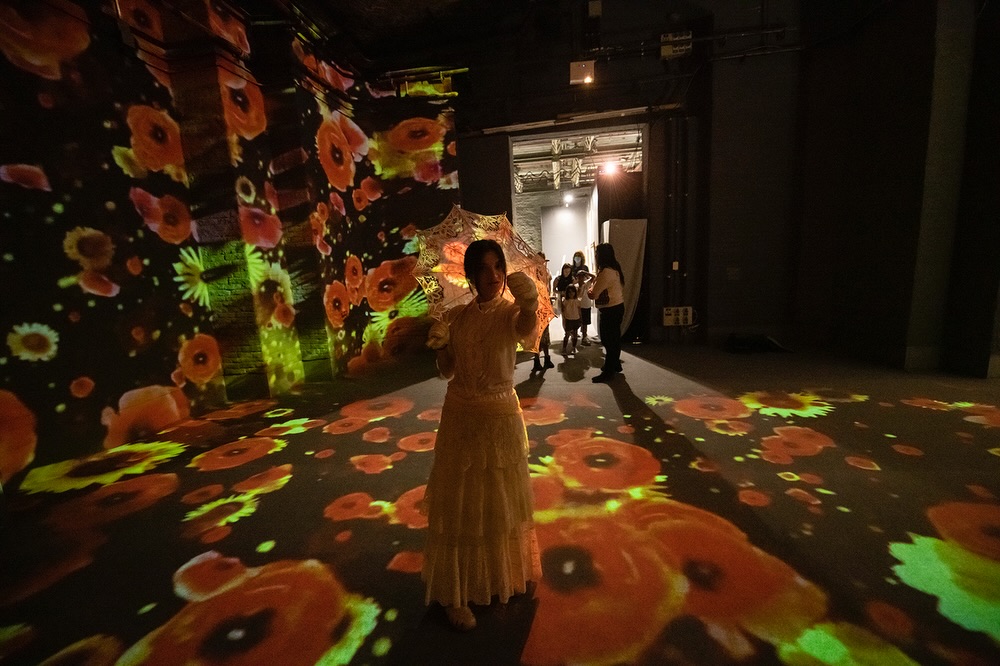
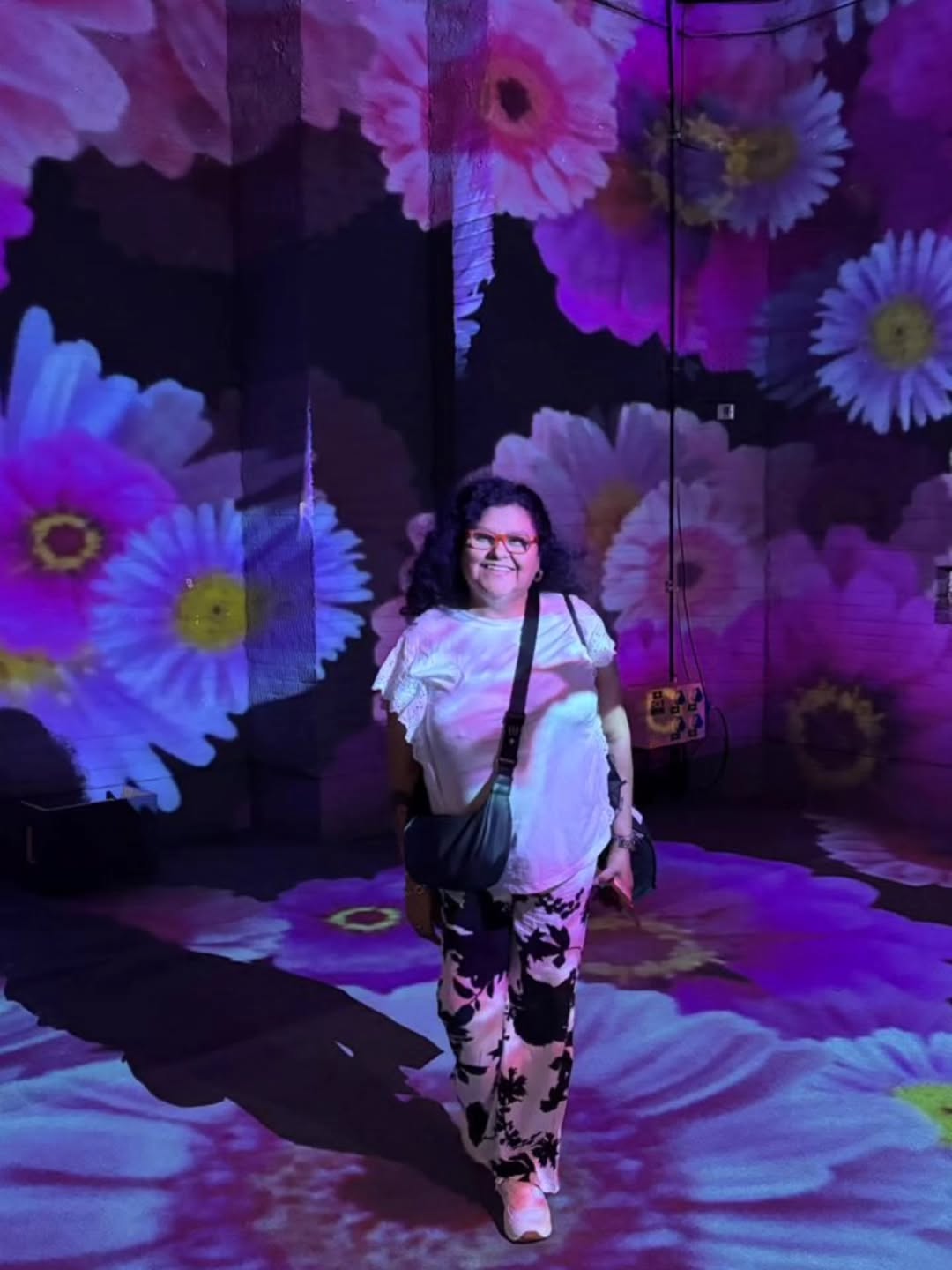
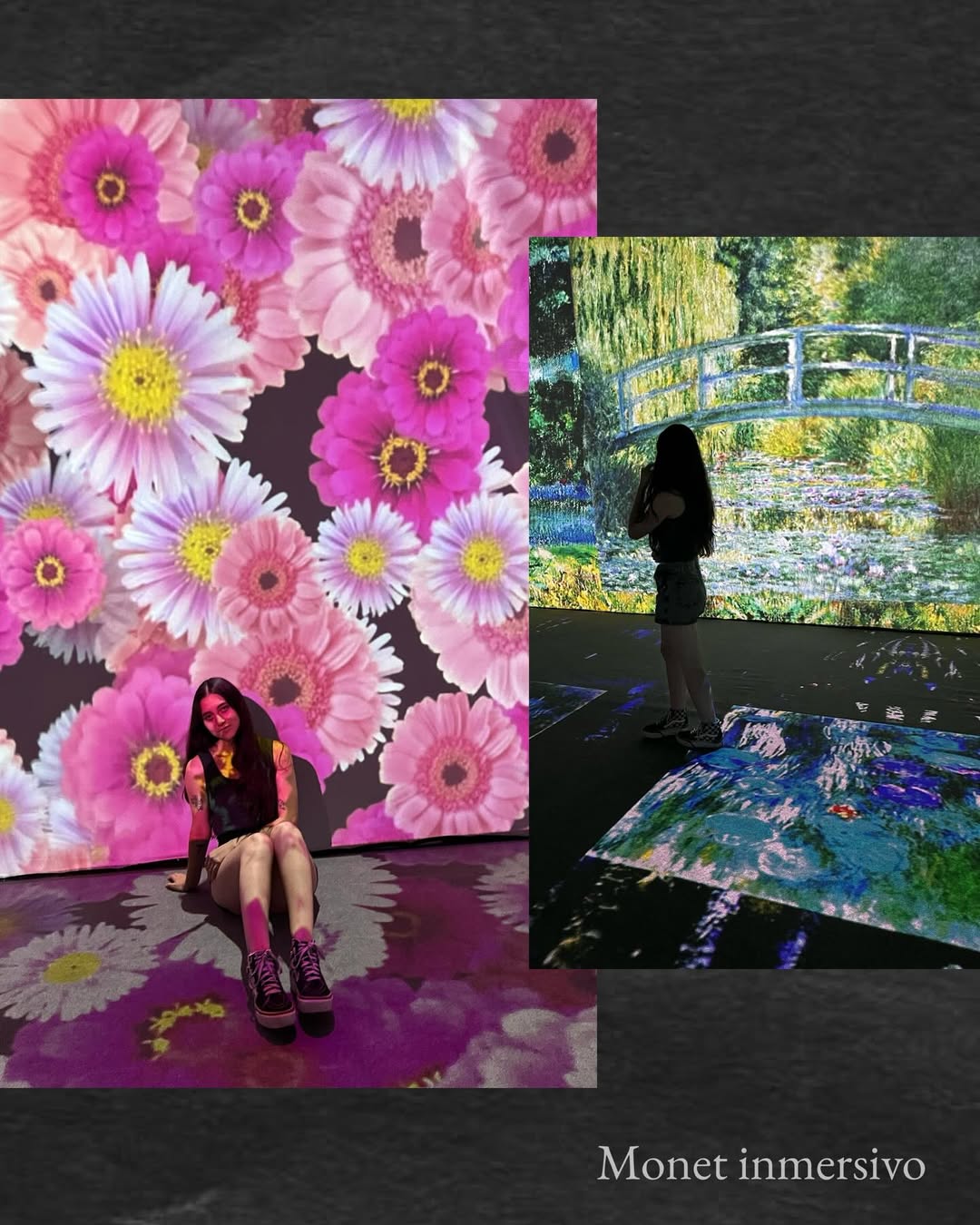
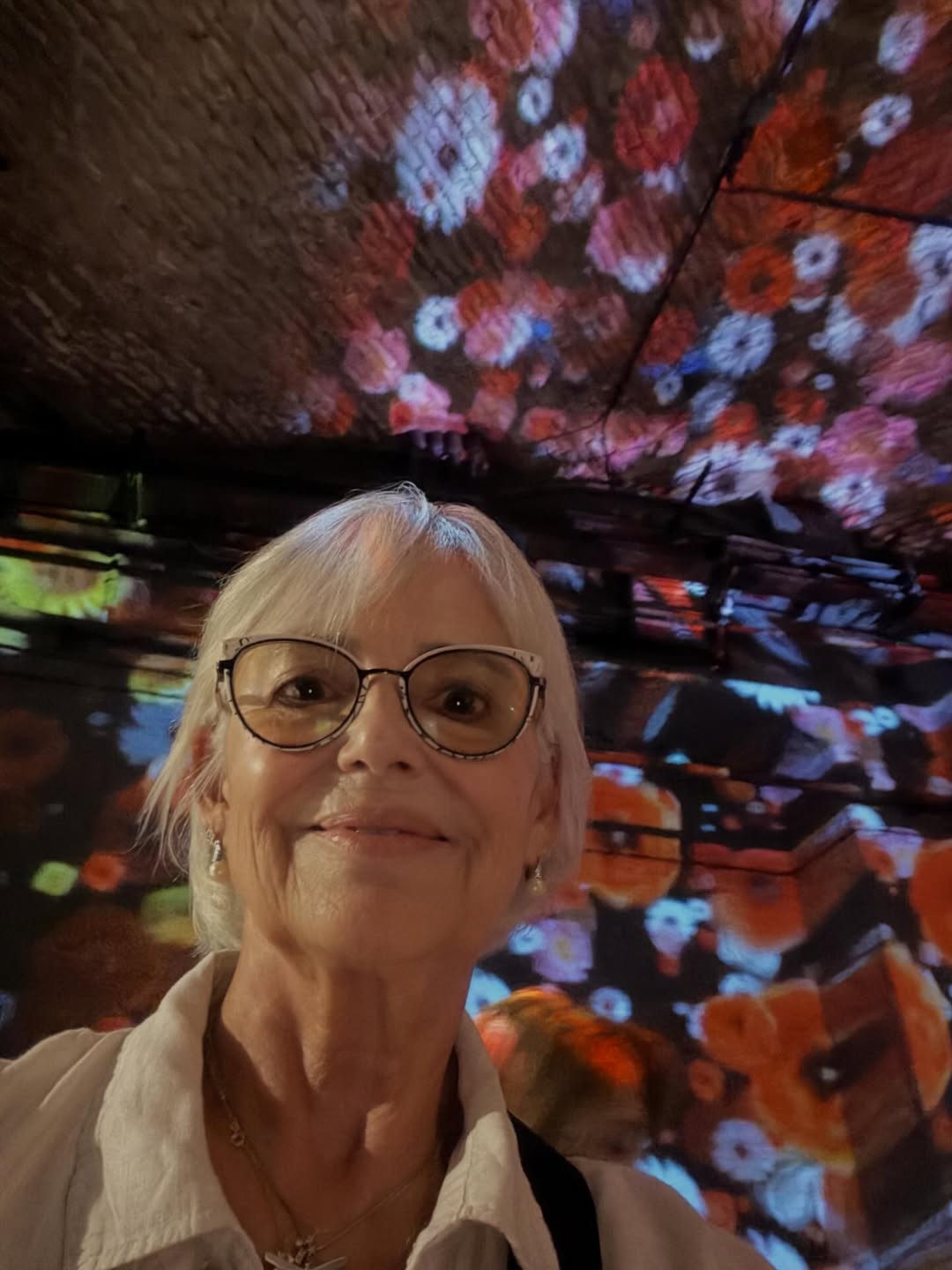
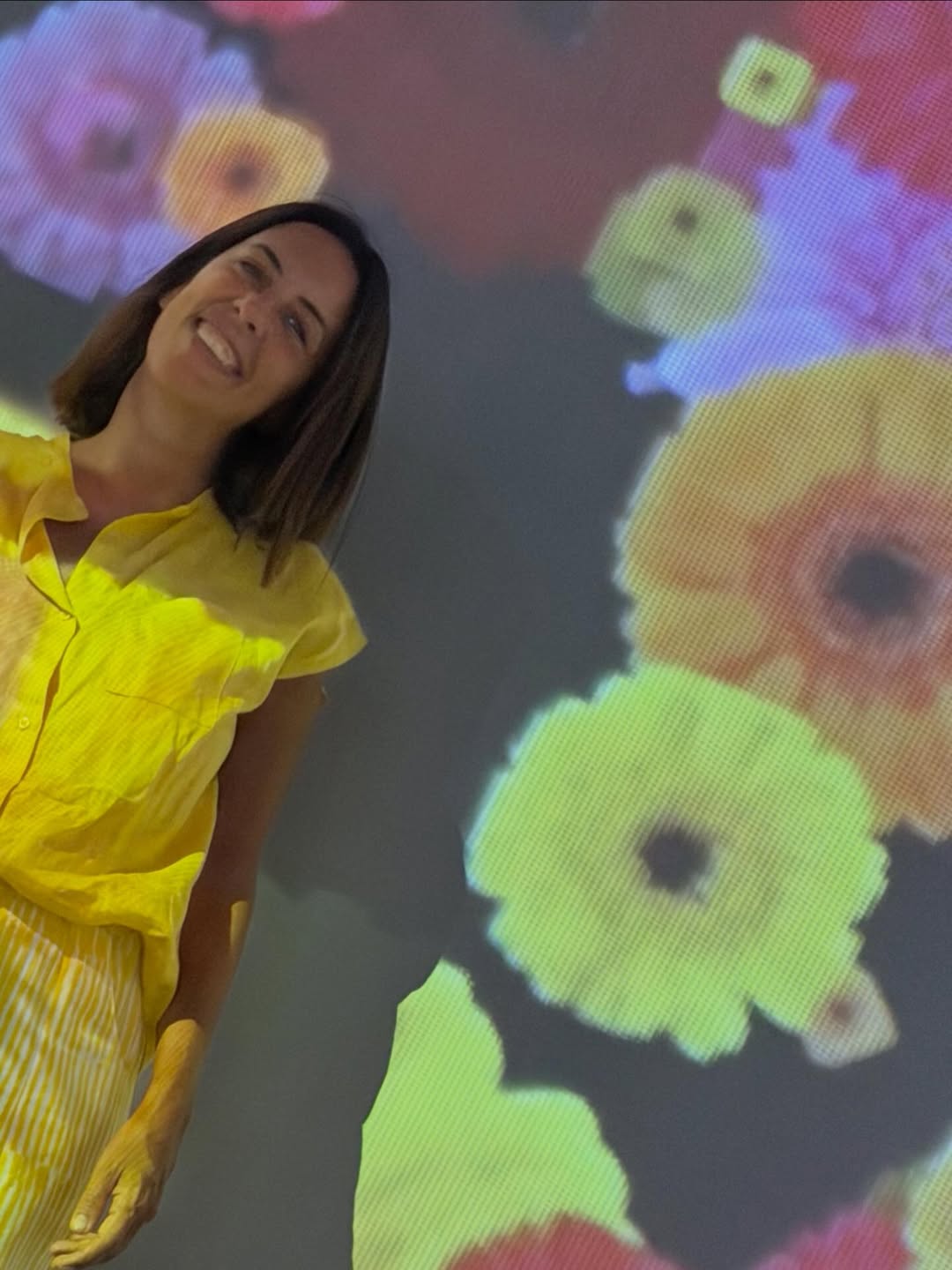
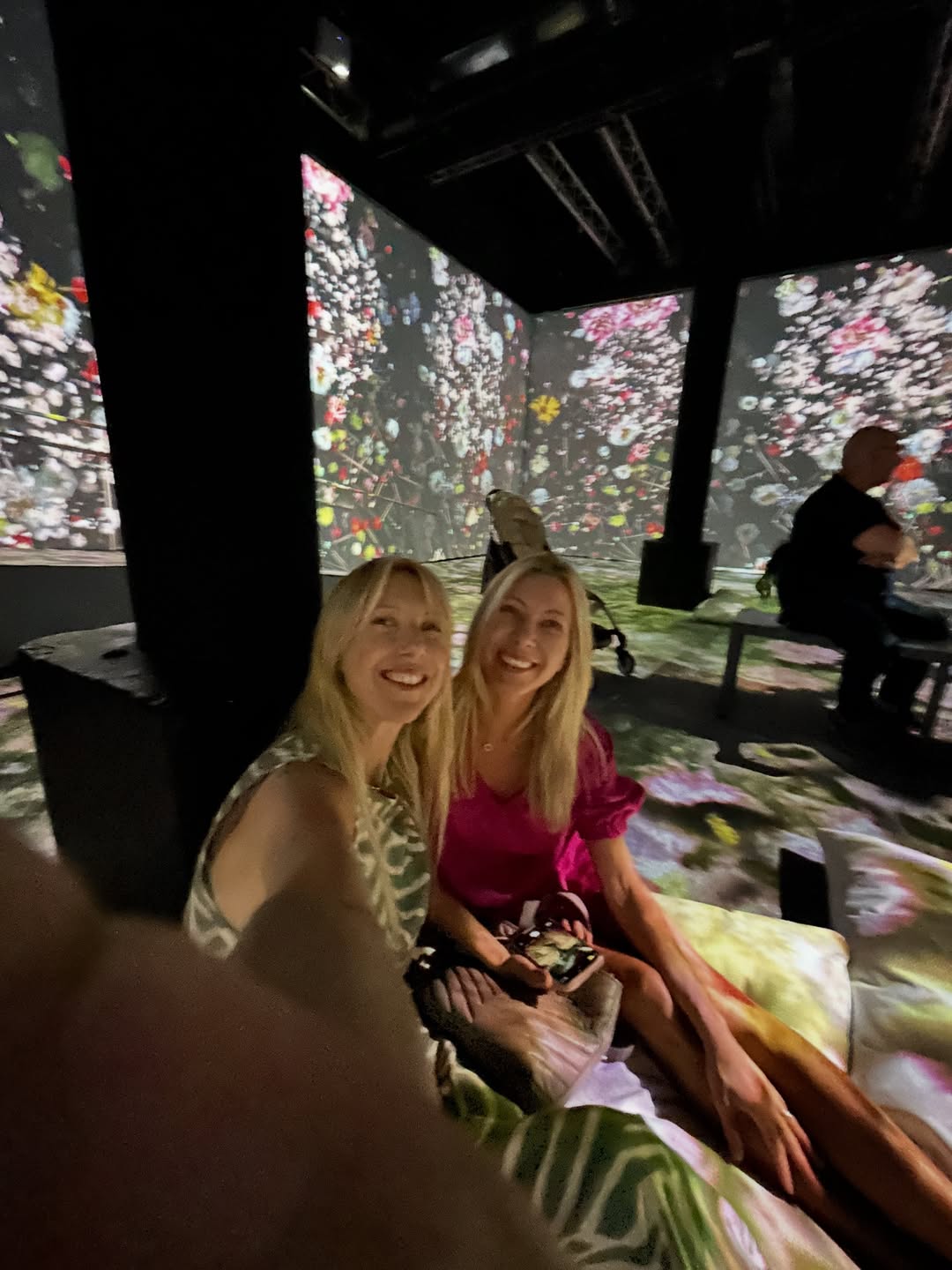
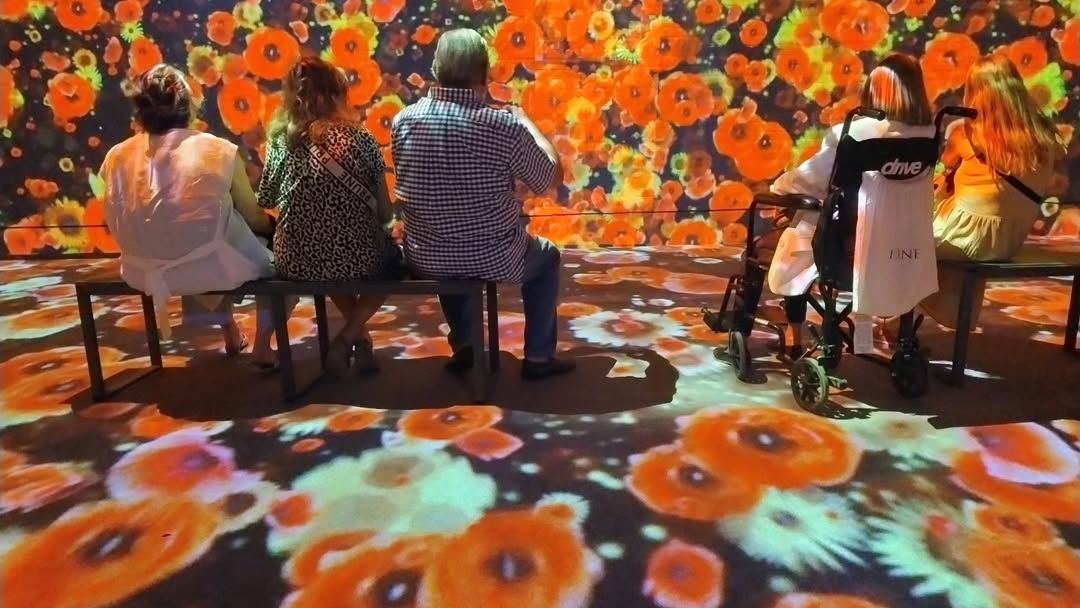
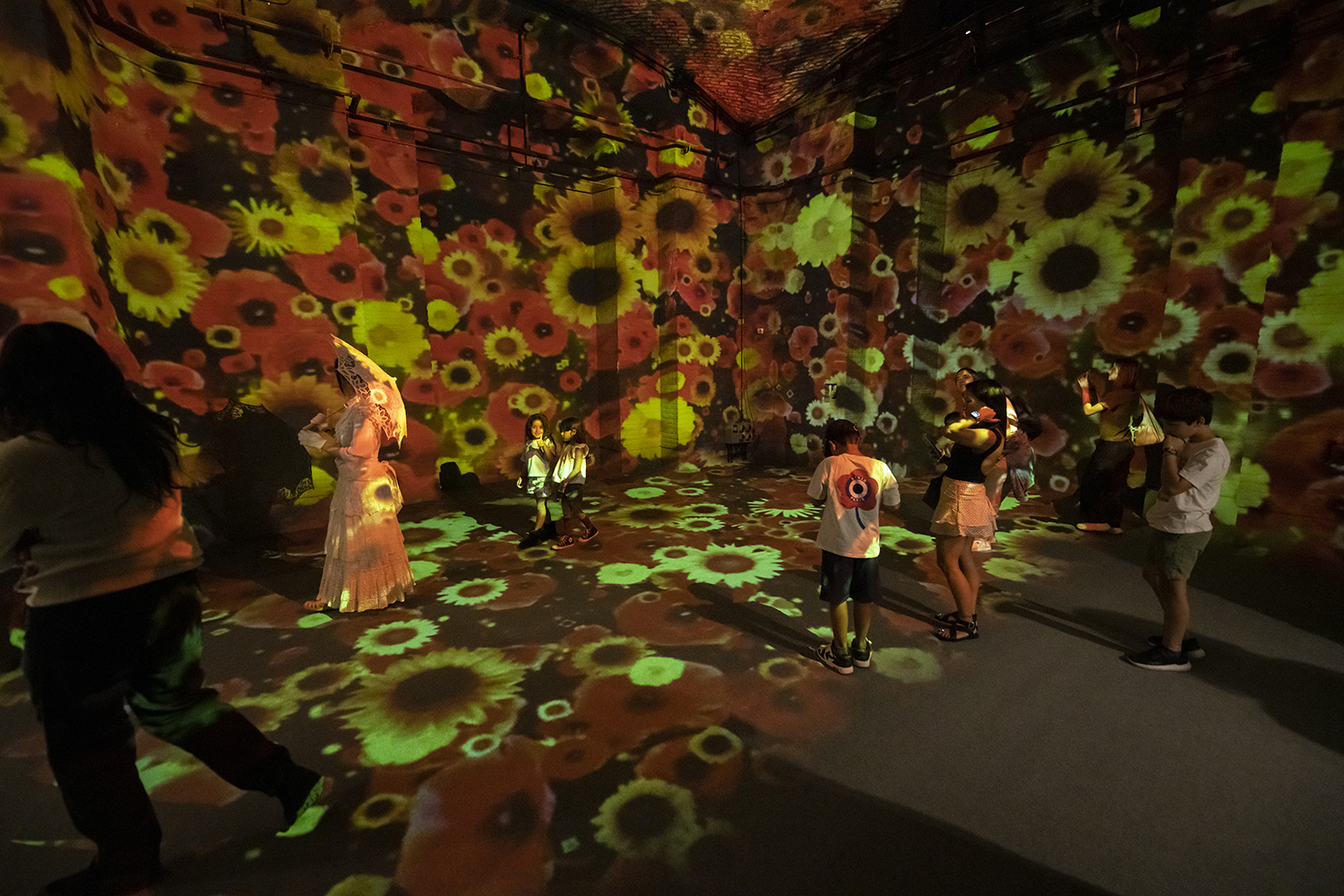
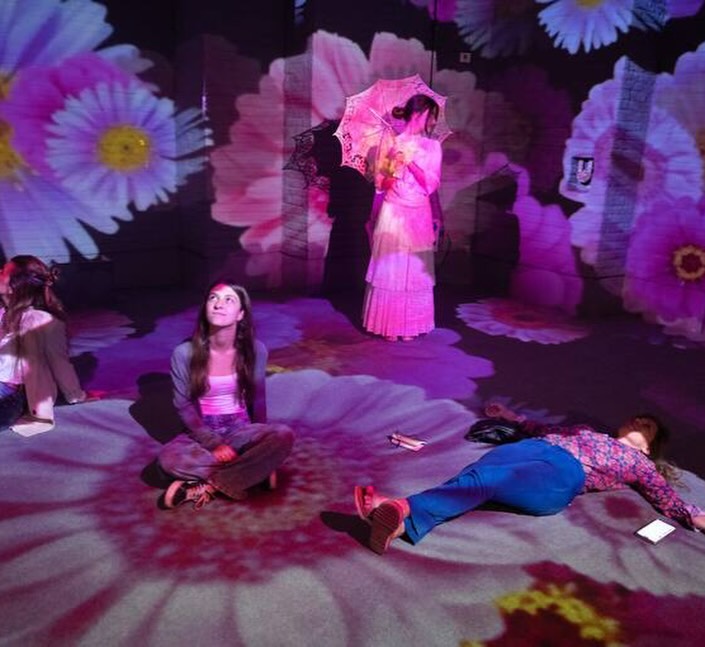
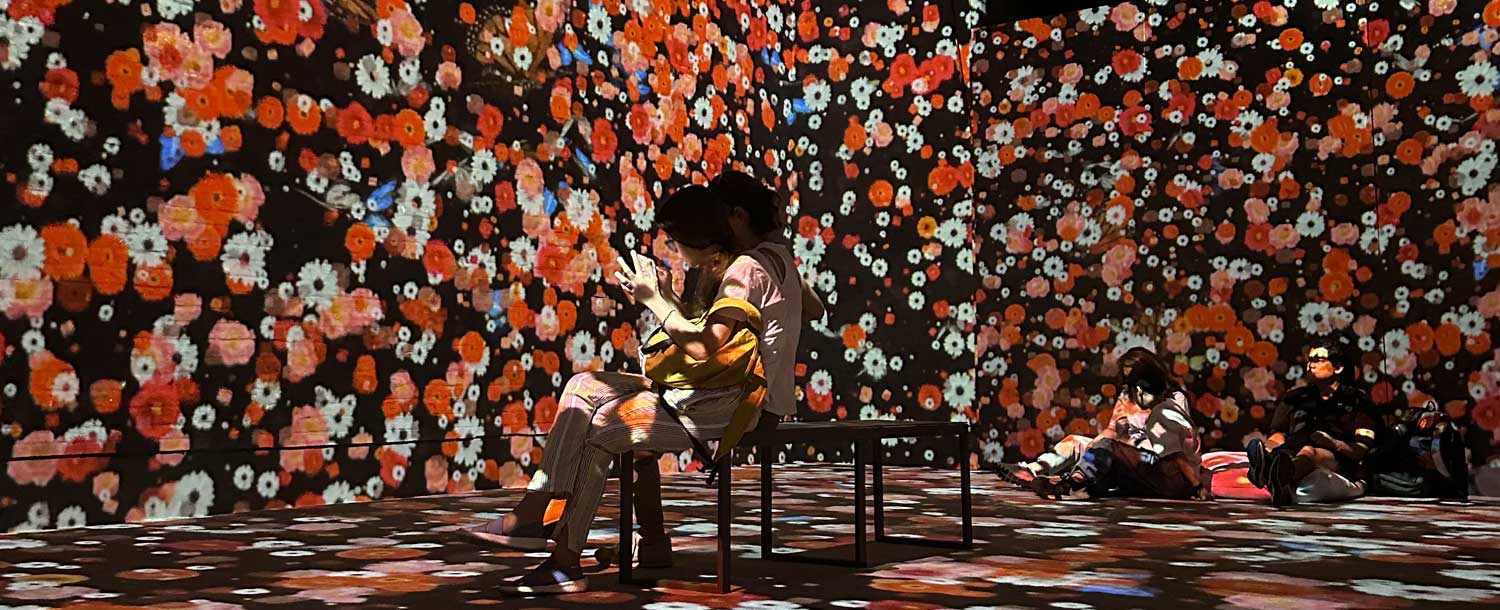
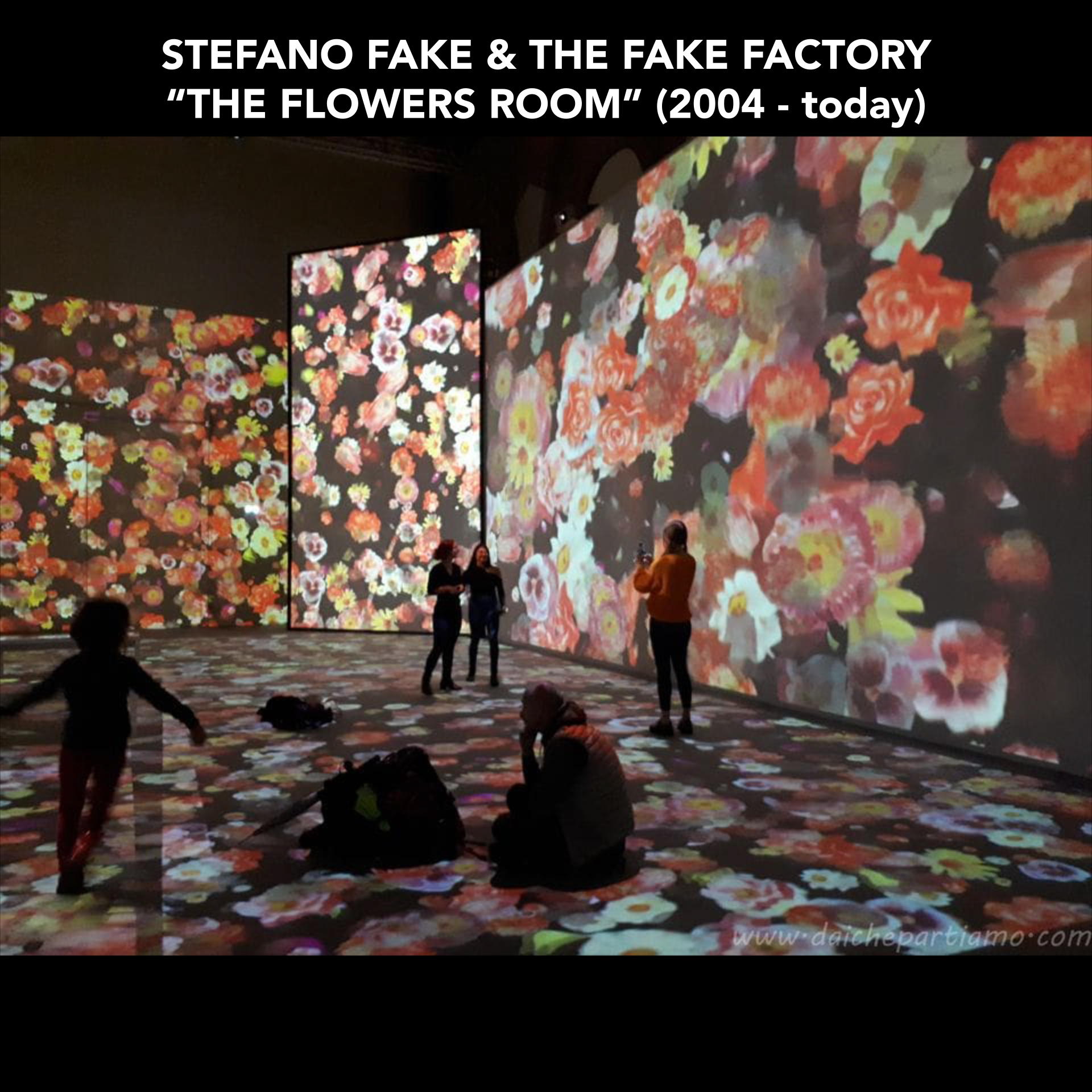
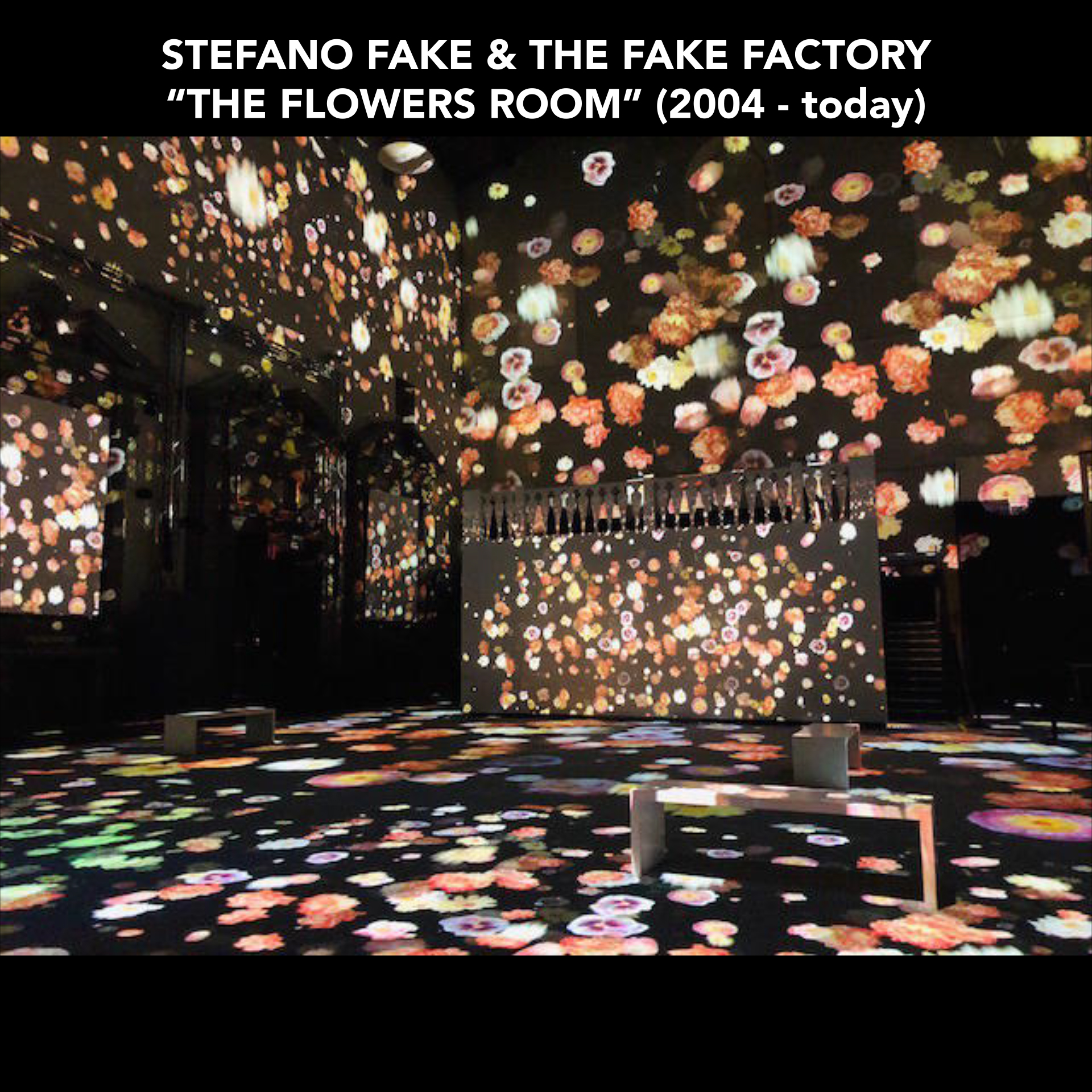
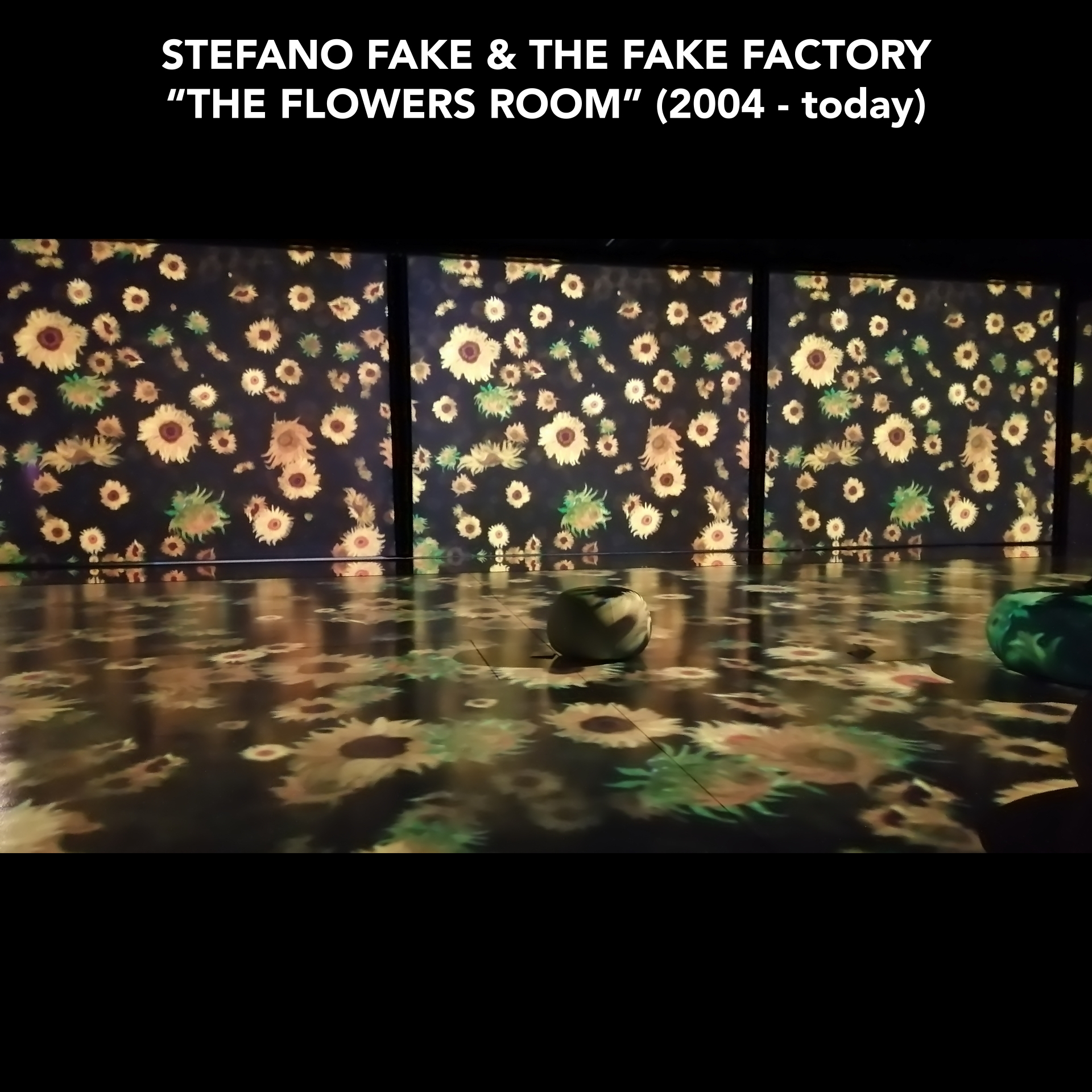
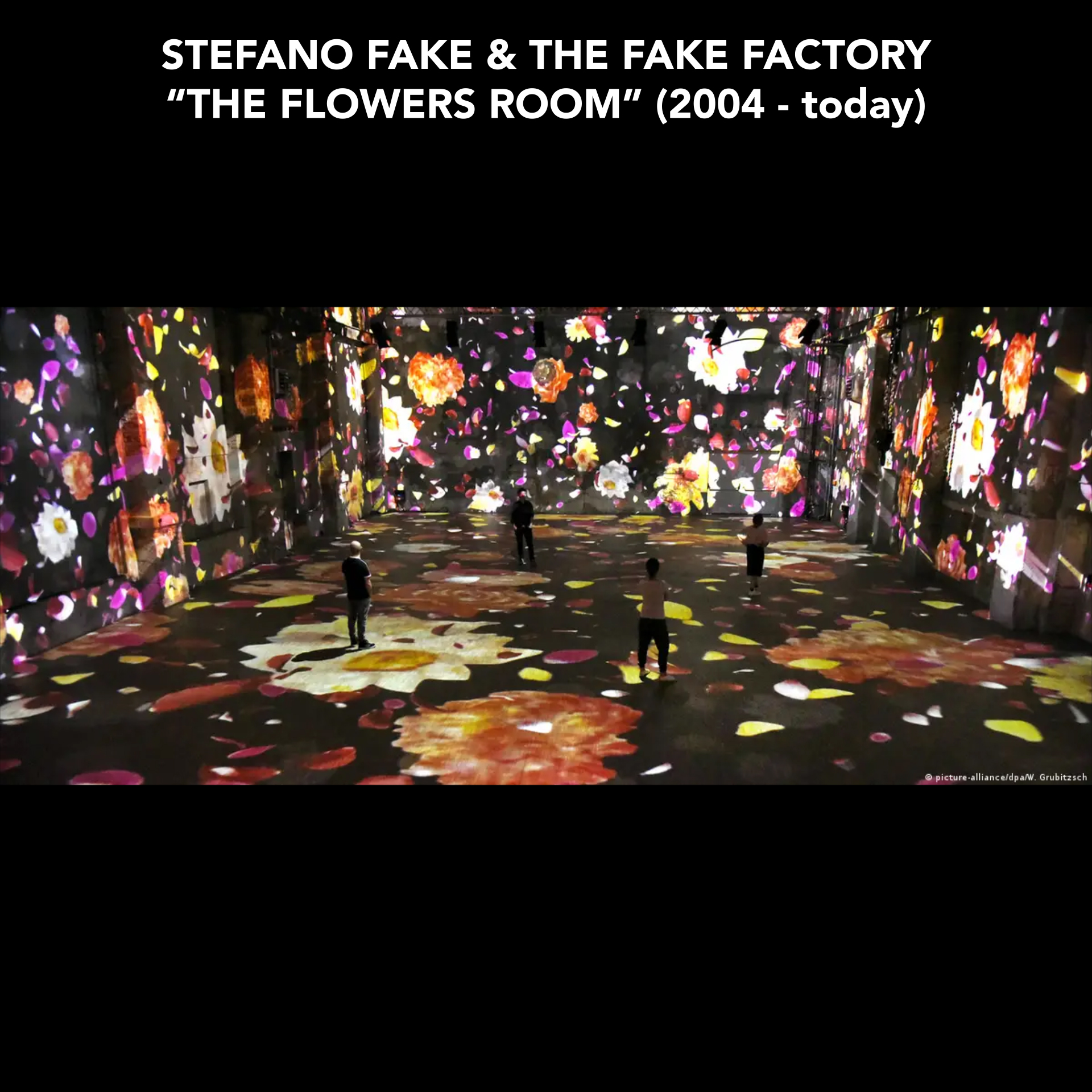
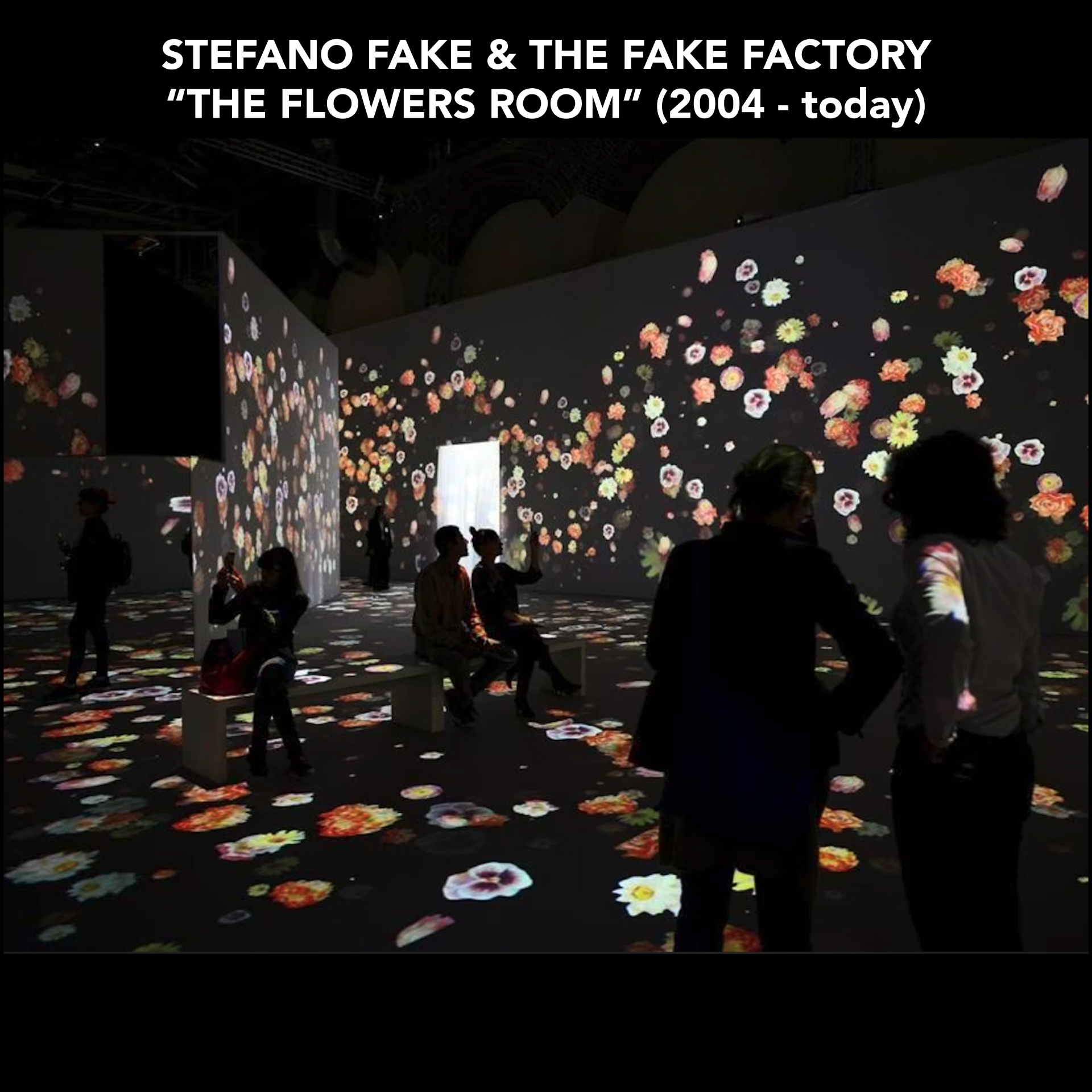
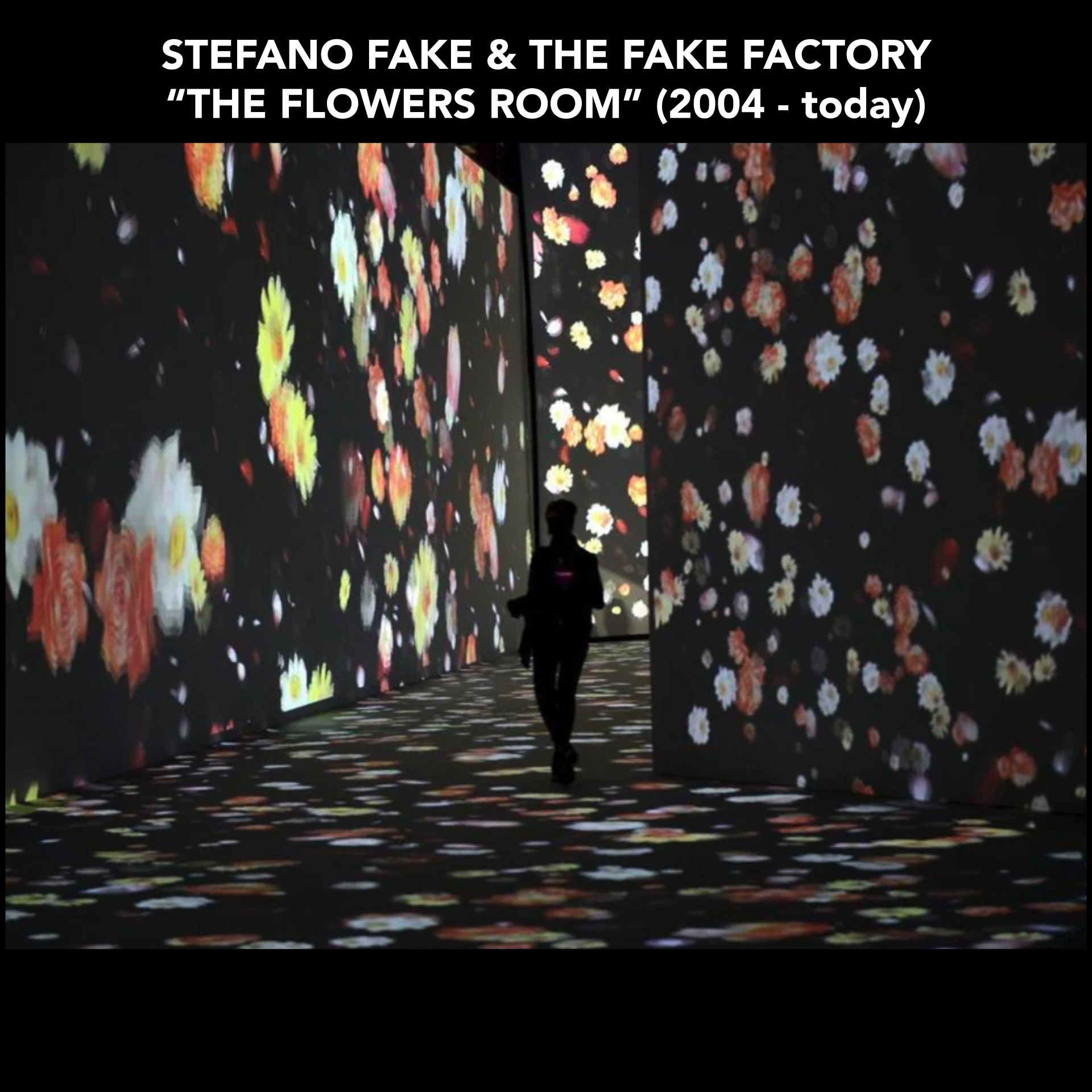
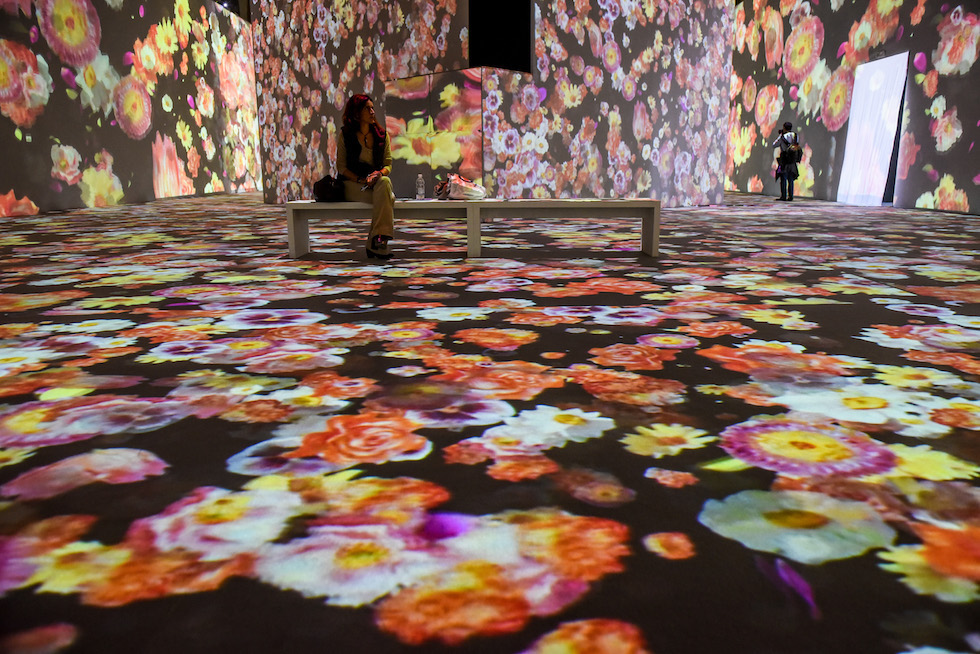
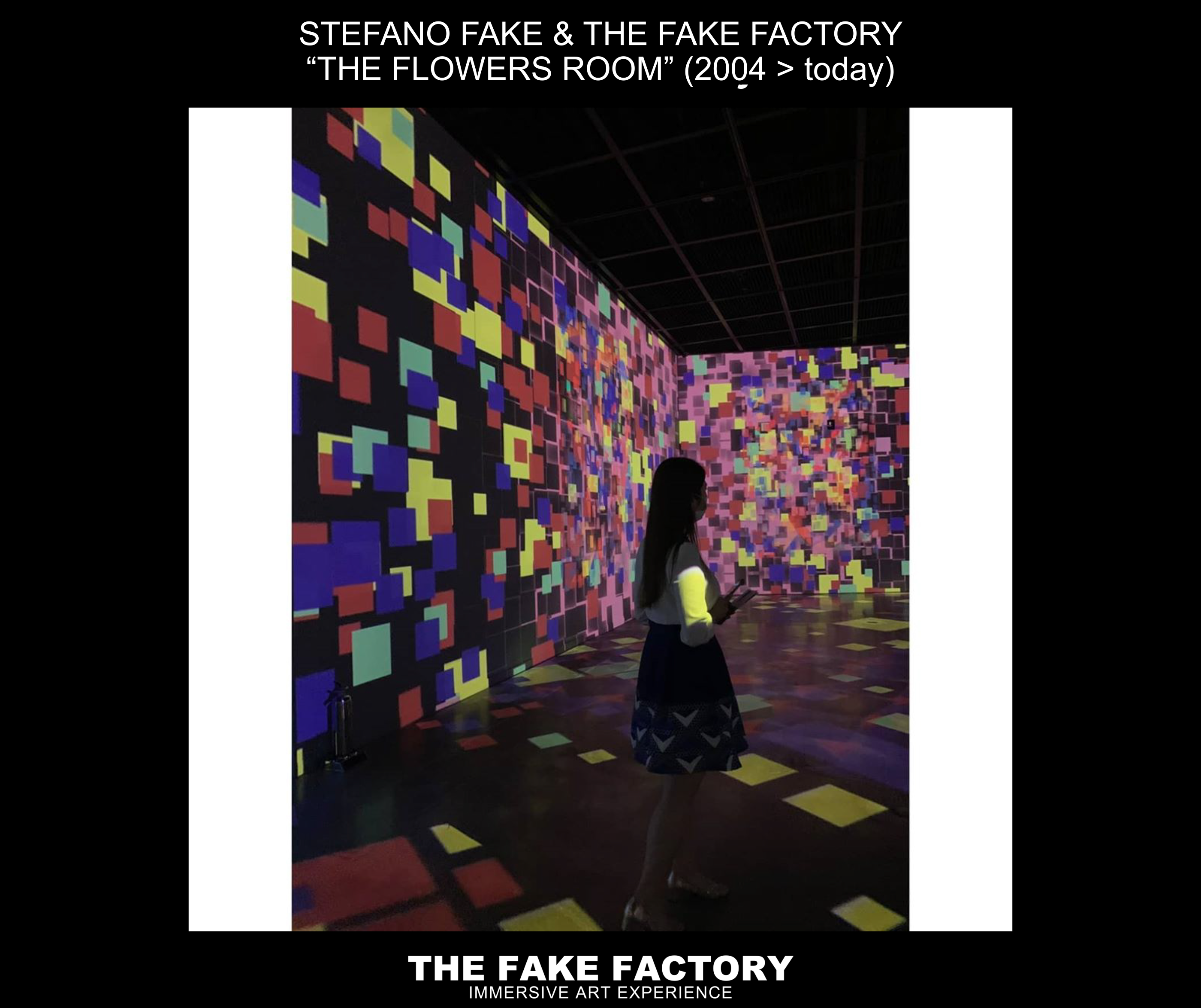
The Flowers Room, developed from 2004 by Stefano Fake & THE FAKE FACTORY, can be situated among the foundational works in the emergence and codification of contemporary immersive digital art. The installation constitutes a paradigmatic example of the transformation of the image from a representational surface into an experiential and spatial environment, in which audiovisual language operates as a totalizing perceptual device. Within this framework, a continuous and uninterrupted flow of floral elements—images, chromatic fields, and morphologies in perpetual transformation—expands across the architectural space, dissolving the boundaries between image and environment and enveloping the viewer in a multisensory field.
From a formal perspective, the work is structured as a dynamic system grounded in the principle of continuous metamorphosis. Floral forms are not presented as fixed or iconic entities, but rather as generative and transformative processes, undergoing cycles of emergence, dissolution, and recomposition. This produces a fluid visual continuum and a non-linear temporality, closer to an organic and cyclical conception of time. The spectator is thus not positioned as a passive observer of a sequential narrative, but as an immersed subject within a field of visual and temporal transformations.
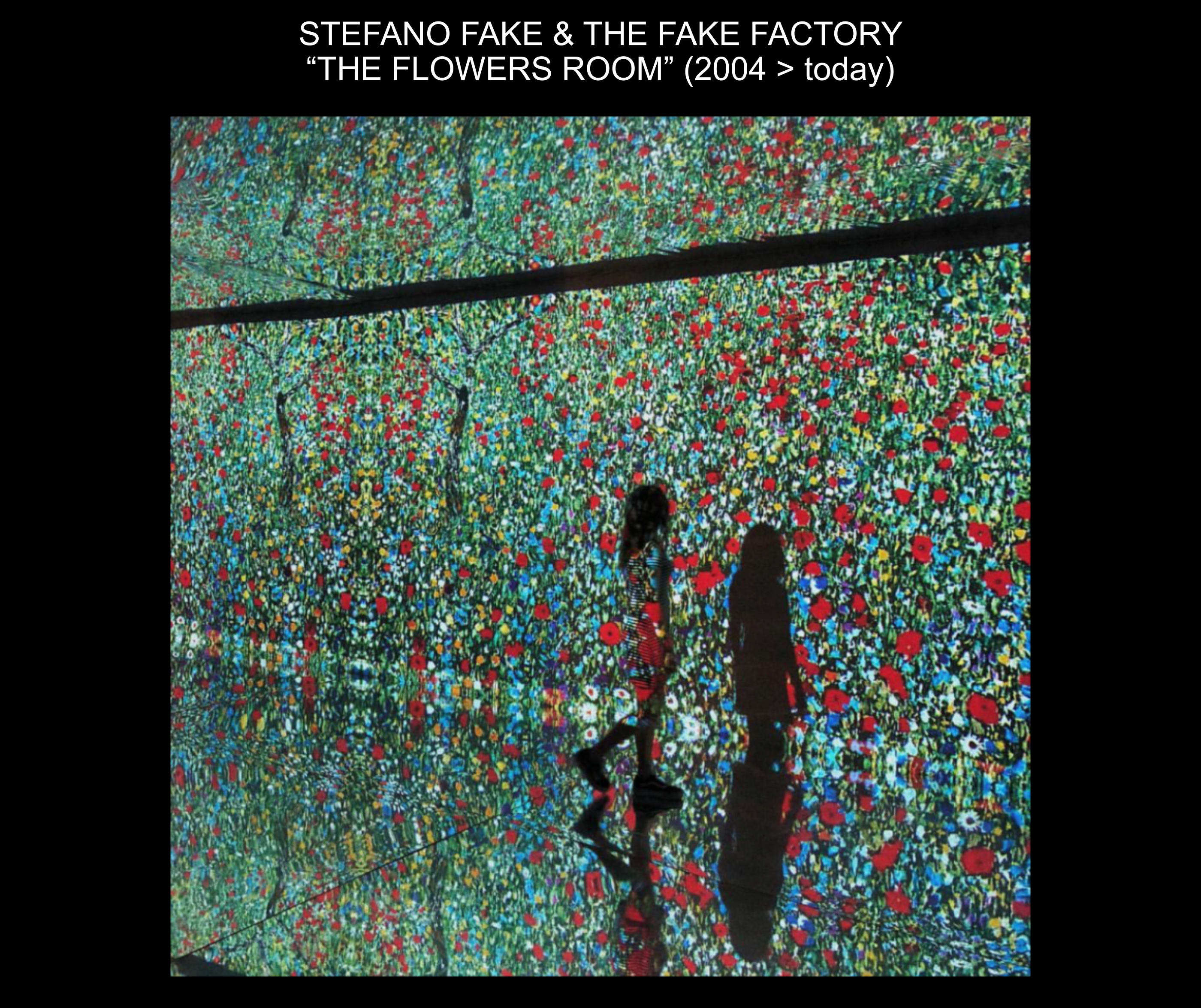
The conceptual matrix of the work is deeply rooted in an art-historical reflection on the iconography of the flower. As Stefano Fake himself states: “I have studied the representation of flowers in the history of art for a long time, from Botticelli to Andy Warhol. Whether used in a symbolic or purely decorative way, flowers have always been the subject of research by artists. The concept of birth, sex, re-production can all be involved within flowers.” This statement situates The Flowers Room within a longue durée of visual culture, in which the floral motif functions as a symbolic and semantic device associated with themes of life, generation, and transience.
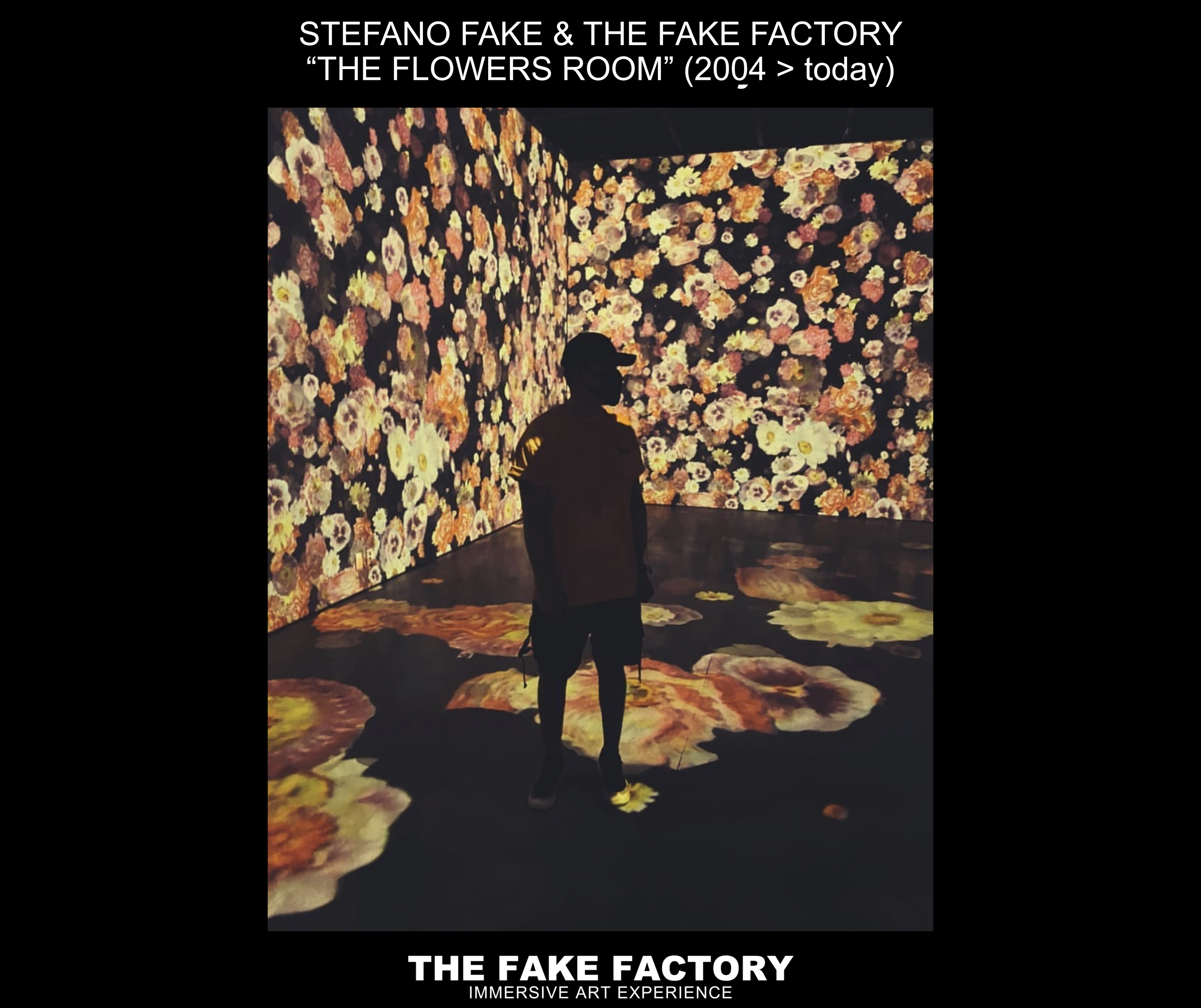
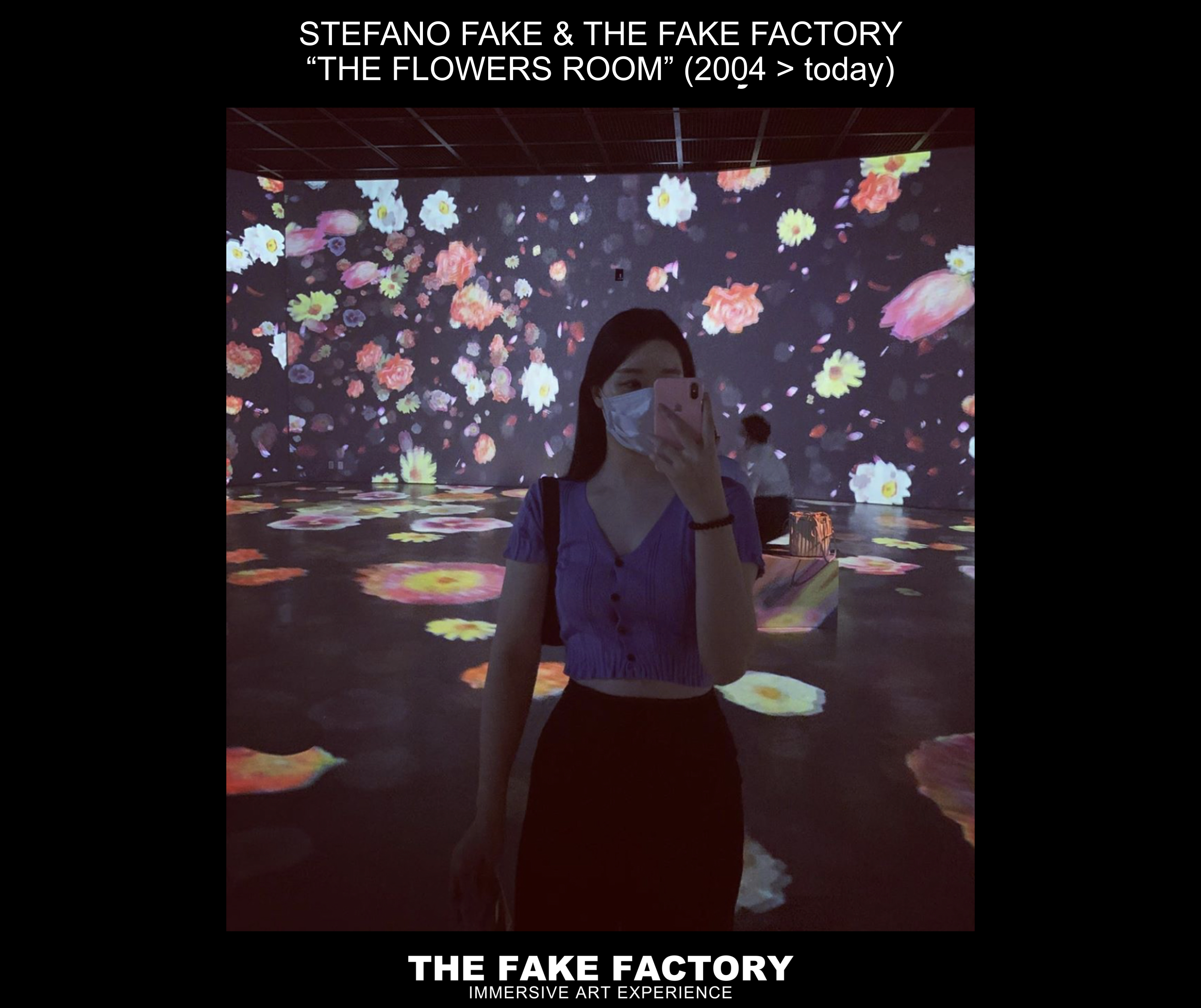
In this sense, the work can be interpreted as a visual and emotional representation of the processes of life and death within the conditions of the digital age. The influence of Andy Warhol is particularly significant, especially his Flowers series exhibited at the Leo Castelli Gallery in 1964. As noted by Ronnie Cutrone, Warhol’s early flower paintings already encapsulated a dialectic between vitality and mortality. Fake’s work reactivates this conceptual tension, translating it into a digital and immersive language in which the flower becomes a site of transformation rather than a fixed image.
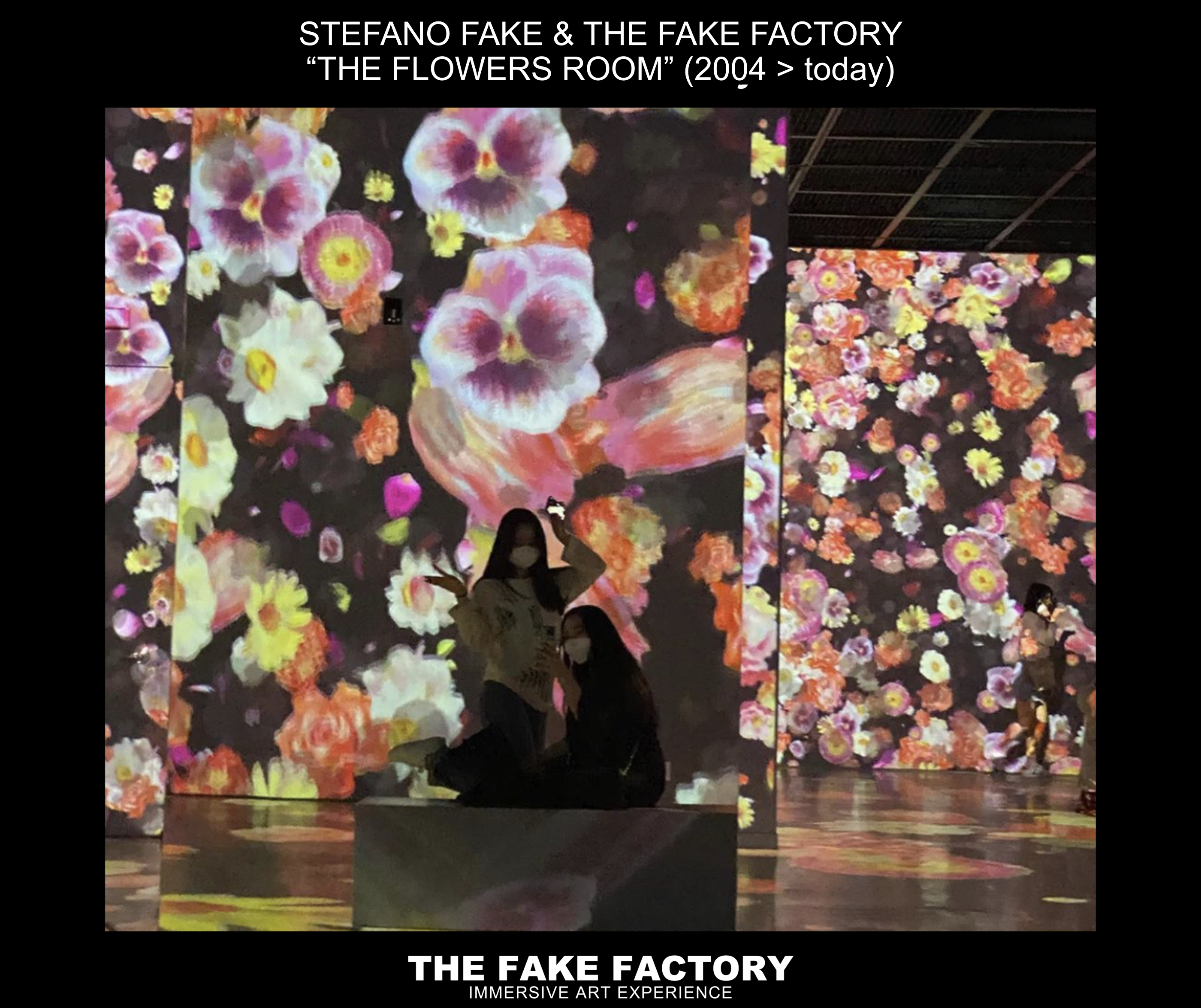
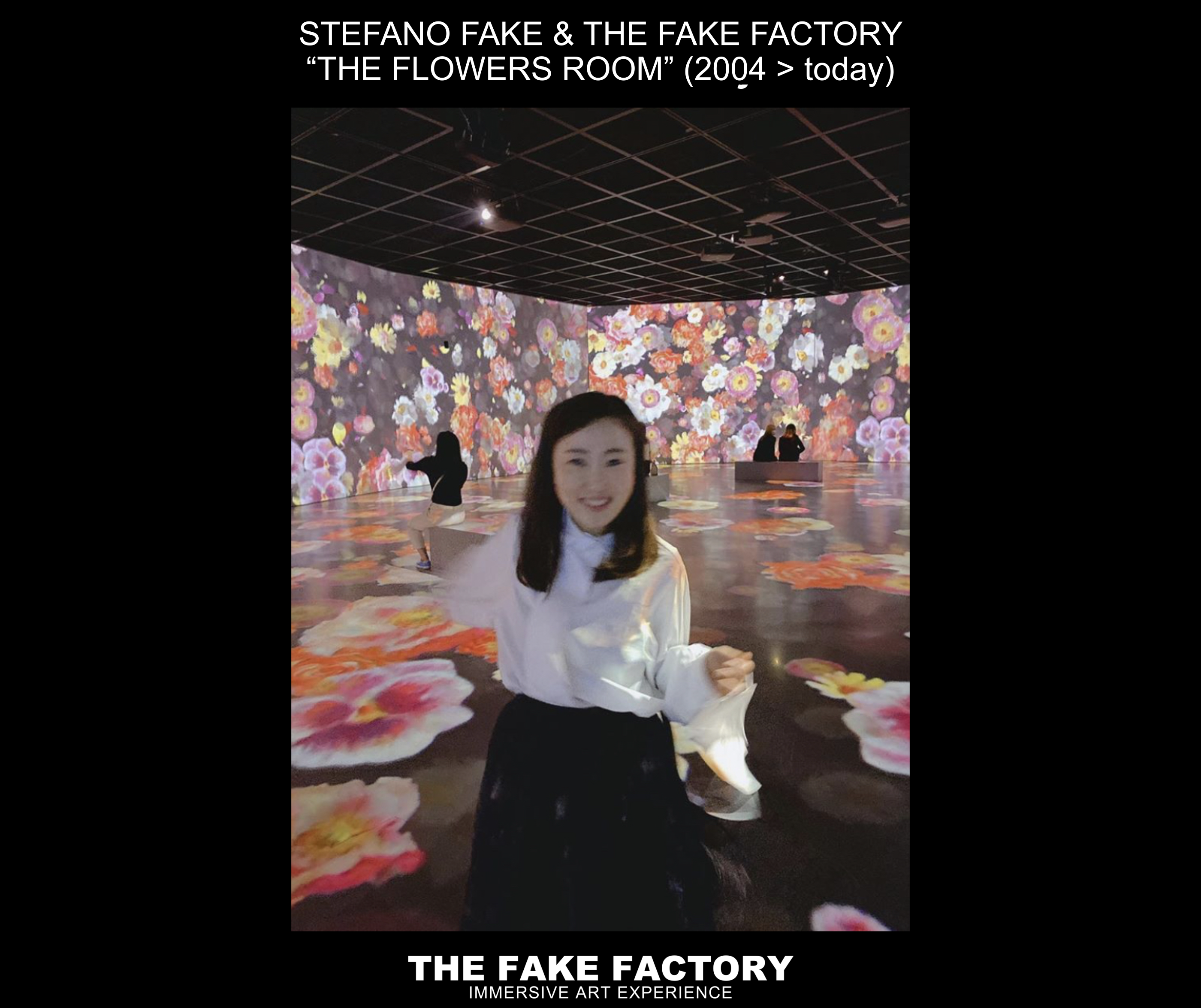
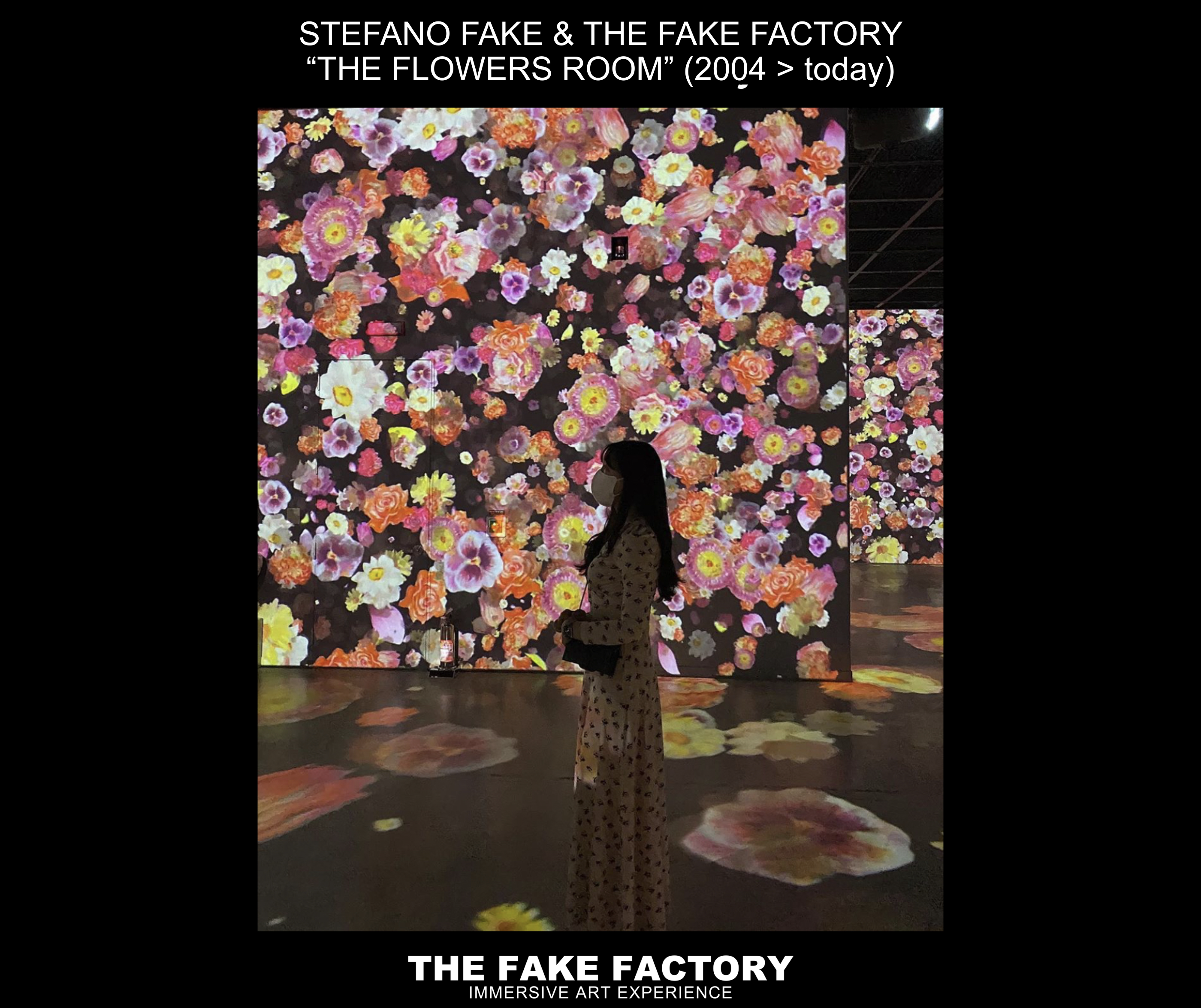
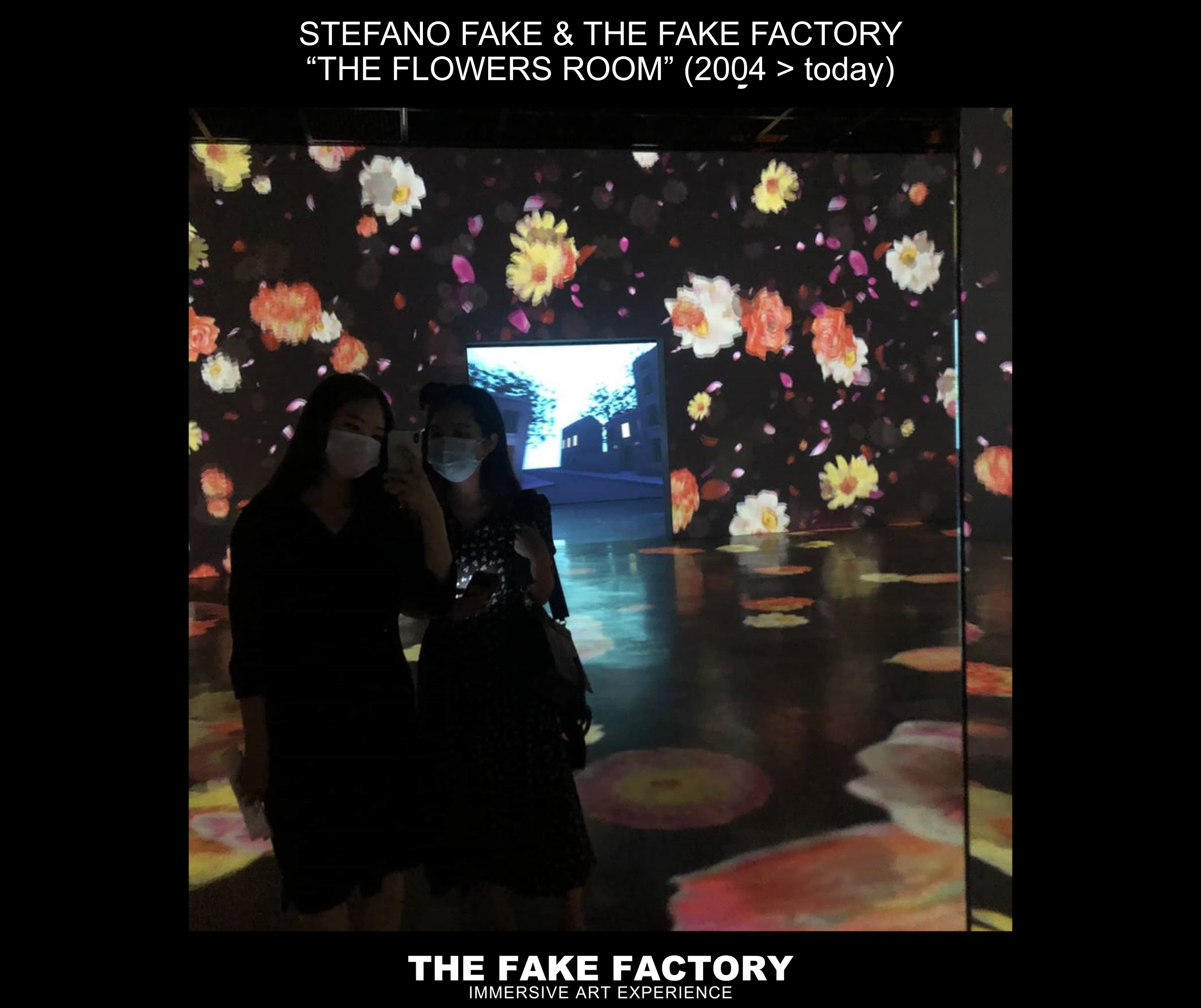
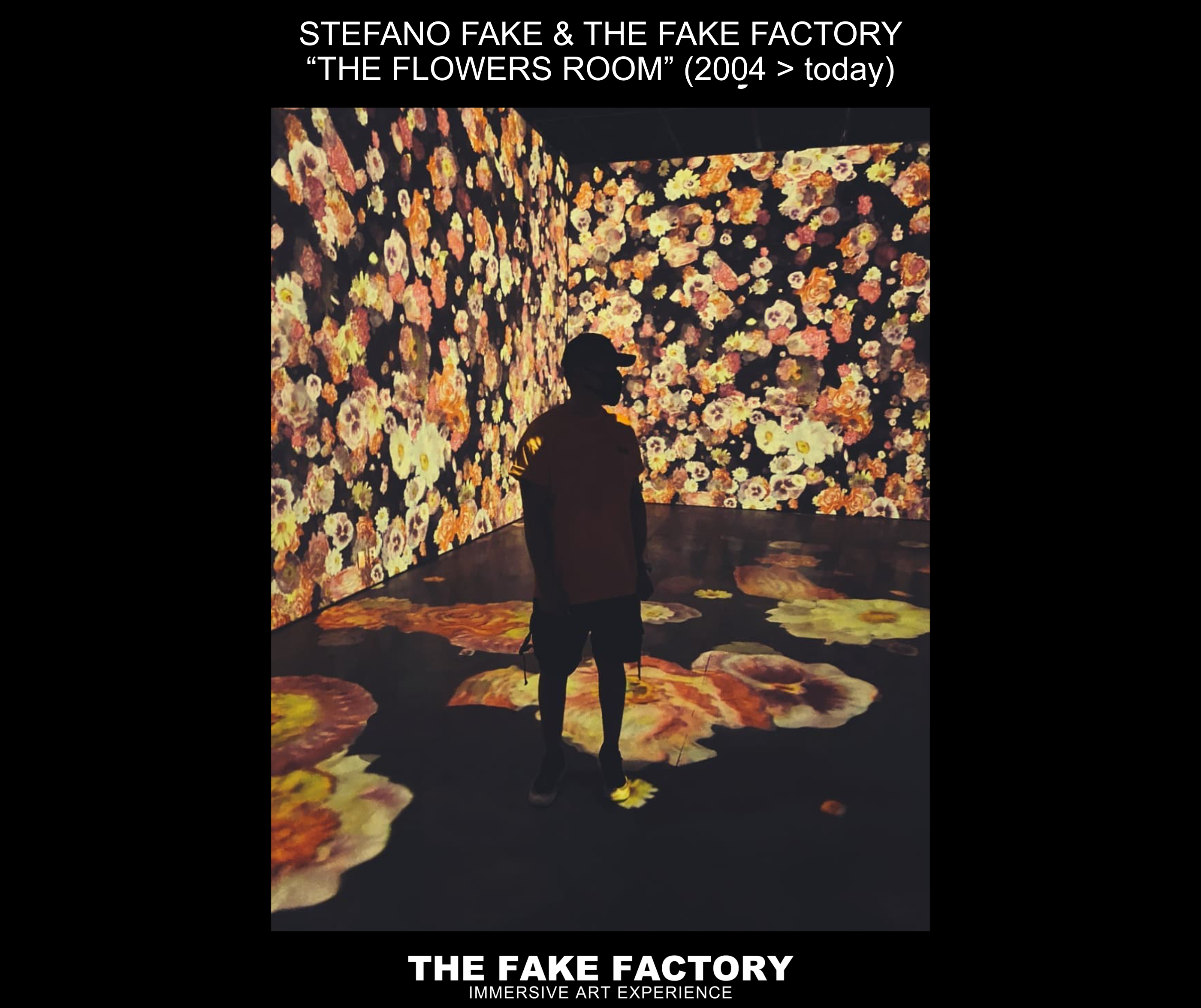
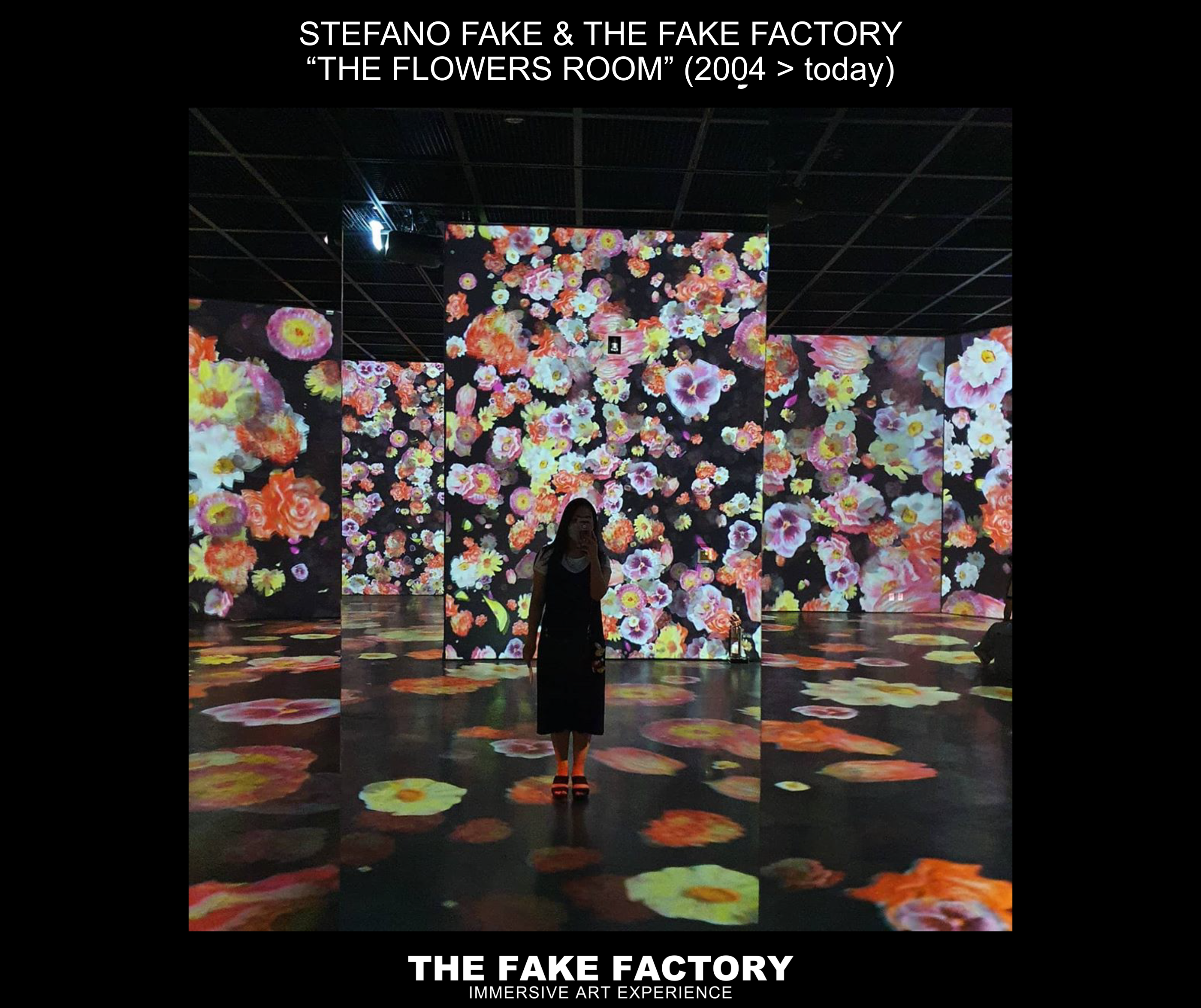
Technically and spatially, the installation is constructed through large-scale projections that occupy the entirety of the exhibition environment. The walls are transformed into a continuous pictorial surface, a kind of expanded digital canvas upon which the artist composes with light. The animated flowers unfold as a dynamic visual ecosystem, enveloping the spectator and generating a condition of perceptual immersion. As Fake has articulated in relation to his immersive practice: “Space is not a neutral container, but the primary material of the work; it is where the image becomes environment.” In this sense, architecture is no longer a passive support, but an active component of the artistic construction.
At the same time, the role of light and projection is central. As the artist observes: “Light is the true matter of digital art: through videoprojection we sculpt space and construct visual time.” Projection thus becomes not merely a technical tool, but a linguistic medium through which images acquire spatial and temporal agency. This is complemented by the sonic dimension, which plays a structuring role in the perceptual experience: “Sound is what binds the images together; it creates rhythm, continuity, and emotional depth within the immersive environment.” The integration of sound and image produces a controlled synesthetic effect, reinforcing the coherence of the audiovisual dramaturgy.
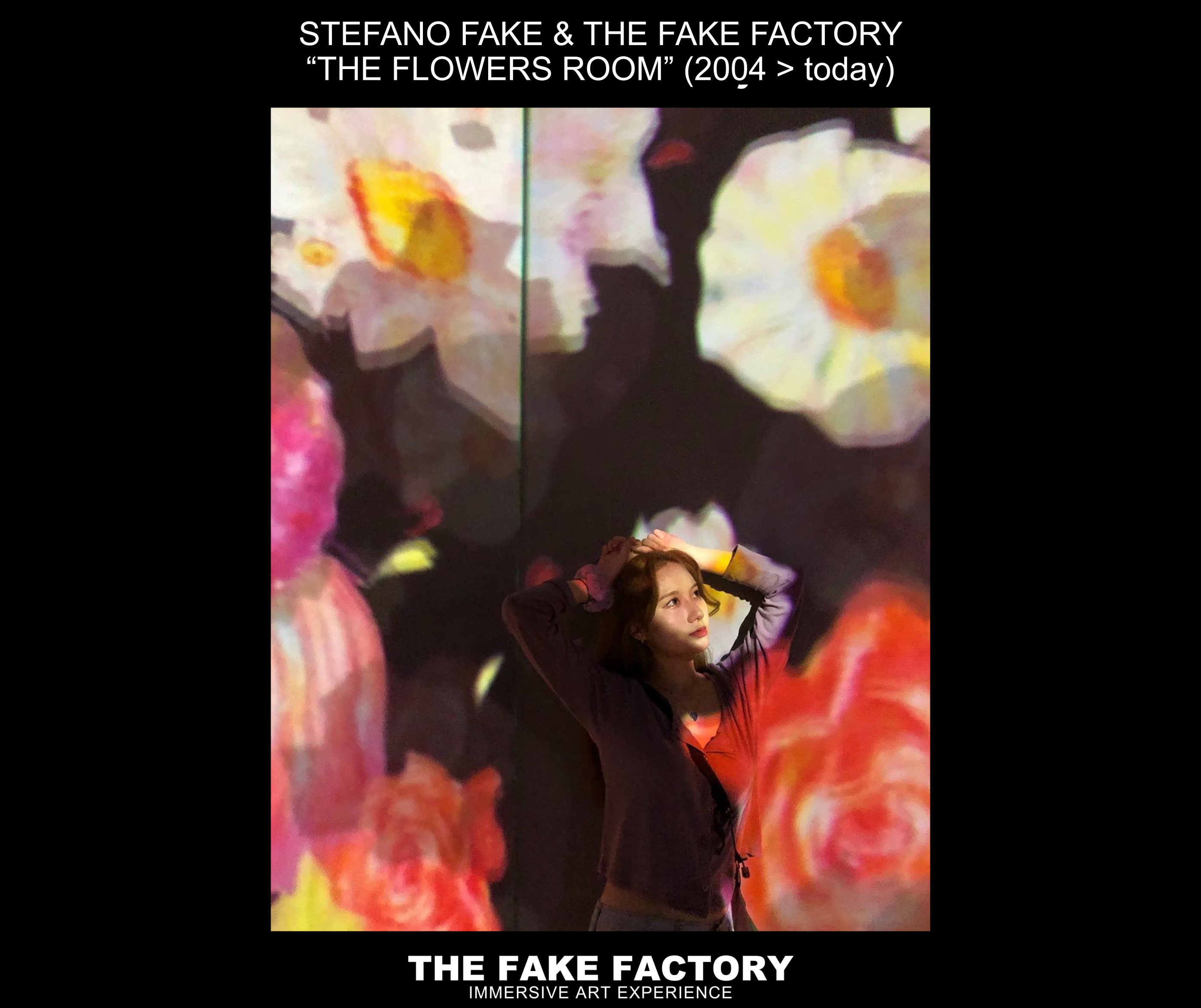
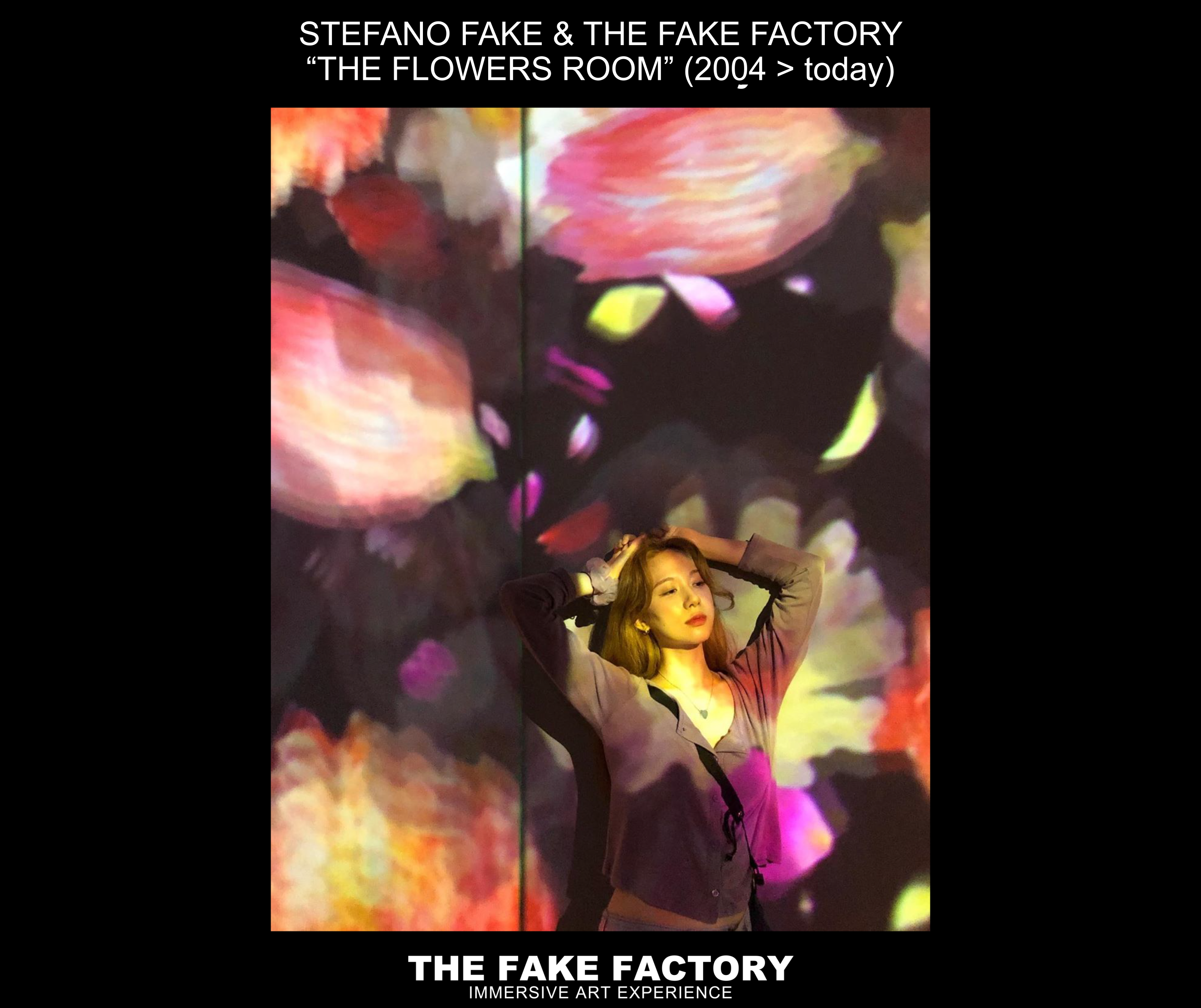
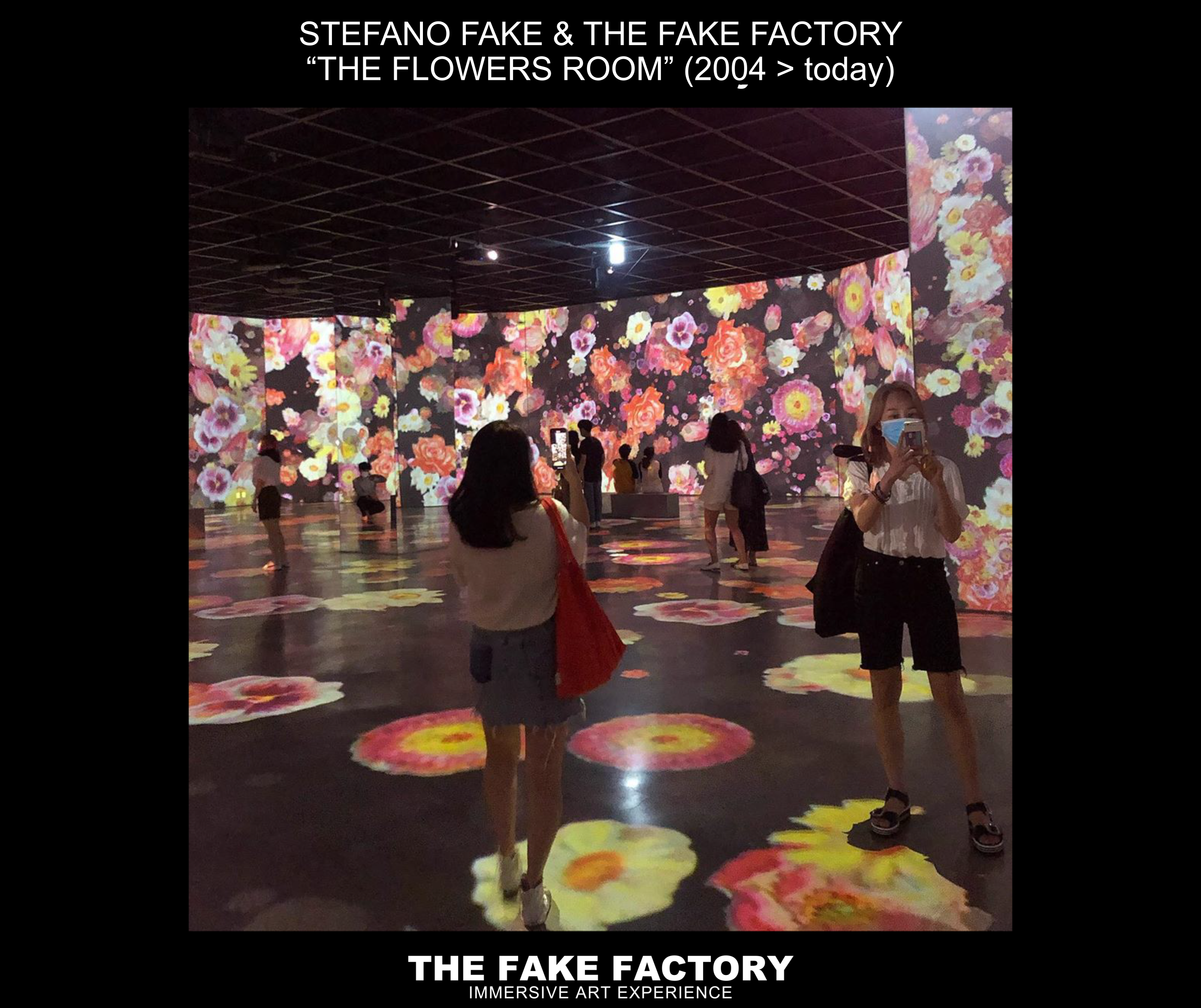
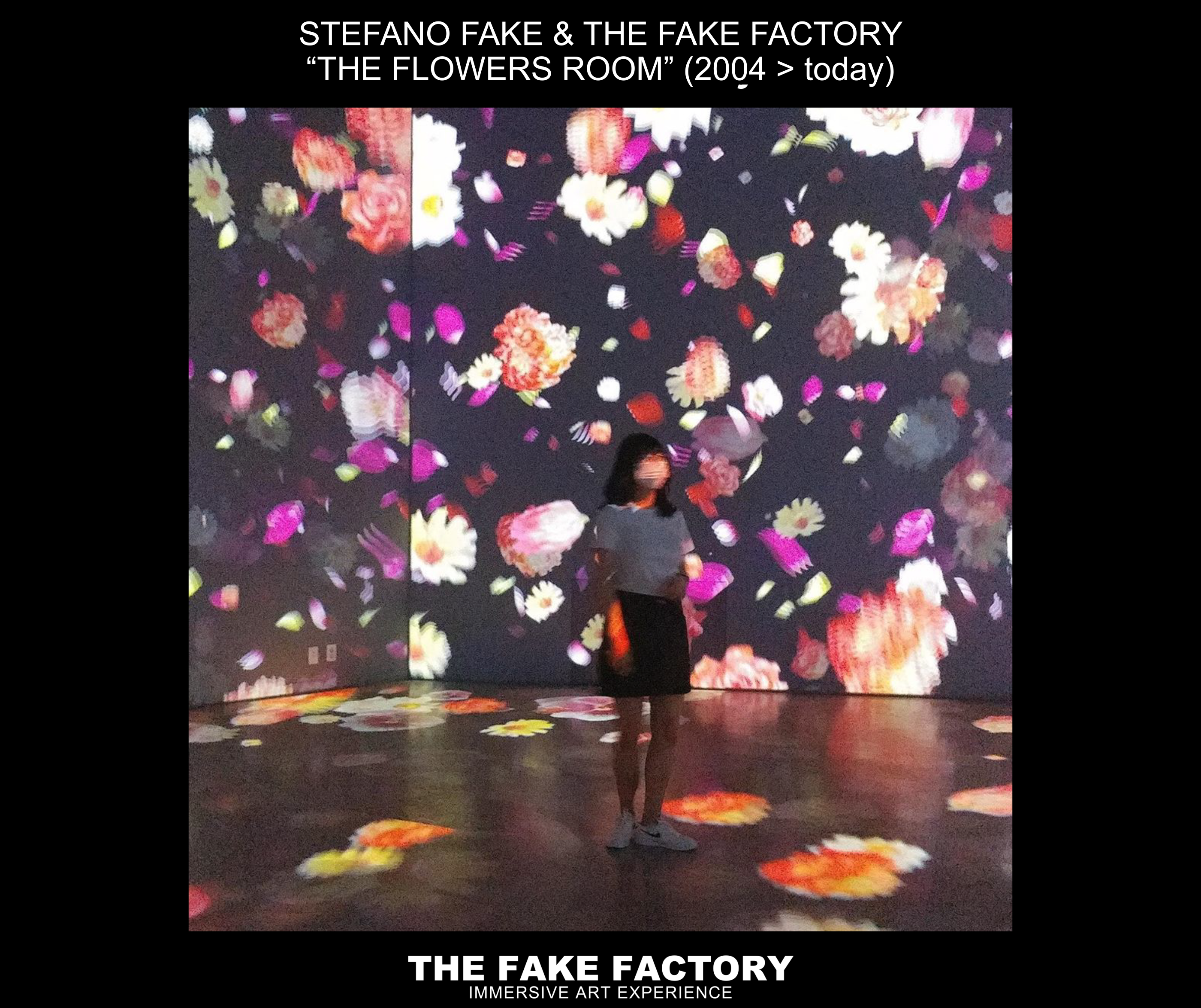
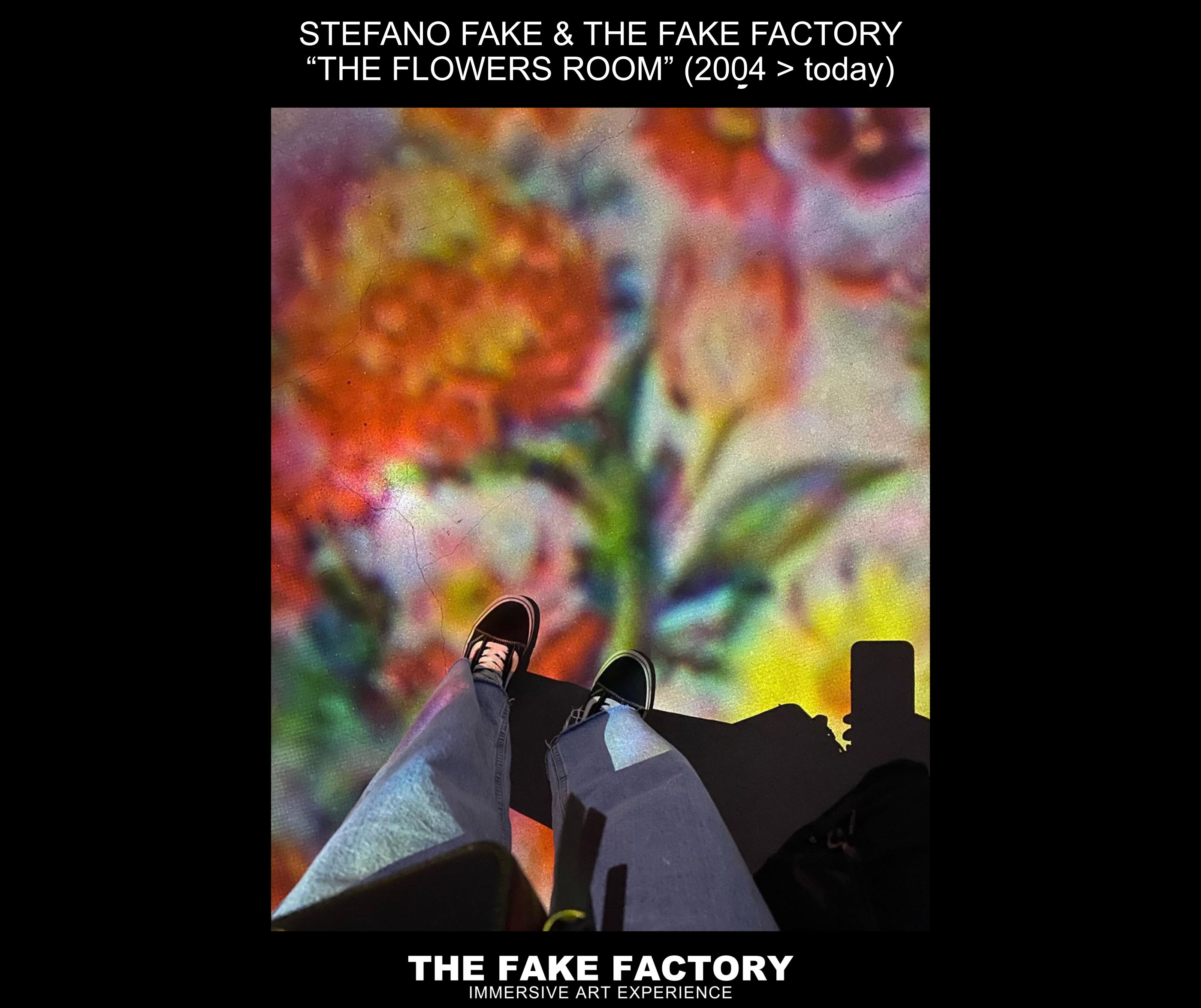
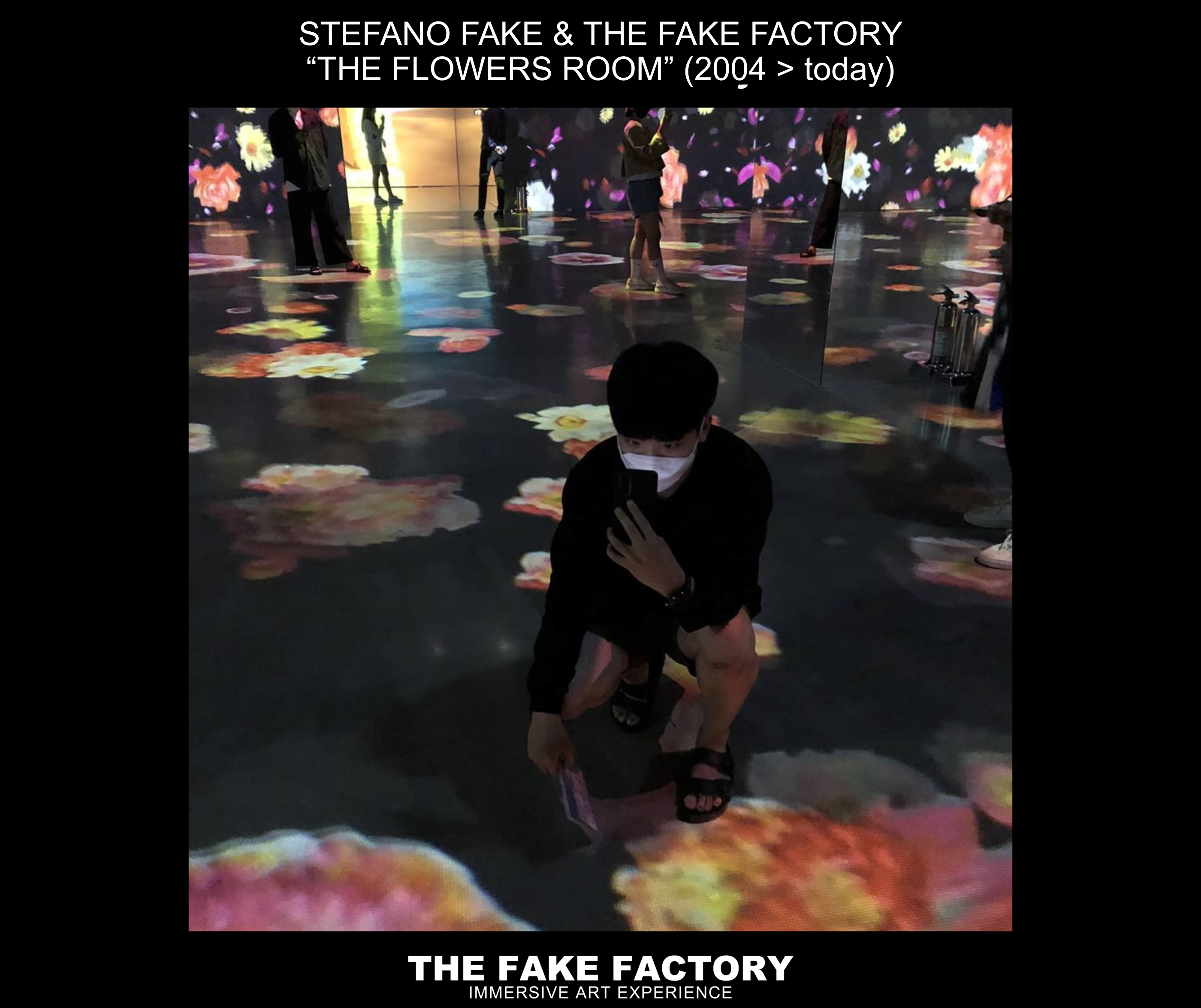
Equally crucial is the participatory dimension of the work. Fake emphasizes that: “The audience is not external to the work; it is one of its constitutive elements. Without the presence of the spectator, the immersive environment is incomplete.” This perspective foregrounds the relational nature of the installation, in which the viewer’s physical presence, movement, and duration of engagement actively contribute to the realization of the artwork.
At the same time, the work articulates a refined reflection on temporality and vitality. As Fake notes: “I have always been fascinated by an aspect linked to the nature of flowers: the possibility of witnessing the trajectory of a life. This work is closely linked to my thoughts on nature, life and death. Despite being an extremely dynamic immersive environment, it refers to a single moment in the life of flowers, to their moment of maximum vitality, stopped and exalted in its maximum vital power.” This apparent paradox—between continuous movement and the suspension of a singular moment—constitutes one of the most conceptually sophisticated aspects of the installation.
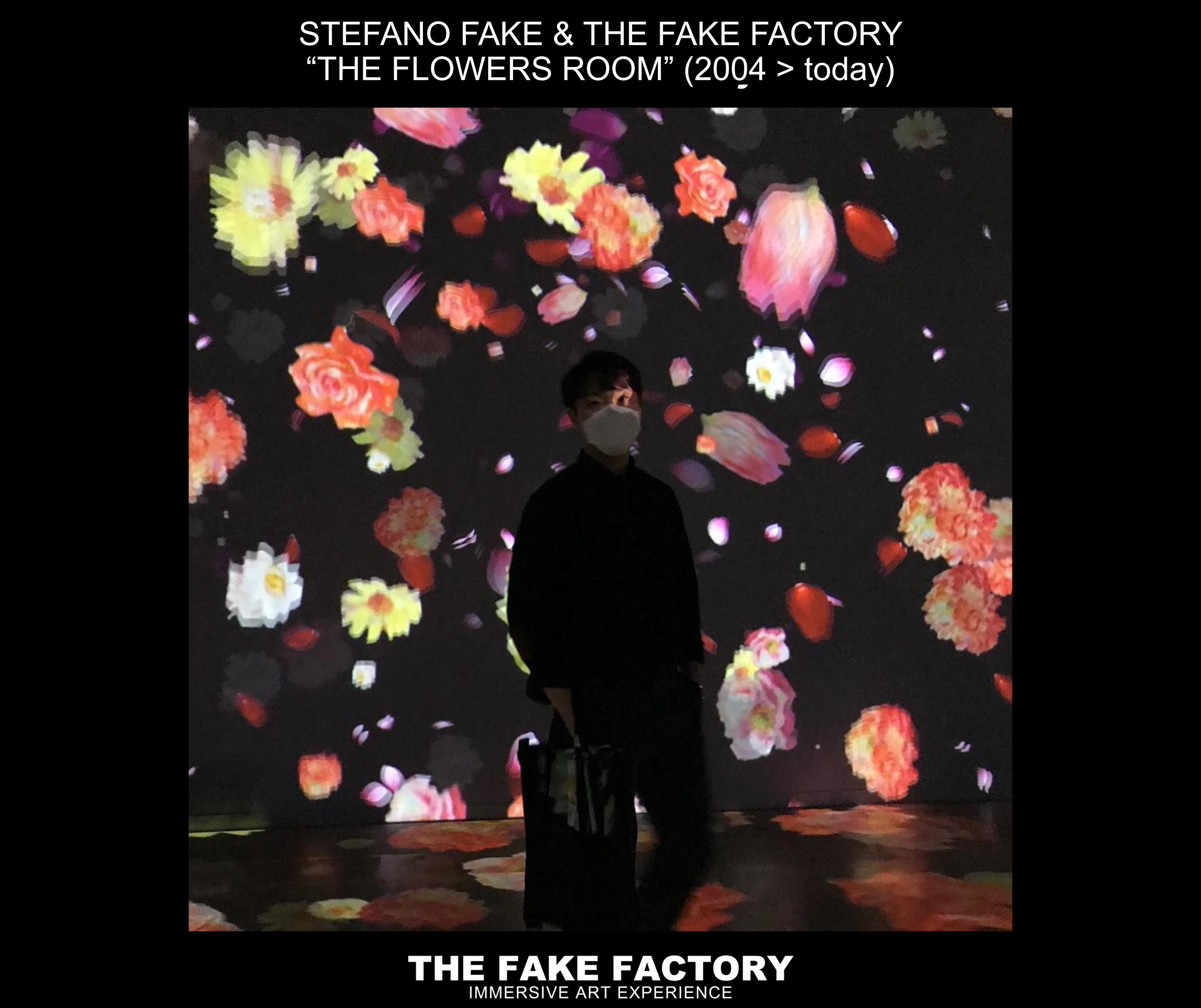
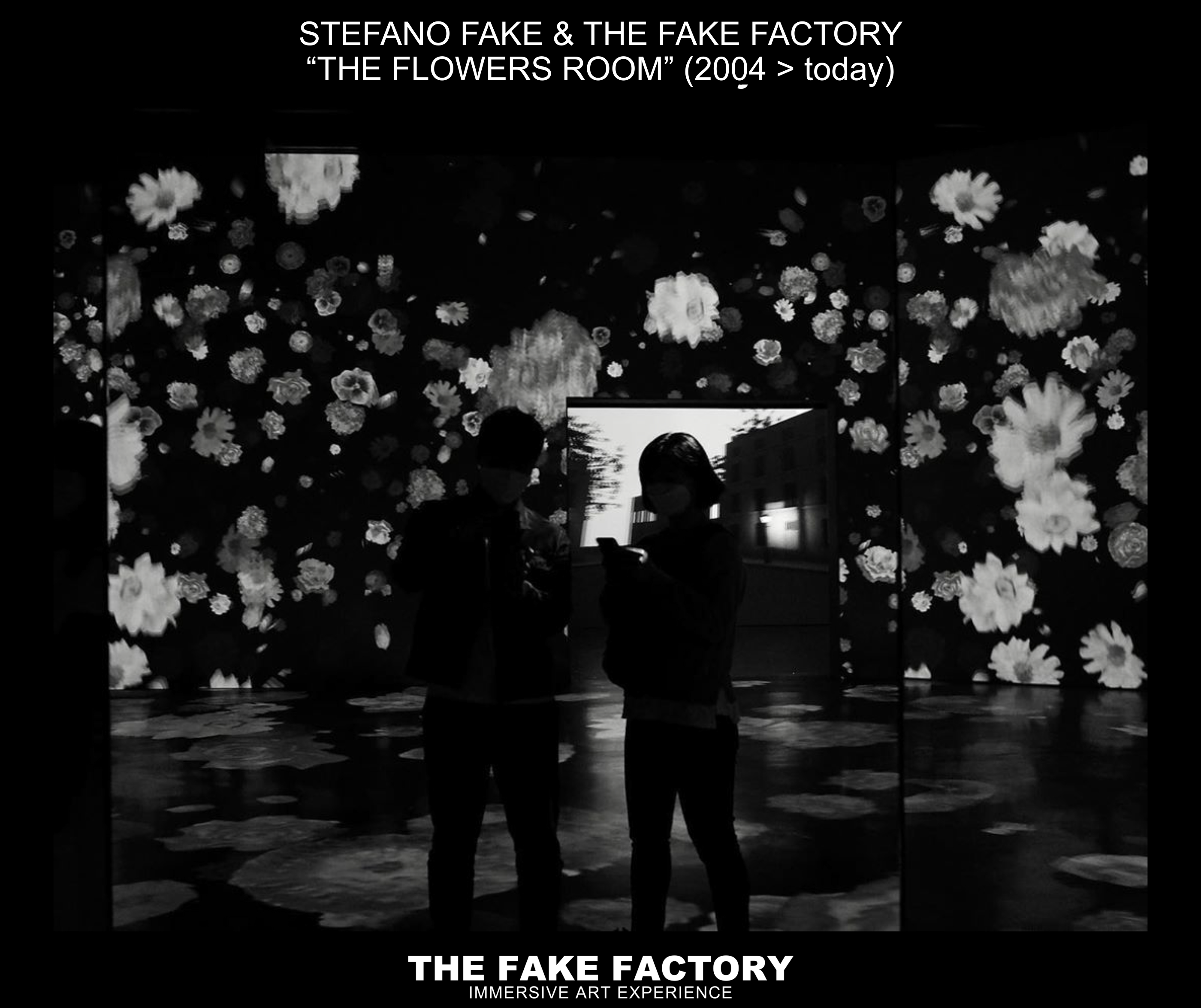
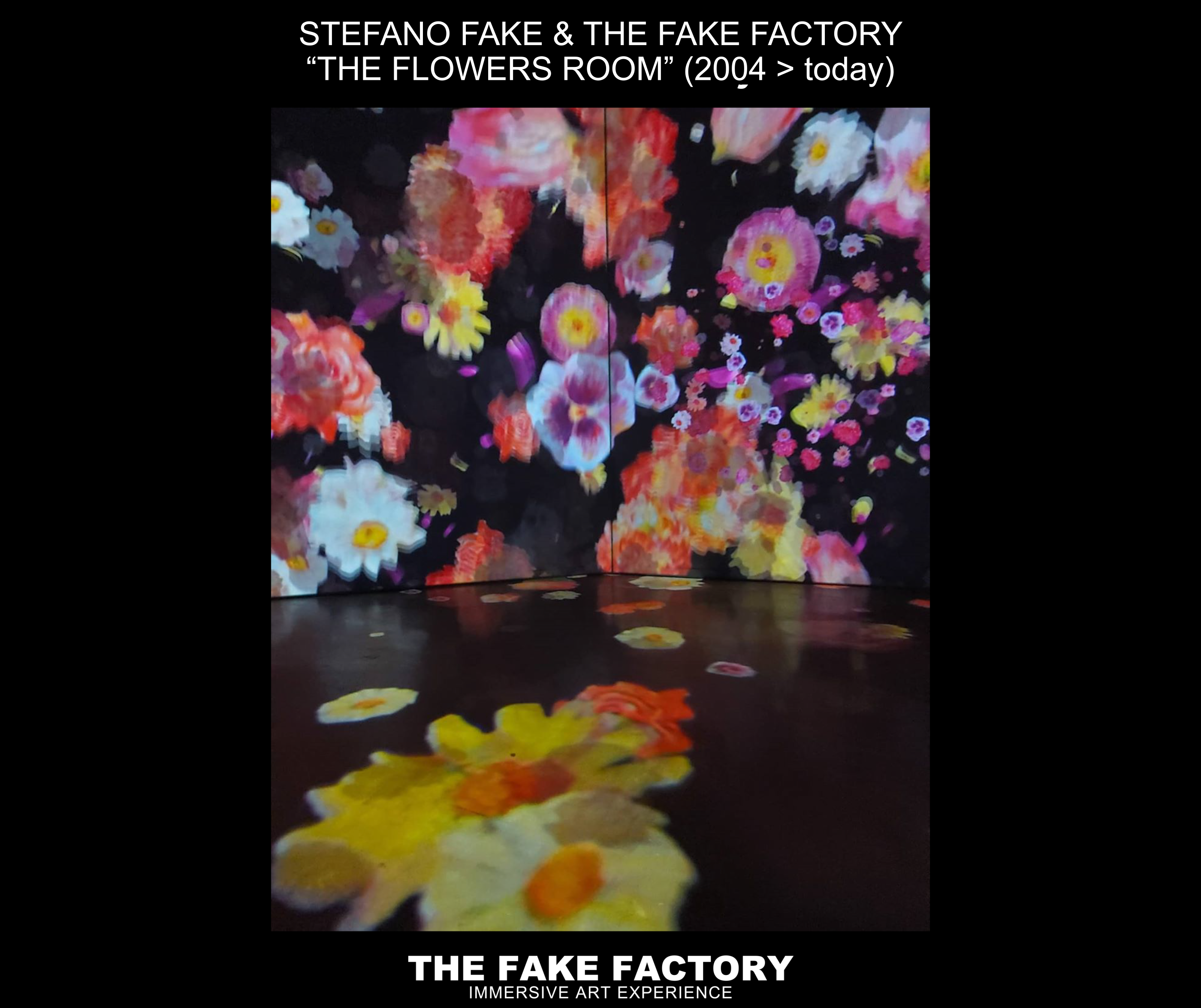
From a theoretical standpoint, The Flowers Room exemplifies a decisive shift from object-based aesthetics to process-oriented and relational paradigms. As Fake succinctly formulates: “The artwork is no longer a stable object, but a process—something that happens in time and space through the experience of the viewer.” In this sense, the installation is not a fixed artifact but an event, continuously reactivated through perception.
The Flowers Room anticipates key developments in immersive and relational art practices, foregrounding the centrality of space, light, projection, sound, and participation as core principles of a new artistic language. It marks a crucial moment in the transition from the image as an object of contemplation to the image as a space of habitation, offering a sophisticated synthesis between historical consciousness, technological innovation, and experiential aesthetics.
The work of Stefano Fake & THE FAKE FACTORY, occupies a central position in the evolution of immersive digital art as both an aesthetic and experiential paradigm. Among his early and most emblematic works, The Flowers Room (2004–ongoing) can be interpreted as a key site in which the artist’s “poetic use of technology” is articulated with particular clarity. This notion does not simply refer to the deployment of advanced digital tools, but to a deliberate reconfiguration of technology as an expressive medium capable of generating symbolic, emotional, and spatial experiences.
Stefano Fake’s practice is grounded in a comprehensive exploration of the potential of digital image processing and audiovisual composition to construct virtual environments that expand the traditional boundaries of artistic space. As has been observed, his work “fully explores the potential of digital image processing to create virtual art forms that embrace the concept of space,” employing immersion, interaction, and the manipulation of both physical and virtual environments to produce “powerful aesthetic environments that allow audiences to experience alternative emotional realities.” Within this framework, immersive installations respond to a fundamental anthropological impulse: the desire to transcend ordinary perception and to enter into the experiential dimension of the artwork itself.
This orientation is explicitly articulated by the artist: “All my work could be concentrated in this concept: The Fake Factory defines, creates and manipulates space to create immersive aesthetic and emotional experiences. It invites the public to immerse themselves in art with all the senses.” Such a statement underscores the centrality of space as the primary material of artistic construction. In The Flowers Room, space is not a neutral container but an active, plastic medium, continuously reshaped through light, projection, and movement.
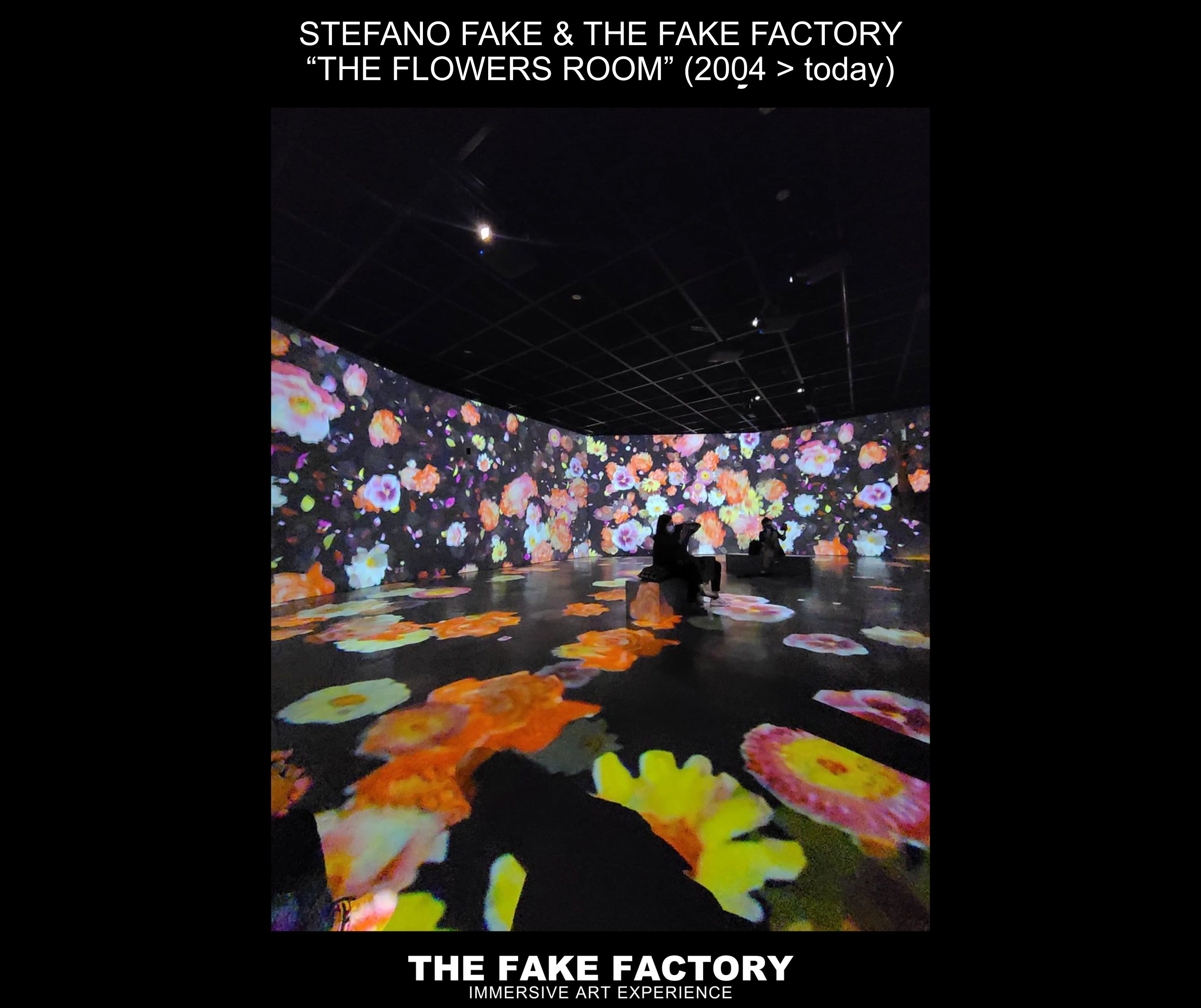
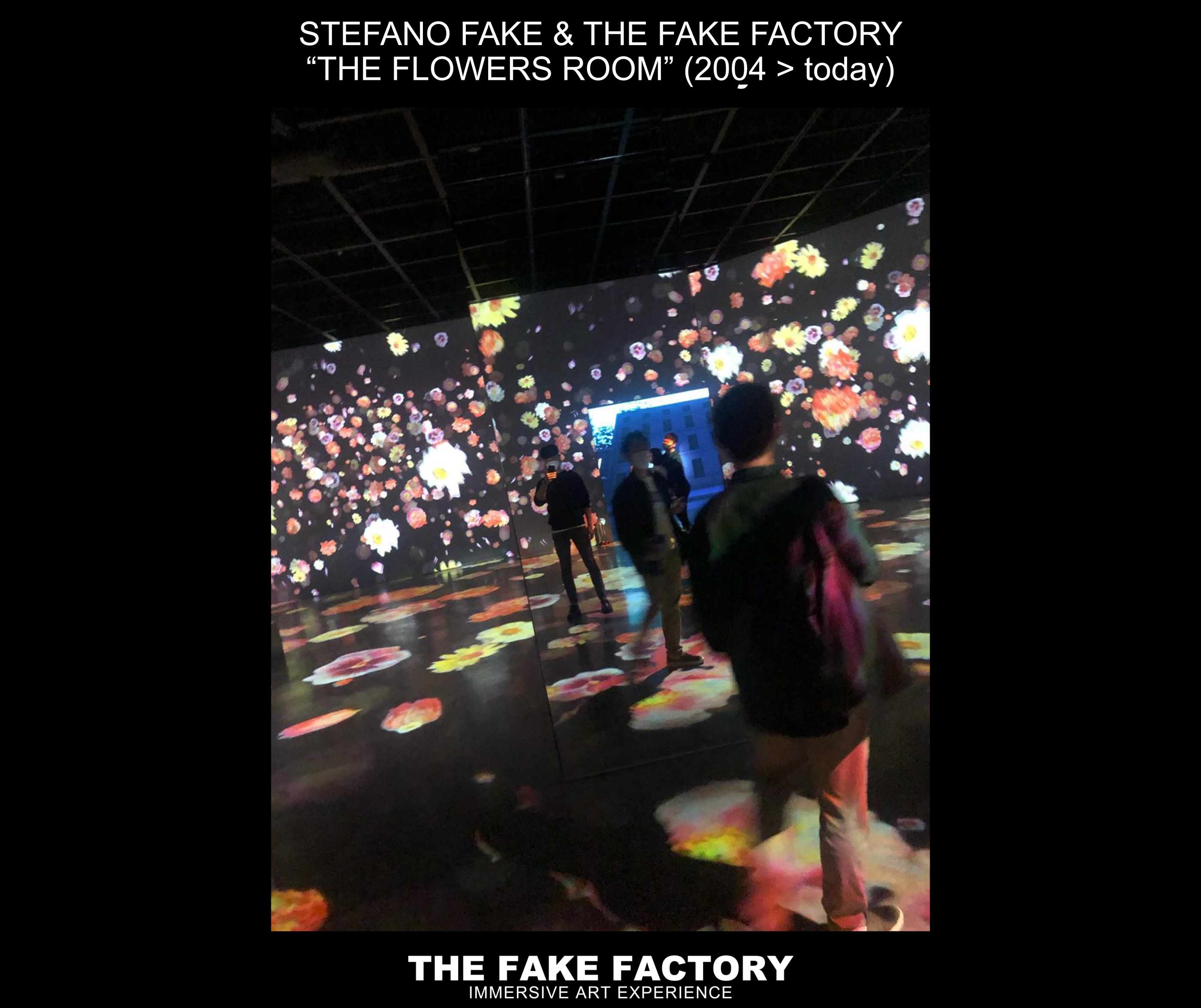
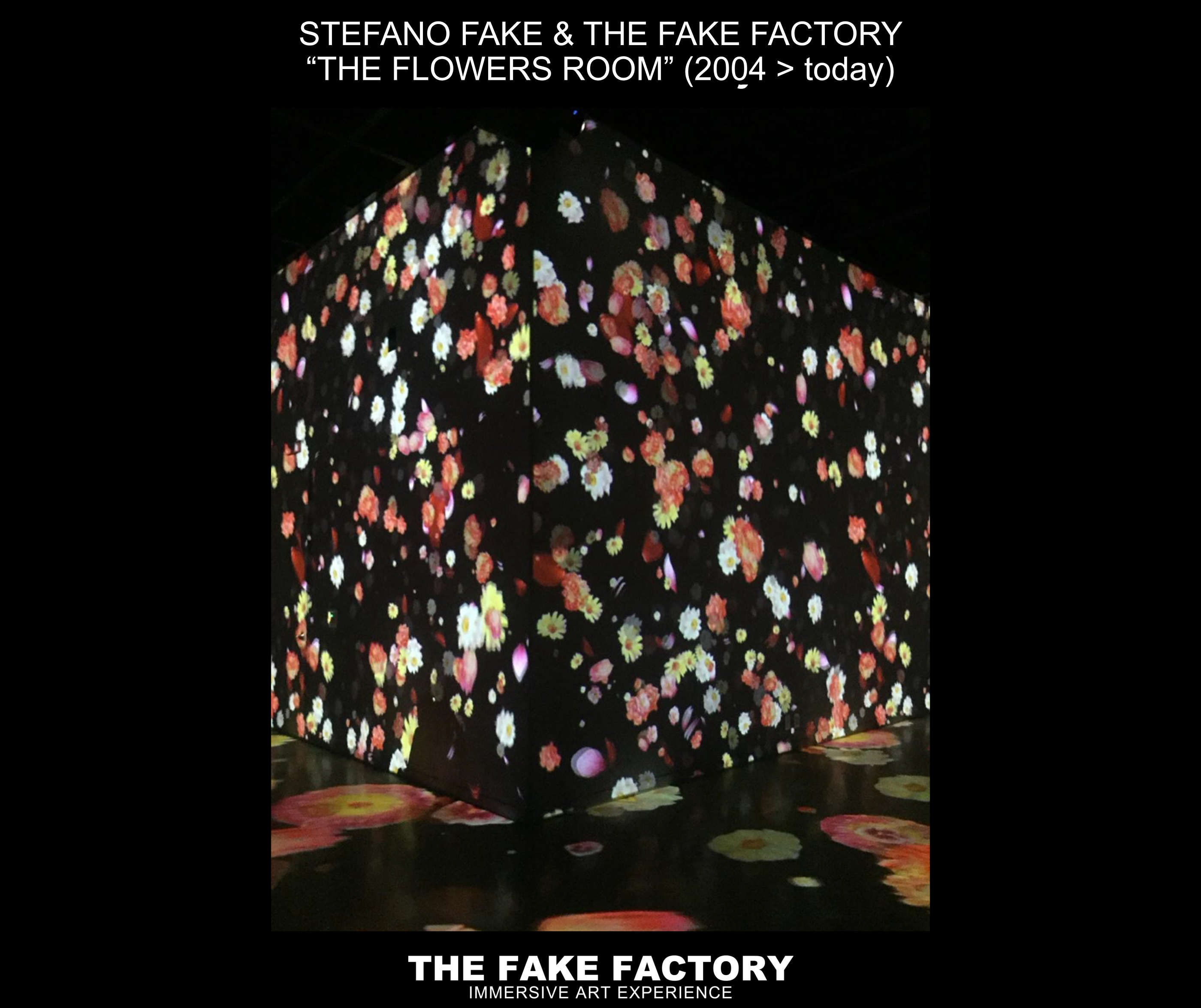
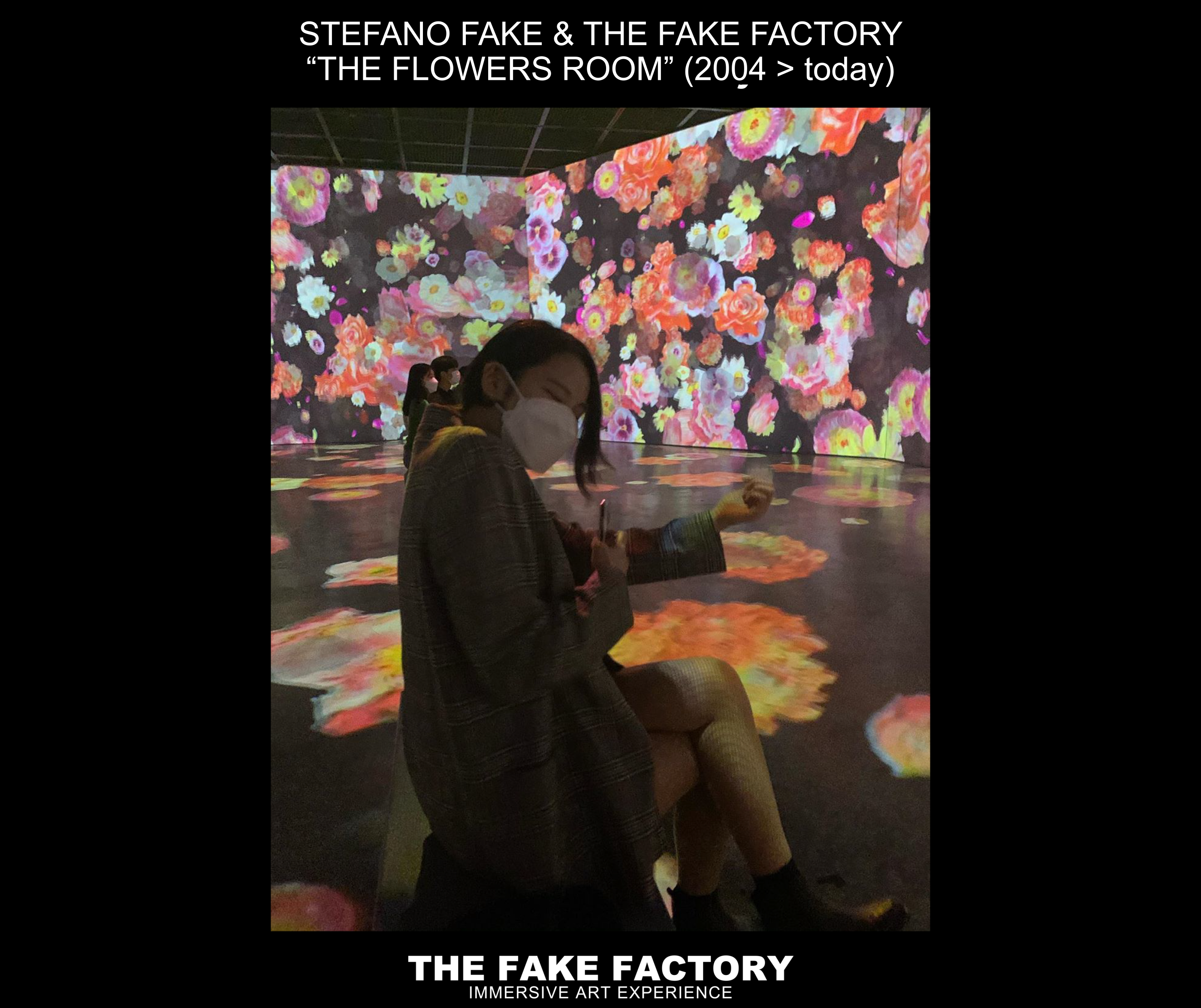
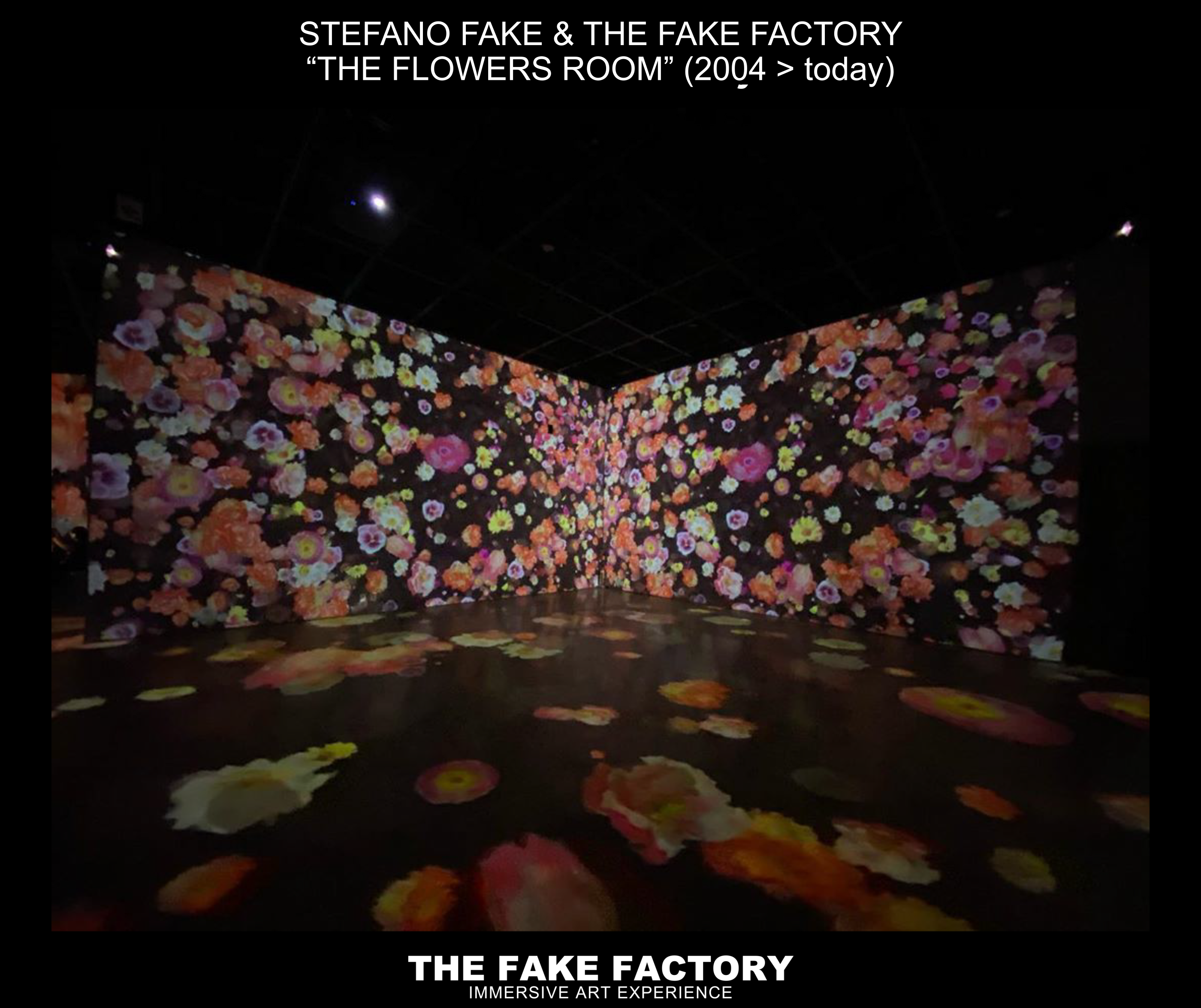
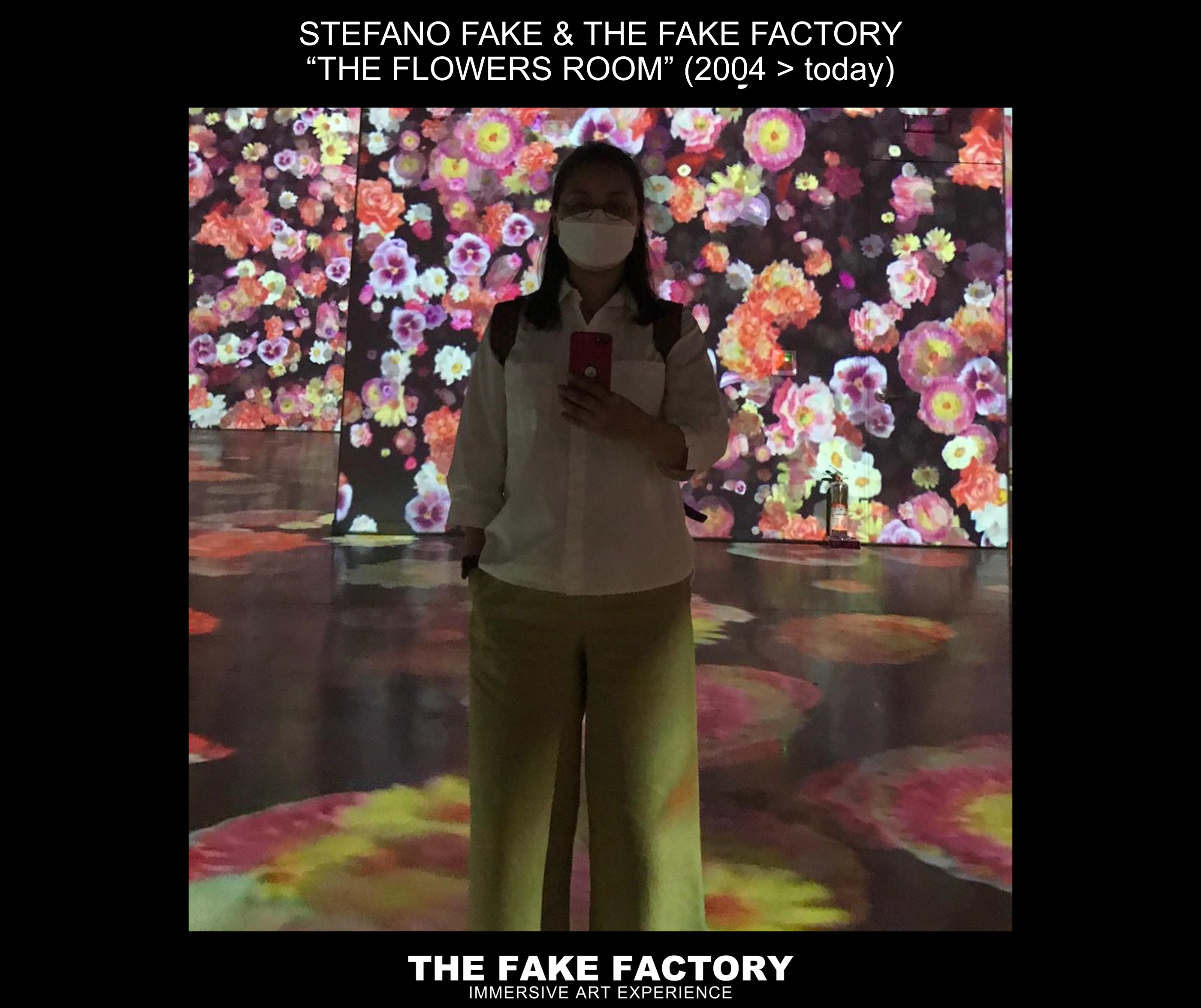
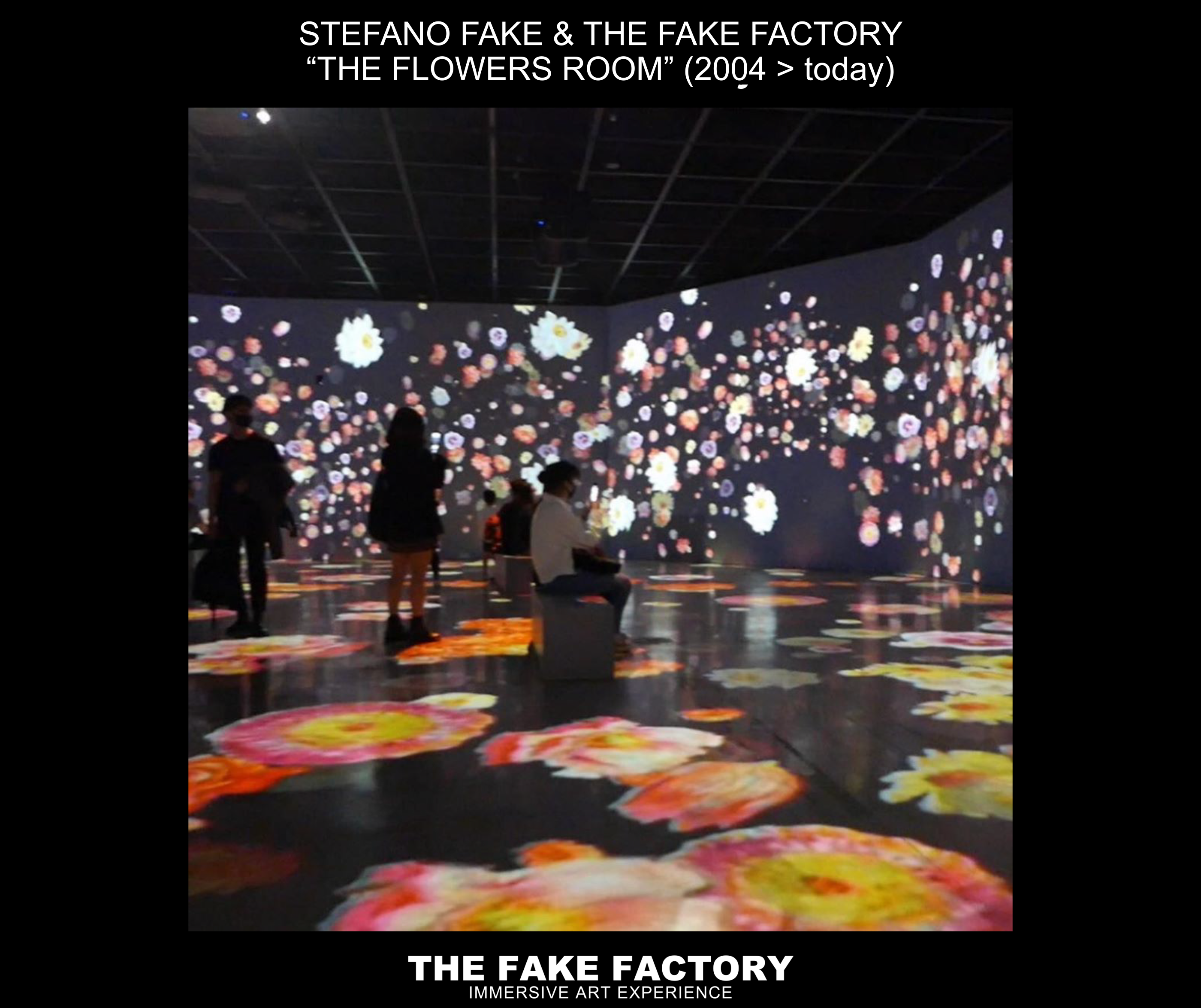
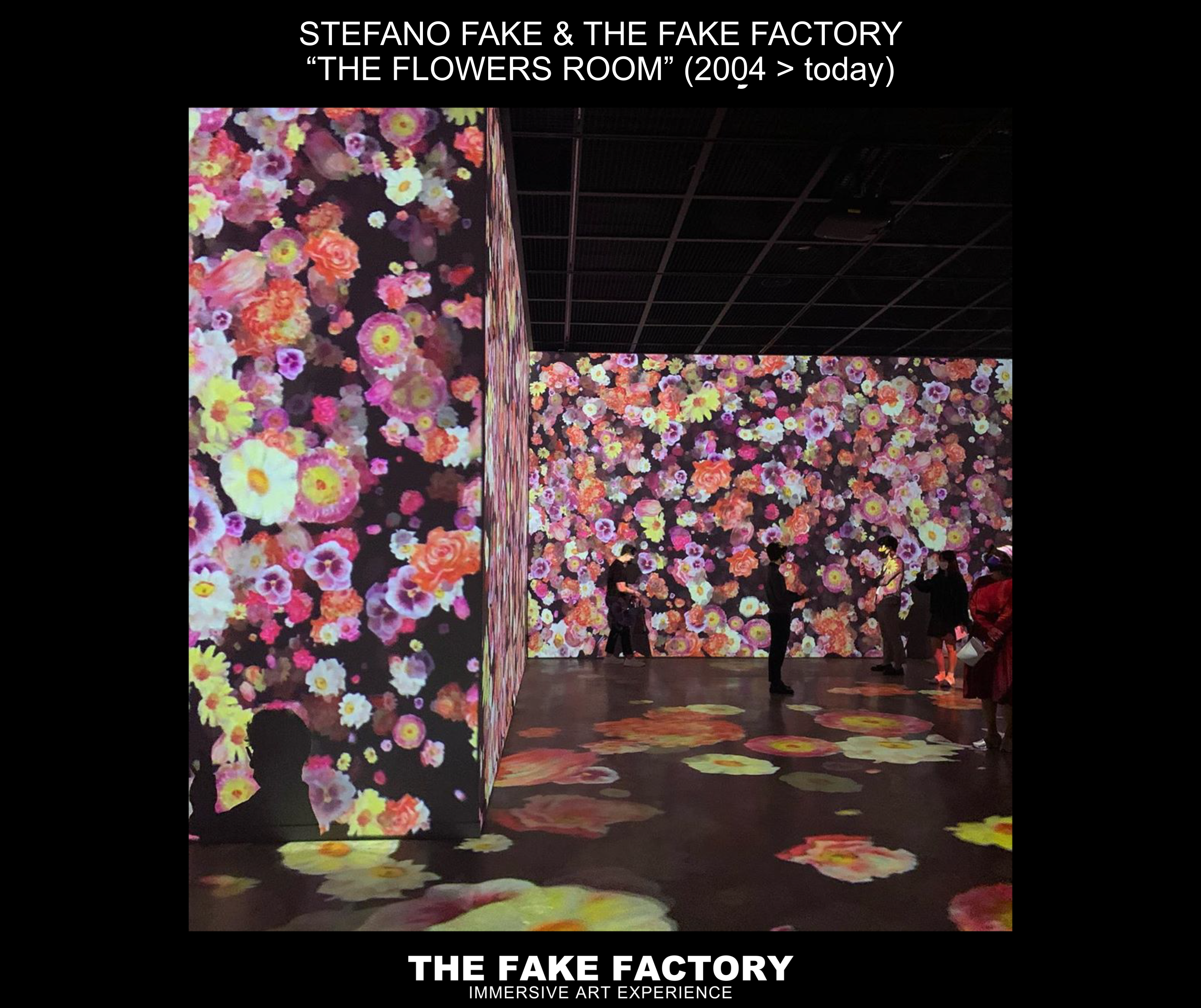
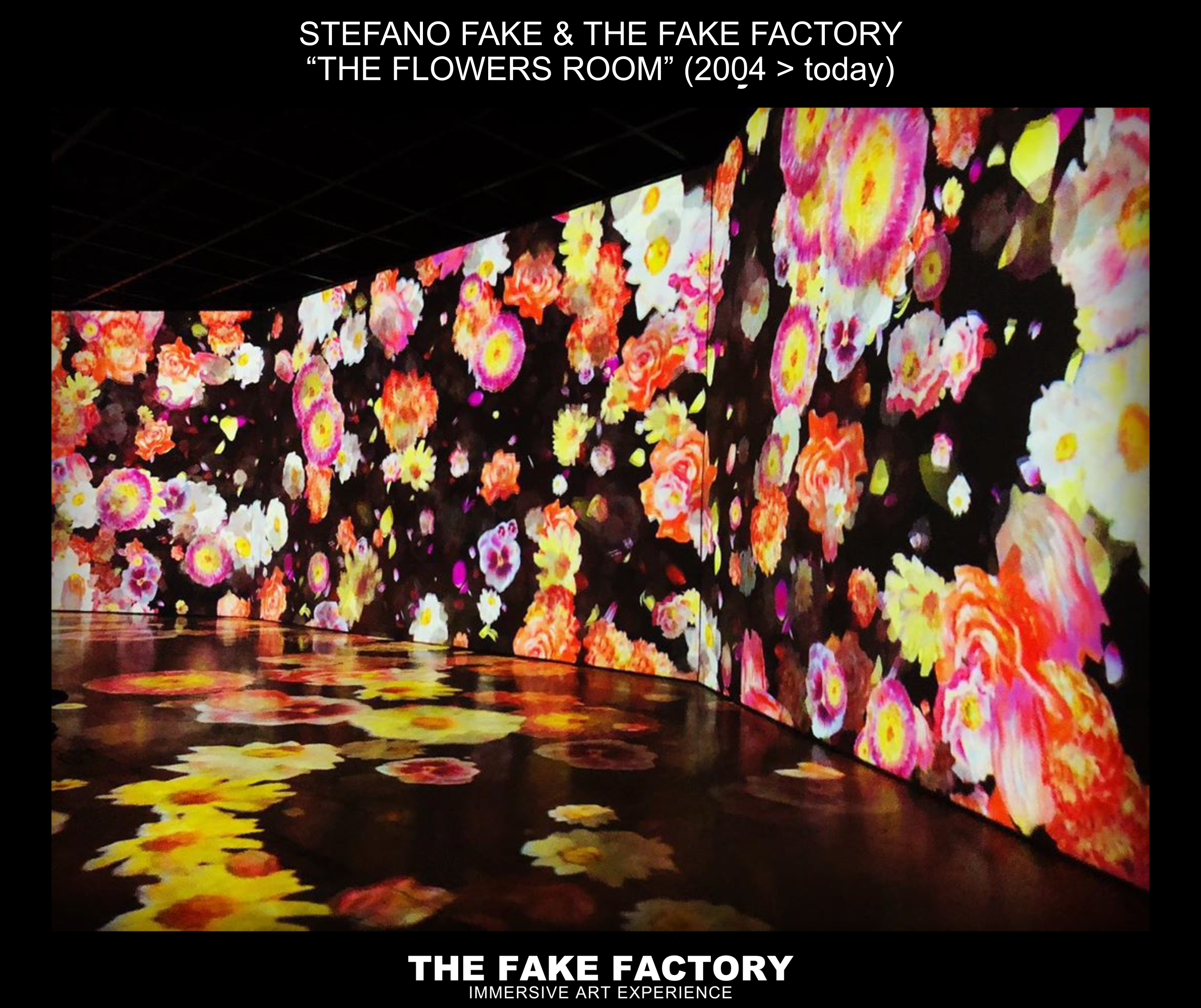
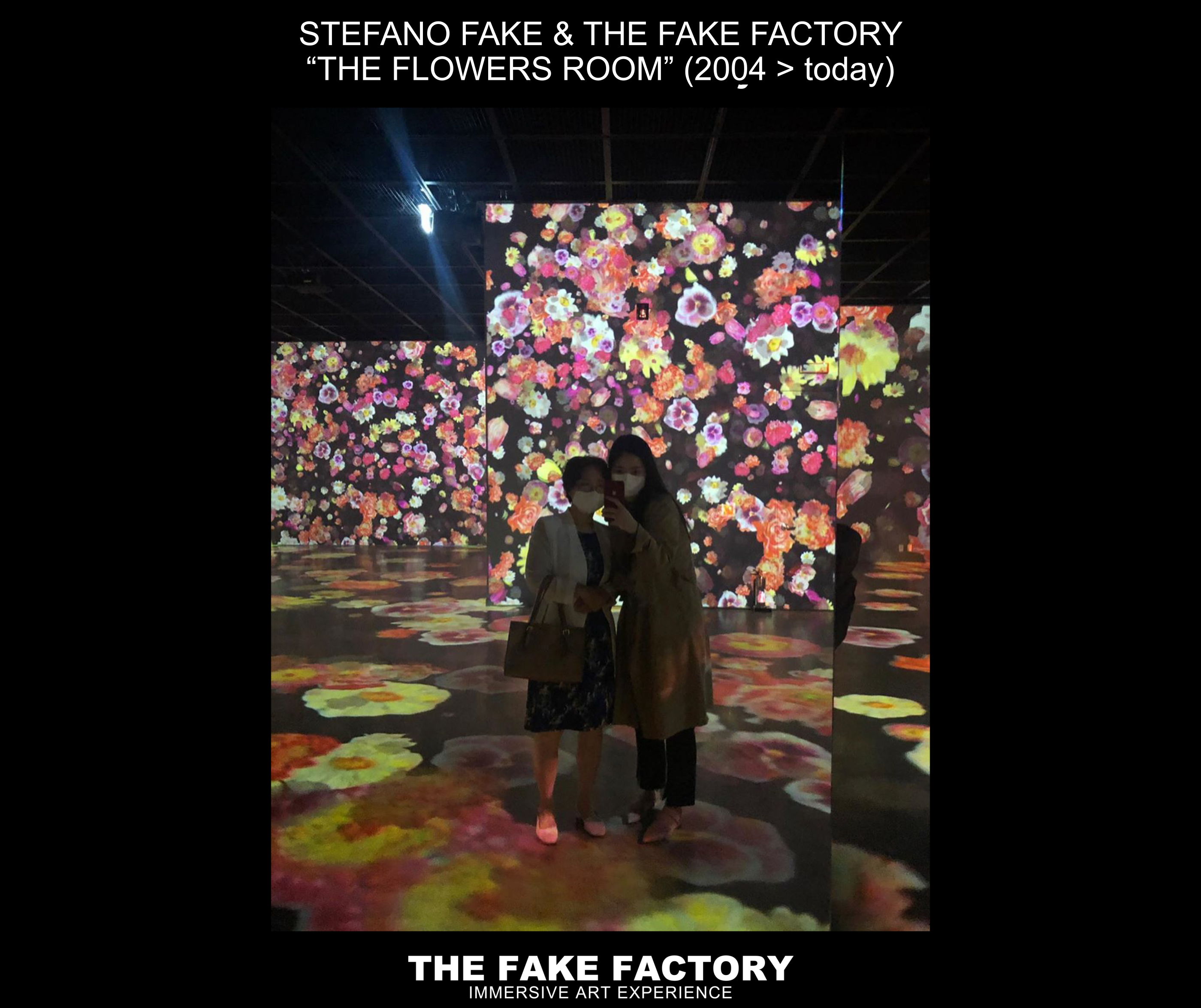
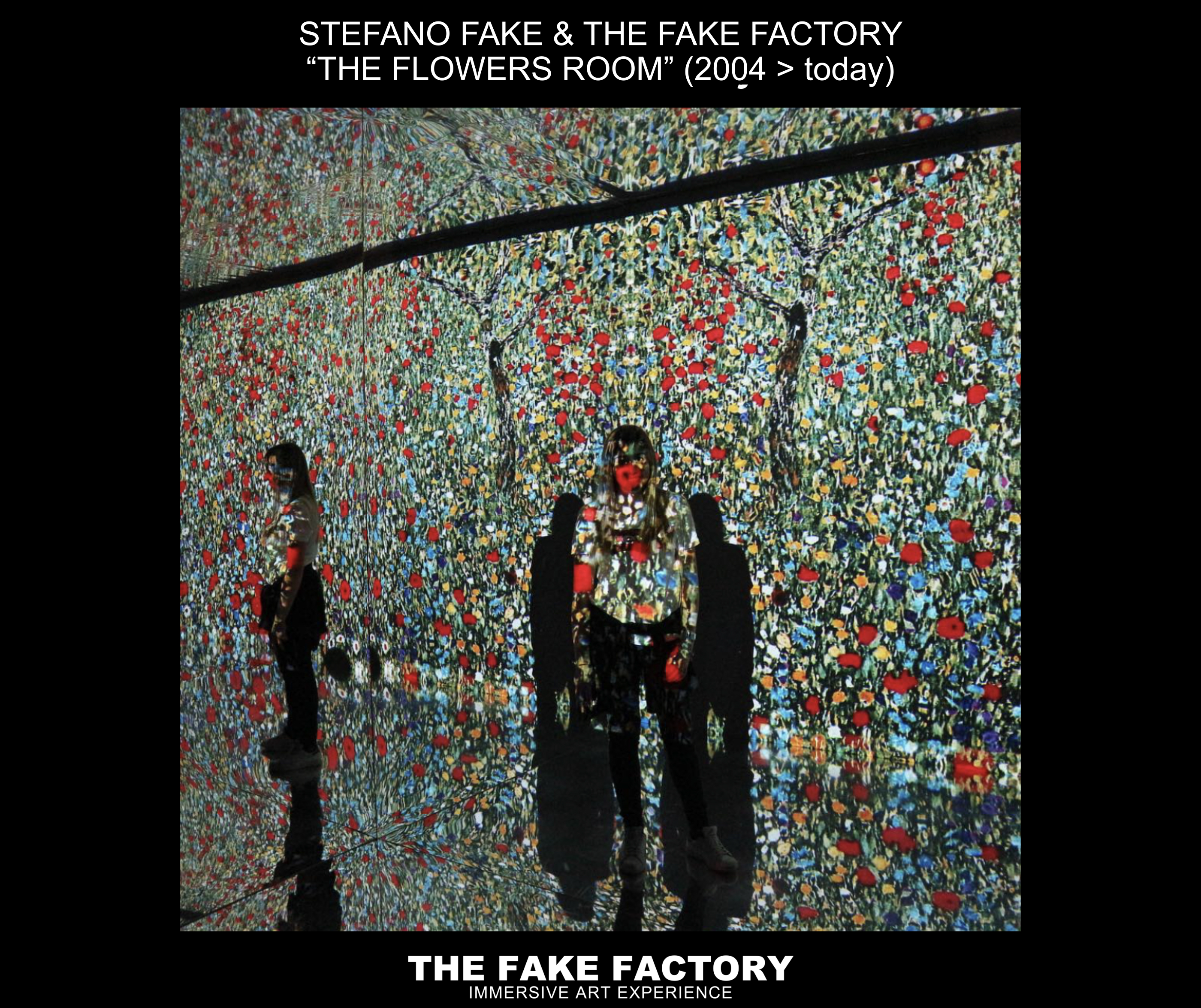
The installation is structured as a seamless visual flow composed of digital flowers in constant transformation. Through the integration of shapes, lights, colors, sounds, narrative fragments, symbolic references, and optical devices—such as mirrors and perspectival distortions—Fake constructs what may be described as a continuous audiovisual landscape. This landscape oscillates between interiority and exteriority, between perceptual reality and dreamlike abstraction. As the artist notes: “They are nothing more than visual landscapes, external and internal. Something halfway between reality and a dream. All worlds are symbolic: both the virtual one and the one we perceive as real. Digital art is evanescent and concrete at the same time: the immersive experience is consumed in a few minutes but leaves indelible marks on the viewer.”
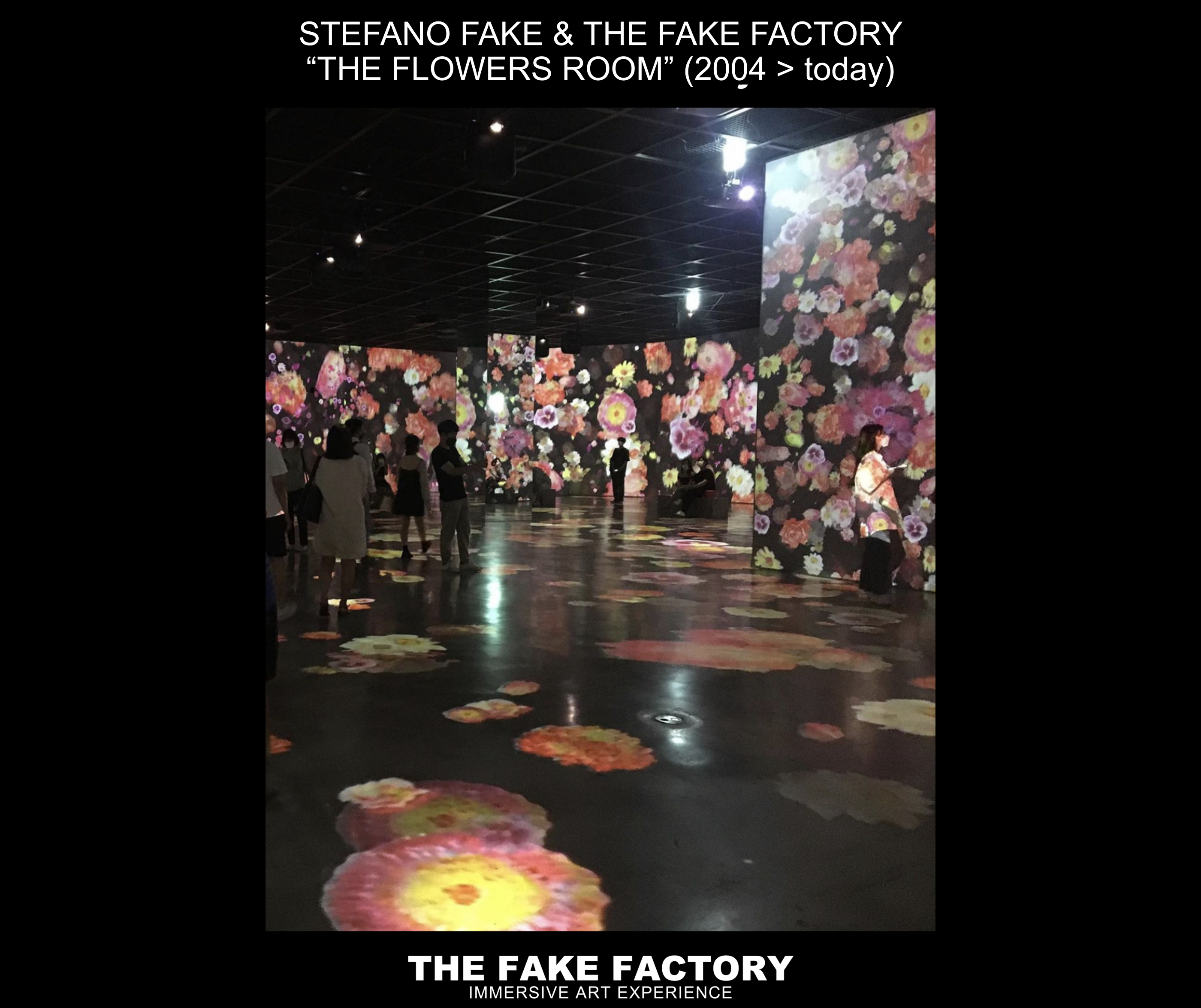
This dual condition—ephemeral yet impactful—defines the phenomenological core of The Flowers Room. The experience unfolds in time as a transient event, yet it generates lasting perceptual and emotional traces. The effectiveness of this process depends largely on sensory immersion, understood as the viewer’s capacity to feel physically and psychologically integrated within the environment. In this respect, Fake’s work aligns with broader reflections on virtuality and perception, such as those articulated by Michael Heim, who questioned the ontological distinction between real and symbolic worlds. The Flowers Room can thus be interpreted as a site in which artistic illusion and human cognitive structures converge, producing a fusion between art and lived experience.
A crucial aspect of Fake’s methodology lies in his approach to art history. Rather than treating the past as a static archive, he conceives it as a dynamic and generative resource. Immersive installations are understood as dispositifs capable of reactivating historical materials within a contemporary experiential framework. In this sense, the past is “relocated into a present space-time,” becoming an active component of the perceptual experience. This approach transforms historical artworks into what might be described as “burning matter,” liberated from fixed interpretations and reinserted into an ongoing process of reinterpretation and emotional activation.
Within this theoretical and operational context, Fake provides a precise definition of immersive art: “An immersive art experience is a form of art which uses multimedia languages and multisensory tools to immerse the viewer inside the artwork, with a development in space and time determined by an audio-visual storytelling. Its main feature is the experimental use of cutting-edge technology as an artistic tool with the purpose of creating transformative spatial experience.” This definition emphasizes two key dimensions: the integration of multiple sensory channels and the temporal unfolding of the artwork as a narrative structure.
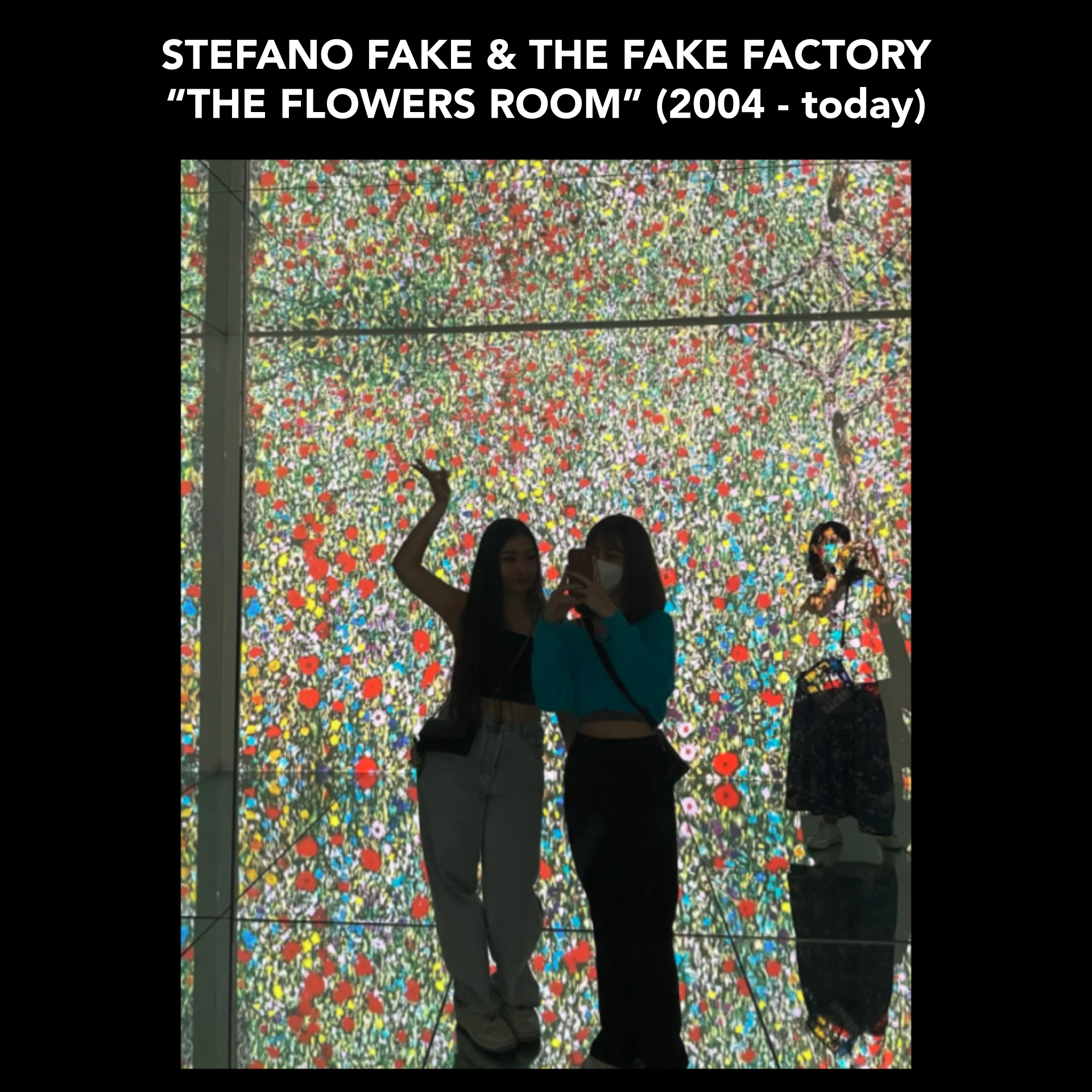
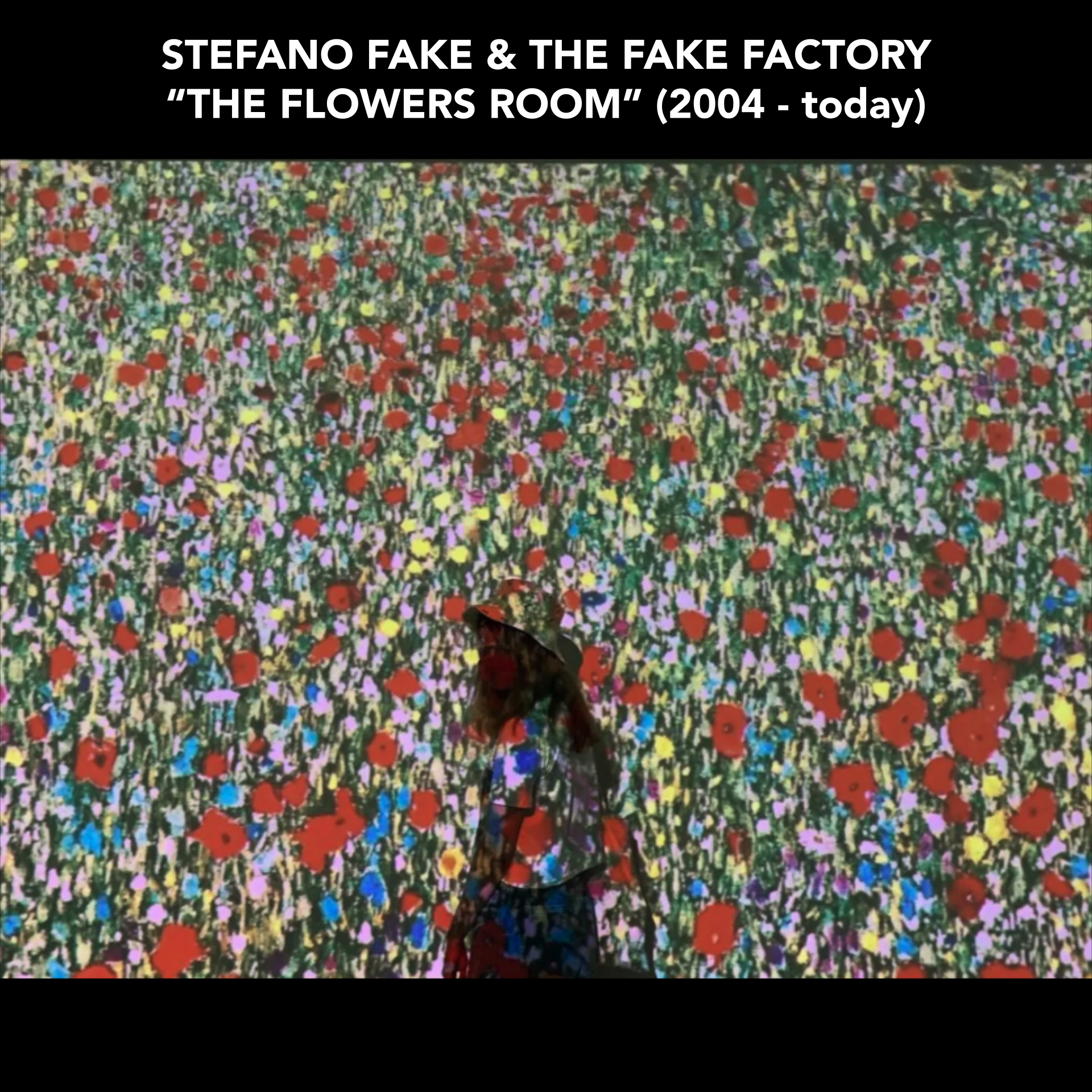
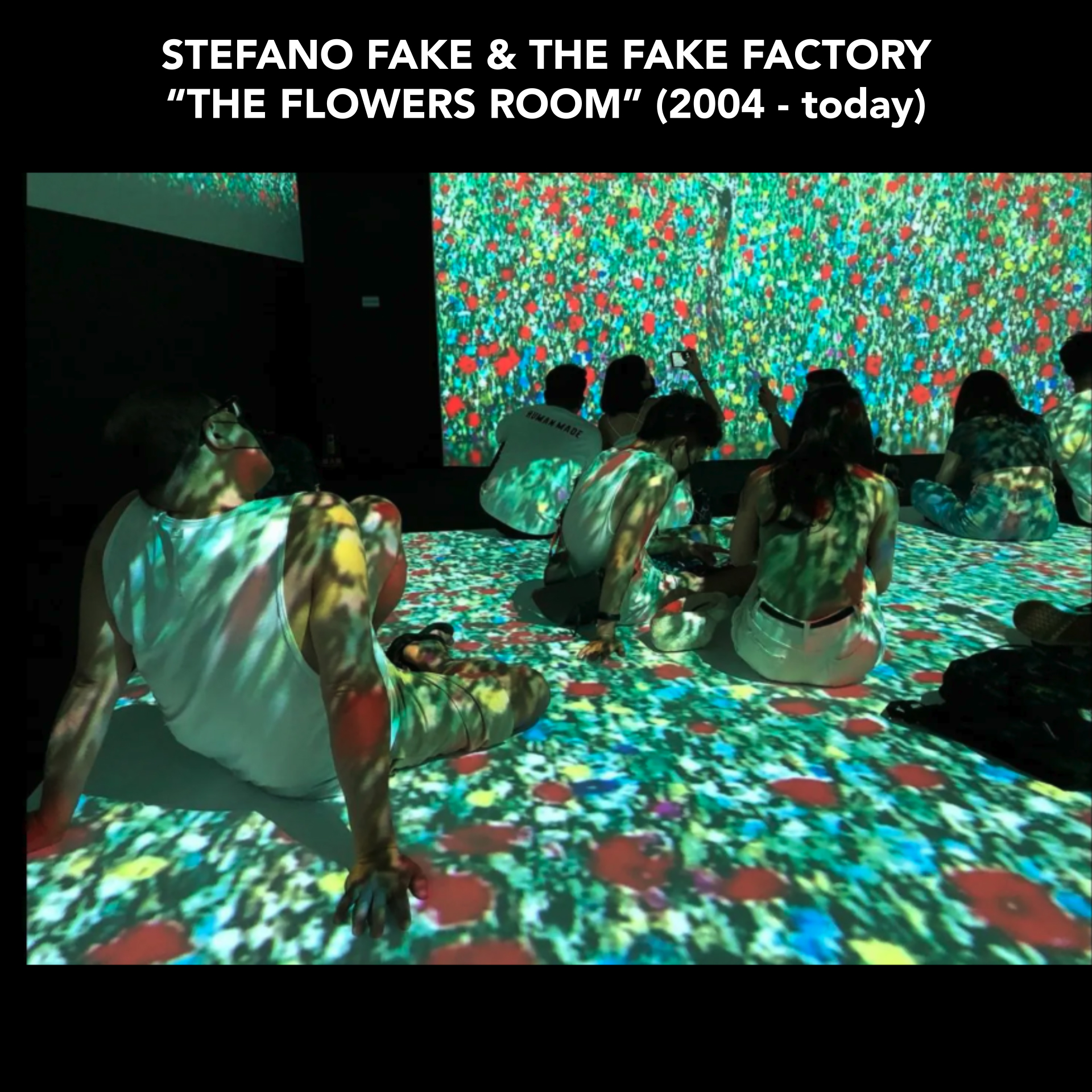
The compositional framework of such experiences is based on a set of fundamental elements: “the space, the light, the visual dramaturgy, the soundtrack, the audience. Each of these elements is fundamental and must have the same balance in the creation process.” In The Flowers Room, this balance is achieved through a careful orchestration of visual and sonic flows, in which no single component dominates, but all contribute to a unified perceptual field.
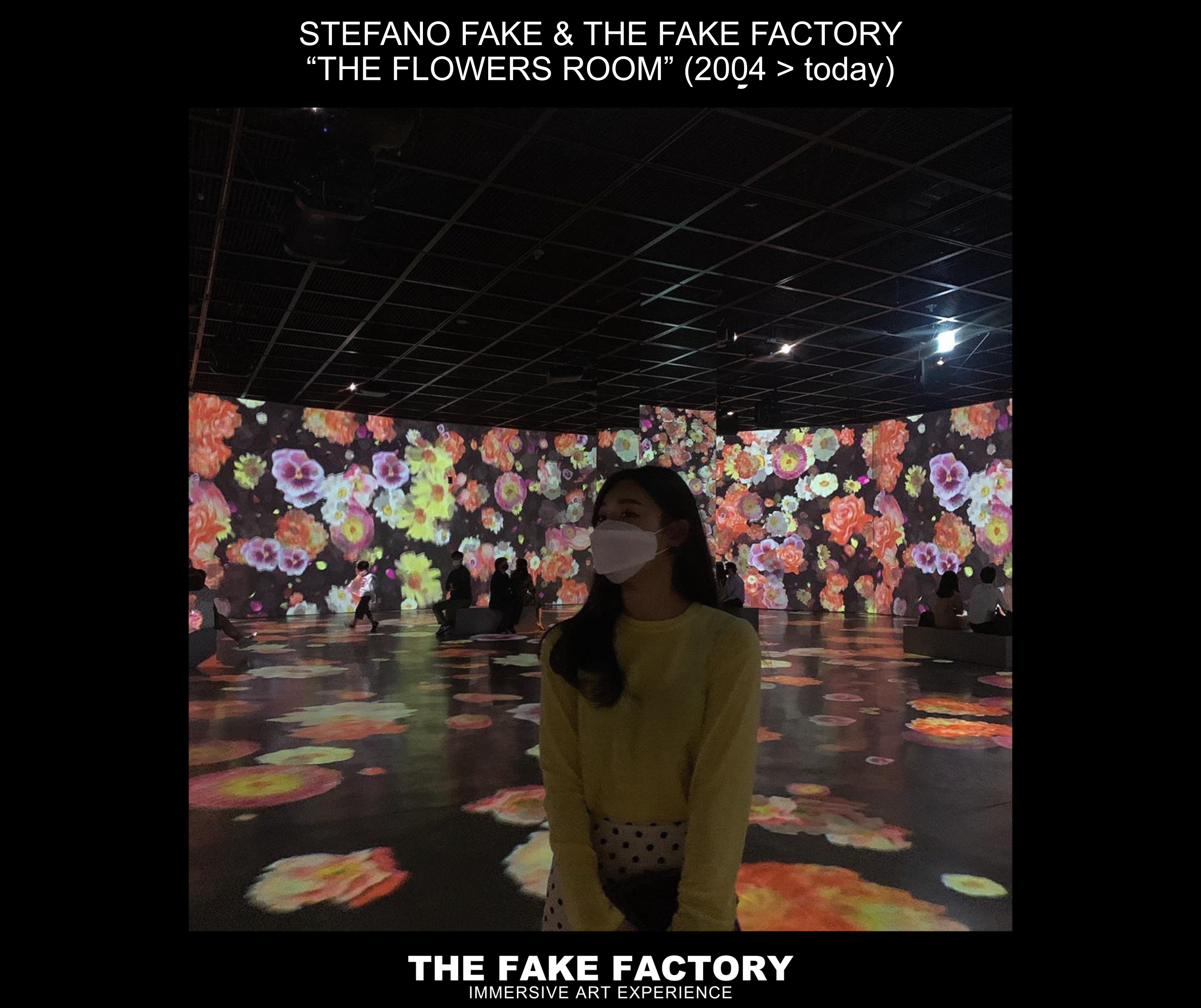
At the core of Fake’s practice lies a radical redefinition of artistic agency. As he states: “To be an artist is not a matter of making videos or multimedia artworks at all. What we are really dealing with is the visitor’s state of consciousness and the shape of their perceptions.” This shift from object production to perceptual modulation marks a significant departure from traditional artistic paradigms. The artwork is no longer conceived as a stable object, but as a process that unfolds through the interaction between environment and spectator.
This perspective is further reinforced in his reflections on immersive art as a relational practice: “Immersive Art is an art form that aims to immerse the viewer inside the work of art itself… The artist’s goal is to create a space that is a ‘container of emotions’, a place that generates a seamless sensorial flow.” The emphasis here is on the creation of environments capable of hosting and generating emotional states. The artwork becomes a relational field, structured around the encounter between artist and visitor.
Significantly, Fake introduces an ethical and affective dimension into this framework by reinterpreting a well-known statement by Andy Warhol. If, according to Warhol, pop art was “a way of loving things,” immersive art, in Fake’s words, becomes “above all loving people.” This formulation highlights the fundamentally relational nature of immersive environments, in which the presence of the viewer is not incidental but constitutive.
Finally, the notion of a “poetic use of technology” emerges as the unifying principle of Fake’s practice. Technology is not employed as an end in itself, nor as a means of spectacle, but as a medium for shaping perception and generating meaning. As he clarifies, the goal is not “surrounding the viewer with large images,” but rather “bringing him into an audiovisual flow, shaping the form of sensory perceptions.” In this sense, technology becomes a tool for constructing experiential narratives that operate at the intersection of perception, emotion, and cognition.
The Flowers Room exemplifies a mature synthesis between technological innovation and artistic intentionality. Through its integration of space, light, sound, and participation, the work articulates a model of immersive art in which the artwork is conceived as a processual, relational, and perceptual phenomenon. Stefano Fake’s contribution lies precisely in this redefinition: the transformation of digital technology into a poetic instrument capable of generating new forms of aesthetic experience, and of reconfiguring the relationship between art, space, and human perception.
STEFANO FAKE & THE FAKE FACTORY: THE IMMERSIVE EXPERIENCE OF VIDEO ART.
Stefano Fake is an artist who fully explores the potential of digital image processing to create virtual art forms that embrace the concept of space. Through the use of immersion, interaction and digital manipulation of physical and virtual space, The Fake Factory creates powerful aesthetic environments that allow audiences to experience alternative emotional realities. Immersive installations satisfy the viewer’s intrinsic desire to escape physical reality and become part of the experience of art itself.
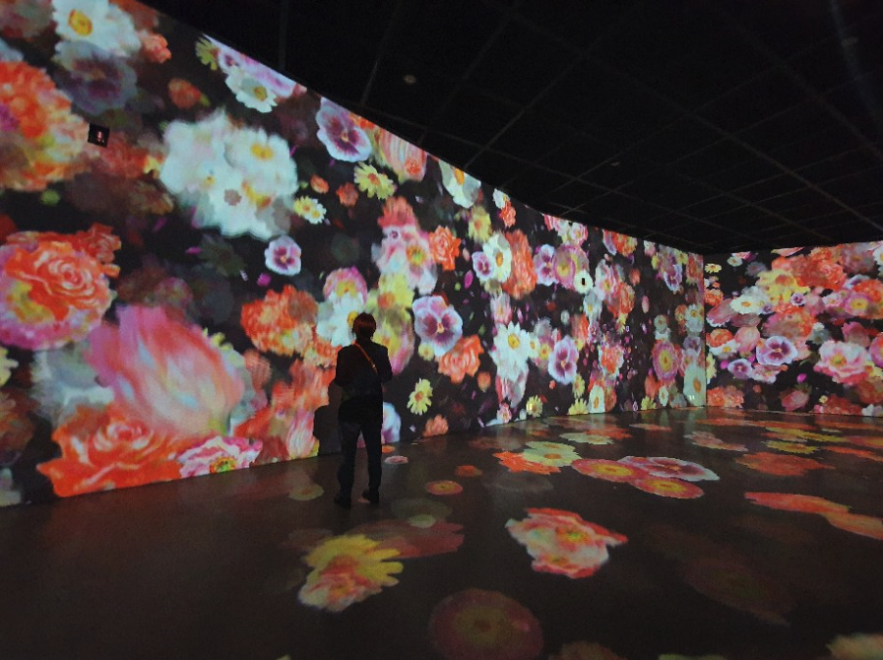
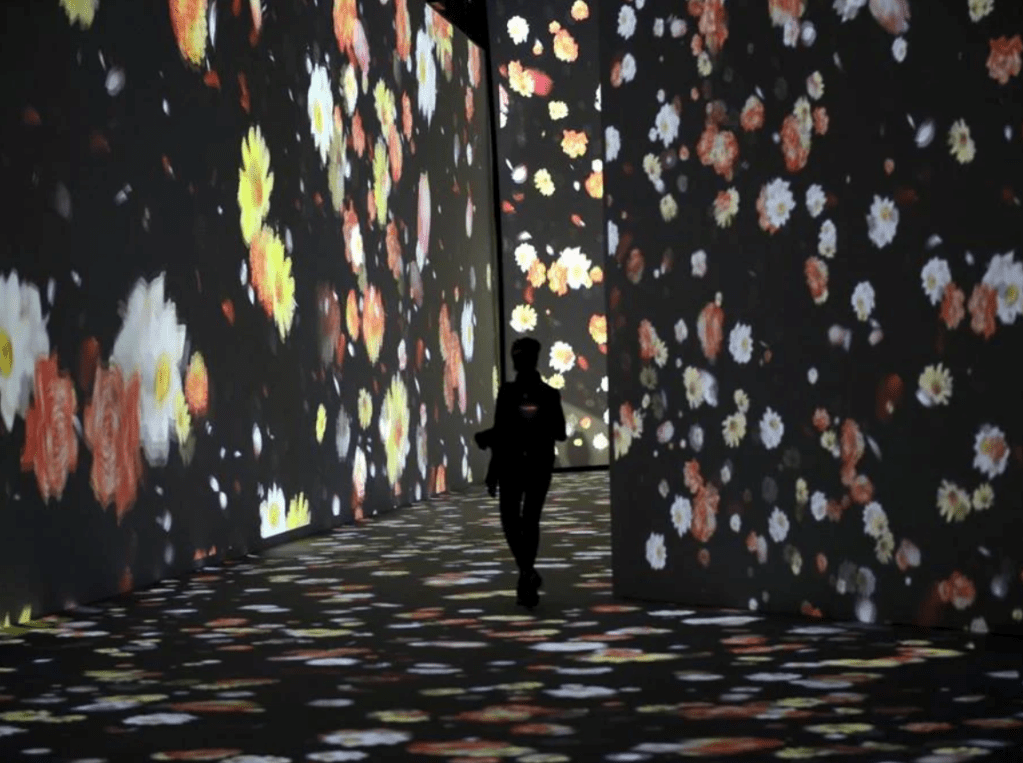
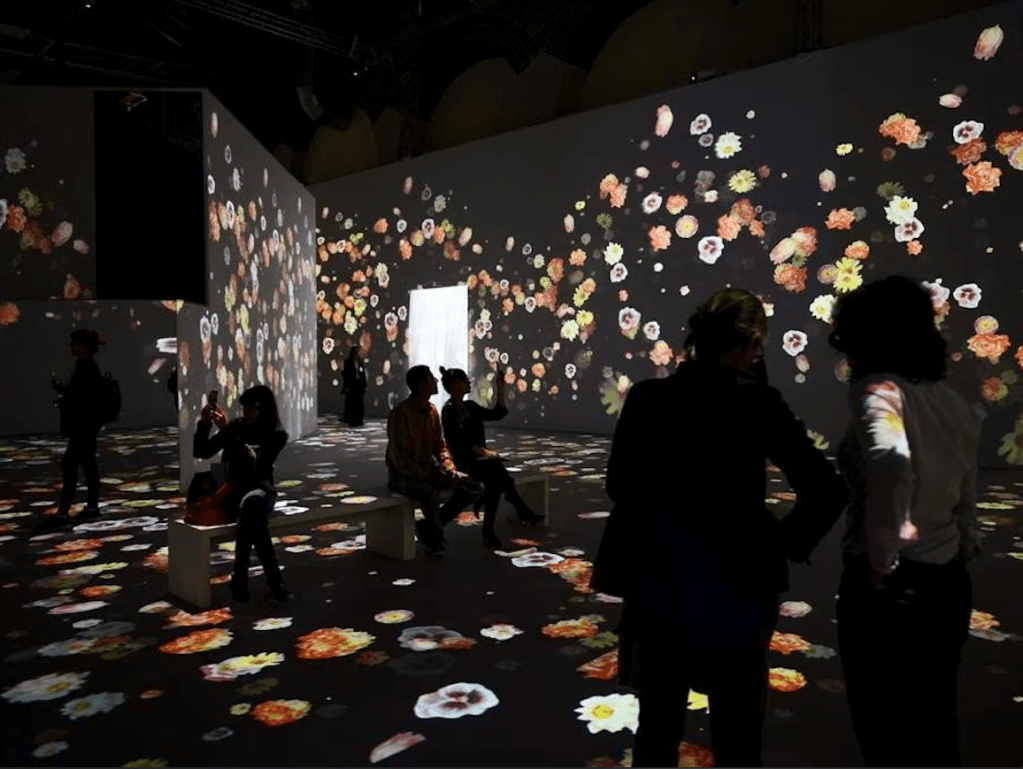
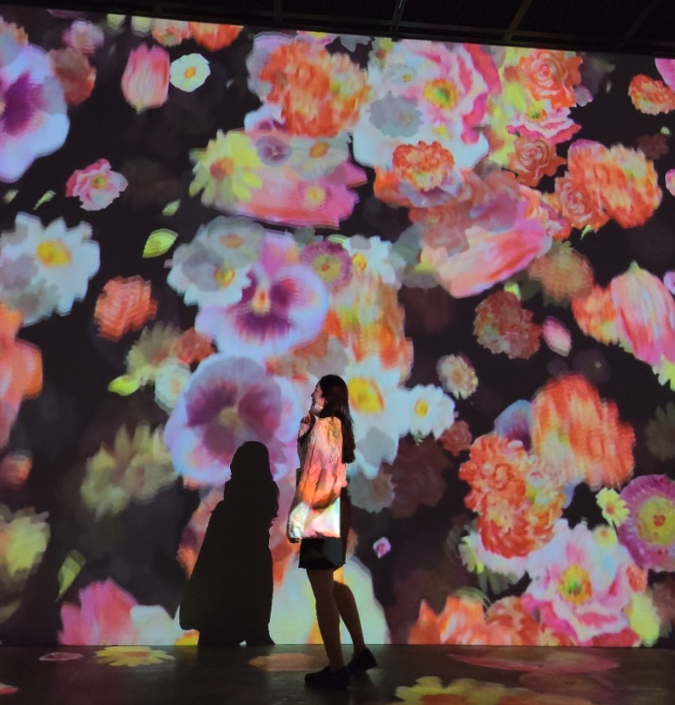
“All my work could be concentrated in this concept: The Fake Factory defines, creates and manipulates space to create immersive aesthetic and emotional experiences. It invites the public to immerse themselves in art with all the senses” (Stefano Fake).
To immerse the viewer in an ecstatic and emotional experience, Fake uses all the tools that digital art allows in the third millennium: shapes, lights, colors, sounds, narration, conceptual abstractions and symbolic elements, holograms, quotes taken from the history of art, mirrors, perspective tricks and visual deceptions, in a sort of seamless visual flow.
“They are nothing more than visual landscapes, external and internal. Something halfway between reality and a dream. All worlds are symbolic: both the virtual one and the one we perceive as real. Digital art is evanescent and concrete at the same time: the immersive experience is consumed in a few minutes but leaves indelible marks on the viewer.” ((Stefano Fake, cit). The sensation of being there in that moment to live the experience depends to a large extent on sensorial absorption within the environment. You need to feel immersed in the space and physically perceive that you are a part of it. Sensory immersion is central to our relationship with the natural environment. Harnessing the psychological power of immersion, Fake creates visual spaces that allow audiences to escape to other worlds and experience real emotional responses , the power of artistic illusion that finds a meeting point with the human desire to create parallel realities within the reality in which he lives.
In the metaphysics of virtual reality, Michael Heim asks: “Aren’t all worlds symbolic? Including what we naively call the real world, which we read away with our physical senses? “. The immersive video art works of The Fake Factory ultimately exploit the power of artistic illusion which finds a meeting point with the human desire to create parallel symbolic realities within the reality in which he lives, creating a fusion between art and life.
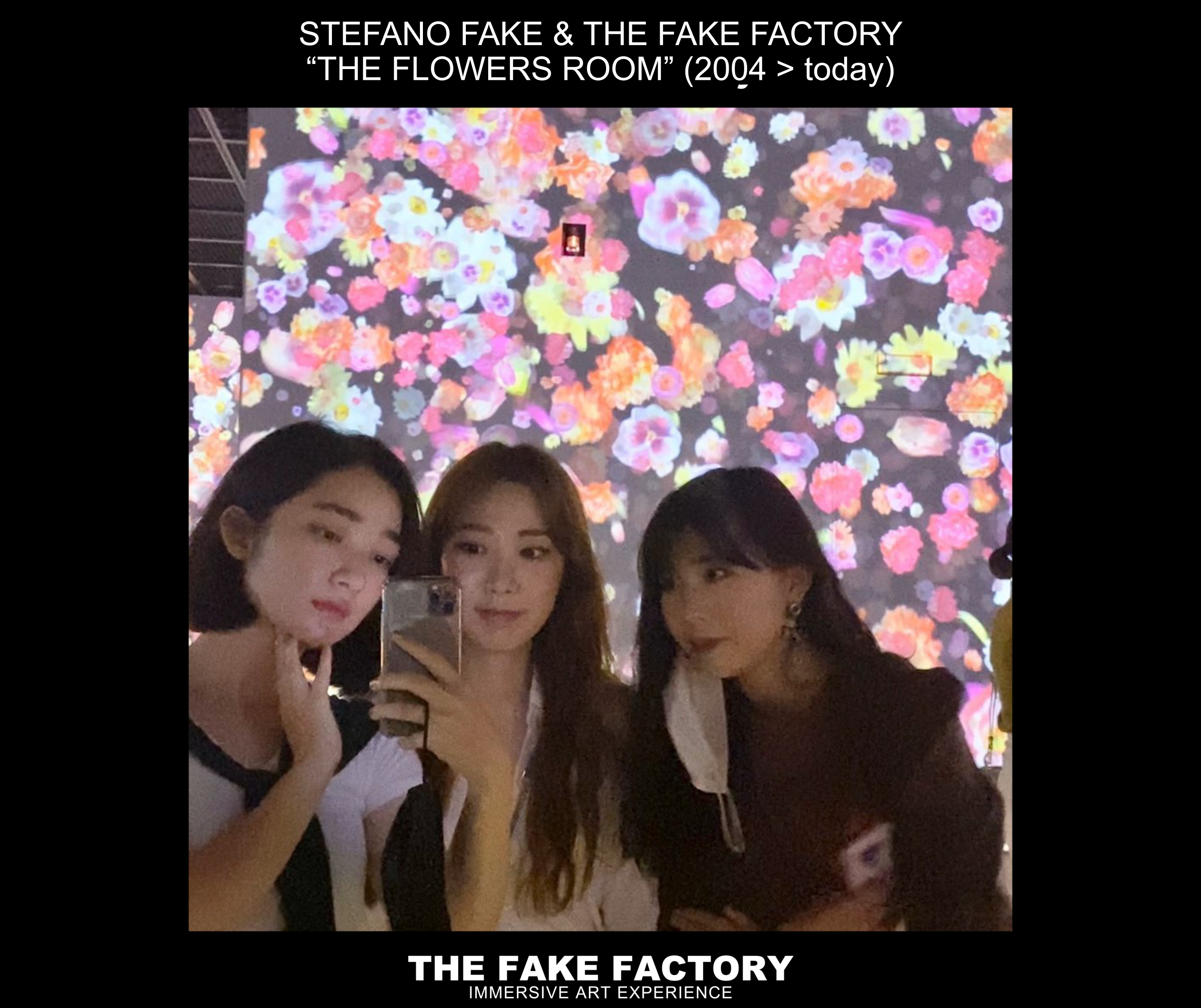
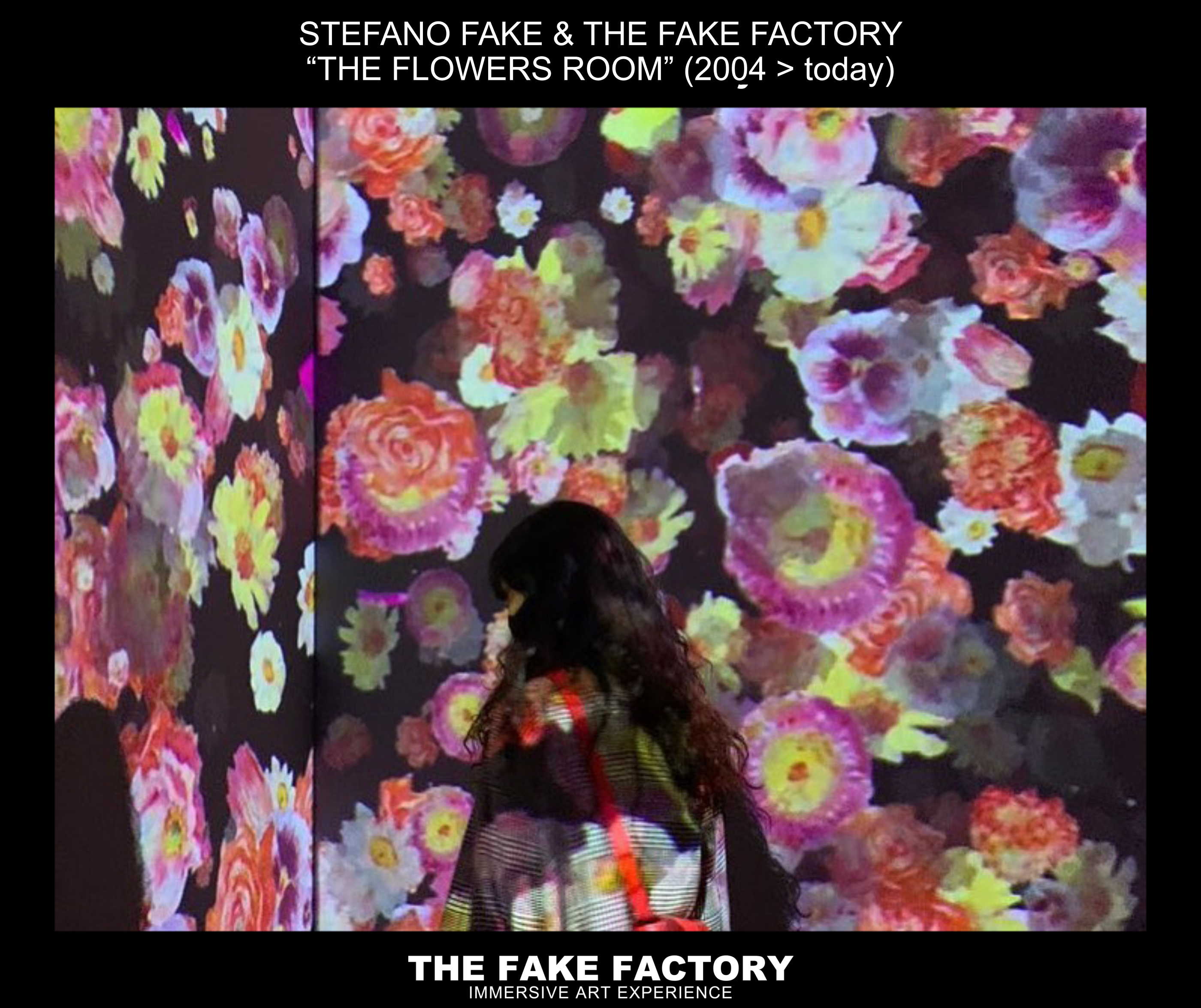
IMMERSIVE ART EXPERIENCE
In an Immersive Art installation, multimedia artists create a relationship with the visitor through a series of sensory stimuli and multimedia narratives. They consider the past not as a still image, but as a treasure chest to be searched intelligently: a complex text which, through revelations, aims to lead back into the present. They consider history as an extraordinary opportunity.
They relocate the past into a present space-time.
These artists want to do justice to the secret ambition of the “classic”: they make it happen here and now. They treat it like burning matter. They re-lease it. They make him live beyond himself, in an unstoppable process. They emancipate him from the identity in which erudition and philology tend to nail him. For a contemporary artist like Stefano Fake, opening up to the ancient is first and foremost a way to revive emotions, to expand the spaces of the fantastic.
Stefano Fake (THE FAKE FACTORY) has been creating immersive art experiences since 2001 and today represents an Italian and international point of reference for this new art form, having created dozens of immersive installations in prestigious museums, visited by millions of visitors.
Within his studio – THE FAKE FACTORY – STEFANO FAKE has designed, directed
and created some of the most significative immersive multimedia art experiences
exhibited in prestigious museums and art galleries worldwide.
“An immersive art experience is a form of art which uses multimedia languages and multisensory tools to immerse the viewer inside the artwork, with a development in space and time determined by an audio-visual storytelling. Its main feature is the experimental use of cutting-edge technology as an artistic tool with the purpose of creating transformative spatial experience.”(Stefano Fake)
The tools in the hands of the digital artist are: the space, the light, the visual dramaturgy, the soundtrack, the audience. Each of these elements is fundamental and must have the same balance in the creation process.” (Stefano Fake)
“To be an artist is not a matter of making videos or multimedia artworks at all. What we are really dealing with is the visitors state of consciousness and the shape of their perceptions.” (Stefano Fake)






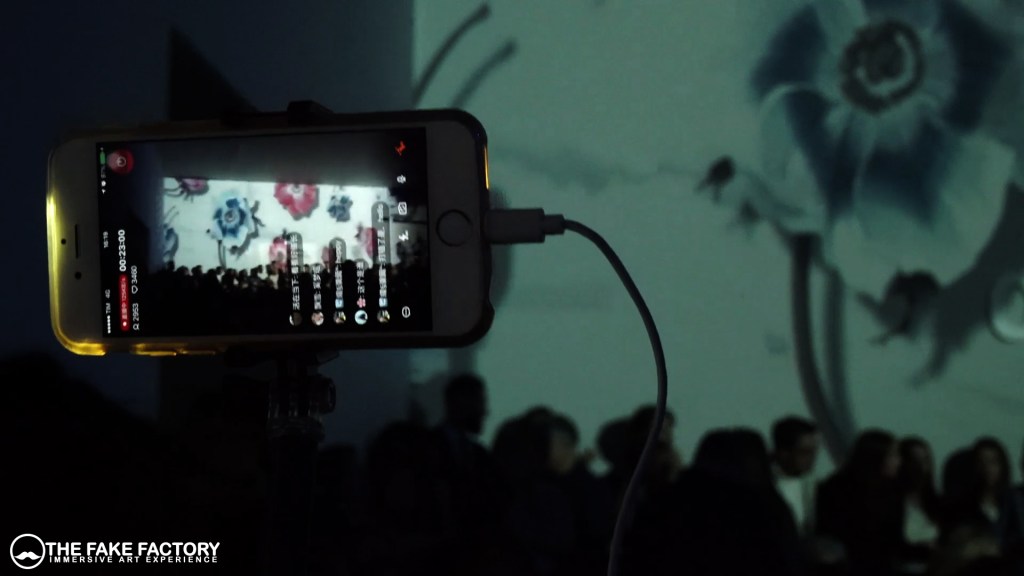
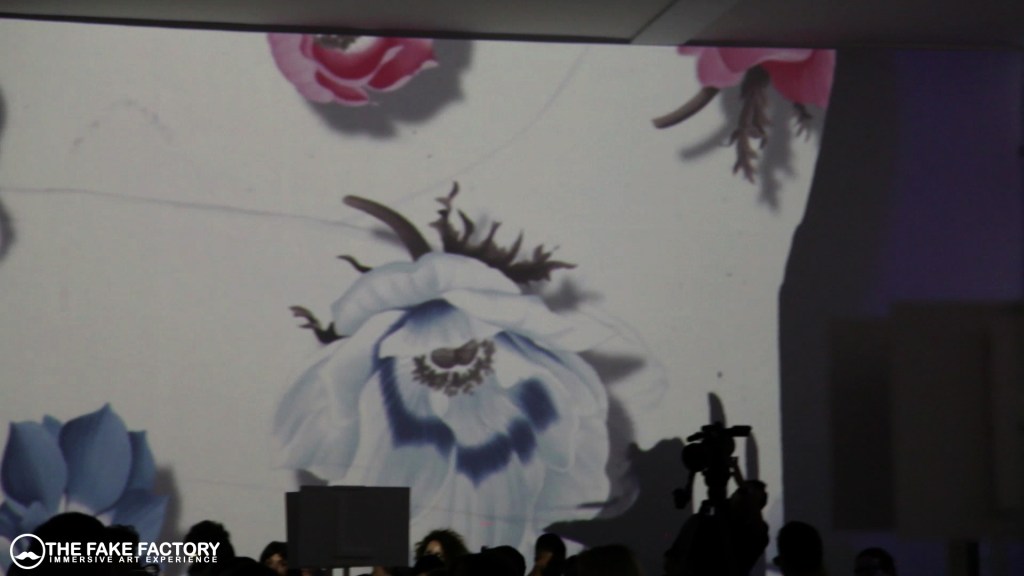


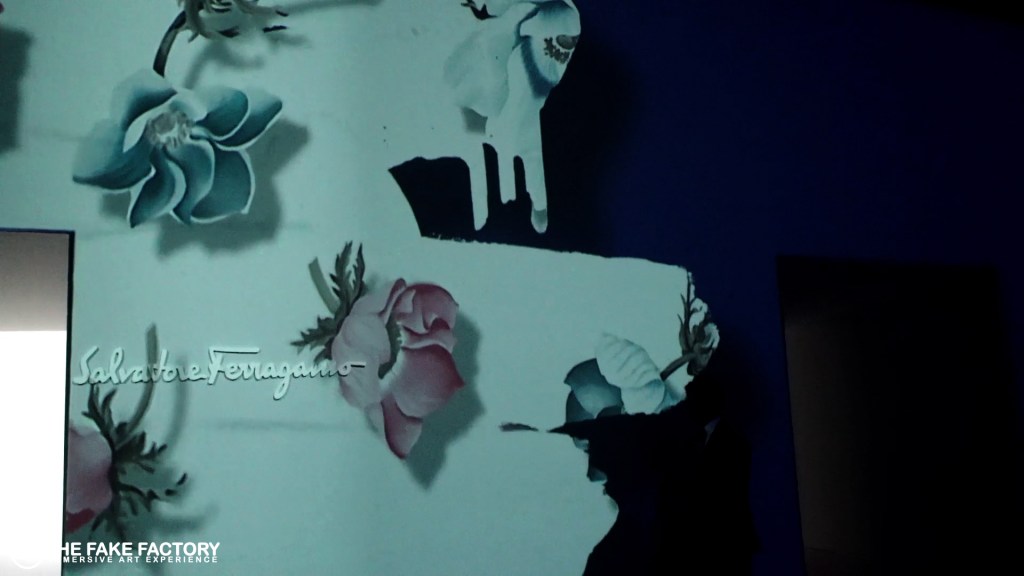

Italy has always been the cradle of creativity, innovation and research in the artistic and cultural fields. Over the past two decades, we have seen a generation born and grown of artists, creatives and designers who have realized pioneering projects and have become a point of international reference in the field of video mapping, immersive art experiences, of light art and audio-visual performances.
The latest generation of Italian Artist who works in digital and immersive art comes from a long tradition that we can trace back to the historical Italian avant-gardes of the twentieth century.
Your eyes
will soon open
to more radiant
visions of light.
We shall put
the spectator
in the center
of the picture.
(Futurist Technical Manifesto,1910)
With the resources of modern technology,
we will make appear in the sky:
artificial forms, rainbows of wonder, luminous writings.
(Lucio Fontana: Second Manifesto of Spatialism – 1948)
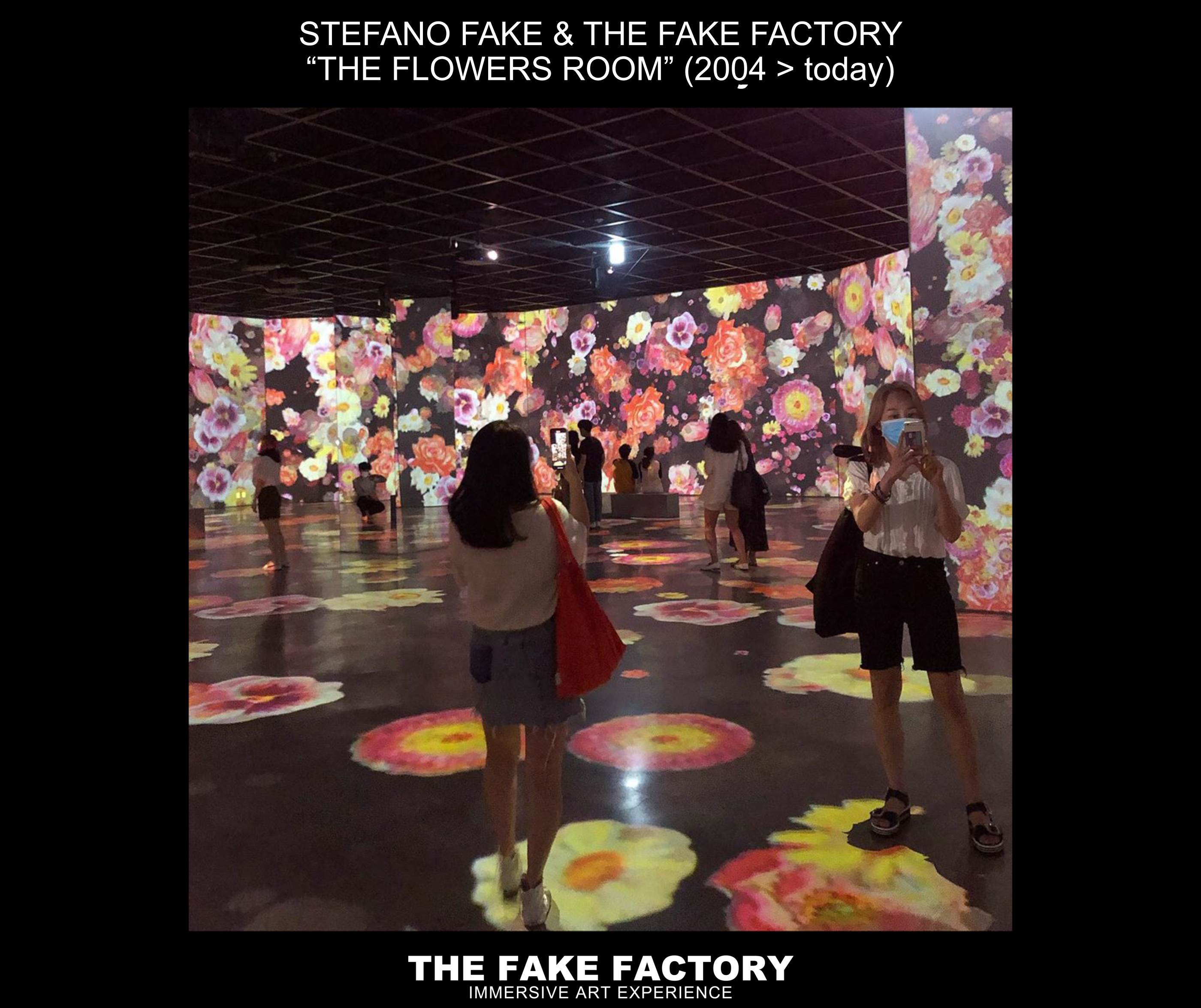
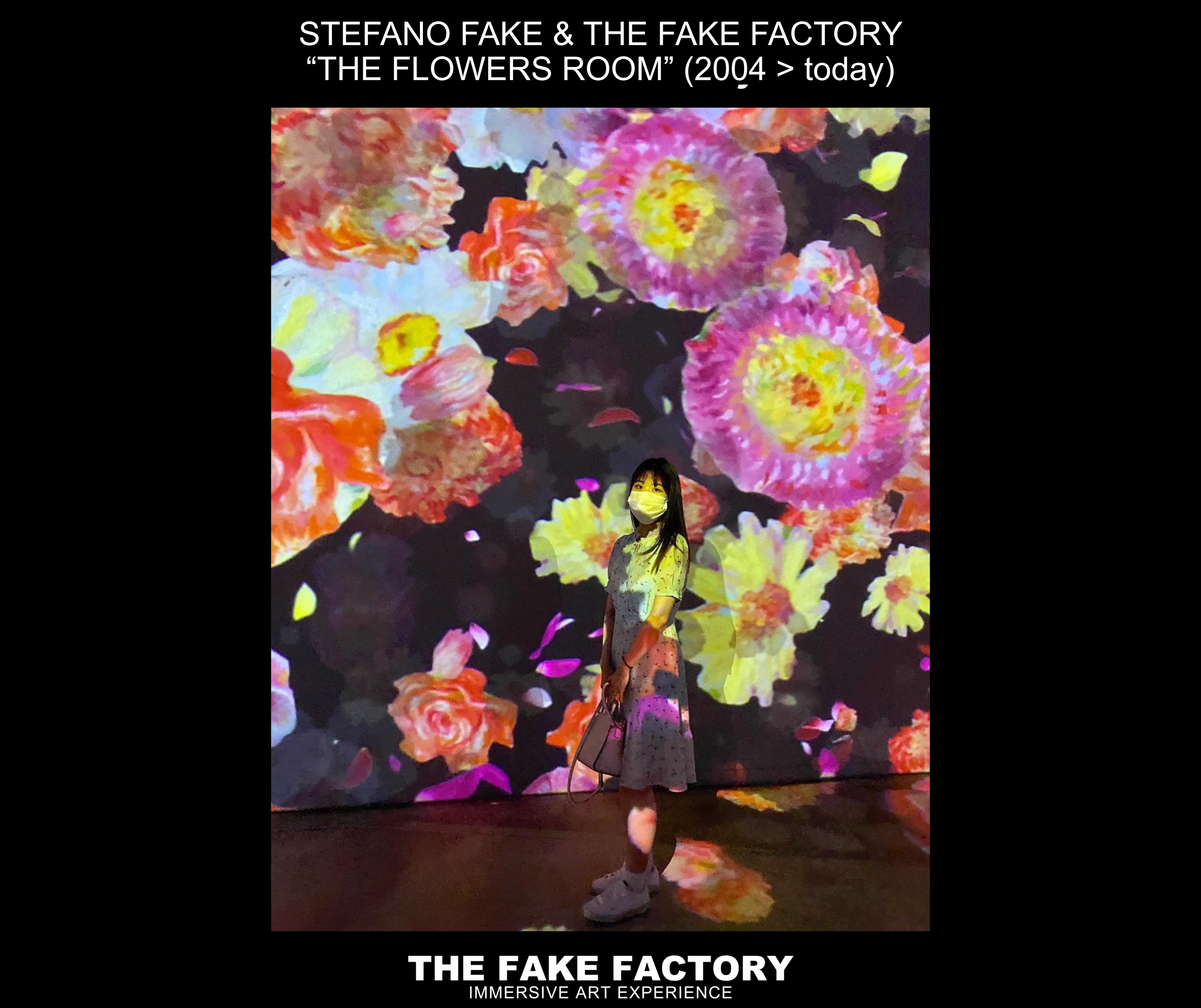
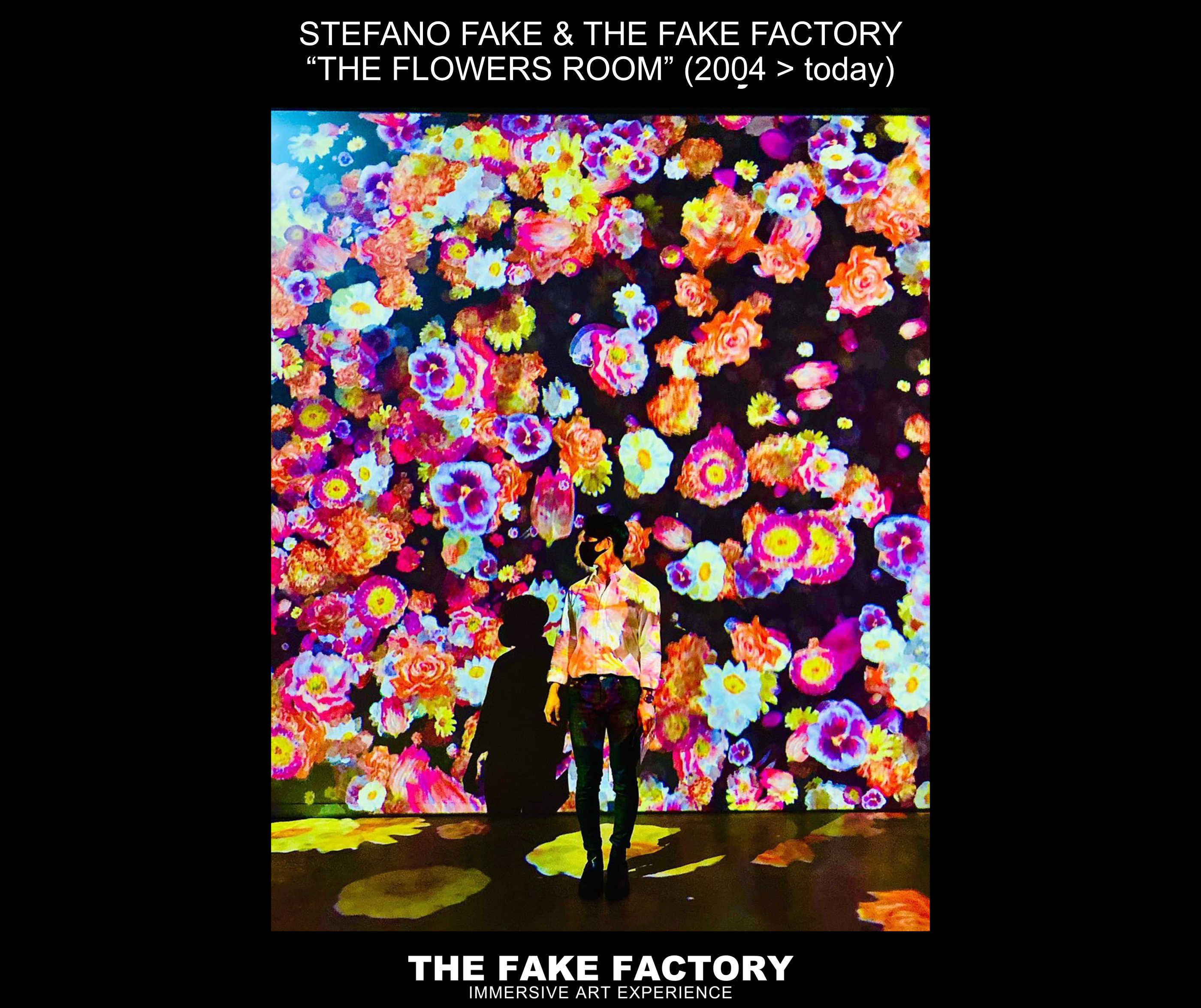
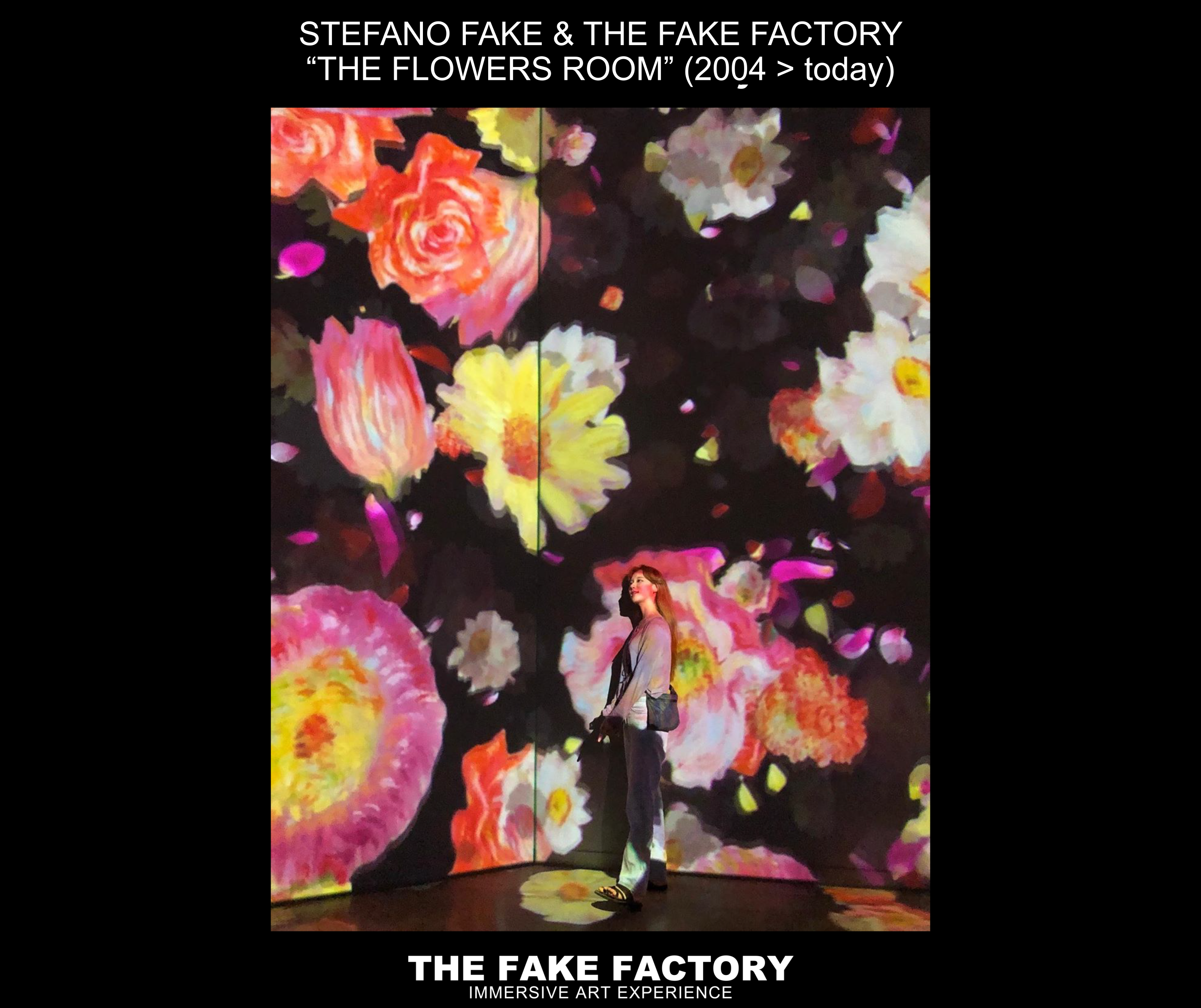
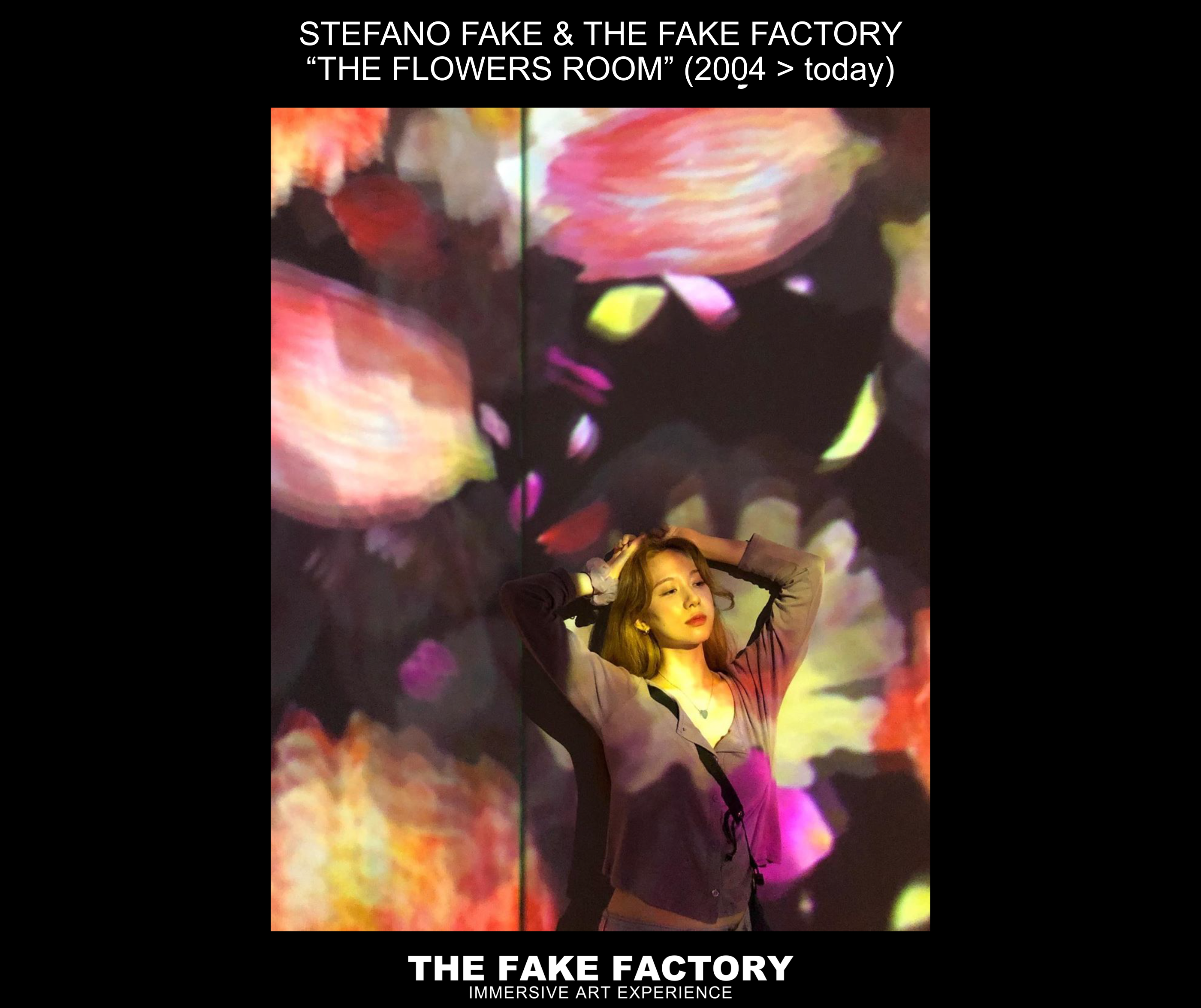
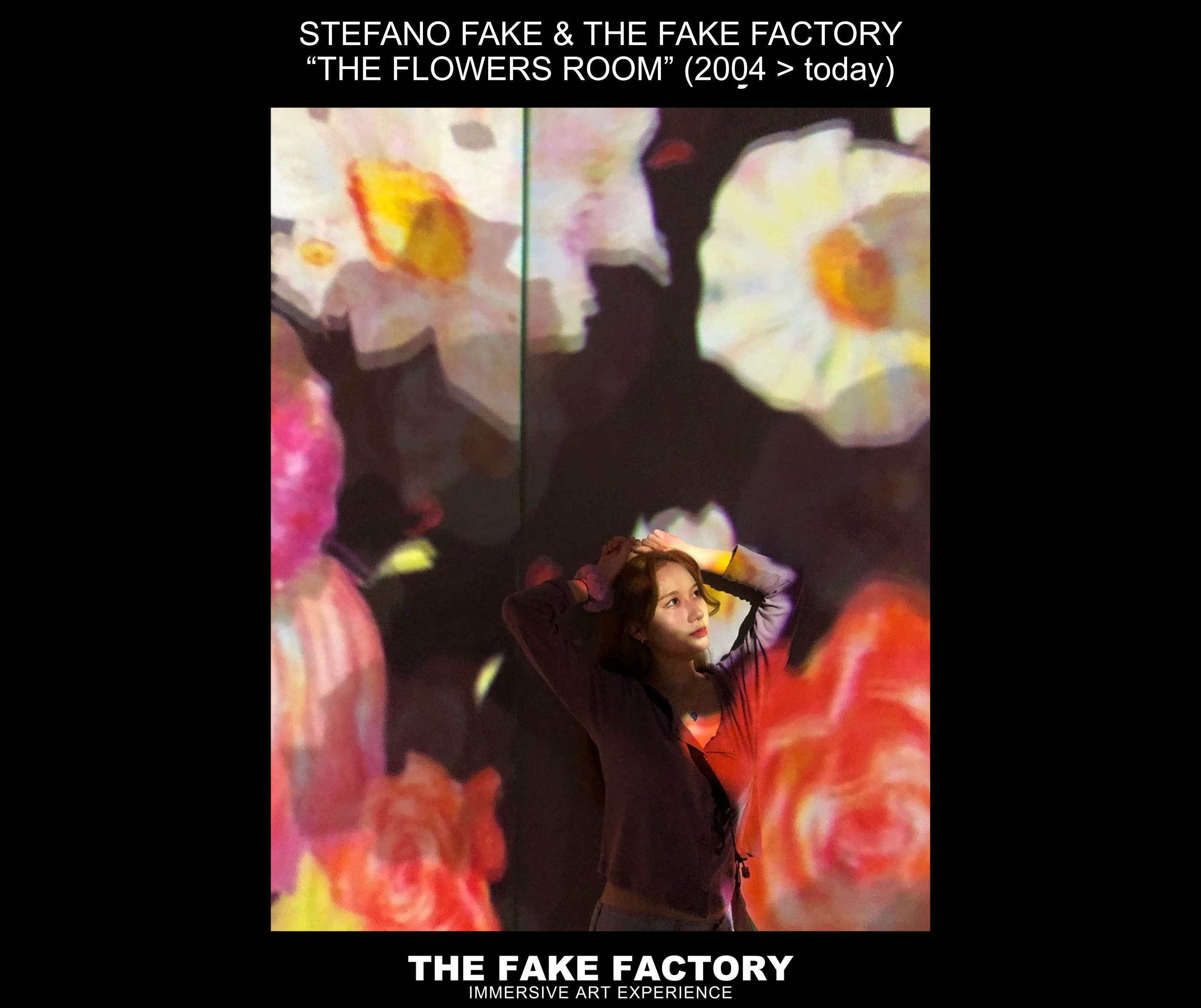
SPACE, intended as an environment, and TIME, intended as a progressive audio-visual experience, are identity components of this immersive art form. The long-lasting effects are the survival of the most intangible emotions, exchange and sharing, the creation of new processes of materialization in art. If the exhibition turns into a film or theater set, the public itself become the actors. Documentation of the participants’ actions through photos and videos shared on social media, becomes part of the creative process, expanding the boundaries of the exhibition itself. Cultural productions are subjected to a re-reading-relocation by visitors, which certify the ubiquity of optical instruments and their current prevalence on any other means of production and social sharing. Immersive art allows multiple and simultaneous views on the work. The viewer/actor is an integral part of the immersive work.
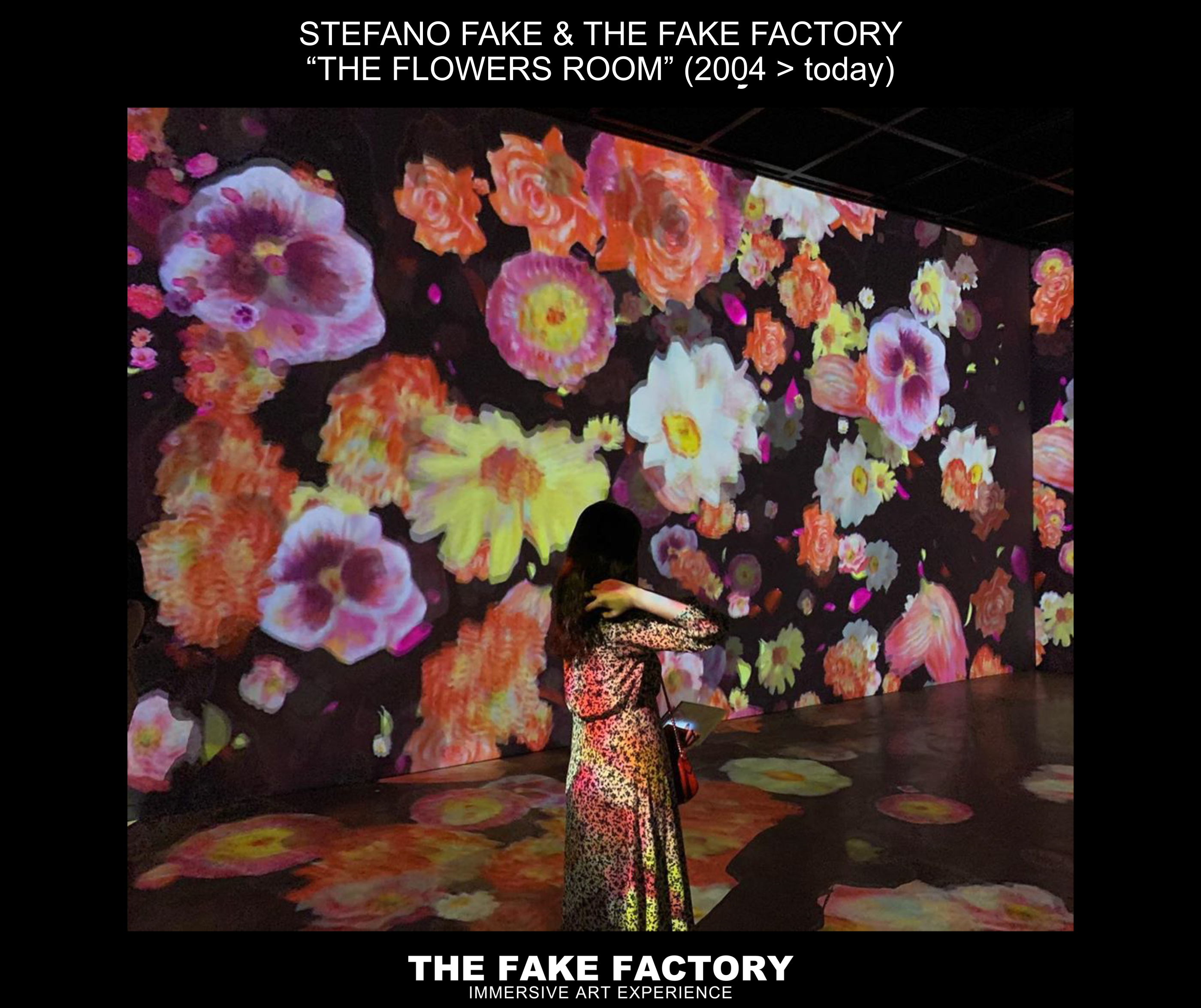
“Immersive Art is an art form that aims to immerse the viewer inside the work of art itself. The visitor is stimulated and involved through light, sound, images and animated graphics. The artist’s goal is to create a space that is a “container of emotions”, a place that generates a seamless sensorial flow. Andy Warhol often liked to repeat that, from his point of view, pop art was above all “loving things’ ‘. Paraphrasing his words, we could say that immersive art is above all “loving people” since in these installations there is an important and fundamental relational aspect between artist and visitor. The only fact of defining them as “experiences” (Immersive Art Experience) makes us understand the change of paradigm put in place by the artists who dedicate themselves to this discipline. The quality of the creation of the audiovisual product or the purely technological, then can also take a second place. First of all is the visitor’s experience, his being enveloped in the light, inside the rooms augmented by the sensorially thanks to the poetic use of technologies. It is not a question of surrounding the viewer with large images, but of bringing him into an audiovisual flow, shaping the form of sensory perceptions. Being an artist who works in the field of Immersive Art is not simply a matter of making videos or multimedia installations but above all the perceptions of the visitors and the relationships created within the immersive space”. (Stefano Fake)
《花之空间》(The Flowers Room)由斯特凡诺·法克(Stefano Fake)与THE FAKE FACTORY工作室自2004年起开发,被视为当代沉浸式数字艺术兴起与语言建构过程中的奠基性作品之一。该装置构成了一个典范性案例,展示了图像如何从传统的再现性表面转化为一种体验性与空间性的环境,其中视听语言作为一种整体性的感知装置发挥作用。在这一框架中,由图像、色彩场域以及不断变化的形态构成的花卉元素,以连续不断的流动形式在建筑空间中展开,消解了图像与环境之间的边界,将观者包裹于一个多感官的感知场域之中。
从形式层面来看,该作品建立在持续变形(metamorphosis)的原则之上,构成一个动态系统。花卉不再被呈现为固定或象征性的图像,而是作为生成性与转化性的过程,在生成、消解与重组的循环中不断演变。这种机制产生了一种流动的视觉连续体以及非线性的时间结构,更接近一种有机的、循环性的时间观。观者不再是线性叙事的被动接受者,而是作为沉浸其中的主体,置身于视觉与时间不断变化的场域之中。
该作品的概念基础深植于对艺术史中花卉图像学的反思。正如斯特凡诺·法克所言:“我长期研究艺术史中花卉的表现形式,从波提切利到安迪·沃霍尔。无论是象征性的还是纯装饰性的,花卉始终是艺术家研究的对象。关于出生、性与再生产的概念,都可以在花卉之中体现。”这一表述将《花之空间》置于一个长时段的视觉文化谱系之中,在这一谱系中,花卉作为象征与意义生成的媒介,始终关联着生命、生成与短暂性的主题。
因此,该作品亦可被理解为对数字时代生命与死亡过程的一种视觉与情感再现。安迪·沃霍尔的影响尤为关键,尤其是其1964年于纽约里奥·卡斯特里画廊展出的《花》系列。正如其助手罗尼·库特罗内所指出的,这些作品已经隐含着生命与死亡之间的辩证关系。法克的创作正是在这一张力之上展开,通过沉浸式数字语言对其进行再激活,使花卉从静态图像转化为持续生成与变化的场域。
在技术与空间层面,该装置通过大规模视频投影覆盖整个展览空间,将墙面转化为连续的绘画表面,类似于一种扩展的数字画布。在这一空间中,艺术家以光为媒介进行创作,构建出一个不断演化的视觉生态系统,使观者被完全包围并沉浸其中。正如法克所言:“空间并不是一个中性的容器,而是作品的主要材料;图像正是在其中转化为环境。”在这一意义上,建筑空间不再是被动的承载体,而成为艺术生成的积极要素。
与此同时,光与投影在作品中占据核心地位。法克指出:“光是数字艺术真正的材料:通过视频投影,我们塑造空间并建构视觉时间。”因此,投影不仅是技术手段,更是一种语言媒介,使图像获得空间性与时间性的能动性。声音则在感知结构中发挥组织性作用:“声音将图像联结在一起,构建节奏、连续性以及情感深度。”视听元素的整合产生了一种受控的联觉效应,从而强化了整体视听叙事的内在一致性。
同样关键的是作品的参与性维度。法克强调:“观众并不在作品之外,而是其构成要素之一。没有观者的存在,沉浸式环境是不完整的。”这一观点突出了装置的关系性本质:观者的身体存在、运动轨迹以及停留时间,均直接参与并塑造作品的实现过程。
与此同时,该作品还展开了对时间性与生命力的精致思考。法克指出:“我始终对花的某一特性感到着迷:见证一段生命轨迹的可能性。这件作品与我关于自然、生命与死亡的思考密切相关。尽管它是一个高度动态的沉浸环境,但它指向的是花朵生命中的一个瞬间——其生命力达到顶峰的时刻,被凝固并在最大强度上加以呈现。”这种在持续运动与瞬间凝固之间形成的悖论,构成了作品最具概念深度的维度之一。
从理论角度来看,《花之空间》体现了从以对象为中心的美学向过程性与关系性范式的转变。正如法克所概括的:“艺术作品不再是一个稳定的对象,而是一个过程——一个在时间与空间中通过观者经验而发生的事件。”因此,该装置不再是一个固定实体,而是一个不断在感知中被激活的事件性结构。
更广泛而言,斯特凡诺·法克与THE FAKE FACTORY的创作实践在沉浸式数字艺术的发展中占据核心地位。《花之空间》作为其早期且具有代表性的作品,清晰地展现了其“技术的诗性运用”这一核心理念。这一概念并非指向技术本身的复杂性,而是强调技术作为一种表达媒介,在生成象征、情感与空间经验中的作用。
正如相关研究所指出的,法克的实践“充分探索了数字图像处理的潜力,以创造涵盖空间概念的虚拟艺术形式”,通过沉浸、互动以及对物理与虚拟空间的操控,构建出“能够使观众体验替代性情感现实的强大审美环境”。在这一框架中,沉浸式装置回应了一种深层的人类学冲动:超越日常感知,并进入艺术体验本身。
法克本人亦对此作出明确阐述:“我所有的工作都可以归结为一个概念:THE FAKE FACTORY定义、创造并操控空间,以构建沉浸式的审美与情感体验。它邀请公众用全部感官沉浸于艺术之中。”这一表述强调了空间作为艺术构建核心材料的地位。
该装置通过不断变化的数字花卉构成连续的视觉流,将形态、光、色彩、声音、叙事片段与象征元素整合为一个无缝的视听景观。这一景观在现实与梦境之间摆动。正如艺术家所言:“它们不过是视觉景观,既是外在的,也是内在的,介于现实与梦境之间。所有世界都是象征性的:无论是虚拟世界还是我们所感知的现实。数字艺术既是短暂的也是具体的:沉浸体验虽在短时间内完成,却在观者心中留下不可磨灭的印记。”
这种“短暂性与持久性”的双重属性构成了作品的现象学核心。体验虽然转瞬即逝,但却在感知与情感层面留下深刻痕迹。这一过程依赖于感官沉浸——即观者在心理与身体层面融入环境的能力。
在方法论层面,法克对艺术史采取了一种动态的理解方式。他并不将过去视为静态档案,而是将其视为可被重新激活的生成性资源。沉浸式装置成为一种机制,将历史重新置入当下的时空之中,使之转化为“燃烧的材料”,摆脱固定诠释,进入持续的情感与意义生成过程。
在此基础上,法克对沉浸式艺术作出明确界定:“沉浸式艺术是一种利用多媒体语言与多感官工具,将观者置于作品之中的艺术形式,其在时空中的展开由视听叙事所决定。其核心特征在于将前沿技术作为艺术工具,以创造转化性的空间体验。”这一界定强调了多感官整合与时间性展开两个关键维度。
其创作体系建立在若干基本要素之上:“空间、光、视觉戏剧性、声音以及观众。这些元素都至关重要,并必须在创作过程中保持平衡。”在《花之空间》中,这种平衡通过视觉与声音的精细编排得以实现。
在艺术观念层面,法克进一步指出:“成为艺术家并不在于制作视频或多媒体作品,我们真正处理的是观者的意识状态以及其感知的形态。”这一论断标志着从“对象生产”向“感知塑造”的范式转移。
他同时强调沉浸式艺术的关系性本质:“沉浸式艺术旨在将观者置于作品内部……艺术家的目标是创造一个‘情感容器’,一个能够生成连续感官流的空间。”在这一意义上,作品成为一个关系场域,围绕艺术家与观者之间的互动而展开。
通过对安迪·沃霍尔观点的重新阐释,法克进一步指出:如果波普艺术是“热爱事物”,那么沉浸式艺术则是“热爱人”。这一观点凸显了观者在作品中的核心地位。
最终,“技术的诗性运用”构成其创作的统一原则。技术不再是目的或纯粹的奇观工具,而是用于塑造感知与生成意义的媒介。正如法克所言,其目标并非“用巨大的图像包围观者”,而是“将其引入一个视听流之中,塑造其感知形式”。
综上所述,《花之空间》体现了技术创新与艺术意图之间的高度综合,通过空间、光、声音与参与的整合,确立了一种将艺术理解为过程性、关系性与感知性现象的沉浸式范式。斯特凡诺·法克的贡献,正是在于将数字技术转化为一种诗性工具,从而重新定义艺术、空间与人类感知之间的关系。
The Flowers Room, desarrollada a partir de 2004 por Stefano Fake y el estudio THE FAKE FACTORY, puede situarse entre las obras fundacionales en la emergencia y codificación del arte digital inmersivo contemporáneo. La instalación constituye un ejemplo paradigmático de la transformación de la imagen desde una superficie representacional hacia un entorno experiencial y espacial, en el cual el lenguaje audiovisual opera como un dispositivo perceptivo totalizante. En este marco, un flujo continuo e ininterrumpido de elementos florales —imágenes, campos cromáticos y morfologías en perpetua transformación— se expande a través del espacio arquitectónico, disolviendo los límites entre imagen y entorno y envolviendo al espectador en un campo multisensorial.
Desde una perspectiva formal, la obra se estructura como un sistema dinámico basado en el principio de metamorfosis continua. Las formas florales no se presentan como entidades fijas o icónicas, sino como procesos generativos y transformativos, que atraviesan ciclos de aparición, disolución y recomposición. Esto produce un continuum visual fluido y una temporalidad no lineal, más cercana a una concepción orgánica y cíclica del tiempo. El espectador deja de ocupar la posición de observador pasivo de una narrativa secuencial para convertirse en un sujeto inmerso dentro de un campo de transformaciones visuales y temporales.
La matriz conceptual de la obra se arraiga profundamente en una reflexión histórico-artística sobre la iconografía de la flor. Como afirma el propio Stefano Fake: “He estudiado durante mucho tiempo la representación de las flores en la historia del arte, desde Botticelli hasta Andy Warhol. Ya sea utilizadas de forma simbólica o puramente decorativa, las flores han sido siempre objeto de investigación por parte de los artistas. Conceptos como el nacimiento, el sexo y la reproducción pueden estar implicados en ellas”. Esta declaración sitúa The Flowers Room dentro de una larga duración de la cultura visual, en la que el motivo floral funciona como dispositivo simbólico y semántico asociado a los temas de la vida, la generación y la transitoriedad.
En este sentido, la obra puede interpretarse como una representación visual y emocional de los procesos de vida y muerte en las condiciones de la era digital. La influencia de Andy Warhol resulta particularmente significativa, especialmente su serie Flowers presentada en la Leo Castelli Gallery en 1964. Como señaló Ronnie Cutrone, estas obras ya contenían una dialéctica entre vitalidad y mortalidad. El trabajo de Fake reactiva esta tensión conceptual, traduciéndola en un lenguaje digital e inmersivo en el que la flor deviene un lugar de transformación más que una imagen fija.
Desde el punto de vista técnico y espacial, la instalación se construye mediante proyecciones a gran escala que ocupan la totalidad del entorno expositivo. Las paredes se transforman en una superficie pictórica continua, una suerte de lienzo digital expandido sobre el cual el artista compone con luz. Las flores animadas se despliegan como un ecosistema visual dinámico, envolviendo al espectador y generando una condición de inmersión perceptiva. Como señala Fake: “El espacio no es un contenedor neutro, sino la materia primaria de la obra; es donde la imagen se convierte en entorno”. En esta perspectiva, la arquitectura deja de ser un soporte pasivo para convertirse en un componente activo de la construcción artística.
Al mismo tiempo, el papel de la luz y de la videoproyección resulta central. En palabras del artista: “La luz es la verdadera materia del arte digital: a través de la videoproyección esculpimos el espacio y construimos el tiempo visual”. La proyección se configura así no solo como herramienta técnica, sino como medio lingüístico a través del cual las imágenes adquieren agencia espacial y temporal. Esta dimensión se complementa con el componente sonoro, que desempeña un rol estructurante en la experiencia perceptiva: “El sonido es lo que une las imágenes; crea ritmo, continuidad y profundidad emocional dentro del entorno inmersivo”. La integración de sonido e imagen produce un efecto sinestésico controlado, reforzando la coherencia de la dramaturgia audiovisual.
Igualmente fundamental es la dimensión participativa de la obra. Fake subraya que: “El público no es externo a la obra; es uno de sus elementos constitutivos. Sin la presencia del espectador, el entorno inmersivo está incompleto”. Esta perspectiva pone en primer plano la naturaleza relacional de la instalación, en la que la presencia física, el movimiento y la duración de la experiencia del espectador contribuyen activamente a la realización de la obra.
Paralelamente, la instalación articula una reflexión sofisticada sobre la temporalidad y la vitalidad. Como afirma el artista: “Siempre me ha fascinado un aspecto ligado a la naturaleza de las flores: la posibilidad de observar la trayectoria de una vida. Esta obra está estrechamente vinculada a mis reflexiones sobre la naturaleza, la vida y la muerte. A pesar de ser un entorno inmersivo extremadamente dinámico, remite a un único momento en la vida de las flores, a su instante de máxima vitalidad, detenido y exaltado en su máxima potencia vital”. Esta aparente paradoja —entre movimiento continuo y suspensión de un instante singular— constituye uno de los aspectos conceptualmente más complejos de la obra.
Desde una perspectiva teórica, The Flowers Room ejemplifica un desplazamiento decisivo desde una estética basada en el objeto hacia paradigmas procesuales y relacionales. Como sintetiza Fake: “La obra de arte ya no es un objeto estable, sino un proceso: algo que sucede en el tiempo y en el espacio a través de la experiencia del espectador”. En este sentido, la instalación no es un artefacto fijo, sino un evento continuamente reactivado por la percepción.
La obra anticipa desarrollos fundamentales del arte inmersivo y relacional, subrayando la centralidad del espacio, la luz, la proyección, el sonido y la participación como principios constitutivos de un nuevo lenguaje artístico. Representa un momento crucial en la transición de la imagen como objeto de contemplación a la imagen como espacio habitable, ofreciendo una síntesis sofisticada entre conciencia histórica, innovación tecnológica y estética de la experiencia.
El trabajo de Stefano Fake y THE FAKE FACTORY ocupa, en este marco, una posición central en la evolución del arte digital inmersivo como paradigma tanto estético como experiencial. Entre sus obras más tempranas y emblemáticas, The Flowers Room puede interpretarse como un laboratorio privilegiado en el que se articula con claridad la noción de “uso poético de la tecnología”. Esta no se limita al empleo de herramientas digitales avanzadas, sino que implica una reconfiguración consciente de la tecnología como medio expresivo capaz de generar experiencias simbólicas, emocionales y espaciales.
La práctica de Fake se fundamenta en una exploración sistemática del potencial del procesamiento digital de la imagen y de la composición audiovisual para construir entornos virtuales que expanden los límites tradicionales del espacio artístico. En este contexto, las instalaciones inmersivas responden a un impulso antropológico fundamental: el deseo de trascender la percepción ordinaria y de acceder a una dimensión experiencial ampliada de la obra.
Como afirma el propio artista: “Todo mi trabajo podría concentrarse en este concepto: THE FAKE FACTORY define, crea y manipula el espacio para generar experiencias estéticas y emocionales inmersivas. Invita al público a sumergirse en el arte con todos los sentidos”. Esta declaración subraya la centralidad del espacio como materia primaria de la construcción artística. En The Flowers Room, el espacio no es un contenedor neutro, sino un medio plástico en continua transformación.
La instalación se configura como un flujo visual continuo de flores digitales en constante metamorfosis. A través de la integración de formas, luces, colores, sonidos, fragmentos narrativos, referencias simbólicas y dispositivos ópticos —como espejos y distorsiones perspectívicas—, Fake construye un paisaje audiovisual continuo que oscila entre interioridad y exterioridad, entre realidad perceptiva y abstracción onírica. Como señala: “No son más que paisajes visuales, externos e internos. Algo a medio camino entre la realidad y el sueño. Todos los mundos son simbólicos: tanto el virtual como el que percibimos como real. El arte digital es evanescente y concreto al mismo tiempo: la experiencia inmersiva se consume en pocos minutos pero deja huellas indelebles en el espectador”.
Esta condición dual —efímera pero intensa— define el núcleo fenomenológico de la obra. La experiencia se despliega como un evento transitorio, pero genera efectos perceptivos y emocionales duraderos. Su eficacia depende en gran medida de la inmersión sensorial, entendida como la capacidad del espectador de sentirse física y psicológicamente integrado en el entorno.
En última instancia, The Flowers Room representa una síntesis madura entre innovación tecnológica e intencionalidad artística. A través de la integración de espacio, luz, sonido y participación, la obra articula un modelo de arte inmersivo en el que la obra se concibe como un fenómeno procesual, relacional y perceptivo. La contribución de Stefano Fake reside precisamente en esta redefinición: la transformación de la tecnología digital en un instrumento poético capaz de generar nuevas formas de experiencia estética y de reconfigurar la relación entre arte, espacio y percepción humana.
《플라워즈 룸》(The Flowers Room)은 스테파노 페이크(Stefano Fake)와 THE FAKE FACTORY 스튜디오가 2004년부터 개발해 온 작품으로, 현대 몰입형 디지털 아트의 형성과 언어적 체계화 과정에서 중요한 기초적 작업으로 평가된다. 이 설치 작품은 이미지가 전통적인 재현의 표면에서 벗어나 체험적이고 공간적인 환경으로 전환되는 과정을 보여주는 대표적인 사례이며, 이 안에서 시청각 언어는 총체적인 지각 장치로 기능한다. 이러한 맥락 속에서 이미지, 색채 장, 그리고 끊임없이 변화하는 형태로 구성된 꽃의 요소들은 건축 공간 전체에 걸쳐 연속적으로 확장되며, 이미지와 환경 사이의 경계를 해체하고 관람자를 다감각적인 지각의 장 속으로 포섭한다.
형식적 측면에서 이 작품은 지속적인 변형(metamorphosis)의 원리에 기반한 동적 시스템으로 구성된다. 꽃은 고정된 상징적 이미지로 제시되는 것이 아니라 생성과 해체, 재구성의 순환 속에서 끊임없이 변화하는 과정으로 나타난다. 이러한 구조는 유동적인 시각적 연속성과 비선형적 시간성을 만들어내며, 이는 보다 유기적이고 순환적인 시간 개념에 가깝다. 따라서 관람자는 선형적 서사를 수동적으로 바라보는 존재가 아니라, 시각적·시간적 변형의 장 안에 몰입된 주체로 자리하게 된다.
이 작품의 개념적 토대는 미술사에서 꽃의 도상학에 대한 깊은 성찰에 뿌리를 두고 있다. 스테파노 페이크는 다음과 같이 말한다. “나는 보티첼리에서 앤디 워홀에 이르기까지 미술사 속 꽃의 표현을 오랫동안 연구해왔다. 상징적이든 장식적이든 꽃은 항상 예술가들의 탐구 대상이었다. 탄생, 성, 재생산이라는 개념은 모두 꽃 안에 포함될 수 있다.” 이러한 발언은 《플라워즈 룸》을 생명, 생성, 덧없음이라는 주제와 결부된 시각문화의 장기적 계보 속에 위치시킨다.
이러한 맥락에서 본 작품은 디지털 시대에 있어 삶과 죽음의 과정을 시각적·정서적으로 재현한 것으로 해석될 수 있다. 특히 앤디 워홀의 영향은 매우 중요하며, 1964년 뉴욕 레오 카스텔리 갤러리에서 전시된 그의 ‘Flowers’ 시리즈는 결정적인 참조점이 된다. 워홀의 조수였던 로니 커트론에 따르면, 이 초기 꽃 그림들은 이미 생명과 죽음 사이의 변증법을 내포하고 있었다. 페이크의 작업은 이러한 긴장을 디지털 몰입형 언어로 재활성화하여, 꽃을 고정된 이미지가 아닌 변화의 장으로 전환시킨다.
기술적·공간적 측면에서 이 설치는 대규모 프로젝션을 통해 전시 공간 전체를 점유하며, 벽면을 하나의 연속적인 회화적 표면, 즉 확장된 디지털 캔버스로 변모시킨다. 이 공간 안에서 예술가는 빛을 매개로 작업하며, 끊임없이 진화하는 시각적 생태계를 구축하여 관람자를 완전히 둘러싸고 몰입시키는 환경을 만든다. 페이크는 “공간은 중립적인 용기가 아니라 작품의 주요 재료이며, 이미지가 환경으로 전환되는 장소”라고 말한다. 이처럼 건축은 더 이상 수동적인 배경이 아니라 적극적인 예술적 구성 요소로 작동한다.
동시에 빛과 프로젝션은 작품의 핵심 요소로 기능한다. 페이크는 “빛은 디지털 아트의 진정한 물질이며, 우리는 영상 투사를 통해 공간을 조형하고 시각적 시간을 구성한다”고 설명한다. 따라서 프로젝션은 단순한 기술적 수단이 아니라 이미지에 공간성과 시간성을 부여하는 언어적 매체가 된다. 여기에 더해 소리는 지각 구조를 조직하는 역할을 한다. “소리는 이미지들을 연결하고, 리듬과 연속성, 그리고 감정적 깊이를 만들어낸다.” 이러한 시청각 요소의 통합은 통제된 공감각적 효과를 생성하며, 전체적인 시청각 드라마투르기의 일관성을 강화한다.
또한 이 작품에서 중요한 것은 참여성이다. 페이크는 “관객은 작품 외부에 있는 존재가 아니라, 작품을 구성하는 요소 중 하나이다. 관람자의 존재 없이는 몰입 환경은 완성되지 않는다”고 강조한다. 이 관점은 설치 작품의 관계적 성격을 부각시키며, 관람자의 신체적 존재와 움직임, 체류 시간이 작품의 형성에 적극적으로 기여함을 의미한다.
동시에 이 작품은 시간성과 생명력에 대한 정교한 성찰을 담고 있다. 페이크는 “나는 꽃의 본질과 관련된 한 가지 측면, 즉 하나의 생명 궤적을 목격할 수 있다는 점에 항상 매료되어 왔다. 이 작품은 자연, 삶과 죽음에 대한 나의 사유와 밀접하게 연결되어 있다. 매우 역동적인 몰입 환경이지만, 동시에 꽃이 가장 강렬한 생명력을 지니는 한 순간을 포착하고 그것을 극대화한다”고 말한다. 이러한 지속적 움직임과 단일 순간의 정지 사이의 긴장은 작품의 가장 정교한 개념적 특징 중 하나이다.
이론적으로 볼 때, 《플라워즈 룸》은 객체 중심의 미학에서 과정적·관계적 패러다임으로의 전환을 보여준다. 페이크는 이를 간결하게 다음과 같이 표현한다. “예술 작품은 더 이상 고정된 객체가 아니라 과정이다. 그것은 관람자의 경험을 통해 시간과 공간 속에서 발생하는 사건이다.” 따라서 이 설치는 고정된 대상이 아니라, 지각을 통해 지속적으로 활성화되는 사건으로 이해될 수 있다.
더 넓은 맥락에서 스테파노 페이크와 THE FAKE FACTORY의 작업은 몰입형 디지털 아트의 발전에서 중심적인 위치를 차지한다. 《플라워즈 룸》은 그의 “기술의 시적 사용”이라는 개념을 명확하게 드러내는 대표적 사례이다. 이 개념은 단순히 첨단 기술의 활용을 의미하는 것이 아니라, 기술을 상징적·정서적·공간적 경험을 생성하는 표현 매체로 재구성하는 것을 의미한다.
관련 연구에서 지적되듯이, 그의 작업은 “디지털 이미지 처리의 잠재력을 최대한 활용하여 공간 개념을 포괄하는 가상 예술 형태를 창조하며, 몰입과 상호작용, 물리적·가상적 공간의 조작을 통해 관객이 대안적 감정 현실을 경험할 수 있는 강력한 미적 환경을 구축한다.” 이러한 맥락에서 몰입형 설치는 인간이 일상적 지각을 초월하고 예술 경험 그 자체에 들어가고자 하는 근본적 욕망에 응답한다.
페이크는 다음과 같이 말한다. “나의 모든 작업은 하나의 개념으로 요약될 수 있다. THE FAKE FACTORY는 공간을 정의하고, 창조하며, 조작하여 몰입적 미학과 감정 경험을 만들어낸다. 그리고 관객이 모든 감각을 통해 예술에 몰입하도록 초대한다.” 이 발언은 공간이 예술 구성의 핵심 재료임을 강조한다.
이 작품은 끊임없이 변화하는 디지털 꽃을 통해 연속적인 시각적 흐름을 형성하며, 형태, 빛, 색채, 소리, 서사적 요소, 상징적 참조를 하나의 끊김 없는 시청각 풍경으로 통합한다. 이 풍경은 현실과 꿈 사이에서 진동한다. 페이크는 “이것들은 외적이면서도 내적인 시각적 풍경일 뿐이다. 현실과 꿈 사이 어딘가에 존재한다. 모든 세계는 상징적이다. 가상 세계뿐 아니라 우리가 현실이라고 인식하는 세계도 그렇다. 디지털 예술은 덧없으면서도 구체적이다. 몰입 경험은 짧은 시간 안에 사라지지만, 관람자에게 지워지지 않는 흔적을 남긴다”고 말한다.
이러한 ‘덧없음과 지속성’의 이중성은 작품의 현상학적 핵심을 이룬다. 경험은 순간적이지만, 감각과 감정의 차원에서 깊은 흔적을 남긴다. 이는 관람자가 심리적·신체적으로 환경에 통합되는 감각적 몰입에 의해 가능해진다.
방법론적으로, 페이크는 예술사를 정적인 아카이브가 아니라 동적으로 재활성화 가능한 자원으로 이해한다. 몰입형 설치는 과거를 현재의 시공간으로 재배치하는 장치로 작동하며, 이를 통해 역사적 이미지들은 고정된 의미에서 벗어나 지속적인 재해석과 감정적 활성화의 과정에 놓이게 된다.
그는 몰입형 예술을 다음과 같이 정의한다. “몰입형 예술은 멀티미디어 언어와 다감각적 도구를 통해 관람자를 작품 내부로 끌어들이는 예술 형식이며, 시청각적 서사에 의해 시간과 공간 속에서 전개된다. 그 핵심은 첨단 기술을 예술 도구로 활용하여 변형적인 공간 경험을 창출하는 데 있다.” 이 정의는 다감각적 통합과 시간적 전개라는 두 가지 핵심 요소를 강조한다.
그의 작업은 또한 다음과 같은 요소들의 균형 위에 구축된다. “공간, 빛, 시각적 드라마투르기, 사운드, 그리고 관객. 이 모든 요소는 동등하게 중요하며 창작 과정에서 균형을 이루어야 한다.” 《플라워즈 룸》은 이러한 균형을 정교하게 구현한 사례이다.
마지막으로, 그는 예술가의 역할을 근본적으로 재정의한다. “예술가가 된다는 것은 단순히 영상이나 멀티미디어 작품을 만드는 것이 아니다. 우리가 실제로 다루는 것은 관람자의 의식 상태와 지각의 형태이다.” 이 발언은 전통적 예술 개념에서 감각과 인식의 조형으로의 전환을 명확히 드러낸다.
결론적으로, 《플라워즈 룸》은 기술 혁신과 예술적 의도가 결합된 정교한 종합체로서, 공간, 빛, 소리, 참여를 통해 예술을 과정적이고 관계적이며 지각적인 현상으로 재정의한다. 스테파노 페이크의 핵심적 기여는 디지털 기술을 시적 도구로 전환하여, 예술과 공간, 그리고 인간 지각 사이의 관계를 새롭게 구성한 데 있다.

