STEFANO FAKE & THE FAKE FACTORY
“PIXELLATION” (2002-today)
What it feels like to be immersed
within the stream of consciousness
of a calculator that produces
not words, but mathematical structures
of multicolored pixels?
Come ci si sente a stare immersi
dentro al flusso di coscienza
di un calcolatore che produce
non parole, ma strutture matematiche
di pixel multicolore?
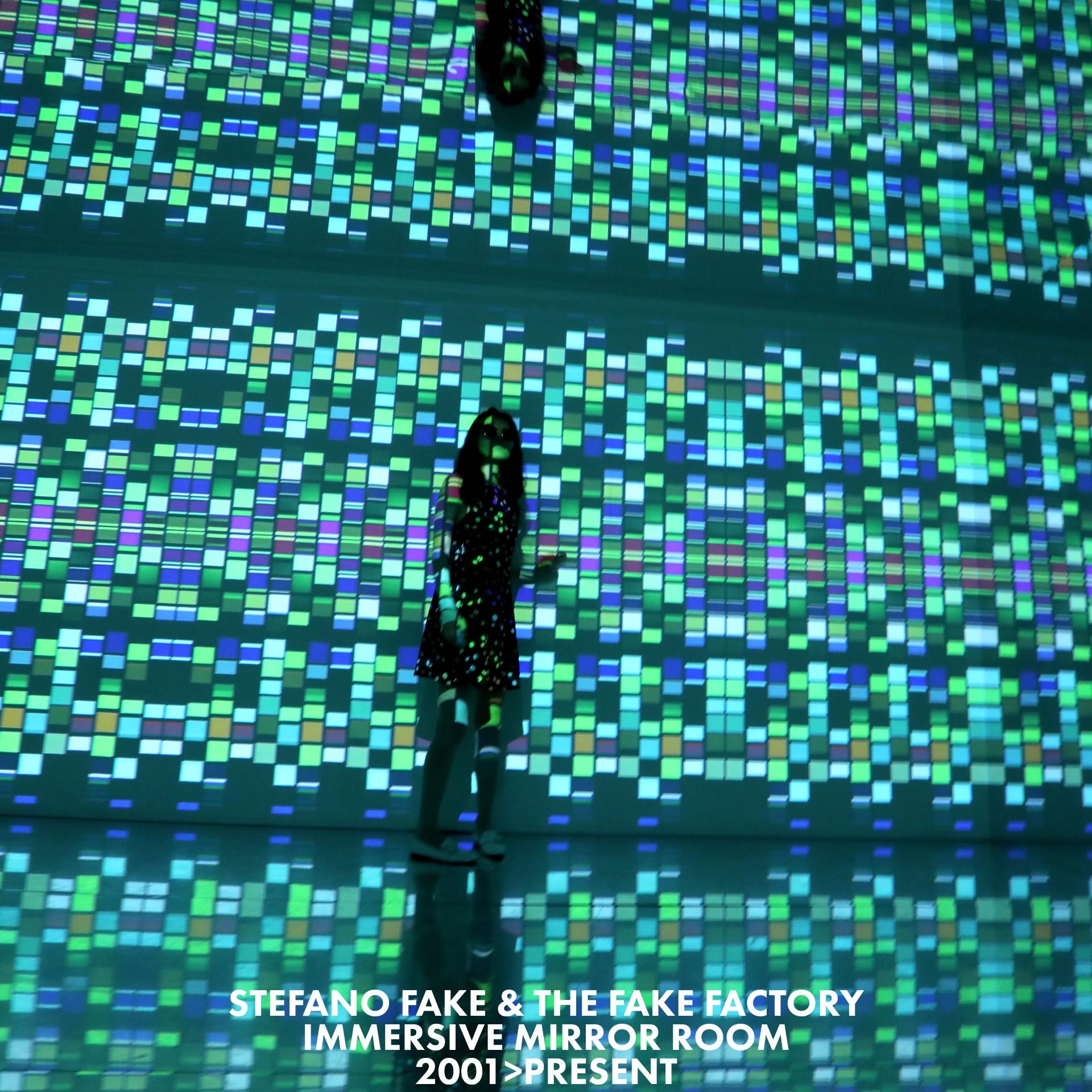
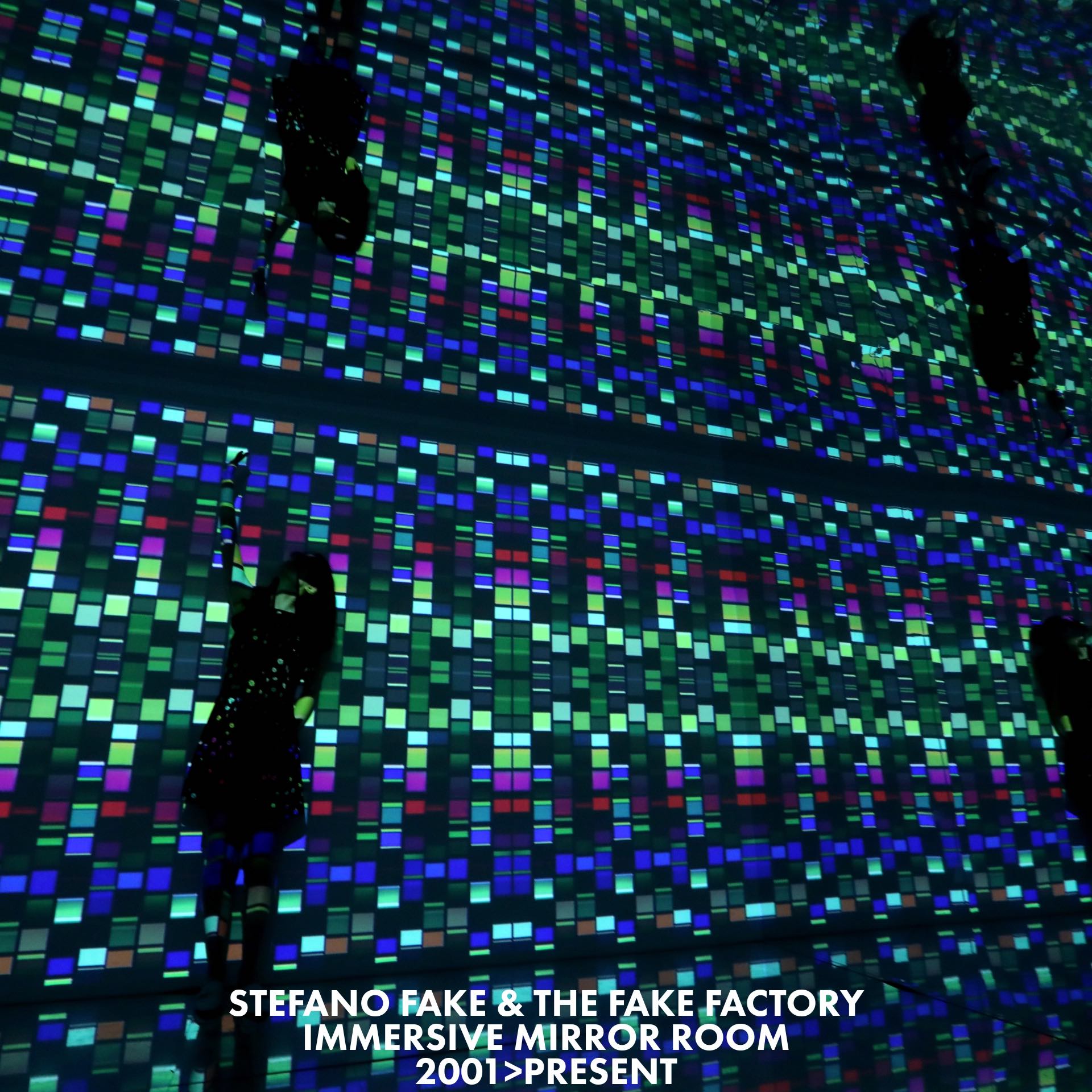
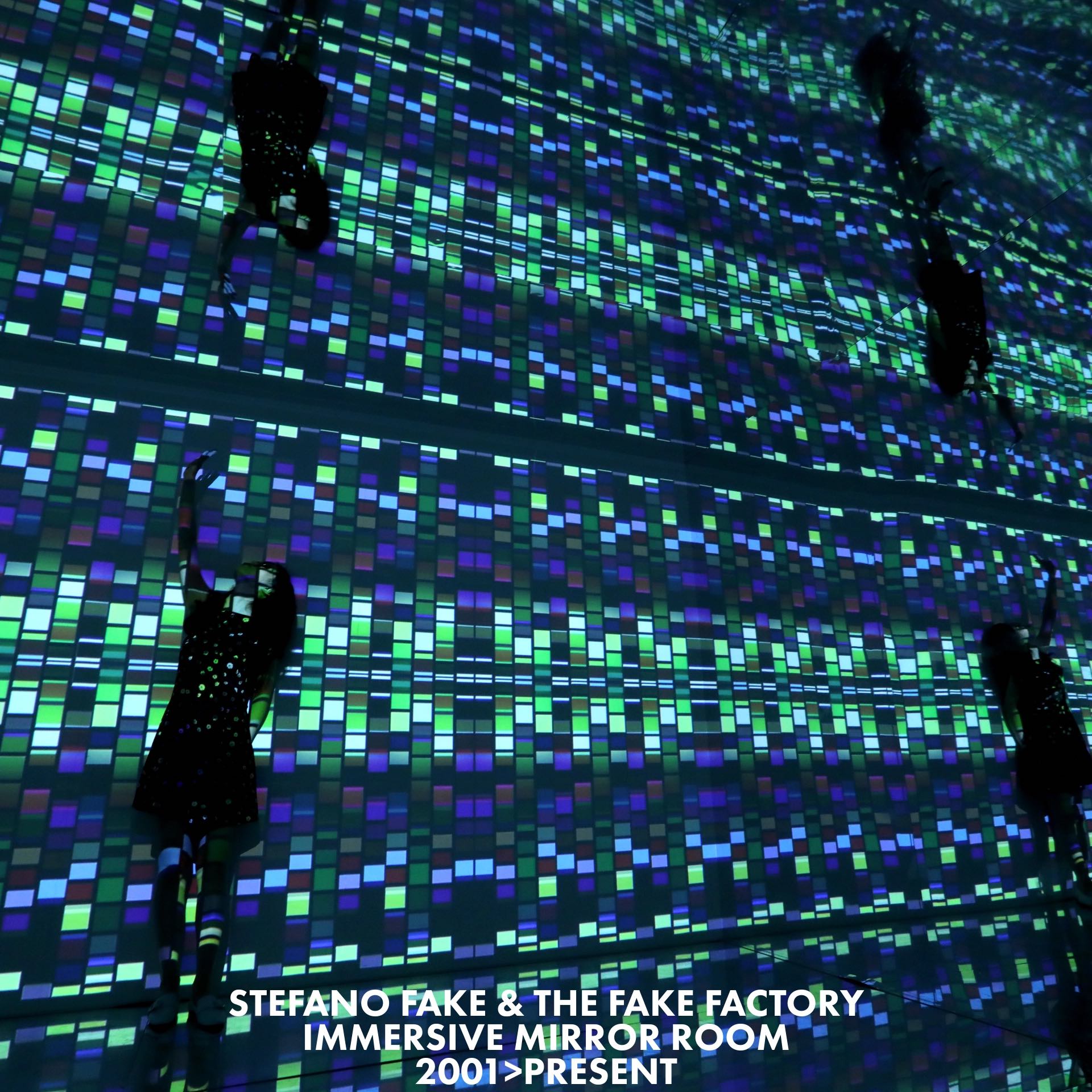
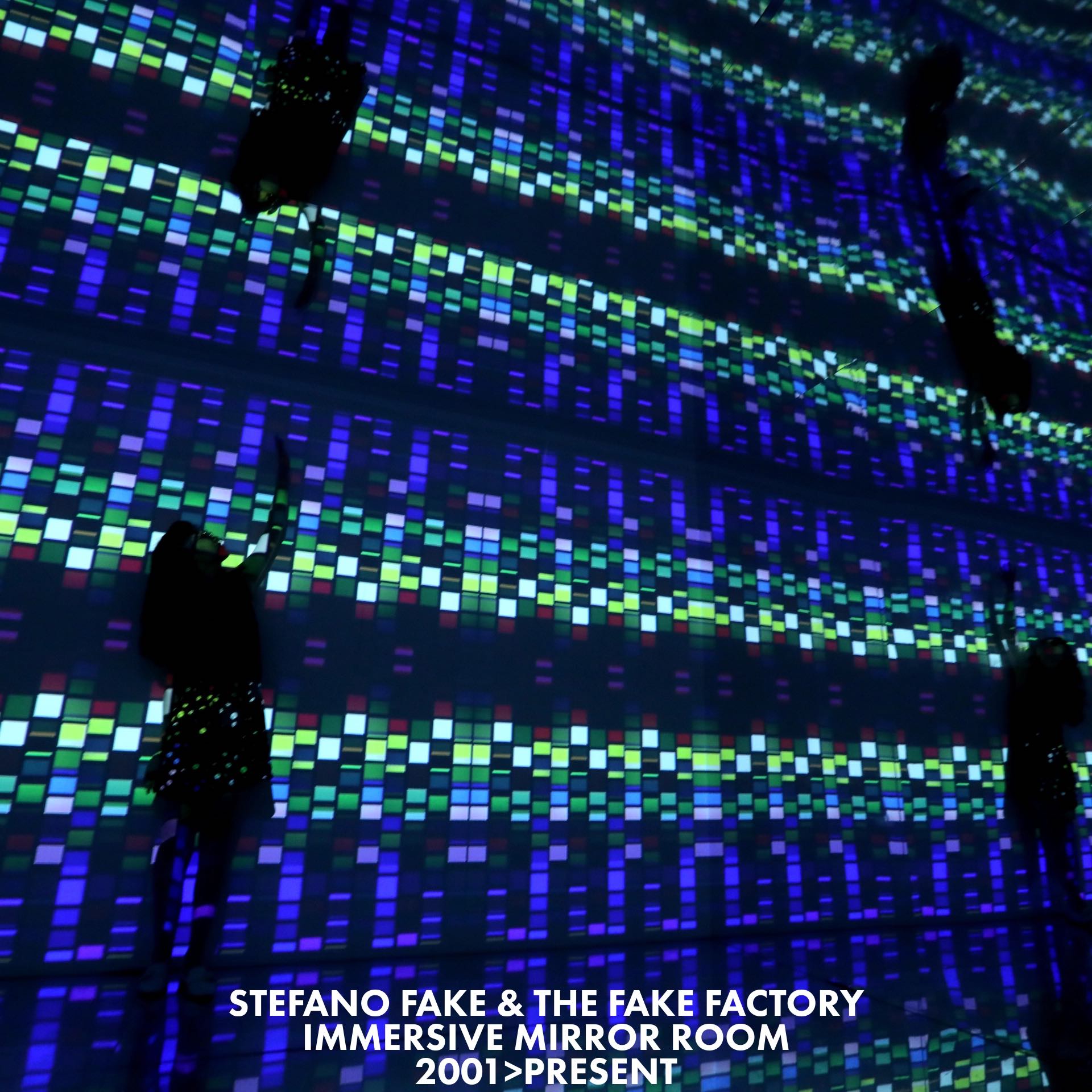
The immersive installation Pixellation (2002), created by Stefano Fake & THE FAKE FACTORY, represents a seminal exploration of the ontology of the digital image and its implications for the perception of reality in the early 21st century. Emerging at a historical moment marked by the rapid diffusion of digital technologies and screen-based media, the work interrogates the process through which the visible world is decomposed, translated, and reconstructed as a continuous flow of numerical data.
At the core of Pixellation lies a conceptual inversion: rather than using digital technology to simulate reality in a transparent or mimetic manner, the installation foregrounds the very structure of digital representation. Reality is not presented as a stable, coherent image, but as a dynamic aggregation of pixels—elementary visual units that constantly recombine into fluctuating configurations. In this sense, the work reveals the artificial and constructed nature of the digital image, exposing its underlying grammar.
This conceptual framework is explicitly articulated by Stefano Fake himself:
“In the age of digital media, we have come to understand that reality can be entirely recreated, from a visual standpoint, through a specific composition of colored pixels. Pixellation was conceived precisely as an installation that investigates this contemporary phenomenon.” (Stefano Fake, 2002)
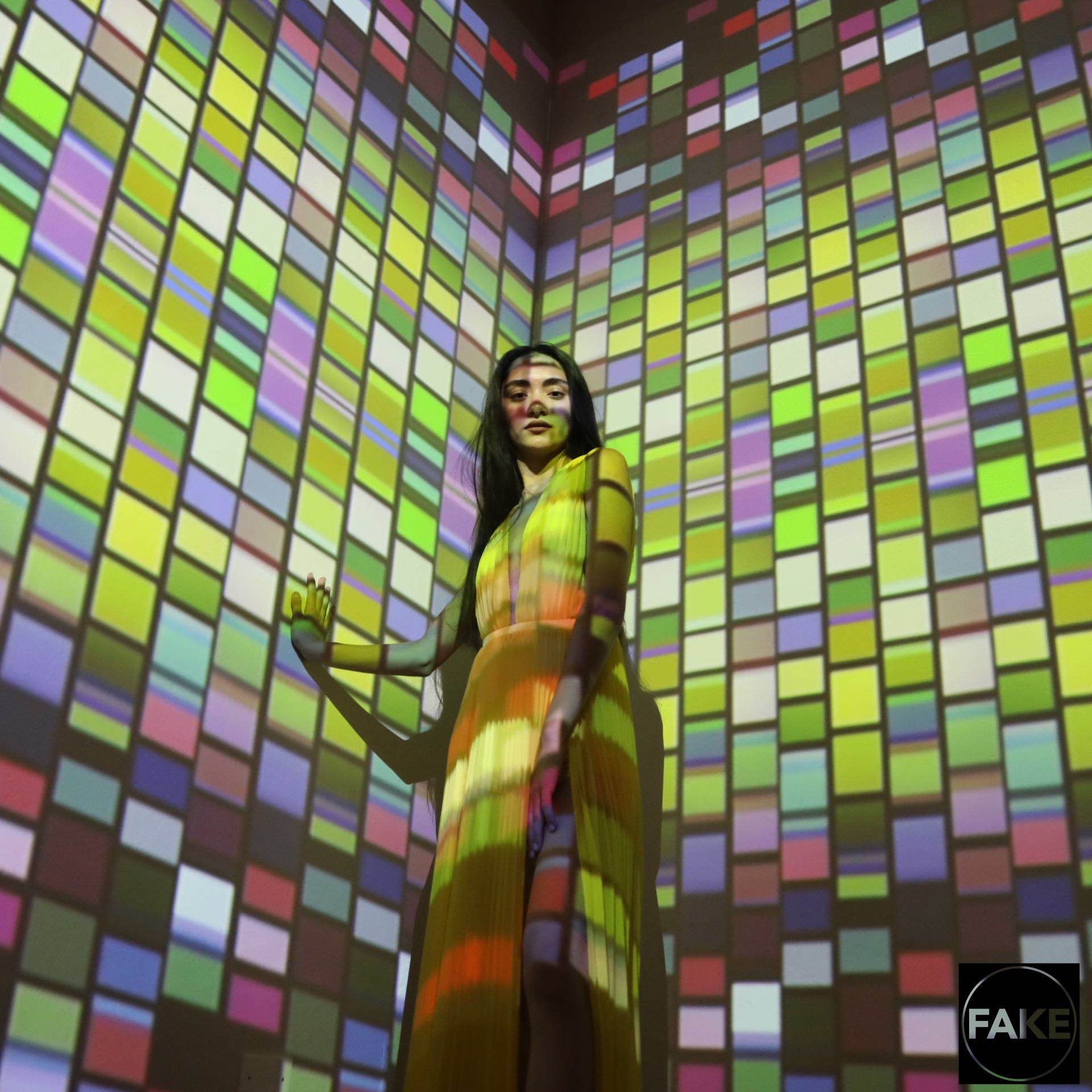
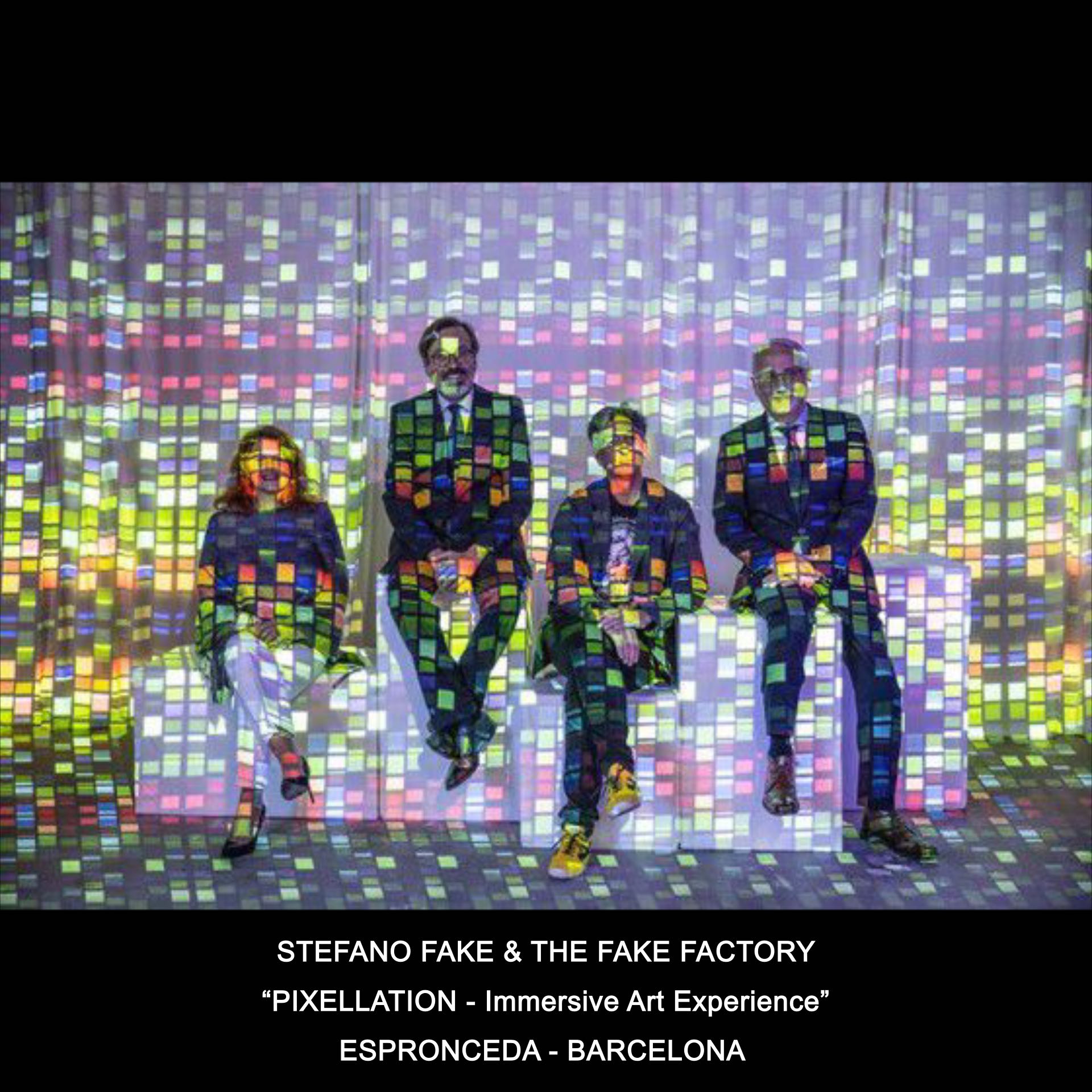
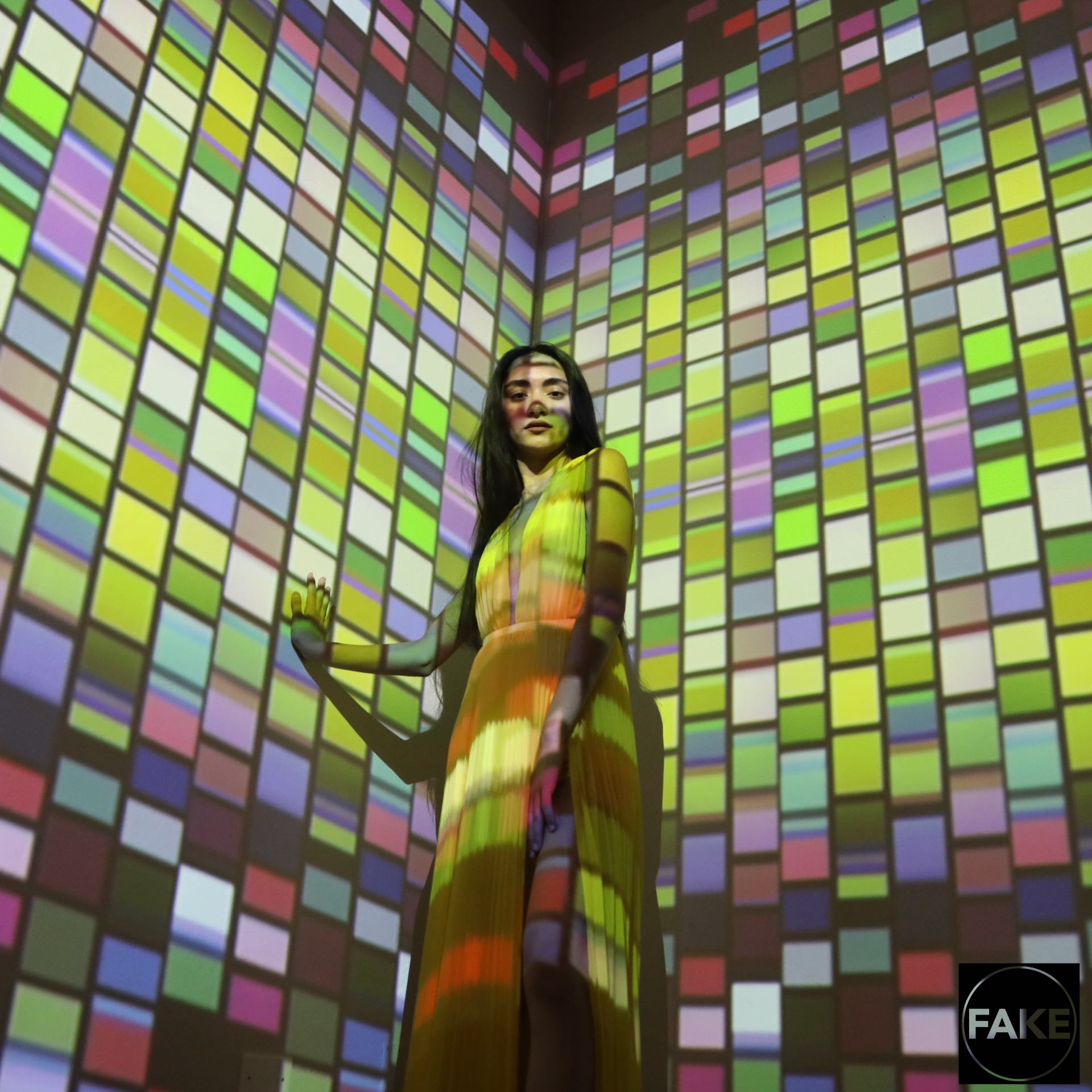
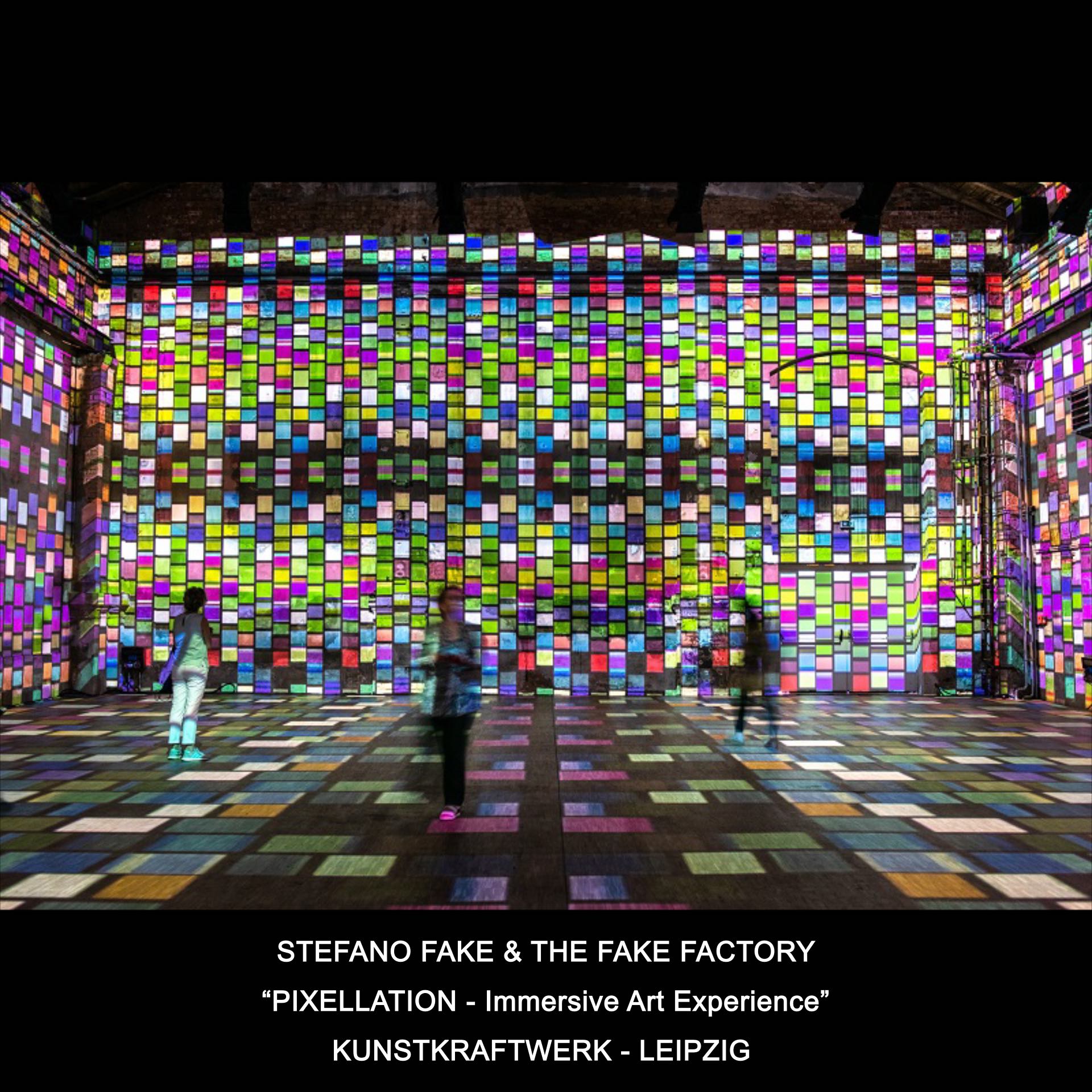
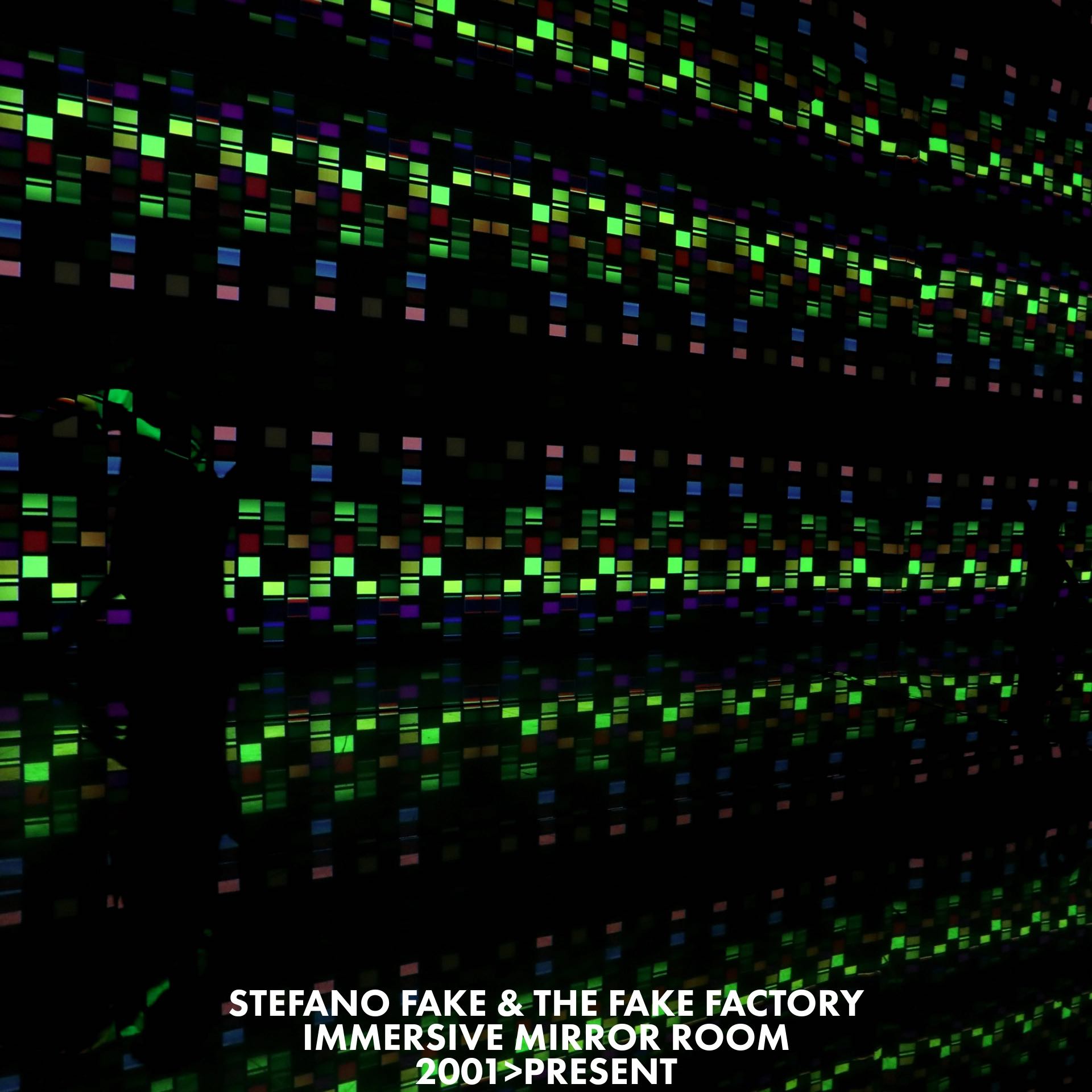
PIXELLATION by STEFANO FAKE & THE FAKE FACTORY operates as both an aesthetic and epistemological device. It does not merely represent the digital condition, but actively immerses the spectator within it. The viewer is enveloped in an environment where images dissolve into pixelated matrices, where forms emerge and disintegrate in real time, and where perception is continuously destabilized. The space itself becomes a field of computation, a visual interface in which the boundaries between image, data, and environment collapse.
From a phenomenological perspective, Pixellation can be understood as an attempt to simulate what might be described as a machinic mode of perception. Rather than privileging human-centered vision, the installation evokes the logic of computational processes—fragmentary, discrete, and algorithmic. This shift is evocatively captured in another statement by the artist:
“What it feels like to be immersed within the stream of consciousness of a calculator that produces not words, but mathematical structures of multicolored pixels?” (Stefano Fake, 2002)
This formulation is particularly significant, as it introduces the notion of a non-human “stream of consciousness,” suggesting that digital systems generate their own form of perceptual and cognitive organization. The spectator, immersed in this environment, is invited to inhabit—albeit temporarily—this alternative perceptual regime. The experience is therefore not only visual, but cognitive: it challenges habitual modes of seeing and understanding, prompting a reflection on how digital technologies reshape human perception.
Formally, the installation is characterized by the use of large-scale projections, dynamic pixelation effects, and continuous visual transformations. The absence of a fixed narrative structure reinforces the idea of an endless data flow, in which images are perpetually in a state of becoming. This aligns with broader theoretical discourses on digital culture, in which reality is increasingly conceived as fluid, mutable, and subject to constant reconfiguration.
“After the film Matrix, the simulated representation of physical reality had become an obsession for artists working with computer graphics. We had already expanded the concept of a digitized environment with the installation The Matrix and the iconic numerical flow that the film had revealed to everyone. With Pixellation, I was seeking an evolution of that graphic sign, but in a more positive, colorful, and communicative direction. The aesthetic language I was looking for was a blend of early 8-bit computer graphics, the minimalist painting of Josef Albers and Ellsworth Kelly, and Gerhard Richter’s 1966 Colour Charts.” (Stefano Fake, 2002)
Within the broader context of Stefano Fake’s artistic practice, Pixellation anticipates several key elements that will later define his immersive works: the centrality of space as an active medium, the use of audiovisual flows as a structuring principle, and the involvement of the spectator as an embodied participant within the artwork. However, unlike later productions that often engage with art history and figurative imagery, Pixellation operates at a more abstract and conceptual level, focusing on the fundamental building blocks of digital visuality.
Moreover, the work can be situated within a lineage of media art that interrogates the materiality of the digital, from early video art experiments to contemporary data-driven installations. Yet, what distinguishes Fake’s approach is the integration of this inquiry into an immersive, experiential format. The analysis of the pixel is not confined to a screen or a theoretical discourse; it becomes a spatial and sensory experience.
In this sense, Pixellation exemplifies a critical moment in the evolution of immersive digital art: the transition from representation to environment, from image to experience. By transforming the pixel from a technical unit into an aesthetic and conceptual protagonist, Stefano Fake constructs a work that not only reflects on the digital condition but also embodies it.
PIXELLATION by STEFANO FAKE & THE FAKE FACTORY can be interpreted as a meditation on the nature of reality in the digital age—a reality that is no longer given, but continuously generated through processes of computation and visualization. Through immersion, the spectator is confronted with this condition, experiencing firsthand the fluid, fragmented, and algorithmic nature of contemporary visual culture.
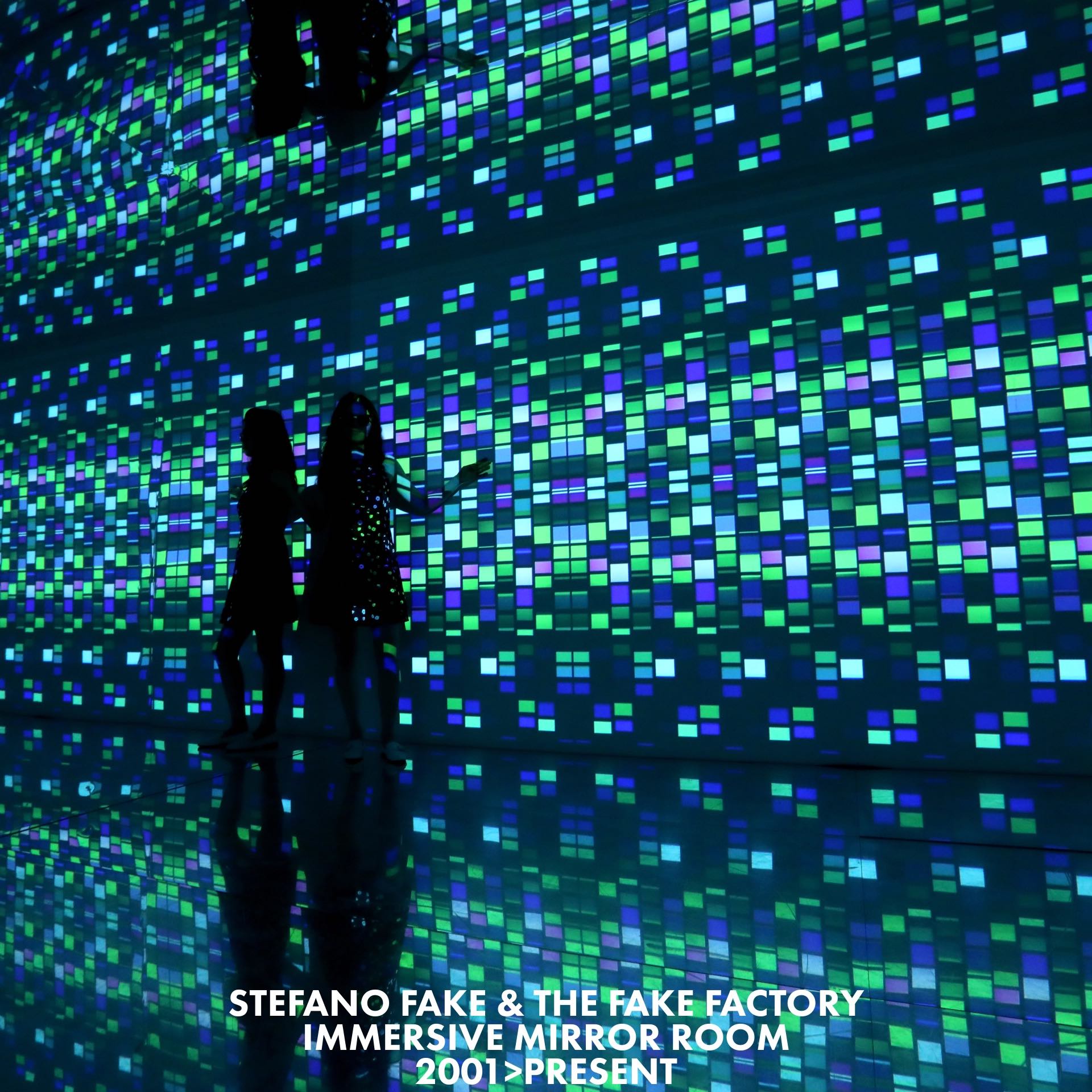
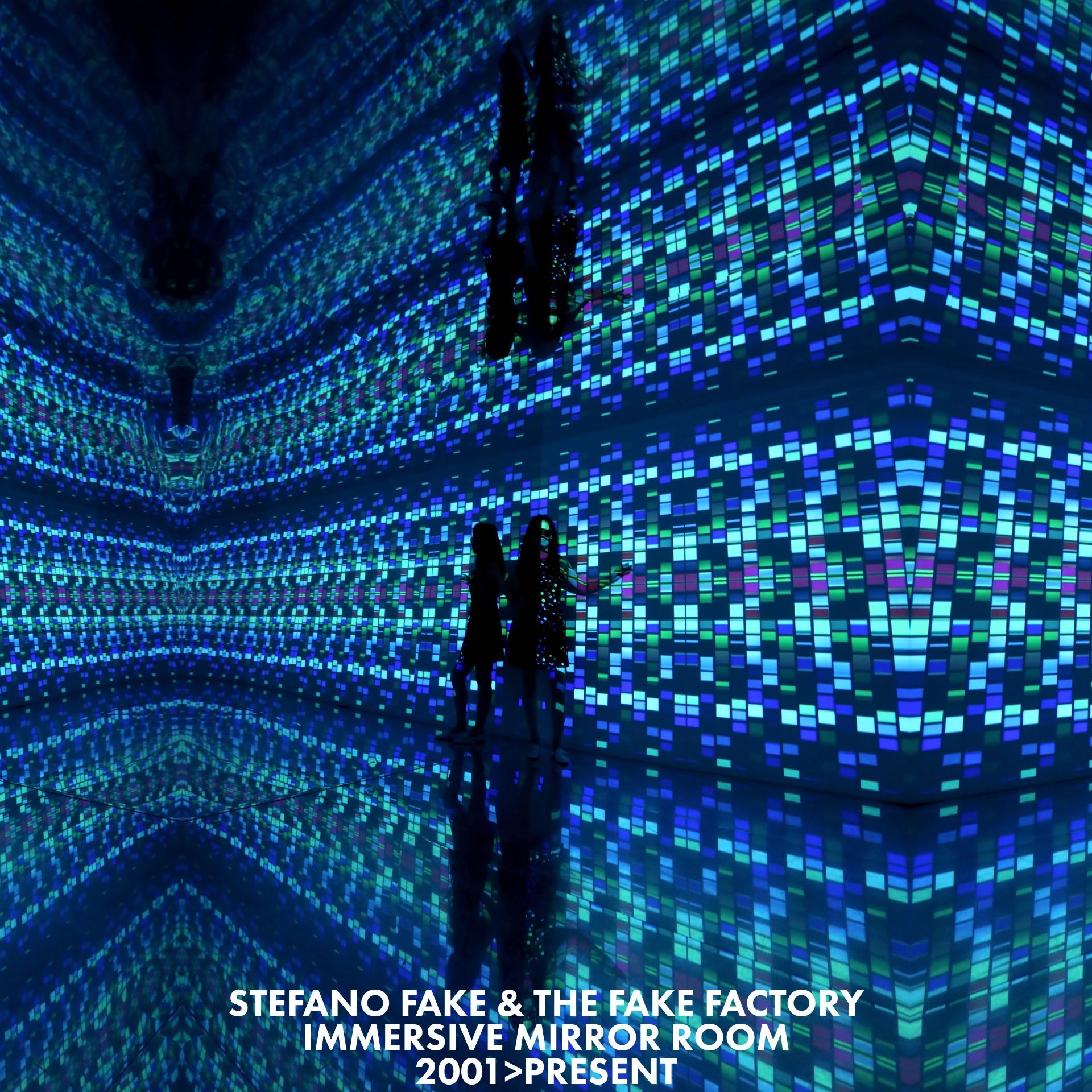


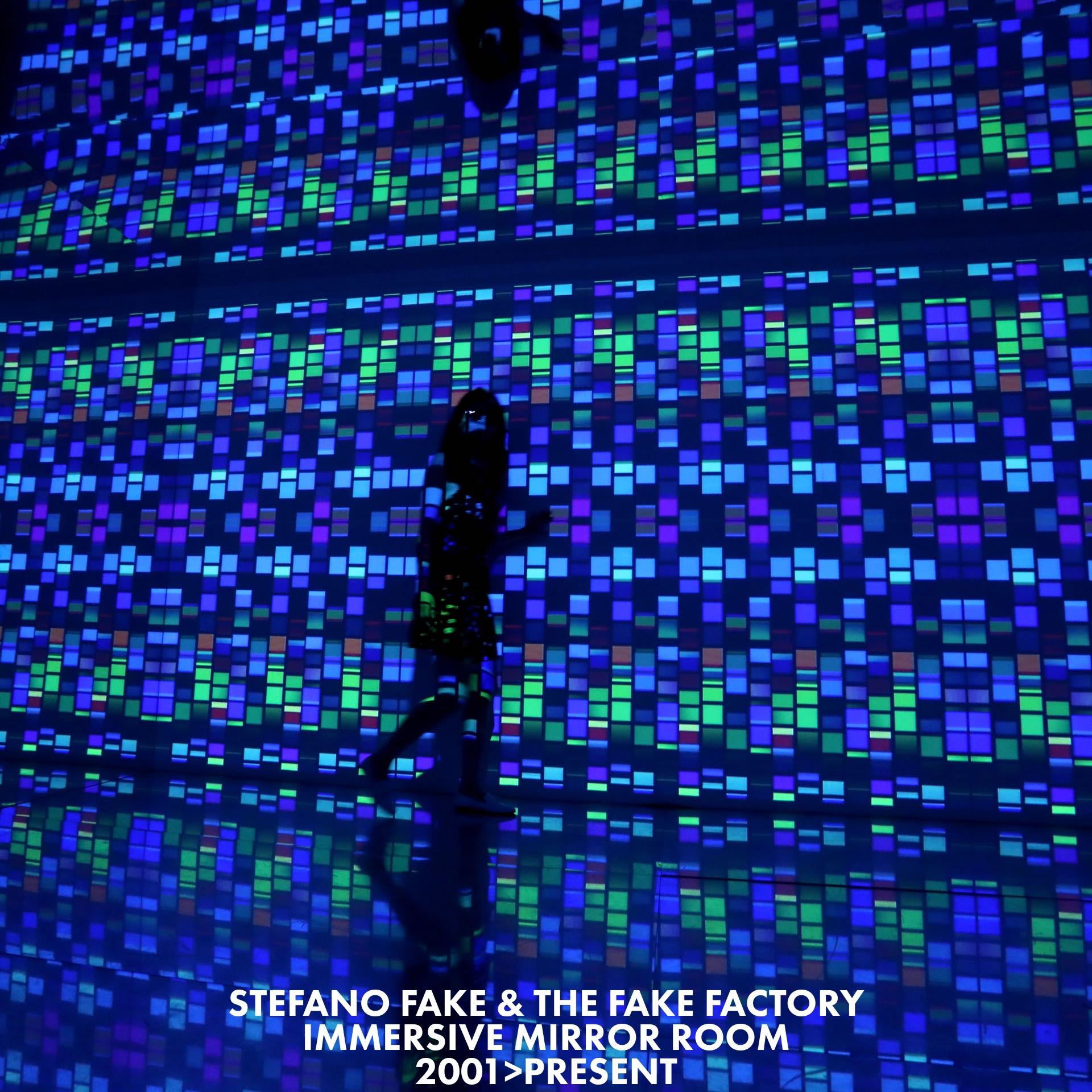
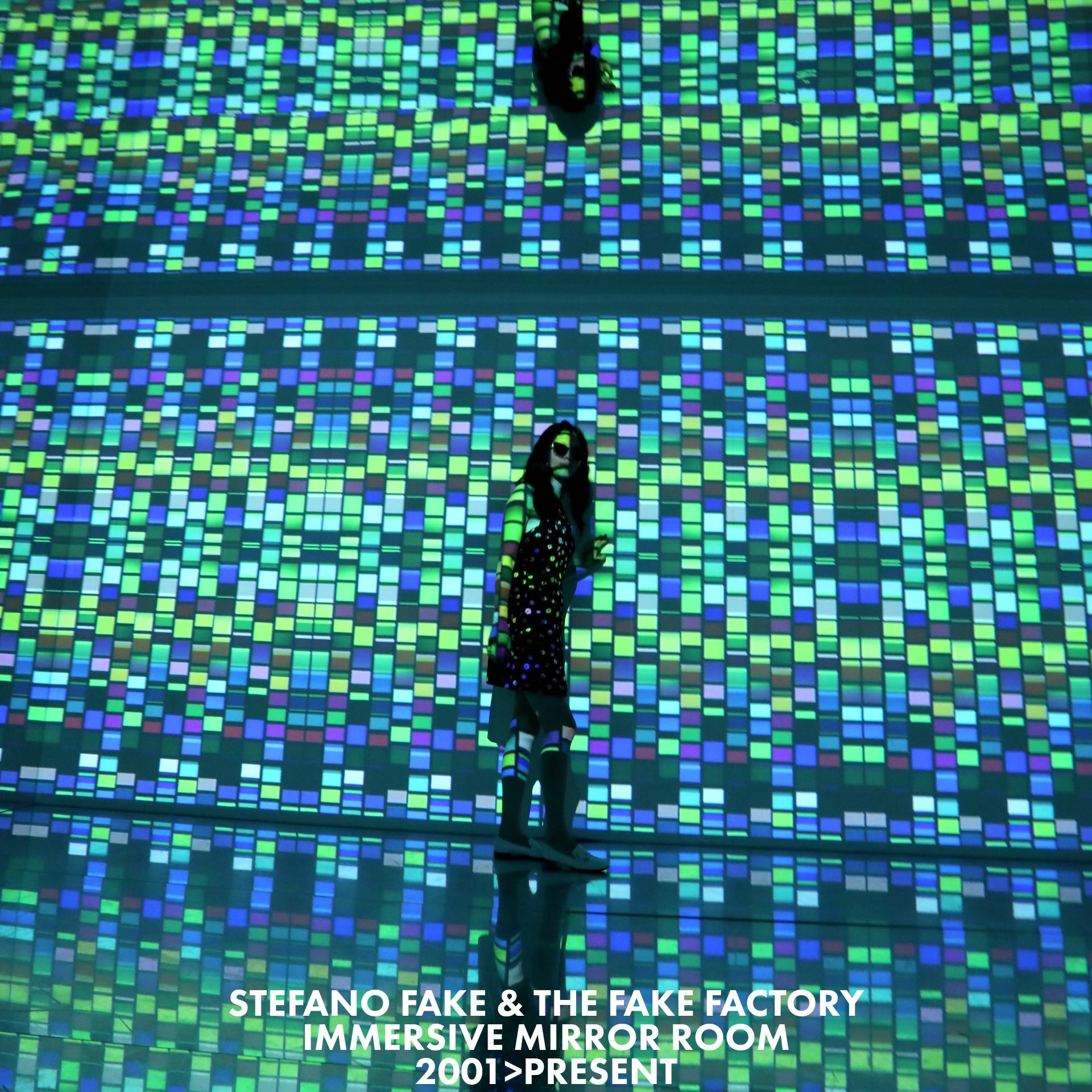



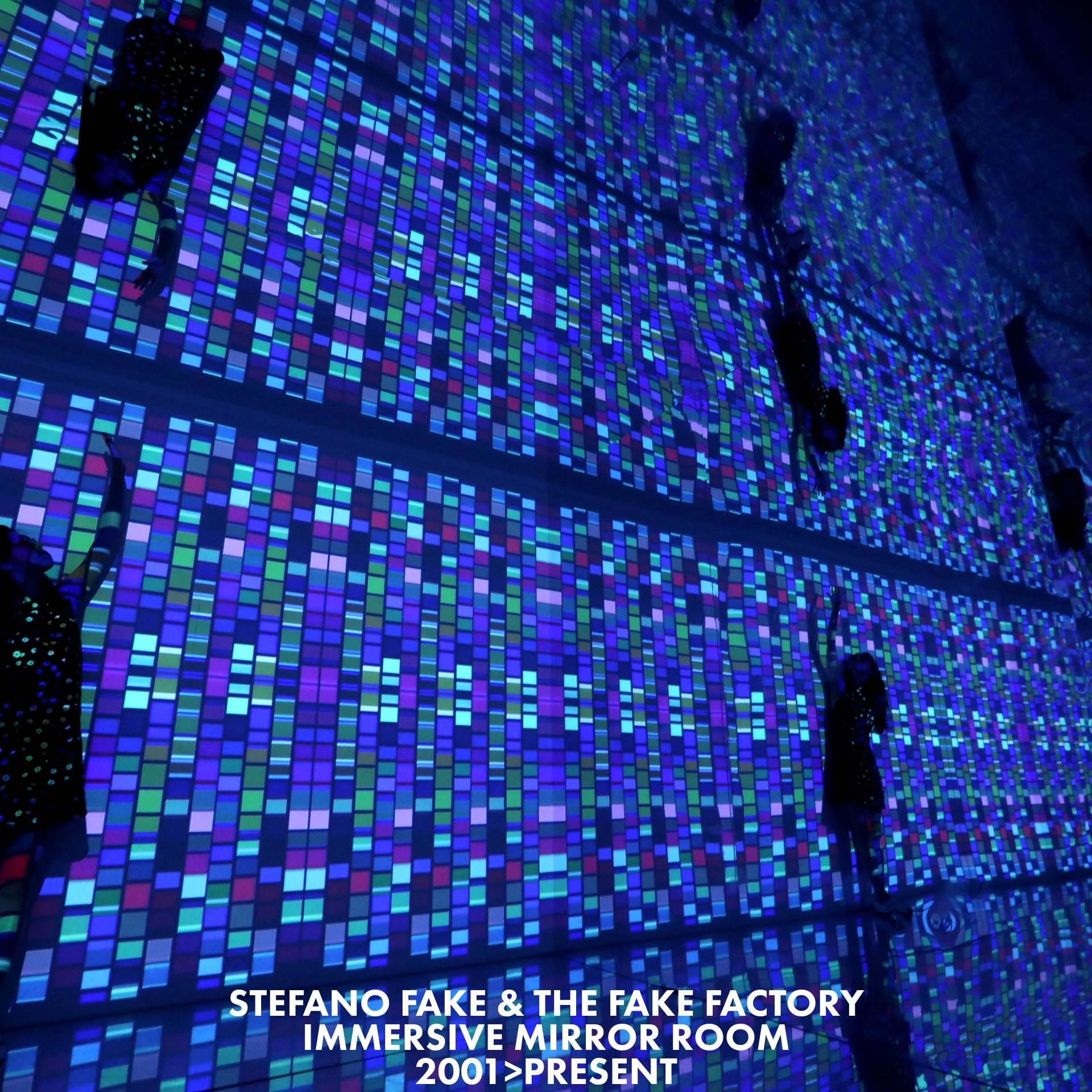
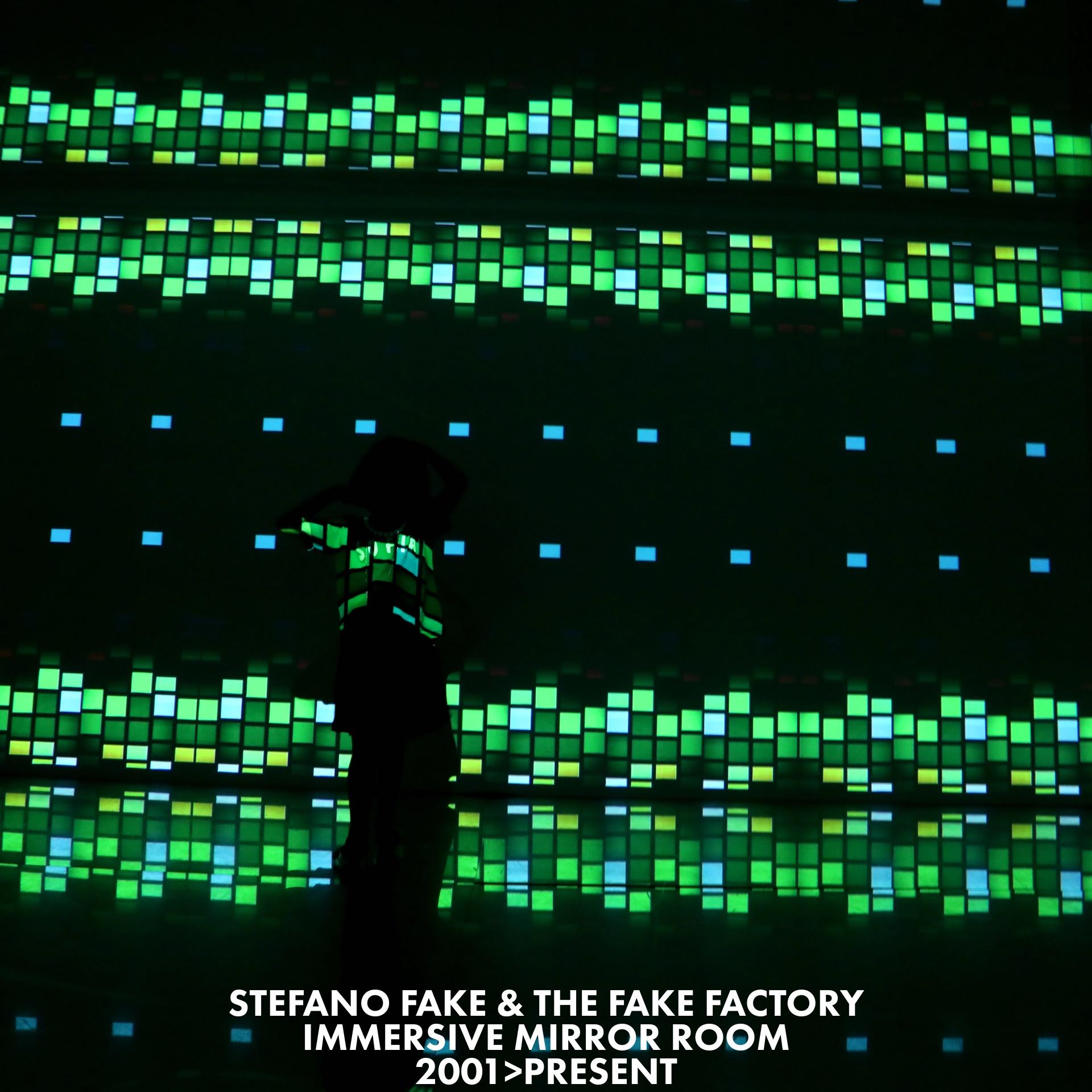


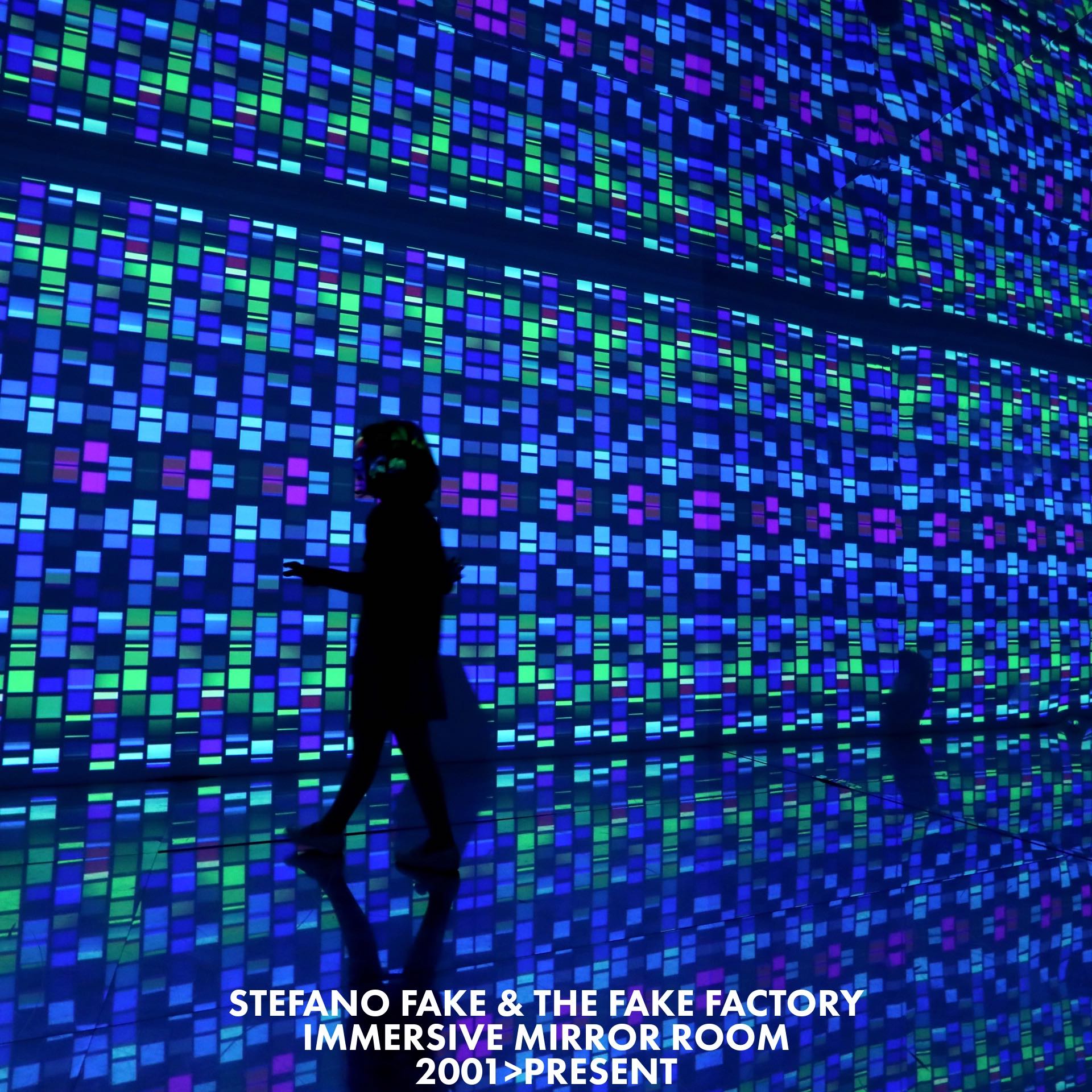
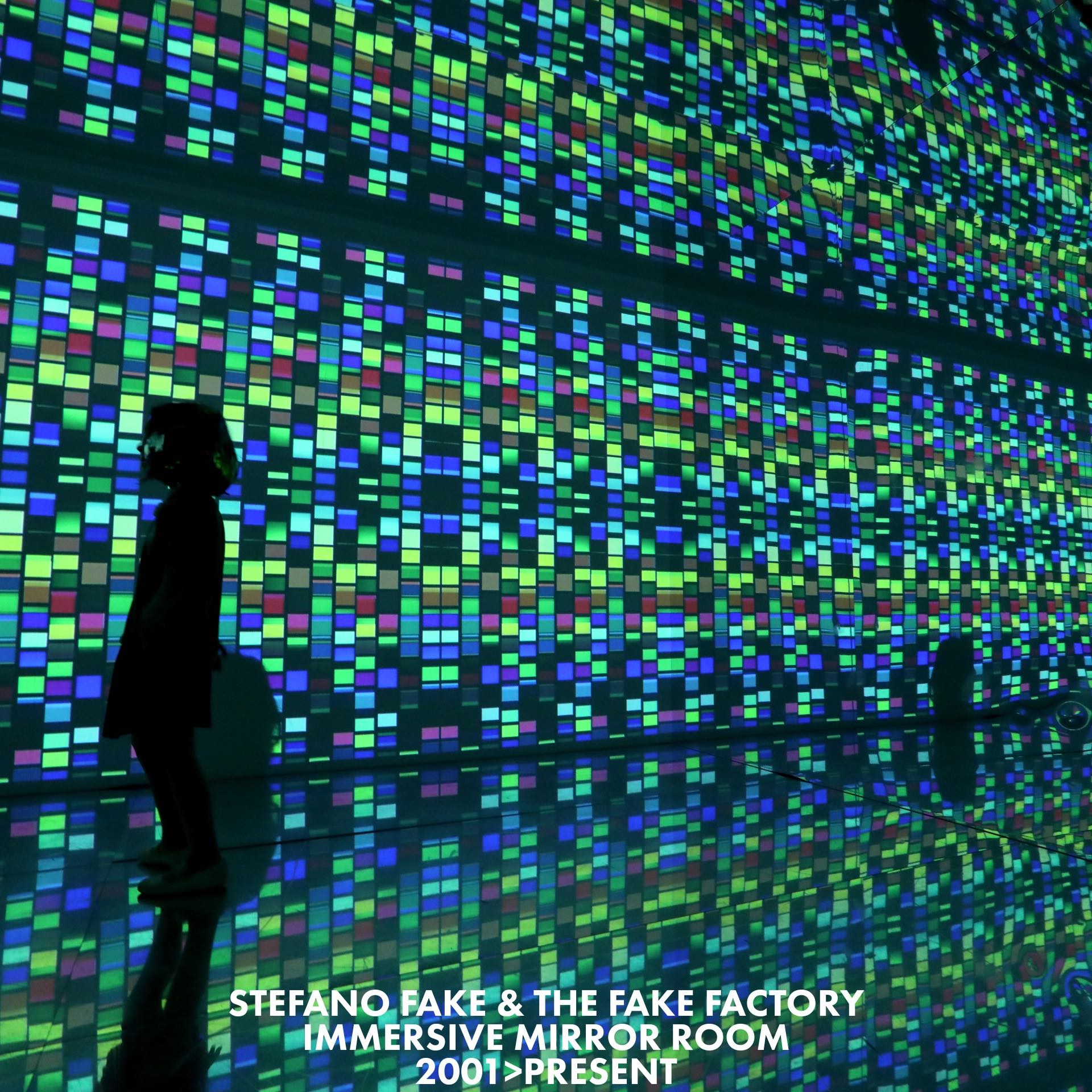
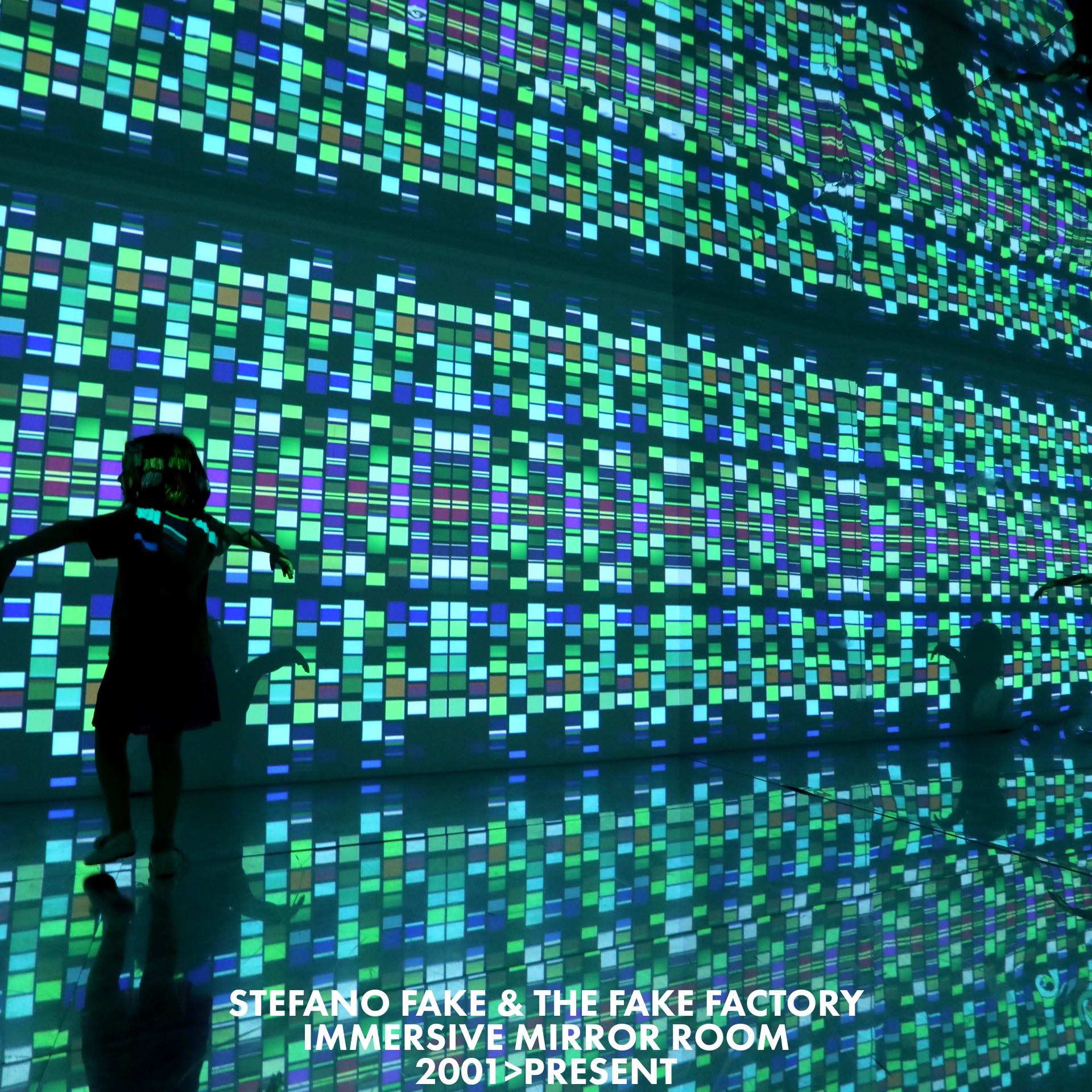
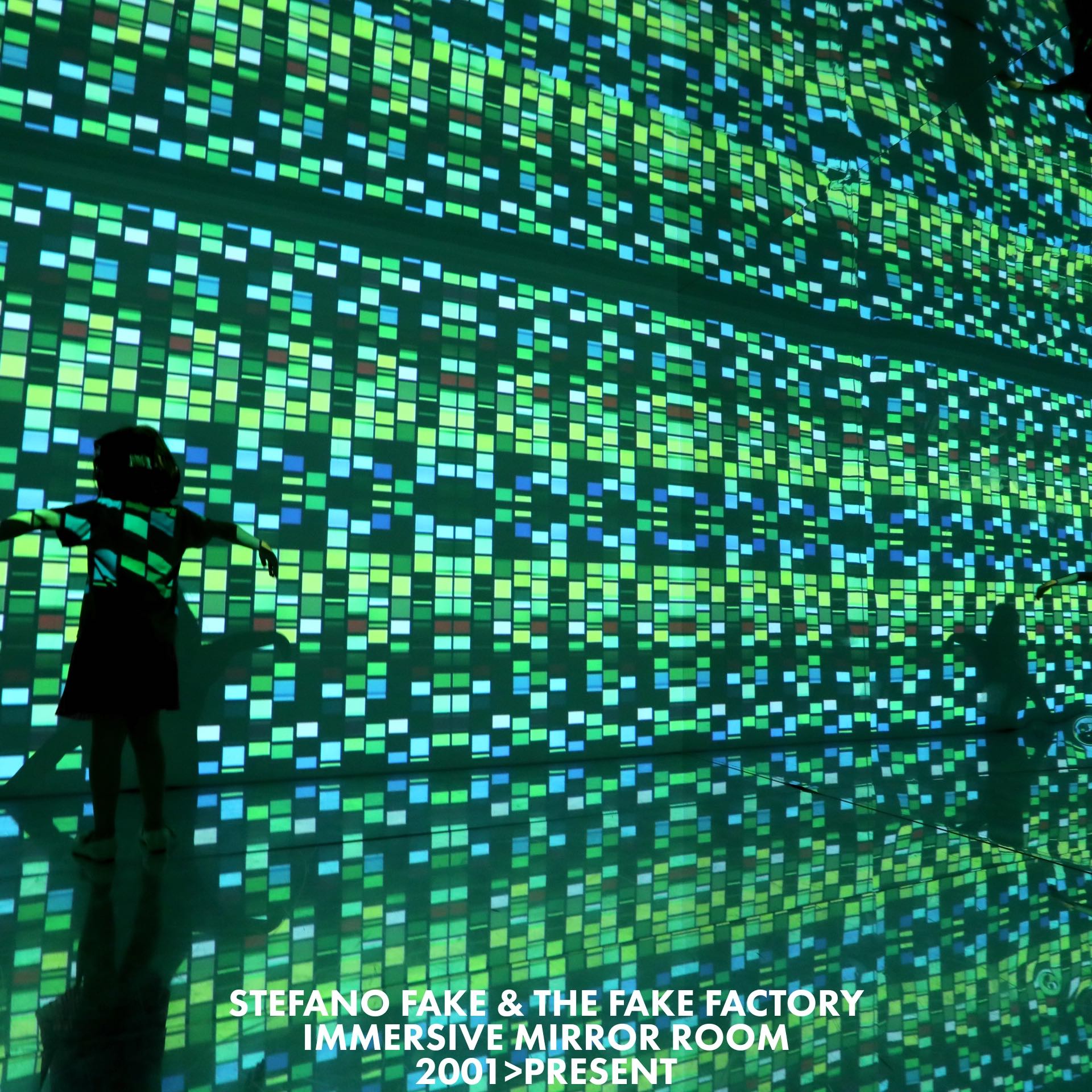
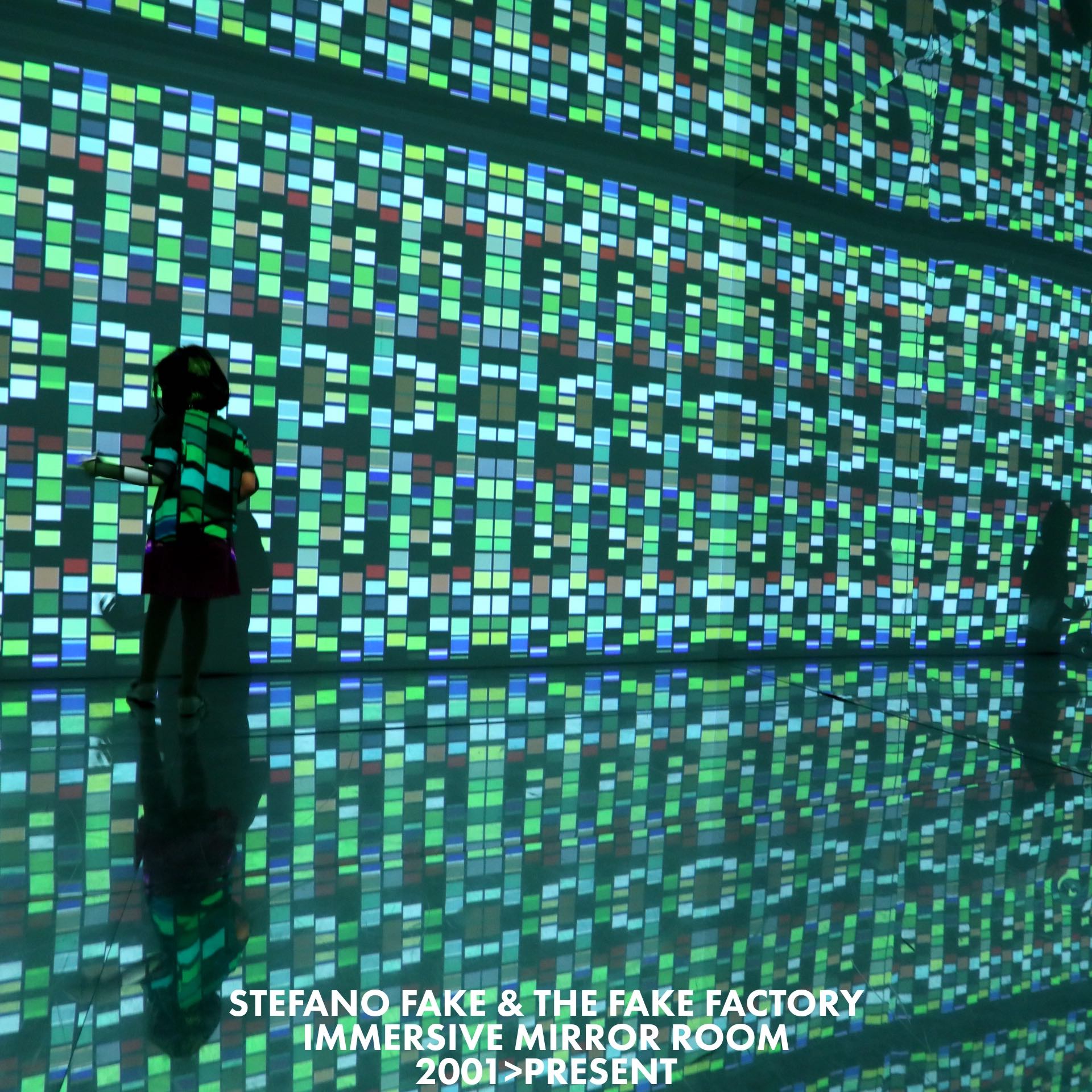


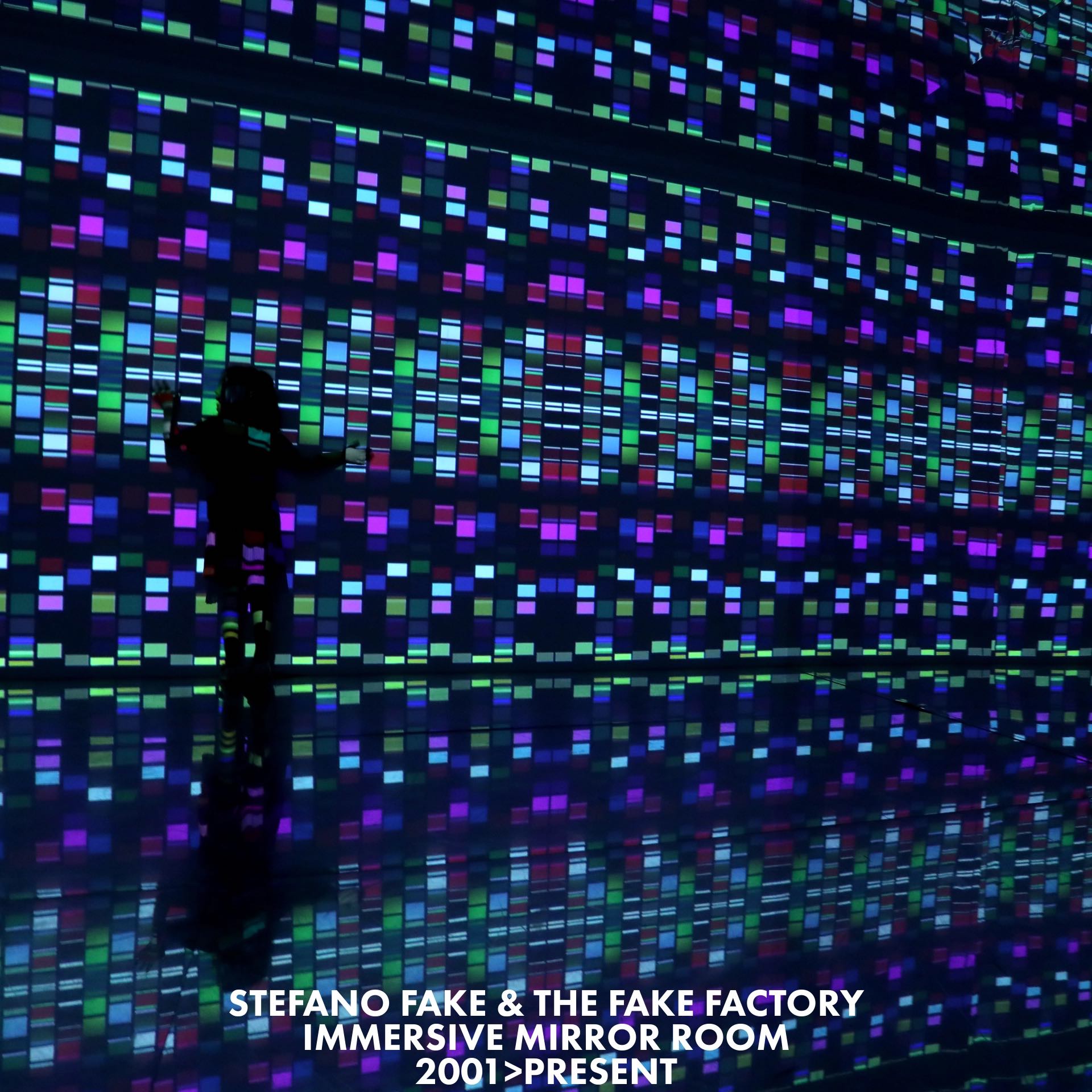


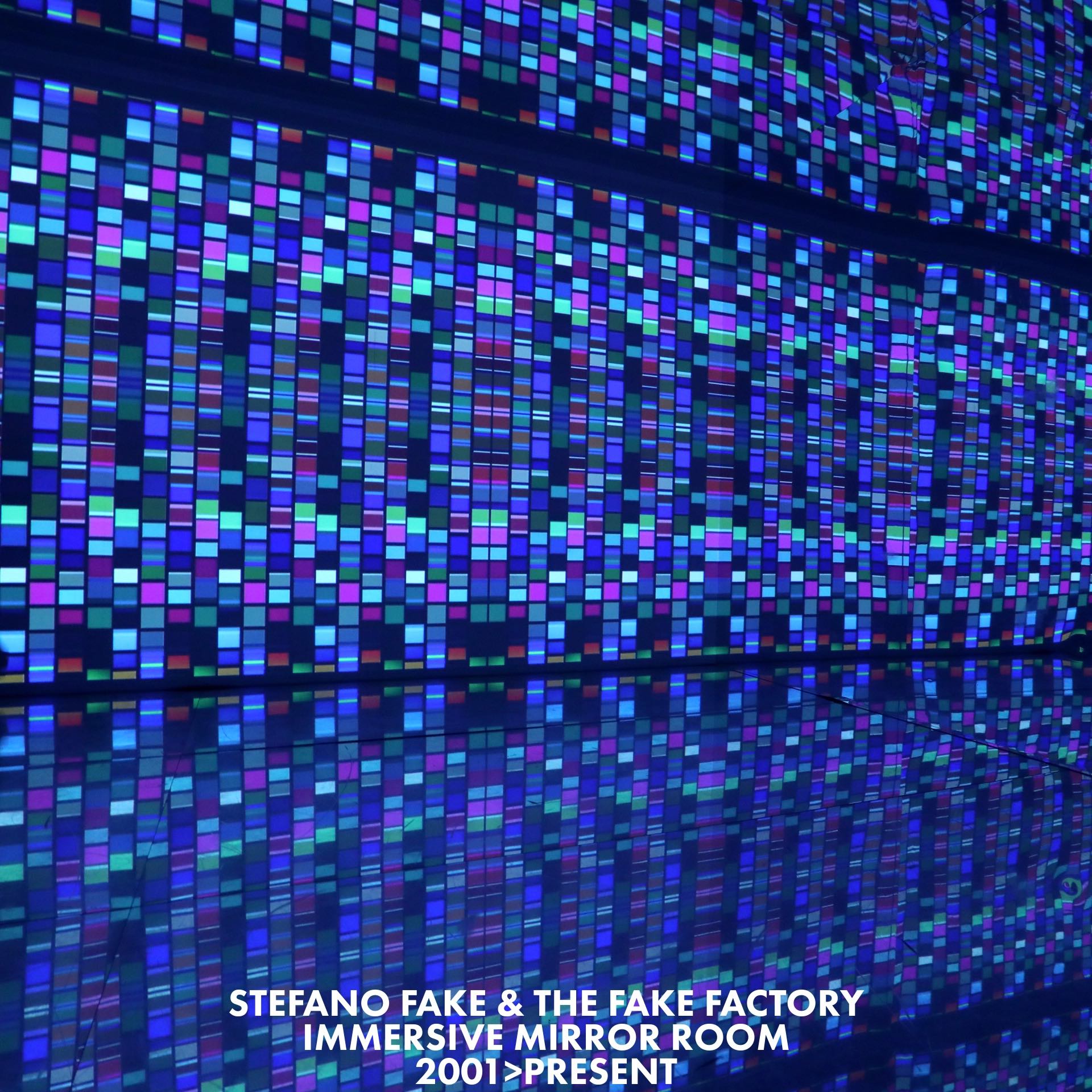
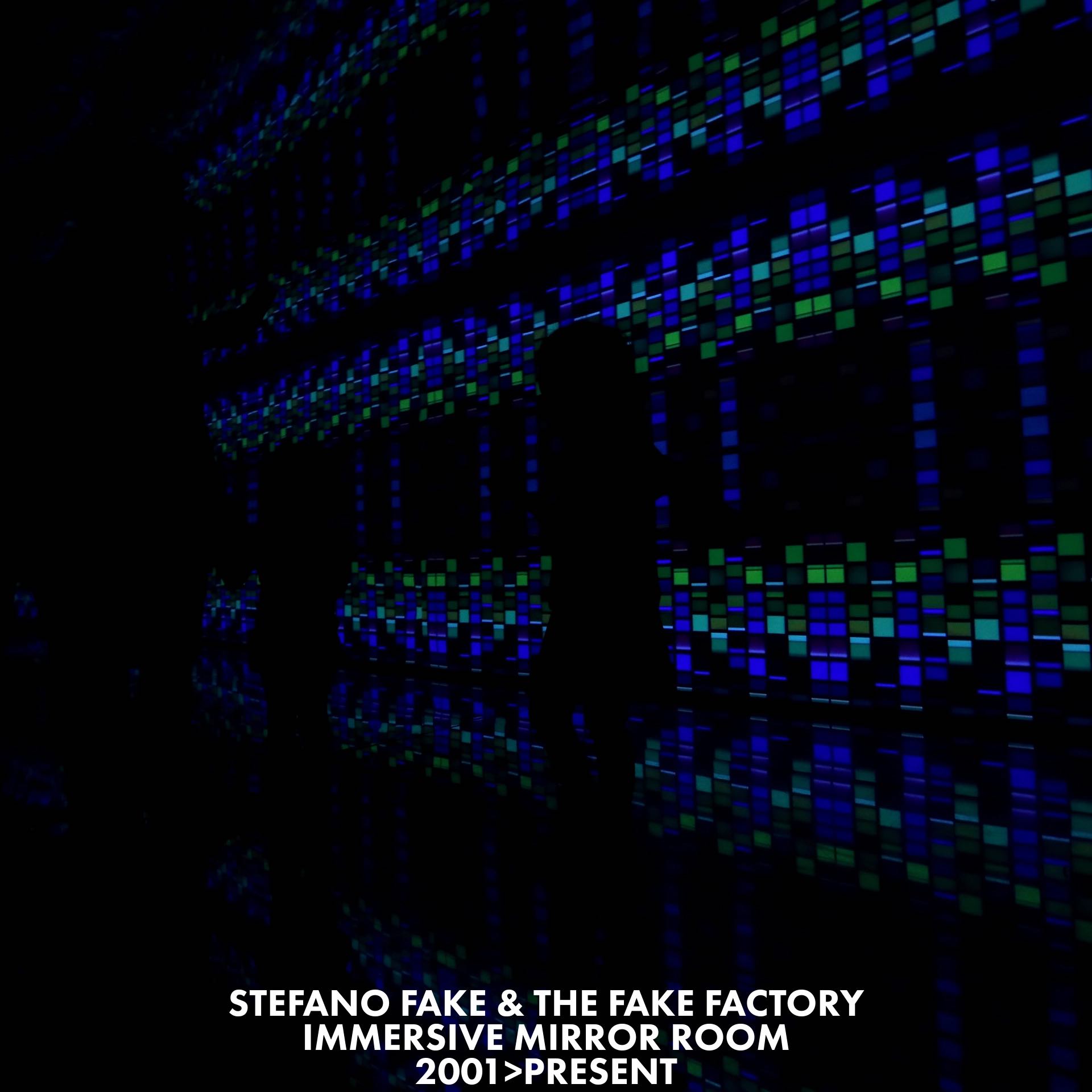
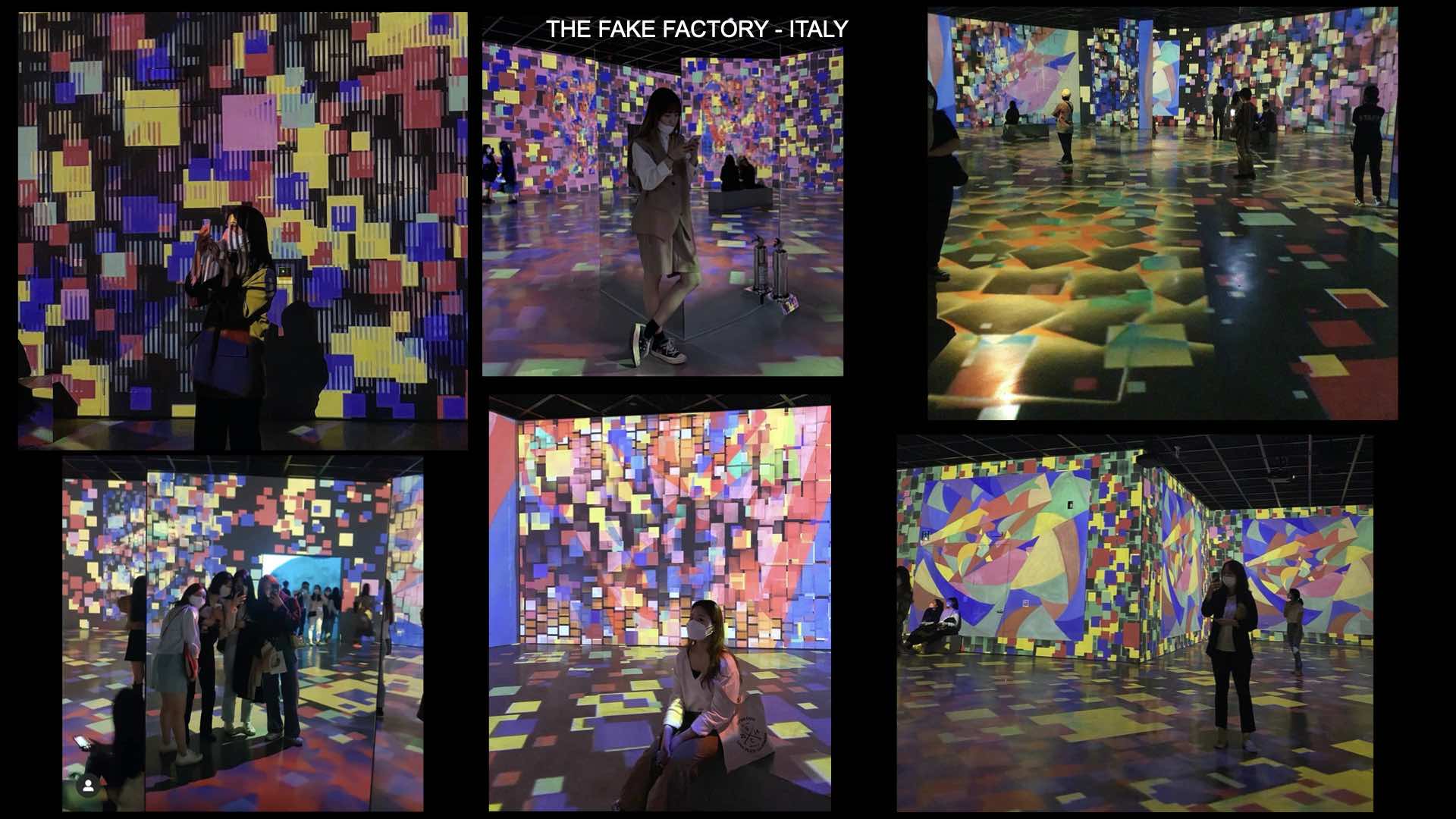


The immersive installation Pixellation (2002), created by Stefano Fake & THE FAKE FACTORY, represents a seminal exploration of the ontology of the digital image and its implications for the perception of reality in the early 21st century. Emerging at a historical moment marked by the rapid diffusion of digital technologies and screen-based media, the work interrogates the process through which the visible world is decomposed, translated, and reconstructed as a continuous flow of numerical data.
At the core of Pixellation lies a conceptual inversion: rather than using digital technology to simulate reality in a transparent or mimetic manner, the installation foregrounds the very structure of digital representation. Reality is not presented as a stable, coherent image, but as a dynamic aggregation of pixels—elementary visual units that constantly recombine into fluctuating configurations. In this sense, the work reveals the artificial and constructed nature of the digital image, exposing its underlying grammar.
This conceptual framework is explicitly articulated by Stefano Fake himself:
“In the age of digital media, we have come to understand that reality can be entirely recreated, from a visual standpoint, through a specific composition of colored pixels. Pixellation was conceived precisely as an installation that investigates this contemporary phenomenon.” (Stefano Fake, 2002)
PIXELLATION by STEFANO FAKE & THE FAKE FACTORY operates as both an aesthetic and epistemological device. It does not merely represent the digital condition, but actively immerses the spectator within it. The viewer is enveloped in an environment where images dissolve into pixelated matrices, where forms emerge and disintegrate in real time, and where perception is continuously destabilized. The space itself becomes a field of computation, a visual interface in which the boundaries between image, data, and environment collapse.
From a phenomenological perspective, Pixellation can be understood as an attempt to simulate what might be described as a machinic mode of perception. Rather than privileging human-centered vision, the installation evokes the logic of computational processes—fragmentary, discrete, and algorithmic. This shift is evocatively captured in another statement by the artist:
“What it feels like to be immersed within the stream of consciousness of a calculator that produces not words, but mathematical structures of multicolored pixels?” (Stefano Fake, 2002)
This formulation is particularly significant, as it introduces the notion of a non-human “stream of consciousness,” suggesting that digital systems generate their own form of perceptual and cognitive organization. The spectator, immersed in this environment, is invited to inhabit—albeit temporarily—this alternative perceptual regime. The experience is therefore not only visual, but cognitive: it challenges habitual modes of seeing and understanding, prompting a reflection on how digital technologies reshape human perception.
Formally, the installation is characterized by the use of large-scale projections, dynamic pixelation effects, and continuous visual transformations. The absence of a fixed narrative structure reinforces the idea of an endless data flow, in which images are perpetually in a state of becoming. This aligns with broader theoretical discourses on digital culture, in which reality is increasingly conceived as fluid, mutable, and subject to constant reconfiguration.
“After the film Matrix, the simulated representation of physical reality had become an obsession for artists working with computer graphics. We had already expanded the concept of a digitized environment with the installation The Matrix and the iconic numerical flow that the film had revealed to everyone. With Pixellation, I was seeking an evolution of that graphic sign, but in a more positive, colorful, and communicative direction. The aesthetic language I was looking for was a blend of early 8-bit computer graphics, the minimalist painting of Josef Albers and Ellsworth Kelly, and Gerhard Richter’s 1966 Colour Charts.” (Stefano Fake, 2002)
Within the broader context of Stefano Fake’s artistic practice, Pixellation anticipates several key elements that will later define his immersive works: the centrality of space as an active medium, the use of audiovisual flows as a structuring principle, and the involvement of the spectator as an embodied participant within the artwork. However, unlike later productions that often engage with art history and figurative imagery, Pixellation operates at a more abstract and conceptual level, focusing on the fundamental building blocks of digital visuality.
Moreover, the work can be situated within a lineage of media art that interrogates the materiality of the digital, from early video art experiments to contemporary data-driven installations. Yet, what distinguishes Fake’s approach is the integration of this inquiry into an immersive, experiential format. The analysis of the pixel is not confined to a screen or a theoretical discourse; it becomes a spatial and sensory experience.
In this sense, Pixellation exemplifies a critical moment in the evolution of immersive digital art: the transition from representation to environment, from image to experience. By transforming the pixel from a technical unit into an aesthetic and conceptual protagonist, Stefano Fake constructs a work that not only reflects on the digital condition but also embodies it.
PIXELLATION by STEFANO FAKE & THE FAKE FACTORY can be interpreted as a meditation on the nature of reality in the digital age—a reality that is no longer given, but continuously generated through processes of computation and visualization. Through immersion, the spectator is confronted with this condition, experiencing firsthand the fluid, fragmented, and algorithmic nature of contemporary visual culture.
L’installazione immersiva Pixellation (2002), realizzata da Stefano Fake & THE FAKE FACTORY, rappresenta un’esplorazione seminale dell’ontologia dell’immagine digitale e delle sue implicazioni per la percezione della realtà all’inizio del XXI secolo. Nata in un momento storico segnato dalla rapida diffusione delle tecnologie digitali e dei media basati su schermo, l’opera indaga il processo attraverso cui il mondo visibile viene scomposto, tradotto e ricostruito come un flusso continuo di dati numerici.
Al centro di Pixellation si colloca un’inversione concettuale: invece di utilizzare la tecnologia digitale per simulare la realtà in modo trasparente o mimetico, l’installazione mette in primo piano la struttura stessa della rappresentazione digitale. La realtà non viene presentata come un’immagine stabile e coerente, ma come un’aggregazione dinamica di pixel — unità visive elementari che si ricombinano costantemente in configurazioni fluttuanti. In questo senso, l’opera rivela il carattere artificiale e costruito dell’immagine digitale, esponendone la grammatica sottostante.
Questo quadro concettuale è esplicitato dallo stesso Stefano Fake:
“Nell’epoca dei media digitali abbiamo imparato a capire che la realtà può essere interamente ricreata, dal punto di vista visivo, attraverso una specifica composizione di pixel colorati. Pixellation nasce proprio come un’installazione che indaga questo fenomeno contemporaneo.” (Stefano Fake, 2002)
PIXELLATION di Stefano Fake & THE FAKE FACTORY opera dunque come dispositivo al tempo stesso estetico ed epistemologico. Non si limita a rappresentare la condizione digitale, ma vi immerge attivamente lo spettatore. Il visitatore è avvolto in un ambiente in cui le immagini si dissolvono in matrici pixelate, le forme emergono e si disgregano in tempo reale e la percezione viene continuamente destabilizzata. Lo spazio stesso si configura come un campo di computazione, un’interfaccia visiva in cui i confini tra immagine, dato e ambiente collassano.
Da una prospettiva fenomenologica, Pixellation può essere interpretata come un tentativo di simulare una modalità di percezione machinica. Piuttosto che privilegiare una visione antropocentrica, l’installazione evoca la logica dei processi computazionali — frammentaria, discreta e algoritmica. Questo slittamento è efficacemente sintetizzato in un’altra affermazione dell’artista:
“Che cosa si prova a essere immersi nel flusso di coscienza di una calcolatrice che produce non parole, ma strutture matematiche di pixel multicolori?” (Stefano Fake, 2002)
Questa formulazione è particolarmente significativa poiché introduce la nozione di uno “stream of consciousness” non umano, suggerendo che i sistemi digitali generano una propria forma di organizzazione percettiva e cognitiva. Lo spettatore, immerso in questo ambiente, è invitato ad abitare — seppur temporaneamente — questo regime percettivo alternativo. L’esperienza non è quindi soltanto visiva, ma anche cognitiva: mette in crisi le modalità abituali di vedere e comprendere, sollecitando una riflessione su come le tecnologie digitali stiano rimodellando la percezione umana.
Dal punto di vista formale, l’installazione è caratterizzata dall’uso di proiezioni su larga scala, effetti dinamici di pixelazione e trasformazioni visive continue. L’assenza di una struttura narrativa fissa rafforza l’idea di un flusso infinito di dati, in cui le immagini sono perpetuamente in uno stato di divenire. Questo aspetto si allinea con i più ampi discorsi teorici sulla cultura digitale, nei quali la realtà è sempre più concepita come fluida, mutevole e soggetta a continua riconfigurazione.
“Dopo il film Matrix, la rappresentazione simulata della realtà fisica era diventata un’ossessione per gli artisti che lavoravano con la computer grafica. Avevamo già ampliato il concetto di ambiente digitalizzato con l’installazione The Matrix e con l’iconico flusso numerico che il film aveva mostrato a tutti. Con Pixellation cercavo un’evoluzione di quel segno grafico, ma in una direzione più positiva, colorata e comunicativa. Il linguaggio estetico che cercavo era una sintesi tra la prima computer grafica a 8 bit, la pittura minimalista di Josef Albers ed Ellsworth Kelly, e le Colour Charts del 1966 di Gerhard Richter.” (Stefano Fake, 2002)
Nel contesto più ampio della pratica artistica di Stefano Fake, Pixellation anticipa diversi elementi che diventeranno centrali nei lavori immersivi successivi: la centralità dello spazio come medium attivo, l’uso dei flussi audiovisivi come principio strutturante e il coinvolgimento dello spettatore come partecipante incarnato all’interno dell’opera. Tuttavia, a differenza delle produzioni successive, spesso orientate verso la storia dell’arte e l’immaginario figurativo, Pixellation opera su un piano più astratto e concettuale, concentrandosi sui mattoni fondamentali della visualità digitale.
L’opera si inserisce inoltre in una genealogia della media art che indaga la materialità del digitale, dalle prime sperimentazioni della videoarte fino alle installazioni contemporanee basate sui dati. Ciò che distingue l’approccio di Fake è tuttavia l’integrazione di questa riflessione in un formato immersivo ed esperienziale: l’analisi del pixel non rimane confinata allo schermo o al discorso teorico, ma si traduce in un’esperienza spaziale e sensoriale.
In questo senso, Pixellation rappresenta un momento cruciale nell’evoluzione dell’arte digitale immersiva: il passaggio dalla rappresentazione all’ambiente, dall’immagine all’esperienza. Trasformando il pixel da unità tecnica a protagonista estetico e concettuale, Stefano Fake costruisce un’opera che non solo riflette sulla condizione digitale, ma la incarna.
PIXELLATION può infine essere interpretata come una meditazione sulla natura della realtà nell’era digitale: una realtà che non è più data, ma continuamente generata attraverso processi di computazione e visualizzazione. Attraverso l’immersione, lo spettatore viene posto di fronte a questa condizione, sperimentando in prima persona la natura fluida, frammentata e algoritmica della cultura visiva contemporanea.

