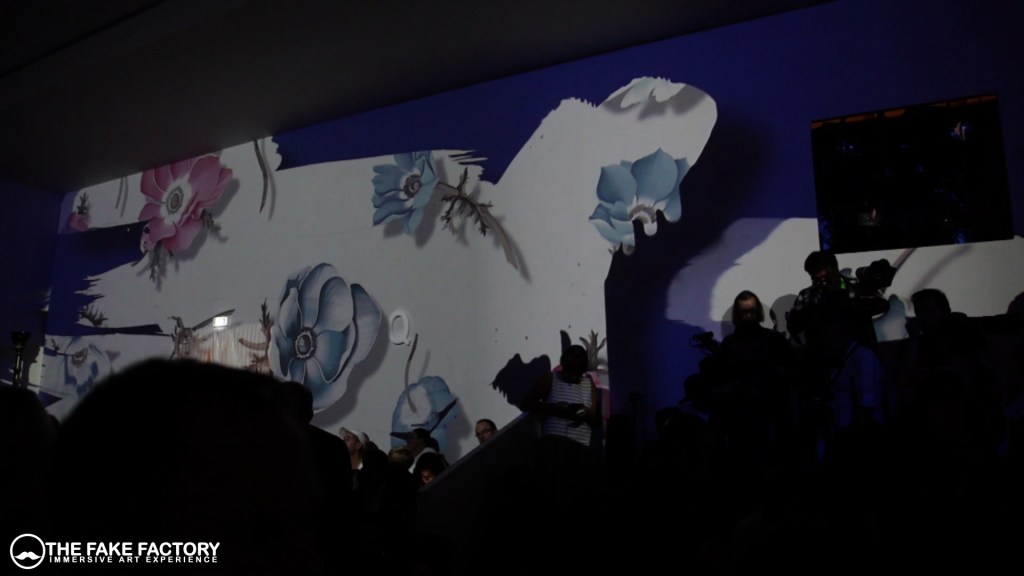
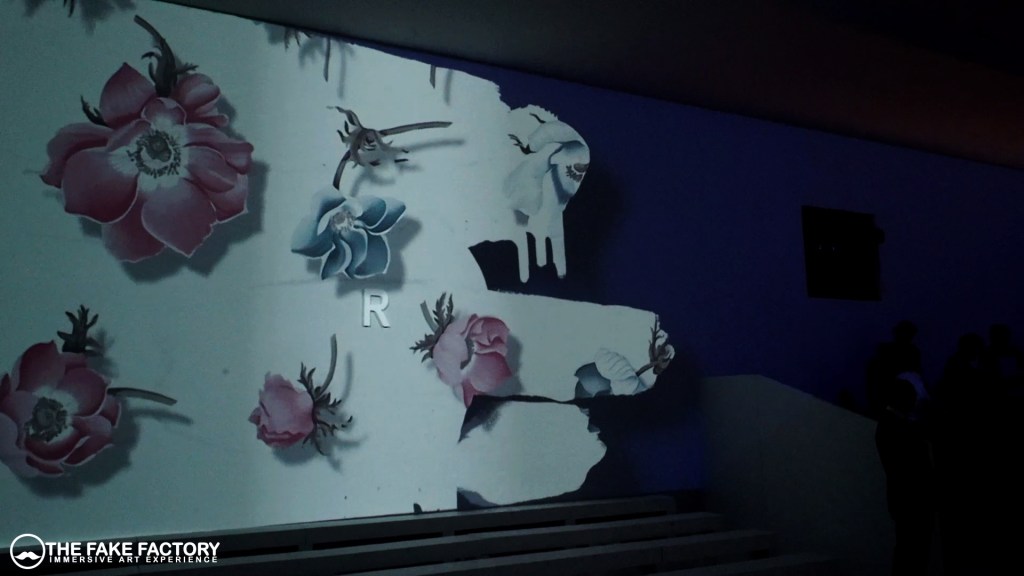
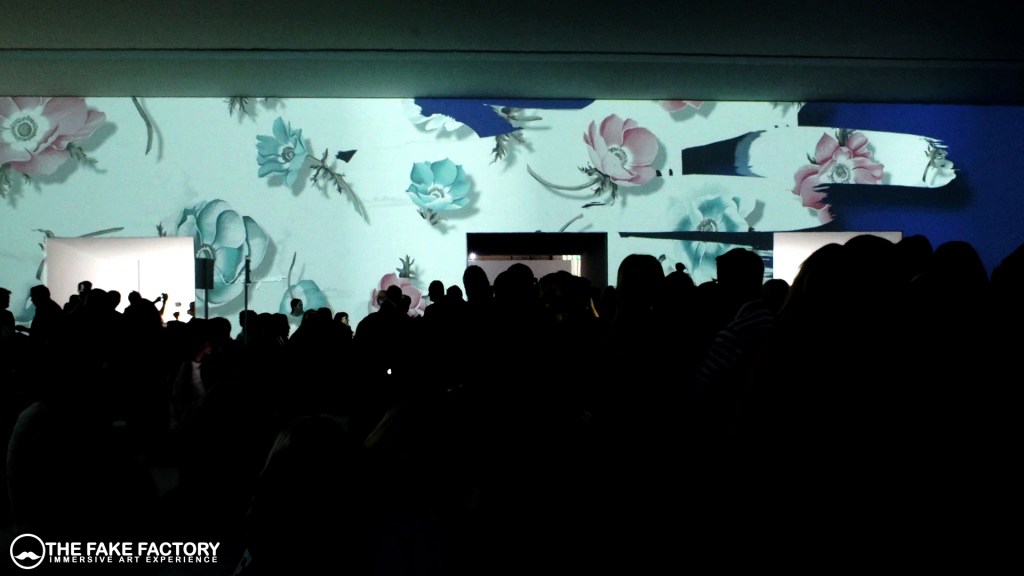
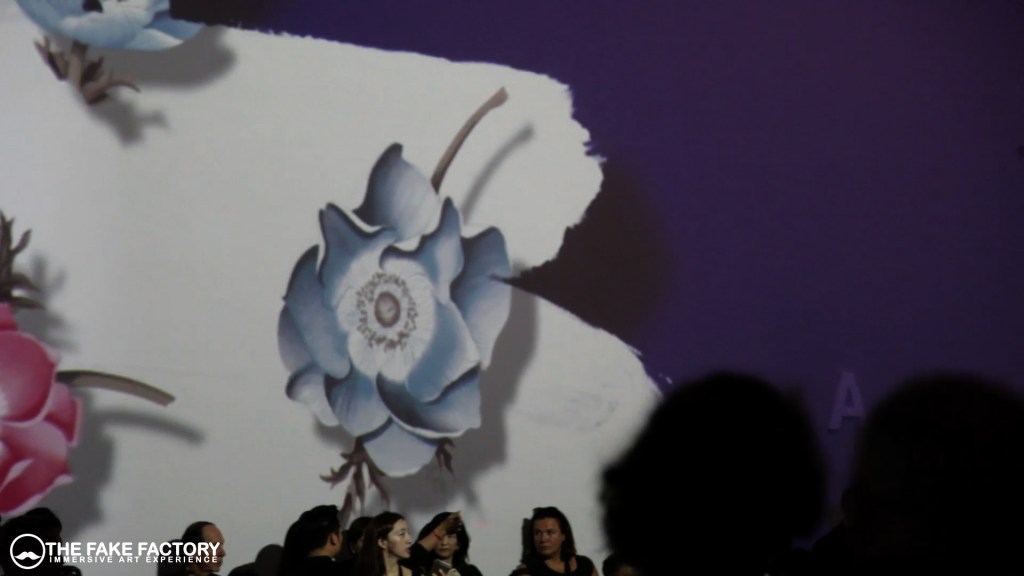
“I have studied the representation of flowers in the history of art for a long time, from Botticelli to Andy Warhol. Whether used in a symbolic or purely decorative way, flowers have always been the subject of research by artists. The concept of birth, sex, re-production can all be involved within flowers. ” (Stefano Fake)
Due to this, the video artwork of The Fake Factory is a visual and emotional representation of the transformation of life and death in the digital age. This work was deeply influenced by the Andy Warhol’s famous Flowers, which the artist showed at a sell-out exhibition at the Leo Castelli Gallery in New York in 1964. Also Ronnie Cutrone, Warhol’s assistant for 10 years, thought the early Flower paintings were about “life and death”.
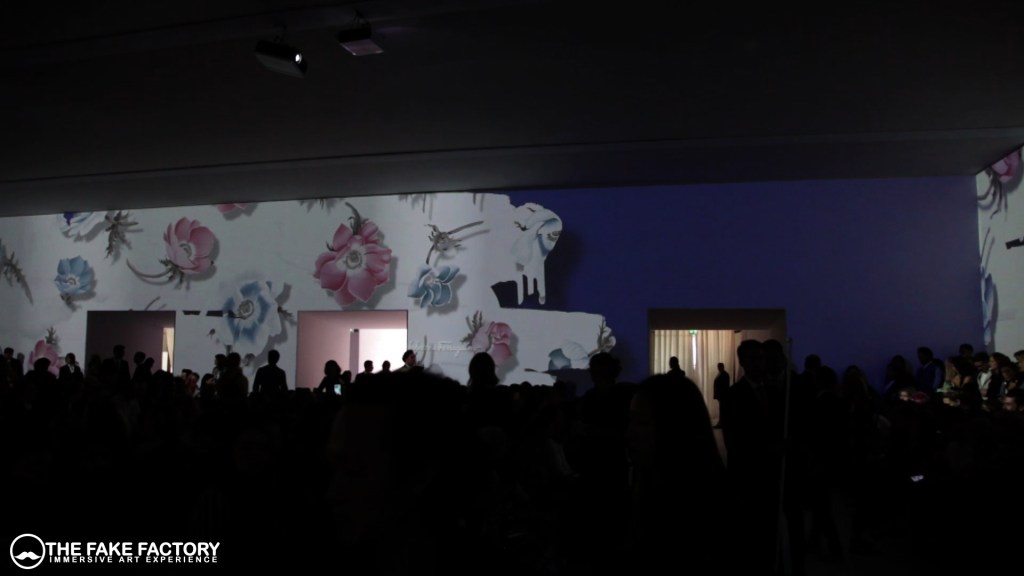
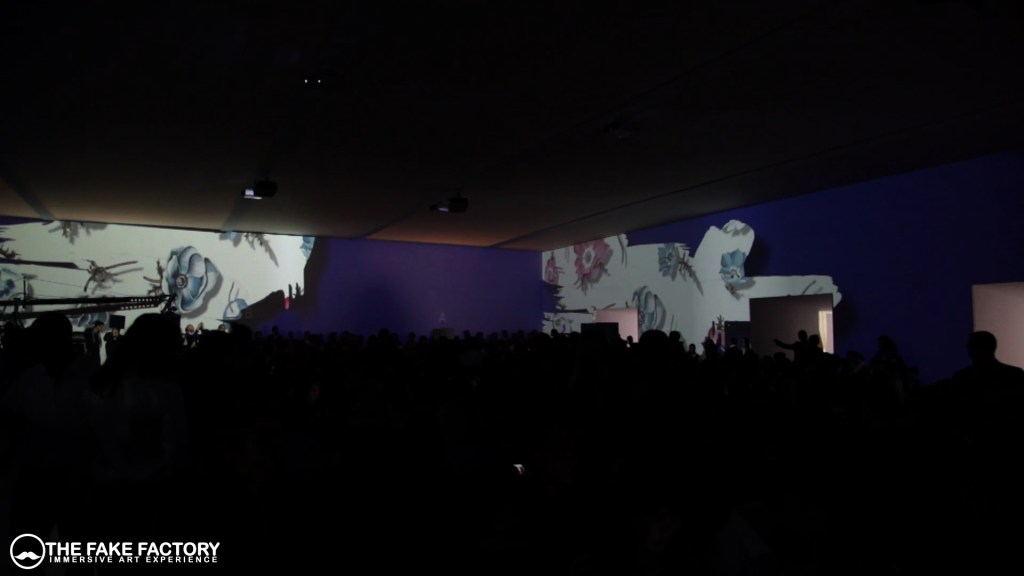
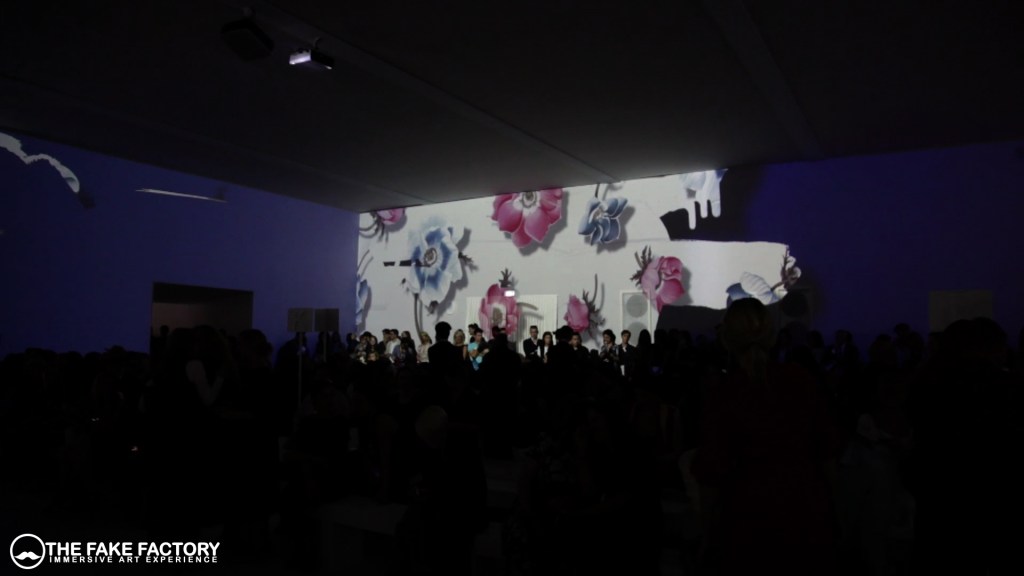
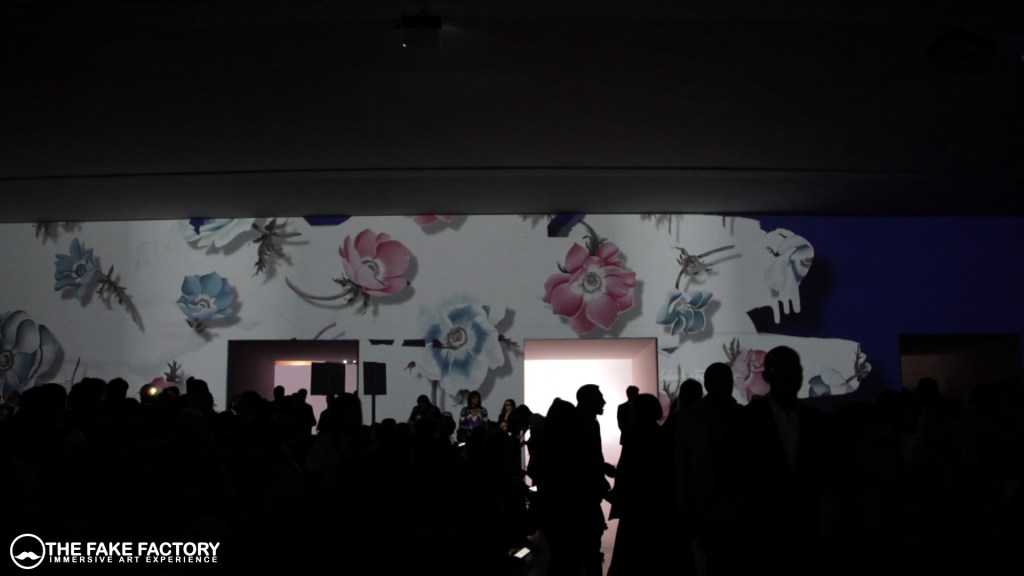
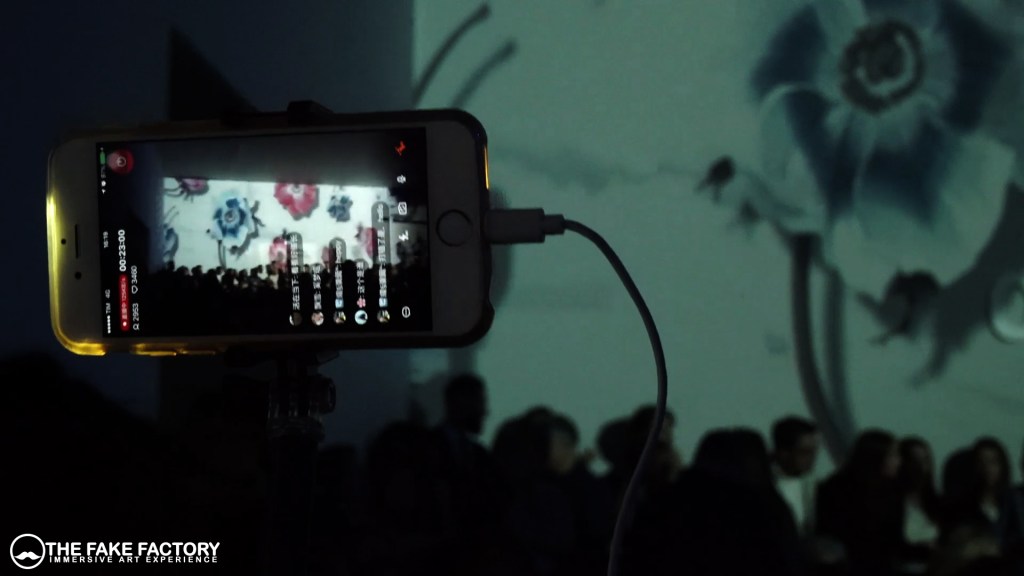
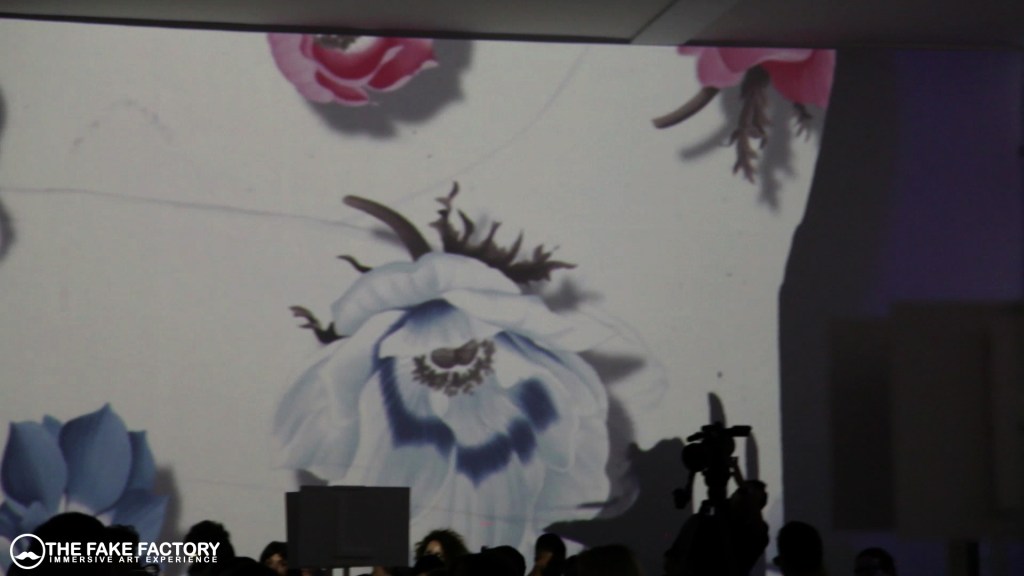
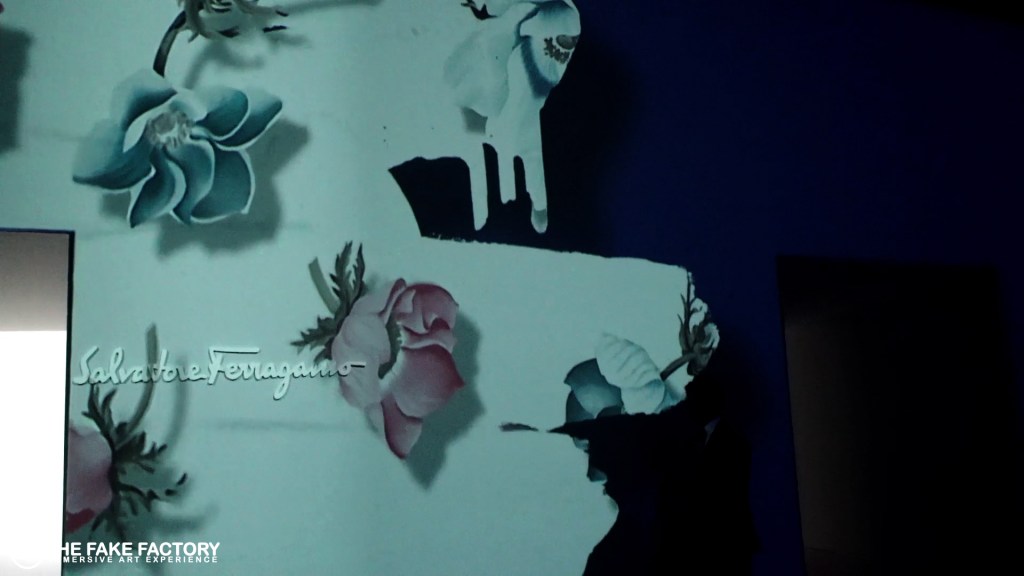
The digital flowers created by Stefano Fake are projected on all the walls of the immersive space. The entire environment becomes a canvas on which the artist creates with light a dynamic evolution of digital flowers that envelops the spectators. “I have always been fascinated by an aspect linked to the nature of flowers: the possibility of witnessing the trajectory of a life. This work is closely linked to my thoughts on nature, life and death. Despite being an extremely dynamic immersive environment, refers to a single moment in the life of flowers, to their moment of maximum vitality, stopped and exalted in its maximum vital power.” (Stefano Fake)
STEFANO FAKE & THE FAKE FACTORY: THE IMMERSIVE EXPERIENCE OF VIDEO ART.
Stefano Fake is an artist who fully explores the potential of digital image processing to create virtual art forms that embrace the concept of space. Through the use of immersion, interaction and digital manipulation of physical and virtual space, The Fake Factory creates powerful aesthetic environments that allow audiences to experience alternative emotional realities. Immersive installations satisfy the viewer’s intrinsic desire to escape physical reality and become part of the experience of art itself.
“All my work could be concentrated in this concept: The Fake Factory defines, creates and manipulates space to create immersive aesthetic and emotional experiences. It invites the public to immerse themselves in art with all the senses” (Stefano Fake).
To immerse the viewer in an ecstatic and emotional experience, Fake uses all the tools that digital art allows in the third millennium: shapes, lights, colors, sounds, narration, conceptual abstractions and symbolic elements, holograms, quotes taken from the history of art, mirrors, perspective tricks and visual deceptions, in a sort of seamless visual flow.
“They are nothing more than visual landscapes, external and internal. Something halfway between reality and a dream. All worlds are symbolic: both the virtual one and the one we perceive as real. Digital art is evanescent and concrete at the same time: the immersive experience is consumed in a few minutes but leaves indelible marks on the viewer.” ((Stefano Fake, cit). The sensation of being there in that moment to live the experience depends to a large extent on sensorial absorption within the environment. You need to feel immersed in the space and physically perceive that you are a part of it. Sensory immersion is central to our relationship with the natural environment. Harnessing the psychological power of immersion, Fake creates visual spaces that allow audiences to escape to other worlds and experience real emotional responses , the power of artistic illusion that finds a meeting point with the human desire to create parallel realities within the reality in which he lives.
In the metaphysics of virtual reality, Michael Heim asks: “Aren’t all worlds symbolic? Including what we naively call the real world, which we read away with our physical senses? “. The immersive video art works of The Fake Factory ultimately exploit the power of artistic illusion which finds a meeting point with the human desire to create parallel symbolic realities within the reality in which he lives, creating a fusion between art and life.
IMMERSIVE ART EXPERIENCE
In an Immersive Art installation, multimedia artists create a relationship with the visitor through a series of sensory stimuli and multimedia narratives. They consider the past not as a still image, but as a treasure chest to be searched intelligently: a complex text which, through revelations, aims to lead back into the present. They consider history as an extraordinary opportunity.
They relocate the past into a present space-time.
These artists want to do justice to the secret ambition of the “classic”: they make it happen here and now. They treat it like burning matter. They re-lease it. They make him live beyond himself, in an unstoppable process. They emancipate him from the identity in which erudition and philology tend to nail him. For a contemporary artist like Stefano Fake, opening up to the ancient is first and foremost a way to revive emotions, to expand the spaces of the fantastic.
Stefano Fake (THE FAKE FACTORY) has been creating immersive art experiences since 2001 and today represents an Italian and international point of reference for this new art form, having created dozens of immersive installations in prestigious museums, visited by millions of visitors.
Within his studio – THE FAKE FACTORY – STEFANO FAKE has designed, directed
and created some of the most significative immersive multimedia art experiences
exhibited in prestigious museums and art galleries worldwide.
“An immersive art experience is a form of art which uses multimedia languages and multisensory tools to immerse the viewer inside the artwork, with a development in space and time determined by an audio-visual storytelling. Its main feature is the experimental use of cutting-edge technology as an artistic tool with the purpose of creating transformative spatial experience.”(Stefano Fake)
The tools in the hands of the digital artist are: the space, the light, the visual dramaturgy, the soundtrack, the audience. Each of these elements is fundamental and must have the same balance in the creation process.” (Stefano Fake)
“To be an artist is not a matter of making videos or multimedia artworks at all. What we are really dealing with is the visitors state of consciousness and the shape of their perceptions.” (Stefano Fake)









Italy has always been the cradle of creativity, innovation and research in the artistic and cultural fields. Over the past two decades, we have seen a generation born and grown of artists, creatives and designers who have realized pioneering projects and have become a point of international reference in the field of video mapping, immersive art experiences, of light art and audio-visual performances.
The latest generation of Italian Artist who works in digital and immersive art comes from a long tradition that we can trace back to the historical Italian avant-gardes of the twentieth century.
Your eyes
will soon open
to more radiant
visions of light.
We shall put
the spectator
in the center
of the picture.
(Futurist Technical Manifesto,1910)
With the resources of modern technology,
we will make appear in the sky:
artificial forms, rainbows of wonder, luminous writings.
(Lucio Fontana: Second Manifesto of Spatialism – 1948)
SPACE, intended as an environment, and TIME, intended as a progressive audio-visual experience, are identity components of this immersive art form. The long-lasting effects are the survival of the most intangible emotions, exchange and sharing, the creation of new processes of materialization in art. If the exhibition turns into a film or theater set, the public itself become the actors. Documentation of the participants’ actions through photos and videos shared on social media, becomes part of the creative process, expanding the boundaries of the exhibition itself. Cultural productions are subjected to a re-reading-relocation by visitors, which certify the ubiquity of optical instruments and their current prevalence on any other means of production and social sharing. Immersive art allows multiple and simultaneous views on the work. The viewer/actor is an integral part of the immersive work.
“Immersive Art is an art form that aims to immerse the viewer inside the work of art itself. The visitor is stimulated and involved through light, sound, images and animated graphics. The artist’s goal is to create a space that is a “container of emotions”, a place that generates a seamless sensorial flow. Andy Warhol often liked to repeat that, from his point of view, pop art was above all “loving things’ ‘. Paraphrasing his words, we could say that immersive art is above all “loving people” since in these installations there is an important and fundamental relational aspect between artist and visitor. The only fact of defining them as “experiences” (Immersive Art Experience) makes us understand the change of paradigm put in place by the artists who dedicate themselves to this discipline. The quality of the creation of the audiovisual product or the purely technological, then can also take a second place. First of all is the visitor’s experience, his being enveloped in the light, inside the rooms augmented by the sensorially thanks to the poetic use of technologies. It is not a question of surrounding the viewer with large images, but of bringing him into an audiovisual flow, shaping the form of sensory perceptions. Being an artist who works in the field of Immersive Art is not simply a matter of making videos or multimedia installations but above all the perceptions of the visitors and the relationships created within the immersive space”. (Stefano Fake)
 IMMERSIVE ART EXPERIENCE