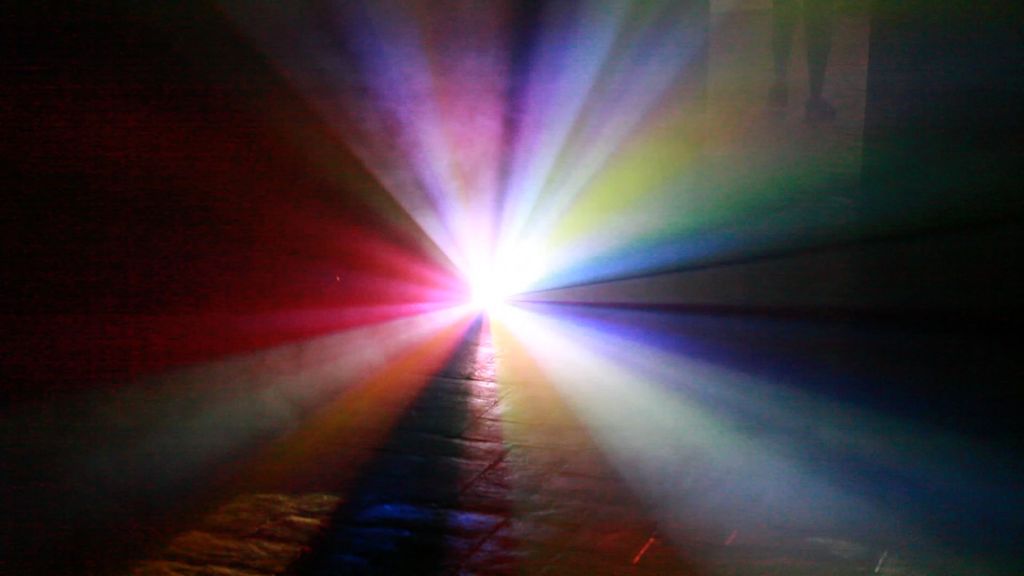
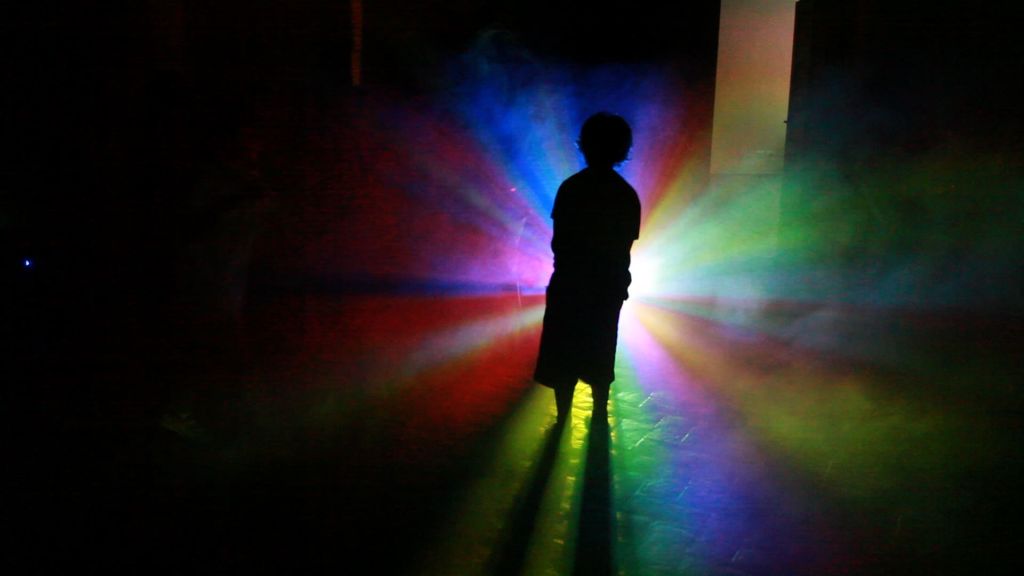
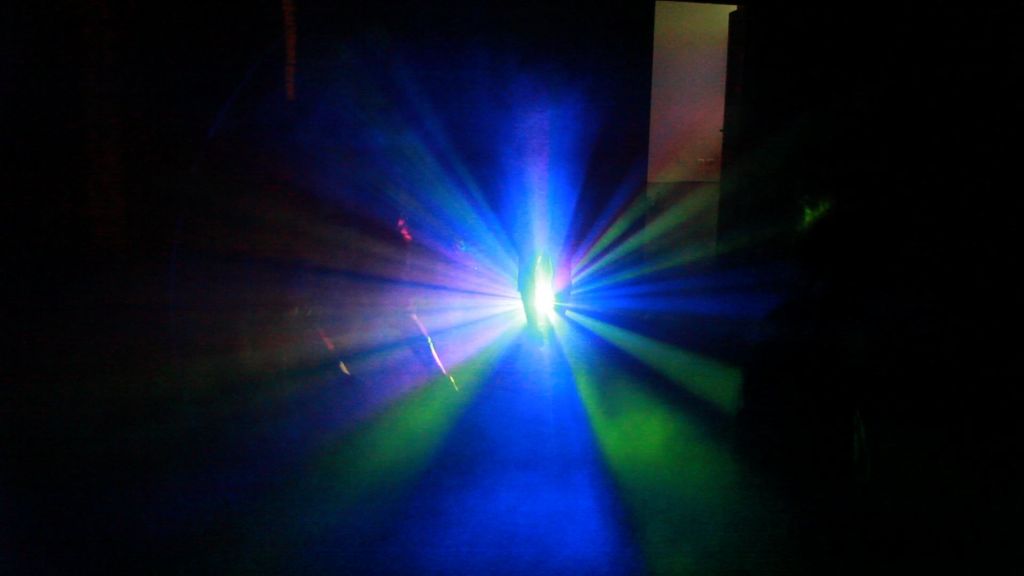
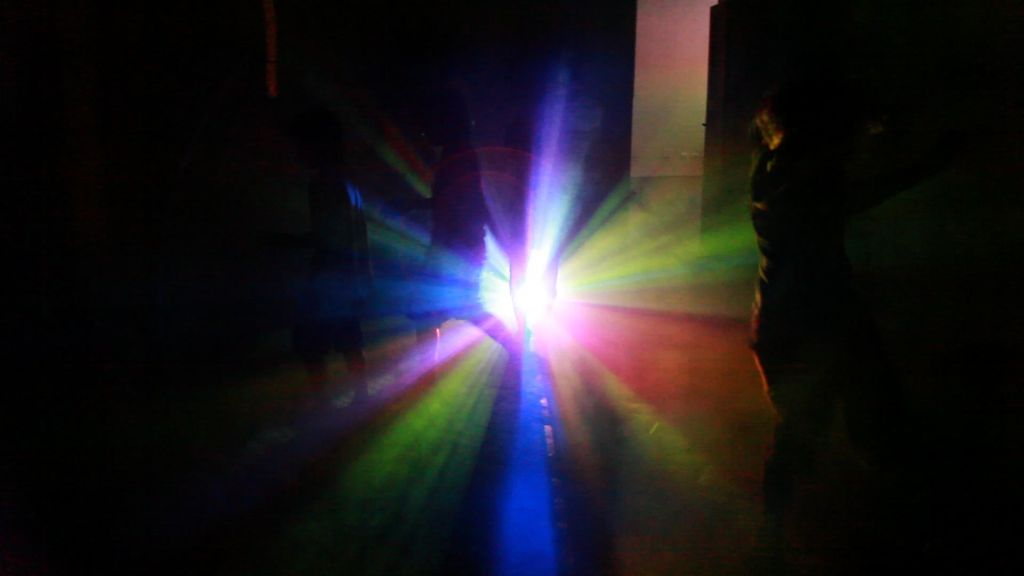
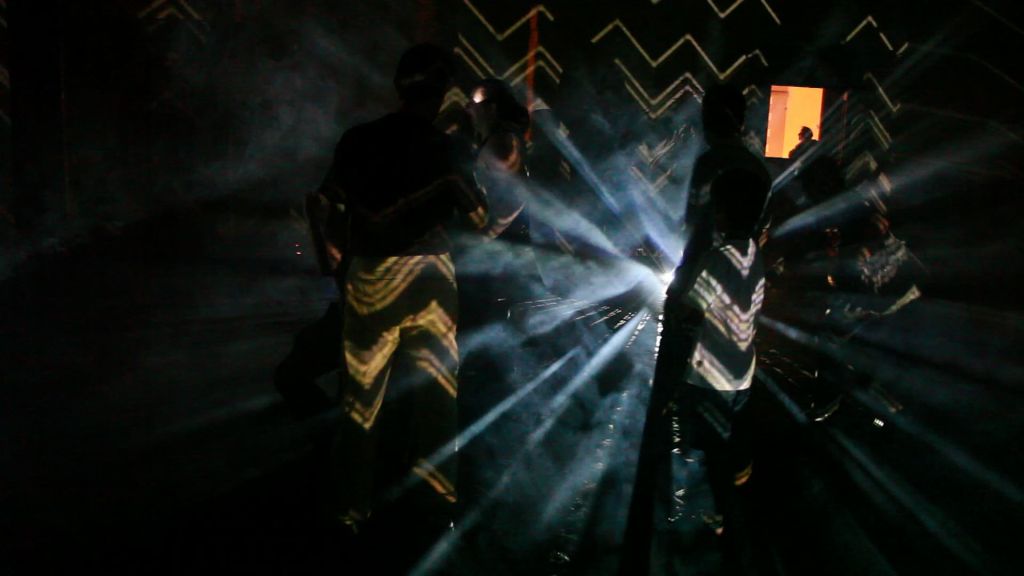
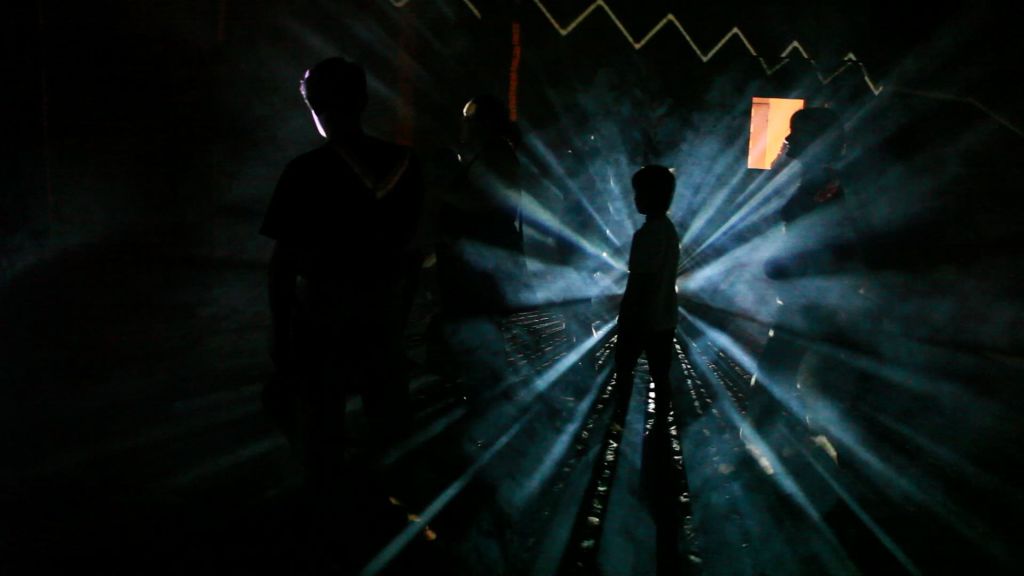
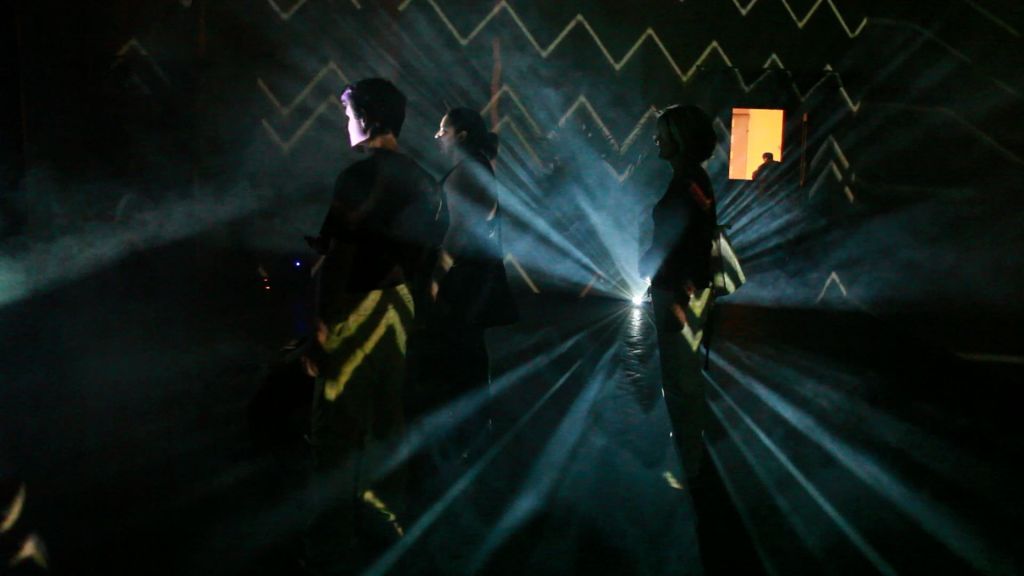
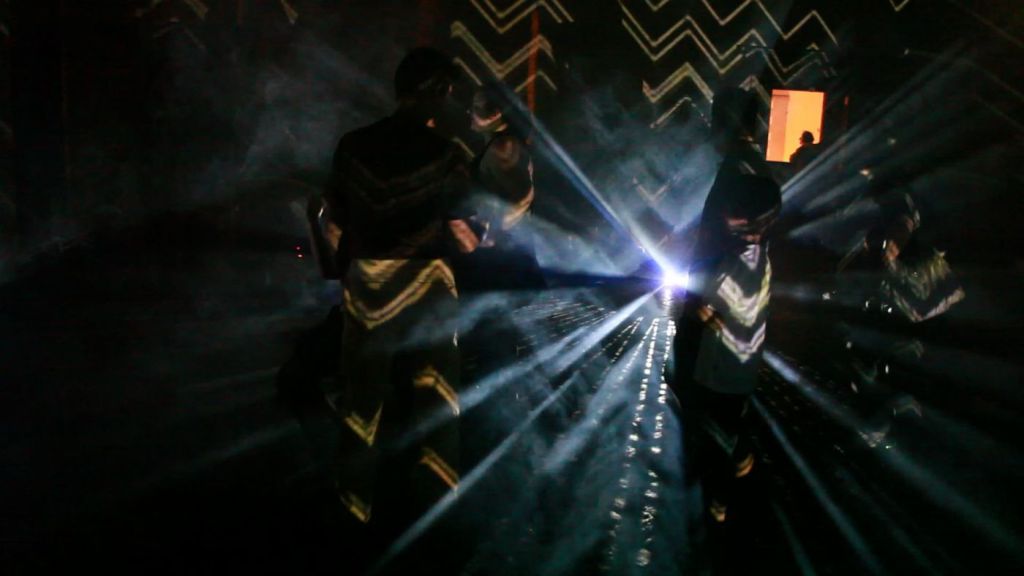
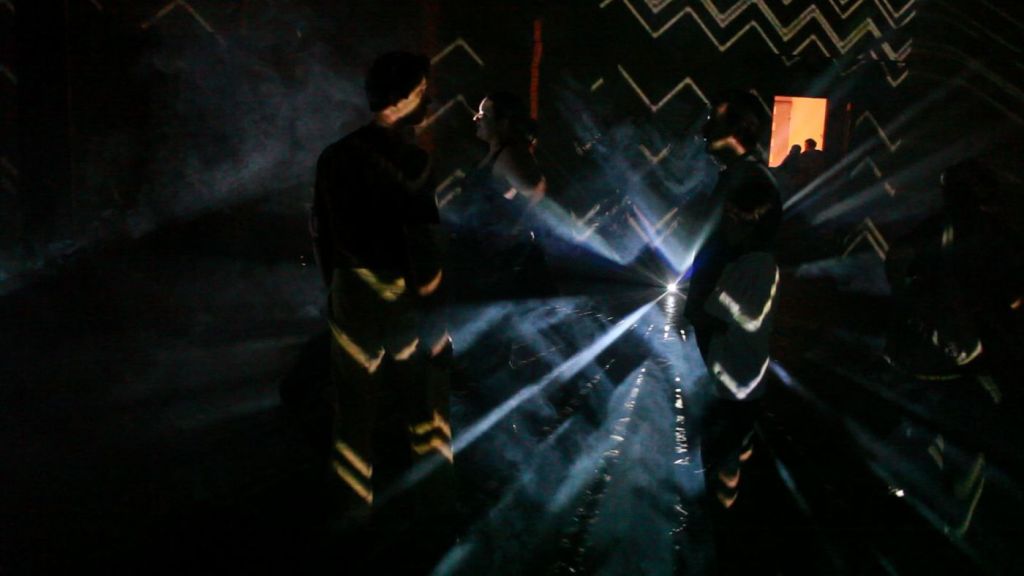
Created by Stefano Fake & The Fake Factory (Limonaia di Villa Strozzi, Firenze, Italy, 2002) the AMBIENTI DIGITALI (DI NUOVA SENSIBILITA’) is an immersive video art installation.
AMBIENTI DIGITALI DI NUOVA SENSIBILITA’ (2002-today)
Dopo la fondamentale mostra di Studio Azzurro a Roma nel 1999:
PALAZZO DELLE ESPOSIZIONI ROMA – Studio Azzurro Ambienti sensibili – Esperienze tra interattività e narrazione (10.03__24.05.1999)
All’inizio del nuovo millennio, tutti noi “giovani artisti” avevamo capito che finalmente si poteva provare a trovare spazio nelle istituzioni culturali e museali italiane e proporre le nostre installazioni digitali, avendo un importante precedente sul quale ci potevamo appoggiare.
Così, anche noi eravamo spinti a creare e proporre i nostri “Ambienti” con interventi di videografica digitale. Naturalmente, forse semplicemente per una questione anagrafica, il nostro modo di utilizzare ed intervenire con l’arte digitale negli spazi espositivi era completamente diverso da quello di Studio Azzurro. Avevamo un’anima un po’ techno-electro-punk, legata alla musica dei Prodigy (i quali tra l’altro avevano titolato “Experience” il loro primo album, termine che poi diventerà paradigmatico nelle nostre installazioni) e ascoltavamo Laurent Garnier, i Fisherspooner, Aphex Twin con i video realizzati da Chris Cunningham. Frequentavamo i rave parties illegali, c’era una certa familiarità con le sostanze psico-attivanti…Era abbastanza ovvio che queste influenze sarebbero finite nel nostro lavoro.
Chiaramente non era per niente facile fare capire che il chaos audiovisivo che mettevamo in scena era una nuova espressione artistica…era troppo diverso dalla definizione tradizionale di opera d’arte.
Comunque, Firenze era una città molto attiva culturalmente, e quindi non mancavano le occasioni di partecipare a festival di “cultura elettronica” per i giovani di allora. Credo che l’interesse primario degli organizzatori fosse sempre fare cassa con ingressi e consumo di bevande…ma probabilmente erano obbligati a inserire nel programma “arte digitale” per avere i permessi e il supporto delle istituzioni.
Quindi nel 2002 venne organizzato un festival di questo tipo nella rinnovata Limonaia di Villa Strozzi a Firenze, un progetto dell’architetto Giovanni Michelucci che tornava ad essere disponibile all’interno della programmazione dell’Estate Fiorentina. Grazie ad un amico finimmo nella programmazione del festival e fu possibile mettere in scena i nostri “ambienti di arte digitale”.
Nelle discussioni sul nome da scrivere nel programma, al nome “ambiente” (preso a prestito da Germano Celant 1977 e poi da Studio Azzurro 1999) ci venne l’idea, forse infantile ma significativa, di aggiungere “Nuova Sensibilità”, perché un amico professore all’accademia e curatore d’arte – Matteo Chini – costantemente ci ripeteva che ci sarebbe voluta “una nuova sensibilità del pubblico e della critica” per far intendere che quello che stavamo creando “era, a tutti gli effetti, una nuova forma d’arte creata con softwares e tecnologie digitali.”
Oggi, a 20 anni da quelle prime esperienze, il pubblico ha veramente sviluppato una “nuova sensibilità” e le arti digitali ed immersive, la light art e le installazioni audiovisuali dentro a stanze ed ambienti, sono probabilmente la forma d’arte più amata dai visitatori a livello globale.
(STEFANO FAKE, 2024)

After the fundamental Studio Azzurro exhibition in Rome in 1999:
PALAZZO DELLE ESPOSIZIONI ROMA
Studio Azzurro Ambienti sensibili.
Esperienze tra interattività e narrazione
10.03__24.05.1999
All of us young artists had understood that we could finally try to find space in Italian cultural institutions and museums and propose our installations having an important precedent on which we could rely.
Thus, we too were driven to create and propose our “Environments” with digital video-graphics interventions. Perhaps simply due to a question of age, our way of using and intervening with digital art in exhibition spaces was completely different from that of Studio Azzurro. We had a somewhat techno-electro-punk soul, linked to the music of the Prodigy (who among other things had titled their first album “Experience”, a term that would later become paradigmatic in our installations) and we listened to Laurent Garnier, the Fisherspooner, Aphex Twin with videos made by Chris Cunningham. We went to illegal rave parties, there was a certain familiarity with psycho-activating substances…It was quite obvious that these influences would end up in our work.
Clearly, it wasn’t easy at all to make people understand that the audiovisual chaos we were staging was art… it was too different from the traditional definition of a work of art.
However, Florence was a very culturally active city, and therefore there was no shortage of opportunities for young people of the time to participate in “electronic culture” festivals. I believe that the primary interest of the organizers was always to make money with admissions and consumption of drinks… but they were probably obliged to include “digital art” in the program to have the permission and support of the institutions.
So in 2002 a festival of this type was organized in the renovated Limonaia of Villa Strozzi in Florence, a project by the architect Giovanni Michelucci which once again became available within the programming of the Estate Fiorentina. Thanks to a friend we ended up in the festival’s programming and it was possible to stage our “digital art environment”.
In the discussions on the name to write in the program, to the name “ambiente” (borrowed from Germano Celant 1977 and then from Studio Azzurro 1999) we came up with the childish but significant idea of adding “Nuova Sensibilità”, because a friend who was the curator of art – Matteo Chini – constantly told us that it would take “a new public sensitivity” to understand that what we were doing was art 🙂
Today, 20 years after those first experiences, I must say that the public has truly developed a “new sensitivity”… and digital and immersive arts, light art and installations in immersive rooms and environments, are probably some of the most loved art form.
(STEFANO FAKE, 2024)
Stefano Fake è un artista e video designer italiano, che realizza installazioni utilizzando video proiezioni, film, fotografie, sculture, computer grafica e tecnologie interattive. E’ fra i principali esponenti della IMMERSIVE ART, che si propone di immergere lo spettatore all’interno dell’opera d’arte stessa. Nel 2001 fonda a Firenze il suo laboratorio THE FAKE FACTORY, che in pochi anni diventa un punto di riferimento internazionale nelle arti immersive e nelle scenografie digitali per teatro, concerti ed eventi. Stefano Fake si propone di rompere la tradizionale separazione creatore-fruitore mettendo lo spettatore al centro dell’esperienza d’arte. Utilizzando i linguaggi e le tecnologie digitali in uso nelle scenografie teatrali e cinematografiche, crea delle Immersive Rooms, ambienti multi-sensoriali immersivi dove il pubblico non è solo spettatore ma diviene attore protagonista dell’opera stessa. L’arte immersiva è una forma d’arte che utilizza video proiezioni, luci, suoni, musiche, e a volte anche essenze profumate e micro-dosi di superfood per avvolgere e coinvolgere lo spettatore in una esperienza d’arte totalizzante, stimolandone i sensi e attivandone le emozioni. Per molti musei diventa un’opportunità di rinnovamento delle regole della fruizione. Un progetto innovativo che tende a scuotere e coinvolgere l’osservatore sia sul piano sensoriale che su quello intellettuale, suggerendo e stimolando nuove letture visive, narrative, critiche e pedagogiche sull’Arte Moderna e Contemporanea.
Since 2001, The Fake Factory has explored the computer’s potential to create both virtual and physical art forms that embrace the concept of space.
Through the use of immersion, interaction, and manipulation of both virtual and physical space, The Fake Factory has created powerful aesthetic environments that enable audiences to experience alternative realities. Immersive installations satisfy the viewer’s inherent desire to escape physical reality and become part of the art experience itself.
We often think of physical space as a three dimensional entity that exists between objects. Although this entity may contain “nothing” but air, we conceive of it as physically definable, malleable, and constructible. We experience sensations in space and define our perception of the world by our relationship to space. One must feel immersed in the space and physically a part of it. Sensory immersion is fundamental to our relationship with the natural environment. Capitalizing on the psychological power of immersion, THE FAKE FACTORY creates immersive spaces that enable the audience to escape to other realms and experience genuine emotional responses.







 IMMERSIVE ART EXPERIENCE